
Coal

Search documents
New Preferred Stock And Baby Bond IPOs, August 2025
Seeking Alpha· 2025-09-04 01:57
Group 1 - Ramaco Resources has priced an offering of $57 million in new 8.25% exchange traded senior notes due in 2030 [1] - The proceeds from the offering will be used to redeem existing debt [1]




中国材料 - 反内卷调研之旅-China Materials-Anti-Involution Trip Day 3
2025-09-04 01:53
Summary of Key Points from the Conference Call Industry Overview - The focus of the conference call was on the **coal industry in Shanxi, China** [1] - The coal market has experienced a price rebound in July and August, but profitability remains an issue for many mines [1] Core Insights - Approximately **40-50% of state-owned enterprise (SOE) coal mines** are still operating at a loss, with loss-making coking coal mines accounting for about **20% of industry capacity** [1] - Following an overproduction inspection in July, coal production from sampled mines has decreased by **5%**, contributing to a rise in thermal coal prices to over **Rmb700/ton** by late August [3] - Despite the expected decline in supply towards year-end, a significant drop is not anticipated due to the need for coal during the winter heating season [3] - Thermal coal prices are projected to fluctuate between **Rmb640-700/ton**, indicating limited downside potential [3] Demand and Supply Dynamics - Total coal demand is expected to increase by **1-2% year-on-year in 2025**, driven by higher thermal power demand due to extreme temperatures and a colder winter forecast [4] - The steel and cement industries are identified as major factors dragging down overall coal demand [4] - Coal imports are projected to decline to **360-370 million tons in 2025**, down from **420 million tons in 2024**, with a **14% year-on-year decrease** noted in the first seven months of 2025 [5] - Increased imports from Indonesia are expected, but overall imports will continue to decline due to India's preference for higher calorific value coal [5] Regional Insights - The potential for increased coal volume from Mongolia is limited by port inventory capacity and demand in China [6] - Mongolian coal is not a substitute for Shanxi coking coal due to its lower strength, primarily serving as blended coal for coke production [7] Additional Considerations - The report indicates that the coal industry is currently viewed as **attractive** by Morgan Stanley [9] - The insights provided are based on comprehensive data and analysis, reflecting the current state and future outlook of the coal industry in Shanxi [1][3][4][5][6][7][9]
金融赋能产业升级 浦发银行22.8亿并购贷款激活宁夏煤炭产业新动能
Zhong Guo Jin Rong Xin Xi Wang· 2025-08-25 06:39
Core Insights - Recently, Pudong Development Bank successfully provided a 7-year merger loan support of 1.57 billion yuan for a coal industry integration project in Ningxia, with a total loan scale of 2.28 billion yuan [1] - The acquiring party is a subsidiary of a central enterprise, and the target is 100% equity of two private coal mines in the Ningxia region [1] - The bank's Yinchuan branch formed a professional service team to innovate financing solutions and efficiently completed project evaluations, showcasing its financial service capabilities [1] Industry Context - Ningxia is a significant energy base in China, accelerating the transformation and upgrading of the coal industry [1] - The Ningxia Hui Autonomous Region has been optimizing its coal industry structure through measures such as revitalizing existing resources and enhancing advanced production capacity [1] - The successful implementation of this project reflects the bank's professional advantages in merger finance and its role in supporting the real economy [1] Future Outlook - The Yinchuan branch of Pudong Development Bank plans to continue deepening financial service innovations through a "commercial bank + investment bank" model to provide robust financial support for key areas such as energy industry upgrades, state-owned enterprise reforms, and technological innovation in Ningxia [2]

X @Bloomberg
Bloomberg· 2025-08-25 00:14
Industry Trend - Despite the boom in renewables and a fast-approaching climate deadline, China still doesn't have a coherent exit strategy for coal [1]
煤炭 - 中国_供应扰动增多,对煤炭转为中性评级,上调盈利与目标价-Coal - China (H_A)_ More supply disruption, turn neutral on coal, lift earnings and POs
2025-08-22 01:00
Summary of Key Points from the Conference Call Industry Overview: Coal in China - **Current Price Levels**: As of year-to-date (YTD), thermal and coking coal prices in China are at RMB680 and RMB1280 per ton, respectively, reflecting a decrease of approximately 50% compared to 2022 prices due to increased domestic capacity and import hikes [1][8] - **Future Price Expectations**: The coal sector is expected to stabilize in the second half of 2025 and into 2026, with net supply growth slowing to 0-1% per annum compared to 6-7% in 2021-2023. Coal imports are projected to decline from 536 million tons in 2024 to 430-440 million tons by 2026 [1][8] Core Insights and Arguments - **Supply Disruptions**: Recent heavy rains in Inner Mongolia and tightened safety checks in northern provinces may lead to production cuts in coal and steel, potentially supporting near-term coal prices [2][45] - **Contract Price Adjustments**: The contract price for coal is lifted to RMB670 per ton for 2025-2026, aligning with the benchmark of RMB675 per ton. This adjustment is crucial as approximately 80% of Shenhua's coal output is sold on a contract basis [1][9][56] - **Earnings Projections**: Shenhua's earnings for 2025-2027 are raised by 7-29%, while Yankuang's earnings are lifted by 20-21% due to changes in coal price assumptions. However, China Coal's earnings are expected to stabilize with a neutral rating maintained [3][65][70] Company-Specific Highlights - **Shenhua Energy**: - New price objective (PO) set at HKD38 for H shares and RMB43 for A shares, reflecting a 19% and 10% increase, respectively [6][59] - Anticipated dividend yield of 5-6% based on a proposed interim dividend payout of 75% [56][57] - Plans to acquire 13 assets from the parent company, valued at RMB258 billion, which is expected to enhance profitability [58] - **China Coal**: - Price objective increased by 29% to HKD11 per share and RMB13 for A shares, maintaining a neutral rating [65][66] - Despite a strong cash position of approximately RMB80 billion, the company is reluctant to increase dividend payouts [66] - **Yankuang Energy**: - Earnings for 2026-2027 are projected to increase by 20-21%, with a new price objective of HKD9 for H shares and RMB12.5 for A shares [70][71] - The company is consolidating Xibei Mining, which will significantly increase its production capacity [68] Additional Important Insights - **Market Dynamics**: The coal market is expected to be influenced by the "anti-involution" campaign, which aims to stabilize prices and reduce competition among coal producers [49] - **Long-term Supply Outlook**: China's coal production is projected to stabilize, with a focus on maintaining quality and pricing standards in contracts, reflecting a shift in market dynamics [40][44] - **Coking Coal Price Recovery**: Recent rebounds in coking coal prices are attributed to stronger-than-expected steel production and supply-side adjustments, including the implementation of a "276 Days" production plan by Shanxi Coking Coal [18][19] Conclusion The coal industry in China is navigating through significant price adjustments and supply disruptions, with major companies like Shenhua, China Coal, and Yankuang adapting their strategies to stabilize earnings and maintain competitive positions. The outlook for coal prices appears cautiously optimistic, with expectations of stabilization in the coming years.



主线切换下的红利配置机遇备受关注
Sou Hu Cai Jing· 2025-08-21 04:09
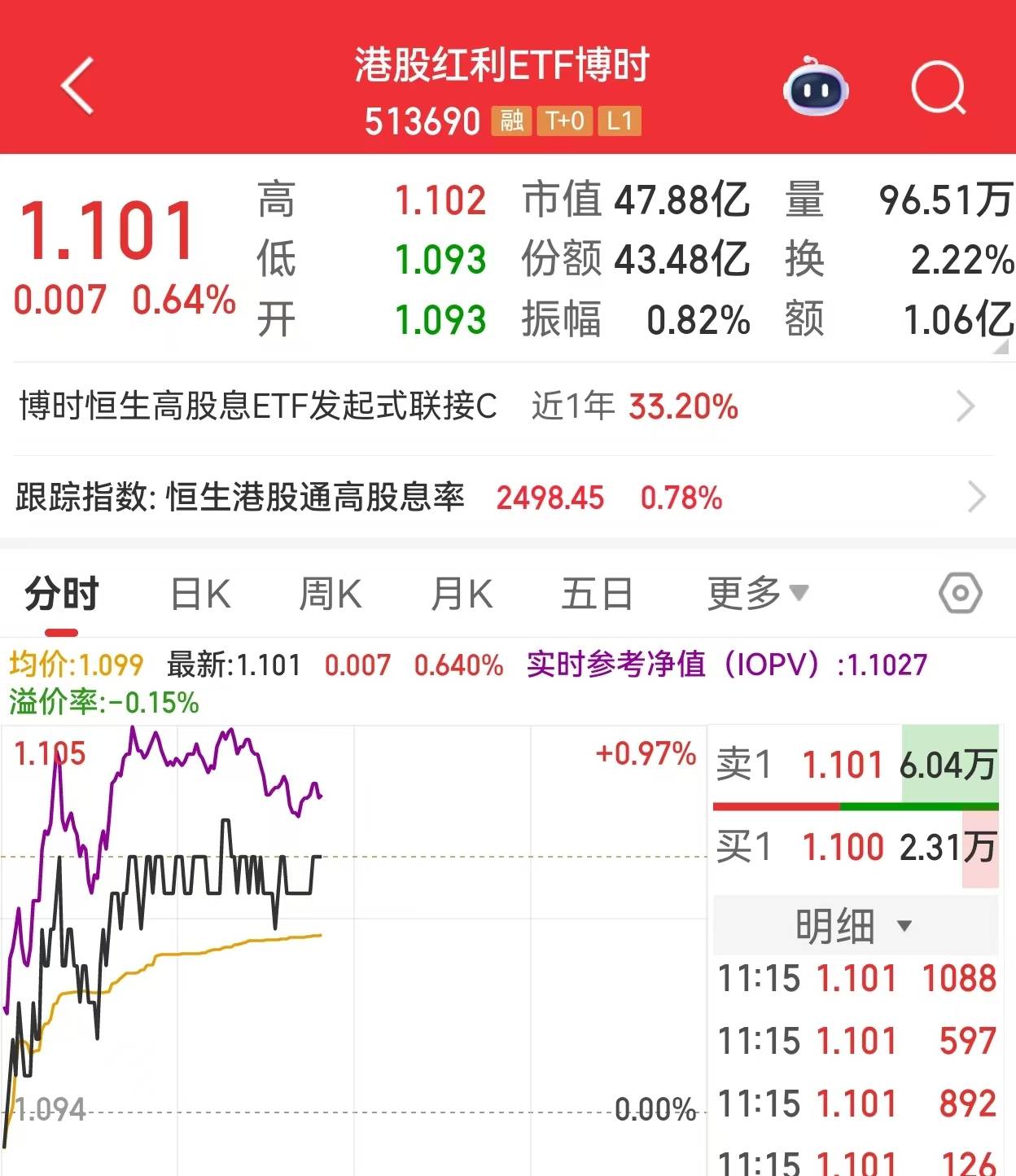
Market Overview - The market is experiencing structural differentiation, with AI and innovative pharmaceutical sectors showing volatility, while agriculture, beauty care, and retail sectors are leading in gains [1] - Defensive assets characterized by high dividends and stable cash flows continue to rise steadily [1] ETF Performance - The Hong Kong Dividend ETF (博时 513690) increased by 0.64%, with a turnover rate of 2.22% and a trading volume of 106 million [1] - The Low Volatility Dividend 100 ETF (红利低波100ETF 159307) rose by 0.55%, with a turnover rate of 0.57% and a trading volume of 7.022 million, showing a net inflow of 24 million over the past five days [3] - The All-Index Cash Flow ETF (全指现金流ETF基金 563830) increased by 0.36%, with a turnover rate of 17.20% and a trading volume of 3.987 million [3] Investment Insights - Recent market volatility has led to profit-taking in some popular sectors, indicating a potential internal market switch towards dividend and cash flow sectors that have seen sufficient pullbacks and increased attractiveness [5] - The logic favoring dividend sectors is reinforced by a low-interest-rate environment, which enhances the relative value of dividend stocks compared to other asset classes [3] - Historical data shows that when the dividend yield premium (股息率-10年国债收益率) is high, the CSI Dividend Total Return Index significantly outperforms the CSI All Share Total Return Index, particularly since 2021 [3] Sector Analysis - The Low Volatility Dividend 100 ETF currently has a dividend yield of 4.31%, with the top five sectors being banking (20.6%), transportation (13.3%), coal (7.4%), pharmaceuticals (6.2%), and basic chemicals (5.6%) [5] - The Hong Kong Dividend ETF has a dividend yield of 5.71%, with the leading sectors being real estate (17.6%), banking (15.3%), coal (10.8%), transportation (8.7%), and oil & petrochemicals (6.9%) [5] - The All-Index Cash Flow ETF has a dividend yield of 4.14%, with the top sectors being non-ferrous metals (15.2%), transportation (13.6%), food & beverage (10.8%), and oil & petrochemicals (9.5%) [5] Strategic Recommendations - Investors are encouraged to consider differentiated allocations between traditional dividend products and free cash flow products to enhance portfolio stability and return potential [4]
放量爆发,沪指创2015年以来新高,牛抬头?
Ge Long Hui· 2025-08-18 19:19
Market Performance - The Shanghai Composite Index rose by 0.85%, the Shenzhen Component Index increased by 1.73%, and the ChiNext Index surged by 2.84% at the close [1][3] - Over 4,000 stocks in the two markets experienced gains, with a total trading volume of 2.76 trillion yuan [1] Sector Highlights - The liquid cooling concept stocks saw a strong surge, with an increase of 7.05% by midday, including over 20 stocks hitting the daily limit or rising more than 10% [3] - Major financial stocks, including brokerage and fintech companies, reached new historical highs, with stocks like Zhina Compass and Tonghuashun performing particularly well [3] - The rare earth permanent magnet sector was active, with stocks like Northern Rare Earth hitting the daily limit [3] - The coal industry opened high but closed down by 0.53%, with several stocks, including Electric Power Investment Energy and Jinko Coal Industry, falling over 2% [3] - Other sectors such as non-ferrous metals, gold, fertilizers, and steel experienced notable declines [3] Trading Dynamics - The market showed strong performance in the morning, with the Shanghai Composite Index reaching a new high since 2015, but cautious sentiment led to a pullback in the afternoon [3] - Despite the afternoon retreat, trading volume significantly increased, surpassing 5.196 trillion yuan compared to the previous trading day [3]
中国基础材料监测-2025 年 8 月:供应端发力,2021 年以来首次全面环比涨价-China Basic Materials Monitor_ August 2025_ the power of supply work, 1st broad sequential price hikes since 2021
2025-08-18 01:00
Summary of China Basic Materials Monitor - August 2025 Industry Overview - The report focuses on the **China Basic Materials** industry, highlighting recent trends in commodity prices and demand dynamics. Key Points Demand and Supply Dynamics - End-user orderbooks remained stable month-over-month (MoM) as of mid-August, indicating a lack of inspiring demand, particularly in infrastructure and renewables sectors [1] - Current Chinese demand for cement and construction steel is estimated to be **3-7% lower year-over-year (YoY)**, while demand for copper and aluminum is **6-11% lower YoY**. Flat steel demand has increased by **5% YoY** [1] - The average prices of main commodities have increased by **2-13% sequentially** in August, marking the first broad price hikes since April 2021 [1] Price Trends - Significant price increases were noted in **lithium** and **met coal**, leading the price hikes in upstream commodities [1] - Improved margins in steel have delayed production cuts, while higher lithium prices are expected to enhance global supply flexibility [1] Supply Policies - New safety standards and controls on coal overproduction are being implemented, along with proposed technical specifications for monitoring cement production and clean-ups in lithium mining licenses [1] - Supply policies are still in early stages but indicate a positive direction for the industry [1] Producer Feedback - A proprietary survey indicated that **26%** of respondents in downstream sectors reported a MoM increase in orders, while **31%** in basic materials reported the same. Conversely, **17%** and **16%** indicated a lower MoM trend [2] Margins and Pricing Stability - Recent weeks have shown improved margins/pricing for steel, coal, and lithium, while cement, aluminum, and copper prices have remained mostly stable [1] Additional Insights - The report suggests that the current trends in the basic materials sector are influenced by both domestic demand fluctuations and regulatory changes aimed at stabilizing supply and prices [1][2] - The stability in downstream order books, despite the overall weak demand, may indicate a cautious optimism among producers regarding future market conditions [2] This summary encapsulates the critical insights from the August 2025 China Basic Materials Monitor, providing a comprehensive overview of the current state of the industry and its future outlook.
YANKUANG ENERGY GROUP(600188):PROFIT UNDER PRESSURE AND FELL IN 1H25;UPBEAT ON RECOVERY IN 2H25
Ge Long Hui· 2025-08-15 03:52
Core Viewpoint - Yankuang Energy Group's preannounced earnings for 1H25 indicate a significant decline in net profit, primarily due to falling coal prices and weak demand conditions in the market [1]. Group 1: Earnings Performance - The net profit attributable to shareholders for Yankuang Energy Group is estimated to have fallen about 38% YoY to Rmb4.65 billion, while recurring attributable net profit declined 39% YoY to Rmb4.4 billion under Chinese accounting standards [1]. - The decline in earnings was sharper than expected, attributed to decreasing coal prices and sales volume amid weak demand [1]. Group 2: Supply and Demand Trends - China's raw coal output rose 5.4% YoY in 1H25, indicating high supply growth, but demand remained weak, with thermal power generation down 2.4% YoY and crude steel output down 3.0% YoY [1]. - Domestic coal prices faced pressure, with the average price of Qinhuangdao 5,500kcal thermal coal declining 22% YoY and 19% HoH to Rmb684 per ton in 1H25 [2]. - Commercial coal sales volume fell 4.9% YoY to 64.56 million tons in 1H25, with self-produced coal sales down 1.8% YoY to 62.60 million tons [2]. Group 3: Price Recovery and Future Outlook - Coal prices have rebounded in 2H25, driven by seasonal demand increases, weaker hydropower output, and expectations of supply contraction, with prices rising from Rmb615 per ton at the end of June to Rmb694 per ton as of August 13 [3]. - The expectation for 2H25 is a further contraction in domestic coal supply, which may bring supply and demand closer to balance, supporting continued price increases and potential earnings improvement compared to 2Q25 [4]. Group 4: Financials and Valuation - The earnings forecasts for A-shares and H-shares remain largely unchanged, with A-shares trading at 14.3x 2025e and 12.2x 2026e P/E, while H-shares are at 9.9x 2025e and 8.1x 2026e P/E [4]. - Target prices are maintained at Rmb16.00 for A-shares (17.3x 2025e and 14.7x 2026e P/E with 20% upside) and HK$10.00 for H-shares (10.2x 2025e and 8.3x 2026e P/E with 3% upside) [4].
X @Bloomberg
Bloomberg· 2025-08-15 03:12
Chinese steel and coal output fell in July, as bad weather affected operations and the government’s efforts to rein in overcapacity intensified https://t.co/jQDaflXQ9o ...