Insurance

Search documents
央行:初步统计,2025年3季度末我国金融业机构总资产为531.76万亿元,同比增长8.7%
Sou Hu Cai Jing· 2025-12-26 08:27
金融业机构负债为485.85万亿元,同比增长8.8%,其中,银行业机构负债为435.95万亿元,同比增长 8%;证券业机构负债为13.25万亿元,同比增长19.2%;保险业机构负债为36.65万亿元,同比增长 15.3%。 12月26日,央行发布数据,初步统计,2025年3季度末,我国金融业机构总资产为531.76万亿元,同比 增长8.7%,其中,银行业机构总资产为474.31万亿元,同比增长7.9%;证券业机构总资产为17.05万亿 元,同比增长16.5%;保险业机构总资产为40.4万亿元,同比增长15.4%。 ...
央行:2025年3季度末我国金融业机构总资产为531.76万亿元同比增长8.7%
Sou Hu Cai Jing· 2025-12-26 08:27
央行数据显示,初步统计,2025年3季度末,我国金融业机构总资产为531.76万亿元,同比增长8.7%, 其中, 银行业机构总资产为474.31万亿元,同比增长7.9%; 证券业机构总资产为17.05万亿元,同比增 长16.5%; 保险业机构总资产为40.4万亿元,同比增长15.4%。金融业机构负债为485.85万亿元,同比增 长8.8%,其中,银行业机构负债为435.95万亿元,同比增长8%;证券业机构负债为13.25万亿元,同比 增长19.2%;保险业机构负债为36.65万亿元,同比增长15.3%。 ...
$15 billion haul: The year world fell in love with an Indian business
The Economic Times· 2025-12-26 07:23
Core Insights - The year 2025 marked a significant shift in global investment dynamics towards India's banking, financial services, and insurance (BFSI) sector, transitioning from cautious participation to deep strategic engagement [1][15] - Foreign investments in India's BFSI sector reached an estimated $14-15 billion through various transactions, indicating a structural re-rating of India's financial system by global investors [15][16] Investment Trends - Mitsubishi UFJ Financial Group's acquisition of a 20% stake in Shriram Finance for approximately $4.4 billion highlighted foreign confidence in India's diversified lending platforms, particularly those focused on retail and small businesses [2][15] - Emirates NBD's acquisition of a 60% controlling stake in RBL Bank signified a maturation of India's regulatory environment, allowing foreign banks to take operational control rather than merely being passive shareholders [15][16] - Sumitomo Mitsui Banking Corporation's near-25% investment in Yes Bank illustrated that foreign banks view India as a core growth market deserving of sustained strategic presence [4][15] Growth Fundamentals - India's credit demand is expanding rapidly, driven by rising household consumption, SME formalization, infrastructure spending, and digital financial inclusion, making it attractive for global investors facing slower growth in developed markets [5][16] - Indian banks and NBFCs entered 2025 with stronger capital adequacy and cleaner balance sheets, enhancing their appeal to foreign investors seeking predictable growth [6][16] Regulatory Environment - The evolving stance of the Reserve Bank of India on foreign ownership and governance standards has reassured overseas investors about the accessibility and prudence of India's financial system [8][16] - The willingness of regulators to consider control transactions, such as the RBL Bank deal, indicates an openness to foreign participation that strengthens institutions [9][16] Long-term Implications - The influx of foreign capital is expected to support faster loan growth, technology investment, and product innovation in the retail and SME segments [10][16] - Consolidation within the sector may occur as well-capitalized players expand and weaker institutions seek strategic investors, leading to fewer but stronger entities [11][16] - Sustained foreign investment will enhance India's financial capacity, supporting economic growth while integrating the country more deeply into global financial networks [12][16] Structural Shift - The participation of overseas investors in India's BFSI sector in 2025 reflects a structural reassessment of India as a long-term financial growth story, driven by rising capital needs and scalable business models [13][16] - If the momentum continues, India's BFSI sector is likely to remain a magnet for global capital, influencing the next phase of the country's financial and economic development [14][16]


PSB consolidation to gain momentum in 2026 as govt eyes big, world-class banks
BusinessLine· 2025-12-26 06:08
Consolidation in Public Sector Banks - The government aims to accelerate consolidation in public sector banks to create larger, world-class banks by 2047, as stated by Finance Minister Nirmala Sitharaman [1][2] - Currently, there are 12 public sector banks, with only the State Bank of India (SBI) ranked among the global top 50 banks by assets, positioned at 43rd [2] Historical Context of Consolidation - The government has previously conducted two rounds of consolidation, reducing the number of public sector banks from 27 in 2017 to 12 in 2019 through major mergers [3][4] - Notable mergers include the consolidation of United Bank of India and Oriental Bank of Commerce with Punjab National Bank, and others involving Syndicate Bank, Allahabad Bank, and Andhra Bank [4][5] Financial Performance of Public Sector Banks - In the first half of FY25-26, the 12 public sector banks reported a net profit of ₹93,675 crore, a 10% increase from ₹85,520 crore in the same period of the previous fiscal year [7] - The net profit for public sector banks is projected to exceed ₹2 lakh crore by the end of FY26, following a record profit of ₹1.78 lakh crore in the previous financial year, which was a 26% increase from ₹1.41 lakh crore in FY24 [8] Foreign Investment Trends - The private sector banking space has seen significant foreign capital inflow, exemplified by Sumitomo Mitsui Banking Corporation acquiring a 20% stake in Yes Bank for ₹13,483 crore [9] - Emirates NBD Bank also announced plans to acquire a 60% stake in RBL Bank for ₹26,853 crore, indicating the attractiveness of India's financial institutions to foreign investors [10] Regulatory Developments in the Insurance Sector - The passage of the Sabka Bima Sabki Raksha Bill allows for 100% foreign direct investment in the insurance sector, which is expected to attract new capital and enhance competition [11][12] - The removal of the 18% GST rate on individual policy premiums has improved affordability and access to insurance products [12][13]

银行保险资产管理产品迎来信息披露新规!明年9月起施行
Nan Fang Du Shi Bao· 2025-12-26 04:03
Core Viewpoint - The Financial Regulatory Bureau has issued the "Management Measures for Information Disclosure of Asset Management Products by Banking and Insurance Institutions" to standardize information disclosure for asset management trust products, wealth management products, and insurance asset management products, enhancing investor rights protection [2][3]. Group 1: Regulatory Framework - The new measures aim to unify the information disclosure standards across the three types of asset management products, addressing the lack of a dedicated disclosure system and inconsistencies in existing regulations [3]. - The official implementation date for the new measures is set for September 1, 2026, allowing an approximately 8-month transition period for institutions to adjust [2]. Group 2: Disclosure Requirements - The measures require comprehensive regulation of the information disclosure process throughout the product lifecycle, including fundraising, ongoing management, and termination phases, ensuring clarity on product performance and risks [4]. - Specific prohibitions include false records, misleading statements, and predictions of actual investment performance, ensuring that disclosures are accurate and reliable [4][5]. Group 3: Differentiation in Disclosure - The measures differentiate between public and private products, imposing stricter disclosure requirements on public products due to their broader audience and lower investor knowledge levels [6]. - A "1+3" disclosure system will be established, where self-regulatory norms will be developed for each product type, ensuring tailored regulations that respect the unique characteristics of each product [7]. Group 4: Performance Benchmarking - Asset management products must disclose performance benchmarks, including the rationale for their selection and calculation methods, while clearly stating that benchmarks do not represent expected returns [8]. - Adjustments to performance benchmarks are generally not allowed without strict internal approval, and any changes must be disclosed in regular reports [8].

Is First American Financial Stock a Buy After Davis Asset Management Added Over 800,00 Shares to Its Position?
The Motley Fool· 2025-12-25 22:38
Company Overview - First American Financial Corporation is a leading provider of title insurance and specialty insurance products, with a significant presence in the U.S. real estate settlement services industry [7] - The company generates revenue through underwriting title insurance policies, delivering settlement and escrow services, and offering specialty insurance products to residential and commercial property markets [9] - First American's trailing twelve-month revenue was $7.08 billion, with a net income of $482.30 million and a dividend yield of 3.6% [4][5] Investment Activity - Davis Asset Management reported a significant increase in its stake in First American Financial Corporation, acquiring 811,642 additional shares during the third quarter, bringing its total holding to 1,100,000 shares valued at $70.66 million as of September 30, 2025 [2][4] - The position accounted for 2.52% of Davis Asset Management's $2.81 billion in reportable U.S. equity holdings [4] - The purchase occurred when First American shares hit a 52-week low of $53.09 in July, and the stock later rose to a 52-week high of $68.64 in September [10][11] Market Performance - As of November 13, 2025, shares of First American Financial Corporation were priced at $64.01, up 3.23% over the past year, underperforming the S&P 500 by 9.20 percentage points [3] - First American management believes the company is in the early stages of the next real estate upswing, suggesting a positive outlook for the housing market [11]


金融监管总局发文 规范银行保险机构资产管理产品信息披露行为
Xin Lang Cai Jing· 2025-12-25 17:23
Group 1 - The core viewpoint of the article is the introduction of the "Management Measures for Information Disclosure of Asset Management Products by Banking and Insurance Institutions" by the National Financial Supervision Administration, aimed at standardizing information disclosure for asset management trust products, wealth management products, and insurance asset management products to enhance investor protection [1] - The new measures address the lack of a dedicated regulatory framework for information disclosure in asset management products, which currently exists in a fragmented manner across different regulations, necessitating a unified disclosure system tailored to the characteristics of these products [1] - The measures establish a principle of "same standards for similar businesses," clarifying the basic principles, responsibilities, common content, and internal management requirements for information disclosure across the three types of products, thereby improving regulatory consistency [1] Group 2 - The measures differentiate between public and private products, imposing stricter disclosure requirements on public products to enhance transparency, while allowing private products to follow industry practices and respect contractual agreements [1] - To ensure continuity in performance benchmarks, the measures stipulate that product managers should not adjust performance benchmarks without following strict internal approval processes and must disclose any adjustments in regular reports and updated product descriptions [2] - For existing products with long historical lifecycles, banks and insurance institutions are permitted to disclose only the adjustments made after the implementation of the new measures, acknowledging that historical benchmarks may have limited relevance for current investors [2]
Why buying Berkshire was Warren Buffett's biggest mistake
CNBC· 2025-12-25 13:12
Core Insights - Warren Buffett is entering his final week as CEO of Berkshire Hathaway, a company he has transformed from a struggling textile manufacturer into a conglomerate valued at over $1 trillion [2] - Buffett's net worth is estimated at $151 billion, primarily from his Class A shares in Berkshire Hathaway, ranking him 10 on the Bloomberg Billionaires Index [2] - Despite his success, Buffett has referred to Berkshire Hathaway as "the dumbest stock I ever bought," highlighting a significant mistake that cost him hundreds of billions [3][10] Company History and Transformation - Buffett acquired control of Berkshire Hathaway in 1965, initially viewing it as a cheap stock in a declining textile business [5][6] - The company had been closing mills and buying back its stock, which led Buffett to believe he could profit from a tender offer [6][9] - After a disappointing tender offer price, Buffett decided to buy control of the company and eventually shifted its focus away from textiles [9][10] Lessons Learned - Buffett acknowledges that investing in a poor business can be detrimental, stating that if he had invested in a good business instead of textiles, Berkshire Hathaway would be worth twice as much today, estimating a potential value of $200 billion [11][12] - He emphasizes the importance of recognizing when to exit a bad business, stating that it took him 20 years to abandon the textile operations [12][17] - The experience taught Buffett that it is better to invest in good businesses at fair prices rather than cheap businesses with poor economics [16][20] Business Philosophy - Buffett's management philosophy diverges from conventional business school teachings, as he prefers to retain underperforming businesses unless they are permanently losing money or facing major issues [22][23] - He believes that the difficulty of a business does not equate to its potential for success, advocating for a focus on simpler, more manageable investments [20][21] - Buffett credits his business partner, Charlie Munger, for influencing his investment approach and acknowledges that he could have avoided many mistakes by heeding Munger's advice [24]

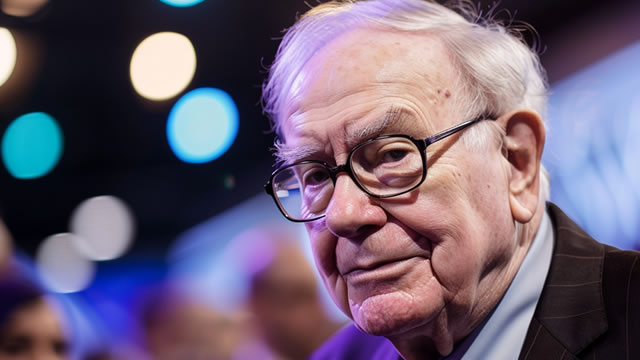
Berkshire Hathaway beyond Warren Buffett: The legacy and future
Youtube· 2025-12-25 11:00
Core Insights - Warren Buffett is stepping down as CEO of Berkshire Hathaway, with Greg Abel set to take over, marking a significant leadership transition for the company [3][27] - Berkshire Hathaway is characterized as a unique conglomerate with three main business engines: operating businesses, a stock portfolio, and an insurance business that provides a structural advantage through its float [4][5][6] - The company has shown strong performance, with a 120% increase over the last five years, outperforming the S&P 500, which increased by 80% during the same period [8] Business Structure - Berkshire Hathaway operates as a holding company with distinct segments: wholly-owned businesses, a diverse stock portfolio led by significant investments in companies like Apple, and an insurance business that generates float for investment [4][5][6] - The insurance segment, particularly Geico, plays a crucial role in providing capital for investments, allowing Berkshire to maintain a patient investment strategy [17][18] Financial Performance - Berkshire Hathaway's stock has performed well, particularly during market downturns, indicating resilience and effective capital allocation strategies [8][12] - The company currently holds over $300 billion in cash, raising questions about future capital deployment strategies under new leadership [13][31] Leadership Transition - The transition from Buffett to Abel is seen as a pivotal moment, with expectations that Abel may implement changes to enhance profitability and operational efficiency [28][30] - Shareholders express a desire for Abel to focus on capital management, including potential dividends and share buybacks, while maintaining the company's long-term value investment philosophy [31][43] Market Position and Valuation - Berkshire Hathaway is viewed as a lower-risk alternative to broader market investments, with a diverse portfolio that includes both cyclical and counter-cyclical businesses [54] - Current valuations are considered reasonable, with a price-to-earnings ratio that aligns closely with the overall market, although slightly above historical averages [55][56] Investor Sentiment - There is cautious optimism among investors regarding the future of Berkshire Hathaway post-Buffett, with expectations that the company's core values and operational culture will remain intact [58] - Concerns exist about the potential loss of the "Buffett premium," as many investors are drawn to the company due to Buffett's iconic status rather than its underlying fundamentals [60][61]

Warren Buffett and Private Equity Both Love Insurance. The Similarities End There.
WSJ· 2025-12-25 10:30
Investing insurance premiums is a different game on Wall Street than in Omaha. ...