
网约车

Search documents
Uber还有机会么?
美股研究社· 2026-01-26 10:27
Core Viewpoint - Uber is optimistic about launching autonomous ride-hailing services by 2026 in over 10 markets, aiming to maintain its competitive edge while forming full-stack partnerships, despite investor concerns about competition from Tesla and Waymo [3][4]. Group 1: Competitive Landscape - Uber has achieved over 20% returns in the past year but has underperformed compared to its industrial peers since mid-2025, facing potential long-term disruption from competitors like Tesla and Waymo [4]. - The argument for autonomous ride-hailing may not significantly impact the network economy until the end of the century, which currently provides Uber with a competitive advantage in its ride-sharing ecosystem [5]. - Analysts express concerns that if Waymo views platform ownership as key to maximizing value, the long-term sustainability of Uber's cooperative/competitive model with Waymo may be in jeopardy [5]. Group 2: Autonomous Vehicle Adoption - Analysts believe that by 2030, autonomous ride-hailing is unlikely to replace the entire ride-sharing market, with projections showing growth from 0.9% in 2026 to 7.5% [10]. - Uber's operational leverage and market leadership in many regions, including Southeast Asia, are bolstered by network effects from data and supply-demand aggregation [5][12]. Group 3: Financial Performance and Outlook - Uber's monthly active platform consumers (MAPCs) have steadily increased to 189 million, indicating the stickiness of its platform moat [12]. - Analysts are relatively optimistic about Uber's free cash flow (FCF) margin, expecting it to reach 18% by 2027, which is considered a strong profitability indicator compared to the industry median [14]. - Despite Tesla's recent peak valuations, Uber's forward P/E ratio of 20.7 is seen as attractive relative to the industry median of 22.8, suggesting a favorable risk/reward balance for investors [14][16].



曹操出行:计划投放10万辆完全定制Robotaxi,在全球范围展开商业化运营
Xin Lang Cai Jing· 2026-01-26 03:03
Core Insights - Cao Cao Mobility aims to deploy 100,000 fully customized Robotaxis globally by 2030, positioning itself as a key player in the Robotaxi commercialization landscape [1][3] Group 1: Business Foundations - The first major advantage lies in the vehicle hardware capabilities, with customized models like Fengye 80V and Cao Cao 60 designed to reduce total cost of ownership (TCO) and improve operational efficiency, achieving over a 30% reduction in total ownership costs compared to typical electric ride-hailing vehicles, with a cost per kilometer as low as approximately 0.47 yuan [1][3] Group 2: Service System Integration - The second advantage is the integrated service system, with Cao Cao Mobility having established 448 battery swap stations and 133 authorized maintenance outlets, providing benefits such as a 60-second battery swap and reduced maintenance time and costs, which can be upgraded for future Robotaxi fleets [2][4] Group 3: Operational Network - The third advantage is the operational network, having expanded to 163 cities and completed over 1.9 billion rides in ten years, earning the title of "Best Service Reputation" in multiple independent surveys [2][4] - In the first half of 2025, Cao Cao Mobility reported revenue of 9.456 billion yuan, a year-on-year increase of 53.5%, with a gross margin of 8.4%, up 1.4 percentage points year-on-year [2][4] - The company achieved a net cash inflow from operating activities of 325 million yuan, a significant year-on-year increase of 164.6%, indicating enhanced self-sustainability [2][4] - Daily order volume reached 2.108 million, a 50.6% increase year-on-year, with an average order value (AOV) rising to 28.9 yuan, and average monthly active users at 38.1 million, up 57.4% year-on-year [2][4]

山东越来越多新就业形态劳动者参加疗休养
Da Zhong Ri Bao· 2026-01-26 01:04
Group 1 - The core viewpoint of the news is that the provincial trade union will continue to deepen the "100,000 frontline workers' recuperation" program in 2025, with the number of participants expected to exceed 200,000 again after surpassing this figure in 2024 [1][2] - The provincial trade union has implemented management measures to standardize the recuperation activities, addressing previous challenges such as defining participants, content management, and unifying standards [1] - The recuperation activities have increasingly included new employment forms such as truck drivers, ride-hailing drivers, couriers, and delivery workers, expanding beyond traditional industrial workers and technical backbones [1] Group 2 - The recuperation program integrates ideological education with practical training, creating a "walking classroom" that combines recuperation routes with party education and national conditions observation [2] - The program is designed to align with major strategic initiatives, such as green low-carbon development and marine economy, effectively transforming recuperation sites into "empowerment stations" [2] - The activities incorporate skill enhancement elements, including technical observation, craftsman salons, and micro-classrooms, allowing workers to achieve "skill charging" during their recuperation [2]
新赛道竞逐 新力量崛起 新业态劳动者技能竞赛绘就成才新图景
Zhen Jiang Ri Bao· 2026-01-25 23:59
织密工会网络 筑牢竞赛"大舞台" 一场场高质量赛事的顺利落地,离不开坚实的组织保障。2024年3月19日,市新工联正式成立,让 分散在各个新业态领域的劳动者有了专属"娘家人"。仅用10天时间,便实现市、县两级新业态行业工会 联合会全覆盖,在全省率先搭建起"纵向到底、横向到边"的立体化组织网络。 这张高效的组织网络,成为技能竞赛常态化开展的核心支撑。通过畅通的信息传递渠道,竞赛通知 能够精准直达一线劳动者,确保每一位有潜力、有追求的从业者都能知晓赛事、参与竞赛。 同时,市 新工联以组织网络为纽带,将行业资源、人才资源与赛事需求精准对接,使技能竞赛从"零散的行业活 动"升级为有规划、可持续的系统性人才孵化工程。 百余名主播同台比拼直播话术与数据分析,50名快递员角逐易碎品收寄与最优派送路线设计,57名 网约车司机比拼精细化驾驶与服务礼仪……近年来,镇江市网络直播技能大赛、快递员职业技能竞赛、 网约车司机技能竞赛等一系列重量级赛事接连上演,在新业态领域掀起"以赛促学、以赛提技"的热潮。 这一系列赛事的成功举办,正是镇江市新就业形态劳动者行业工会联合会(以下简称 "市新工 联")践行"以赛赋能、以赛育才"的扎实实践举 ...
景区出租车司机干不成“黑车”干起了“导游” 从打车误点到高价拼车:景区周边交通短板待补
Yang Zi Wan Bao Wang· 2026-01-25 11:22
1月25日上午,2026年江苏省心理咨询行业发展年会暨创新研讨会在南京紫金山东郊国宾馆举办。尽管记者提前一天规划路线、咨询酒店,并提早一小时 出发,最后还是被"黑出租车"送到了会场。记者在社交媒体搜索发现,此类投诉确实不少,记者还在实地调查中发现,现在的黑车司机又有了新的形式: 当"导游"带您"包车游"。记者了解到,为了杜绝黑车,景区已经禁止机动车上午9点后进入中山陵,但仍有少数车辆"铤而走险",也提醒广大旅客朋友们 不要轻信出租车拼车、"包车游"。 事件还原:规划周全仍遇波折 记者通过多方咨询,得知可以步行去地铁站坐班车,或者可以在明孝陵坐电动班车,10元/人,但只能送到宾馆大门口,走进去还要5分钟。此时,路边数 辆出租车主动招揽乘客。司机表示,前往东郊国宾馆需收取30元费用,拒绝打表。为赶时间,记者支付20元乘车抵达。 途中司机透露,目前景区限行,黑车也不好干,他们在景区周边最喜欢以拼车形式运营,每人收费10元至地铁站,四人一车,但更倾向于承接"导游包 车"业务,带领游客前往明孝陵博物馆等外围景点,收费由双方协商,并无统一标准。"一圈下来,你们也省钱也省力,省时间,一圈连车费、导游、司机 都在里面,你套票 ...
中国公司全球化周报|荣耀、倍思、努比亚等50+品牌签约速卖通品牌出海/《明日方舟:终末地》全球公测,阿里云提供技术支撑
3 6 Ke· 2026-01-25 07:20
Group 1: Events and Forums - The "Dubai Business Forum - China" will take place in Shenzhen on May 14, 2026, focusing on the theme "Working Together for New Economic Growth" to introduce Dubai's economic agenda (D33) and explore new paths for cooperation and strategic investment between Chinese and Dubai businesses [2] Group 2: Company Developments - Over 50 brands, including Honor, Baseus, and Nubia, have signed with AliExpress for the "Super Brand Going Global Plan" to accelerate overseas market expansion, particularly in high-value categories like consumer electronics and smart hardware [3] - Eagle Network's new game "Arknights: Endfield" has launched globally, supported by Alibaba Cloud to handle high concurrency demands during the launch, ensuring smooth operation and real-time player interaction [3] - TikTok Shop in Southeast Asia is projected to double its GMV by 2025, with daily GMV increasing by 90% year-on-year, indicating a significant consumption upgrade in the region [4] - Ninebot has initiated Malaysia's first autonomous vehicle testing project in collaboration with local postal and logistics companies, with over 16,000 autonomous vehicles already operating globally [4] - Jiutian Chuangzhi signed a multi-million dollar order in Oman for autonomous cleaning vehicles, expanding its market reach to Malaysia, Turkey, and Palestine [5] - Cao Cao Mobility plans to deploy 100,000 customized Robotaxis globally by 2030, transitioning towards unmanned operations [5] - Baidu's "Luobo Kuaipao" has launched a fully autonomous driving service in Abu Dhabi, marking its first overseas public service [6] - Cainiao's global overseas warehouse order volume is expected to grow by 32% year-on-year by 2025, with plans for expansion and automation upgrades in key markets [6] - JD Logistics and Honor are collaborating to build overseas warehouses in the Middle East, aiming to support Honor's mobile phone sales in Saudi Arabia [6] - Ant International's Alipay+ has connected with Italy's Tinaba digital wallet, enabling seamless payment solutions for Chinese merchants [7] - UBTECH has partnered with Airbus to deploy humanoid robots in manufacturing processes, with significant order growth expected in the coming years [7] - Longi Green Energy is collaborating with NeoVolta to build an 8GWh battery storage manufacturing plant in Georgia, USA, to meet growing energy storage demands [7] Group 3: Investment and Financing - Zhongke Kelan has completed a multi-million angel round financing to accelerate product development and international expansion of its biodegradable plastics [8] - Yanhua Technology has secured nearly 100 million yuan in A1 round financing to enhance production capacity and global market reach for its perovskite solar cells [8] - Muxin Intelligent has completed a B round financing exceeding 100 million yuan, focusing on product development and global market channel expansion [9] Group 4: Market Trends - The overseas micro-short drama market is expected to exceed $5 billion by 2026, with Chinese apps capturing 90% of the market share [10] - Despite high tariffs, Chinese electric vehicle sales in Europe surged by 127% year-on-year in December 2025, with market share doubling to 9.5% [10]




特斯拉:2026年晴空万里,但2027年的风暴可能腰斩估值
美股研究社· 2026-01-23 10:55
Core Viewpoint - Tesla has transformed from a struggling electric vehicle startup in 2015 to a major player in the S&P 500 with a market capitalization of $1.39 trillion, despite initial skepticism about its valuation [1] Group 1: Investment Perspective - Tesla's investment outlook is complex, requiring an evaluation of its various segments: automotive, energy, and future growth areas like Full Self-Driving (FSD), Robotaxi, and Optimus [2] - Analysts initially expected to be bearish on Tesla due to limited contributions from FSD and Robotaxi, but found that short- and medium-term growth targets appear achievable [2] - Despite a valuation around $435, analysts believe there is significant potential for Tesla to meet or exceed market expectations in the upcoming quarters [2][4] Group 2: Financial Performance - Tesla's automotive sales for Q3 2025 were $20.359 billion, with total revenues from sales and services reaching $27.532 billion, reflecting an 8.3% year-over-year growth [7][8] - The energy business has become a significant growth driver, with sales of $3.281 billion in Q3 2025, representing a 43.5% year-over-year increase [8][10] - The traditional automotive business, including FSD, generated $24.7 billion in revenue, accounting for 87.8% of total revenue, despite facing cyclical headwinds [8][10] Group 3: Future Growth Segments - Future business segments like Robotaxi and Optimus are still in early monetization stages and have not yet contributed to Tesla's sales [9] - Analysts project a valuation of $175 billion for Robotaxi and $522.5 billion for Optimus, indicating a significant portion of Tesla's market value is based on unproven future products [11][12] Group 4: Short-term, Medium-term, and Long-term Outlook - Short-term expectations for Q4 2025 are set at $24.75 billion in revenue, with analysts anticipating a slight beat against conservative estimates [15][18] - Medium-term projections for 2026 estimate revenues of $107.4 billion, driven by growth in energy and FSD, while traditional automotive sales need to stabilize [22][23] - Long-term growth expectations hinge on the successful rollout of Robotaxi and Optimus, with significant revenue increases required to meet future targets [24][25] Group 5: Analyst Sentiment - Analysts currently hold a "hold" rating on Tesla, leaning bullish in the short term due to potentially low expectations for upcoming earnings [4][27] - The outlook becomes increasingly uncertain as the timeline extends, with the need for substantial growth from new technologies to justify current valuations [26][27]

T3出行自主研发大模型入选2025年汽车人工智能应用案例集
Yang Zi Wan Bao Wang· 2026-01-23 10:34
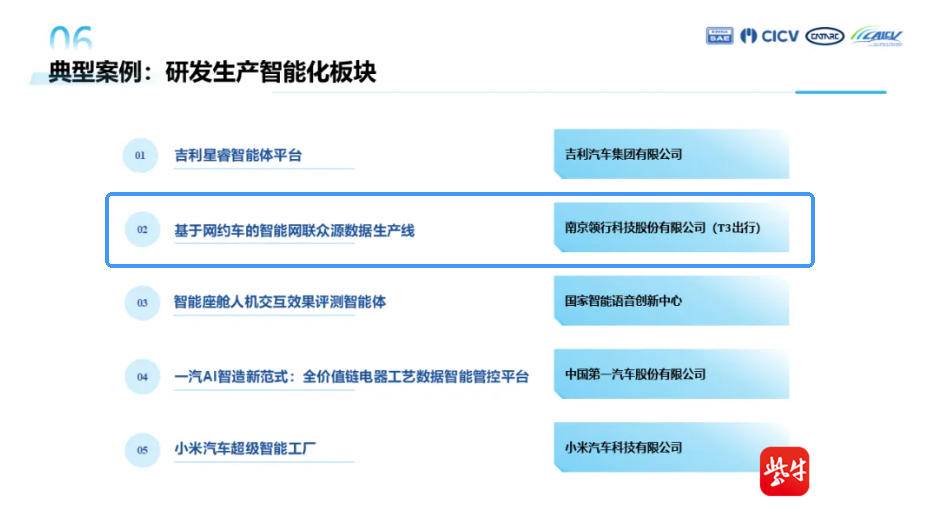
学会名誉理事长、中国工程院院士、清华大学教授李骏指出,生成式人工智能、新型人工智能技术和数据驱动是当前中国车载人工智能发展的三个重要领 域,正深度重塑汽车的产品定义、研发流程和产业生态。此次T3出行自主研发的"基于网约车的智能网联众源数据生产线"正是聚焦数据驱动领域。当前, 智能驾驶数据需求激增,长尾场景(如极端天气、复杂路口)采集成本高昂,人工标注效率低下,且合规要求增加了数据处理难度。 为进一步解决这一产业痛点,T3出行依托日均峰值300万订单的网约车数据,打造了多模态大模型驱动的自动化数据生产线。经数据采集、合规脱敏、智 能挖掘、自动标注等全流程处理,支撑智能驾驶研发、座舱交互化、地图更新和城市交通治理。此外,该大模型已赋能多家相关企业,重构数据资产价 值,其衍生的数据服务年创收超亿元,让出行数据转化为实实在在的产业动能。 当网约车化身流动的数据智能体,城市每一条街道都成为哺育人工智能的母体。2025年9月份,在南京市数据局见证下,T3出行还与江苏省测绘工程院达 成战略合作,双方联手打造智能汽车数据流通平台,共同推进智能网联汽车数据要素的市场化流通与应用。当前,T3出行正以规模车辆集群为基座,浇 筑自动 ...
这个团支部集结了2000多名“活雷锋”
Zhong Guo Qing Nian Bao· 2026-01-23 06:32
"您好,欢迎来到许昌!"每逢节假日,河南省许昌市许昌东高速路口的车流络绎不绝,一群身着红马甲 的年轻人格外亮眼。他们忙着为下高速的外地游客递上饮用水、发放旅游指南,帮着搬运行李等,致力 于用贴心的服务,让游客一下高速就感受到许昌这座城市的温暖。 他们是许昌市建安区学雷锋服务中心团支部集结的团员和大学生青年志愿者。在建安区,还有很多活跃 在基层治理一线的新兴领域团员和青年志愿者。他们来自快递、外卖、理发、网约车等不同行业,但却 有着同一个身份——建安区学雷锋服务中心成员。 凝聚"青"力量,织密服务网 每逢寒冬腊月,建安区学雷锋服务中心的快递小哥巡逻队就会变身"暖冬使者",他们利用送货间隙,为 辖区困境家庭送去棉衣、棉鞋等物资。快递员李明(化名)说:"我们每天走街串巷,对社区情况最熟 悉,哪家老人行动不便,哪家孩子需要帮助,我们都门儿清。送快递的同时顺便送份温暖,一举两 得!" 在"爱心义剪"项目中,青年志愿者同样发挥了独特作用。他们中既有专业理发师,也有外卖骑手、网约 车司机等。他们利用休息时间不定期前往社区、敬老院,为孤寡老人、行动不便者免费剪发,5年来共 开展义剪活动240余场,行程2.9万多公里,服务老人 ...
曹操出行盘中涨超6% 计划2030年投放10万辆完全定制Robotaxi
Zhi Tong Cai Jing· 2026-01-23 03:14
消息面上,1月22日,在吉利控股集团战略解析会上,曹操出行宣布,计划到2030年累计投放10万辆完 全定制Robotaxi,在全球范围开启全面商业化运营。作为吉利控股集团Robotaxi最重要的商业化载体, 曹操出行具备Robotaxi发展所需的全部关键要素,形成了独特的"智能定制车+智能驾驶技术+智能运 营"三位一体发展模式。 目前,曹操出行第二代Robotaxi已开展试点运营。公司正持续提升大规模车队的自动化运营能力,将推 出曹操智行RAS远程安全服务平台,并全面应用智能化资产管理系统,进一步将运营优势与智能座舱、 智能驾驶技术深度融合。在Robotaxi2.0阶段,公司将逐步实现从主驾安全员到无人化运营的平稳过渡, 并探索有人驾驶与无人驾驶混合运营模式。 曹操出行(02643)盘中涨超6%,截至发稿,涨3.97%,报34.6港元,成交额6159.19万港元。 ...