芯片设计

Search documents
新股消息 | 云英谷科技港股IPO招股书失效
Xin Lang Cai Jing· 2025-12-29 11:57
Core Viewpoint - Yunyinggu Technology Co., Ltd. is a leading global designer of AMOLED display driver chips, focusing on providing reliable and high-performance display driver solutions for consumer electronics brands [1] Group 1: Company Overview - Yunyinggu Technology submitted its Hong Kong IPO prospectus on June 26, which became invalid after six months on December 26 [1] - The company is co-sponsored by China International Capital Corporation and CITIC Securities [1] Group 2: Product Offerings - The company offers two main product categories: AMOLED display driver chips, primarily used in high-end smartphones [1] - It also provides Micro-OLED display backplanes/drivers, mainly for AR/VR head-mounted devices [1]


“我可能早了,但没错!”大空头Burry再次逆市而为,做空AI双雄英伟达和Palantir
Hua Er Jie Jian Wen· 2025-12-29 08:59
Core Viewpoint - Michael Burry, known for predicting the subprime mortgage crisis, believes that the AI sector, particularly companies like Nvidia and Palantir, is forming a bubble similar to the internet bubble, and he has taken short positions in these stocks through options trading [1]. Group 1: Market Position and Strategy - Burry has invested approximately $10 million in put options against Nvidia and Palantir, with potential returns exceeding $1 billion if a market crash occurs as he anticipates [1]. - He has publicly criticized Nvidia's internal memo, claiming it is filled with "straw man arguments" and suggests that the real risks are being obscured [1][5]. Group 2: Concerns about Nvidia - Burry's main concerns regarding Nvidia focus on the capital expenditures of its clients, which he believes are at risk of significant asset write-downs due to rapid technological advancements [1][5]. - He argues that Nvidia's clients, such as Microsoft and Meta, may extend the depreciation period of their GPUs to enhance short-term profits, which could lead to future financial issues as new technology renders existing hardware obsolete [5]. Group 3: Concerns about Palantir - Burry criticizes Palantir for its heavy reliance on government contracts and excessive executive compensation, as well as facing intense competition from companies like IBM [6]. Group 4: Historical Context and Market Reactions - Despite Burry's past successes, he has faced skepticism due to several failed predictions over the last 15 years, leading to a perception that he often enters positions too early [8]. - Burry's previous call to "sell" in early 2023 was followed by a significant market rally, which he later acknowledged as a mistake, but he defended his overall investment strategy [8].


上海芯片独角兽,冲刺港股IPO!
Sou Hu Cai Jing· 2025-12-29 07:17
Core Viewpoint - TianShuZhiXin has passed the Hong Kong Stock Exchange hearing and disclosed its prospectus, marking a significant step in its development and reflecting the robust growth of domestic GPU chip capabilities in the global market [1][17]. Company Overview - TianShuZhiXin, headquartered in Shanghai, is a leading provider of general-purpose GPU chips and AI computing solutions in China. Its main products include general-purpose GPU chips, accelerator cards, and customized AI computing solutions [4]. - The company is the first in China to achieve mass production of inference and training general-purpose GPU chips and the first to utilize 7nm advanced technology for chip production in the domestic GPU sector [4]. Product Focus - The company focuses on AI computing needs, which have evolved into two main areas: training and inference. Training requires intensive computing power, while inference emphasizes efficient model deployment and execution [6]. - TianShuZhiXin offers two main product lines: TianGai for training and ZhiKai for inference, addressing the complementary computing needs of these areas [6][8]. Product Development - The TianGai series is designed specifically for AI model training, with the first generation launched in September 2021. The second generation is set for mass production in Q4 2023, and the third generation is expected in Q3 2024 [8]. - The ZhiKai series, launched in February 2023, is the first general-purpose GPU product designed for inference, optimized for various deployment scenarios [8]. Financial Performance - TianShuZhiXin has seen rapid growth in customer base, shipment volume, and revenue, with the number of customers increasing from 22 in 2022 to 181 by 2024. The company has completed over 900 deployments across various industries [13]. - Revenue has grown from 189 million RMB in 2022 to 540 million RMB in 2024, with a compound annual growth rate of 68.8%. However, the company has not yet achieved profitability, recording significant net losses during this period [14][15]. Research and Development - The company places a strong emphasis on R&D, with expenditures significantly exceeding revenue. R&D spending from 2022 to 2024 was 457 million RMB, 616 million RMB, and 773 million RMB, respectively [15]. - The R&D team consists of 484 members, with over one-third having more than ten years of industry experience, and the company holds numerous patents and trademarks [15]. Market Outlook - The general-purpose GPU market in China is experiencing rapid growth, with a projected compound annual growth rate of 33.0% from 2025 to 2029. Domestic GPU companies are expected to increase their market share significantly [16]. - TianShuZhiXin's listing is anticipated to further activate the domestic GPU industry ecosystem and support China's competitive position in global AI computing [17].

当轨交电气设备遇上电力通信芯片,通业科技与思凌科1+1>2的“战略联姻”
Quan Jing Wang· 2025-12-29 00:43
Core Viewpoint - The acquisition of the chip design company Silingke by Tongye Technology marks a strategic expansion into the power IoT communication chip sector, indicating the company's intent to establish a "second growth curve" beyond its core rail transit equipment business [1][13]. Group 1: Acquisition Details - Tongye Technology plans to acquire 91.69% of Silingke for 561 million yuan, a reduction from the previously proposed 100% acquisition [3]. - The valuation of Silingke has been adjusted from a maximum of 670 million yuan to 612 million yuan due to minor discrepancies in financial data, alleviating some financial pressure on Tongye Technology [2]. - The acquisition will be financed partly through a loan from Tongye's actual controllers, which will help reduce external financing needs and financial costs [2]. Group 2: Financial Performance of Silingke - Silingke, founded by a team of PhD researchers from the Chinese Academy of Sciences in 2016, focuses on the research, design, and sales of IoT communication chips, particularly for power systems [4]. - The company has shown stable financial performance with projected net profits of 27.71 million yuan and 20.36 million yuan for 2023 and 2024, respectively [5]. - Silingke's revenue from self-developed chips has consistently accounted for over 89% of its main business income in recent years [5]. Group 3: Synergies and Strategic Fit - The merger is expected to create synergies in business, technology, marketing, and management between Tongye Technology and Silingke, enhancing operational efficiency [8][9]. - Tongye Technology's existing products can integrate Silingke's communication chips, improving communication efficiency and reducing construction difficulties in rail transit systems [9]. - Both companies share similar customer bases, allowing for streamlined marketing and service integration post-acquisition [10]. Group 4: Profit Commitment and Future Outlook - Silingke's core team has committed to achieving a cumulative net profit of no less than 175 million yuan over three years, which aligns with reasonable valuation metrics compared to similar acquisitions [11][12]. - The acquisition is seen as a strategic move to tap into the growing power IoT chip market, which is supported by favorable policies and has significant growth potential [13].

我 投资人 还在重仓芯片设计
投中网· 2025-12-28 07:01
Core Viewpoint - The article discusses the challenges and opportunities in the IC design industry, particularly focusing on the emergence of LingShuo Technology, a Sino-French joint venture, which has secured angel funding to develop high-performance automotive chips based on the RISC-V architecture [2][5][11]. Industry Overview - The past decade has been a golden era for domestic IC design in China, marked by a surge in investment following the "chip shortage" in 2021. However, since 2023, the industry has cooled down, with few companies successfully navigating mergers or going public [3]. - The high-end automotive MCU design sector is particularly struggling, with a consensus among investors to avoid this area due to high labor costs, stringent testing processes, and low profit margins [3][5]. LingShuo Technology's Strategy - LingShuo Technology aims to challenge the dominance of foreign giants in the ASIL-D level automotive domain control chip market, which is currently over 90% controlled by companies like Infineon, NXP, and Renesas [7]. - The company has chosen to focus on the open-source RISC-V architecture, abandoning the mainstream ARM architecture, and plans to leverage its strong technical foundation and shareholder support to bring its Ulyss2 chip to market [10][12]. Market Dynamics - The automotive industry is increasingly recognizing the need for domestic alternatives to high-end MCUs, especially after the chip shortage highlighted vulnerabilities in the supply chain. However, the stringent safety requirements for ASIL-D chips pose significant challenges for domestic manufacturers [8][9]. - LingShuo Technology's approach, supported by its founding shareholders, aims to address these challenges by utilizing proven RISC-V technology and established market channels [10][11]. Investment Insights - The recent angel funding round led by Licheng Capital reflects confidence in LingShuo Technology's potential to become a leading player in the domestic automotive chip market, particularly in the high-safety segment [2][15]. - Licheng Capital emphasizes the importance of RISC-V architecture in the MCU and SoC design fields, recognizing the strategic advantages of LingShuo's technology and market positioning [16][17].

峰岹科技7.1亿元买楼建总部
Shen Zhen Shang Bao· 2025-12-27 20:50
Core Insights - Leading technology companies are intensifying their presence in Shenzhen, with firms like Douyin, Xiaomi, and Vivo establishing new office buildings to enhance their research and development capabilities [1][3]. Group 1: Company Developments - Fengcai Technology plans to purchase a property in Qianhai for approximately 710 million RMB, covering an area of 25,204.97 square meters, to support its expansion and R&D needs [1][2]. - In the first three quarters of the year, Fengcai Technology reported revenues of 558 million RMB, a year-on-year increase of 28.88%, while its net profit attributable to shareholders decreased by 9.01% to 167 million RMB [1]. Group 2: Industry Trends - The demand for quality office spaces in Shenzhen is being driven by the growth of the technology sector, which has maintained the top position in demand for seven consecutive quarters, accounting for 25% of the market [3]. - Major tech companies are focusing on Shenzhen due to its robust electronic information industry cluster, which offers significant advantages in supply chain efficiency and access to talent [4].

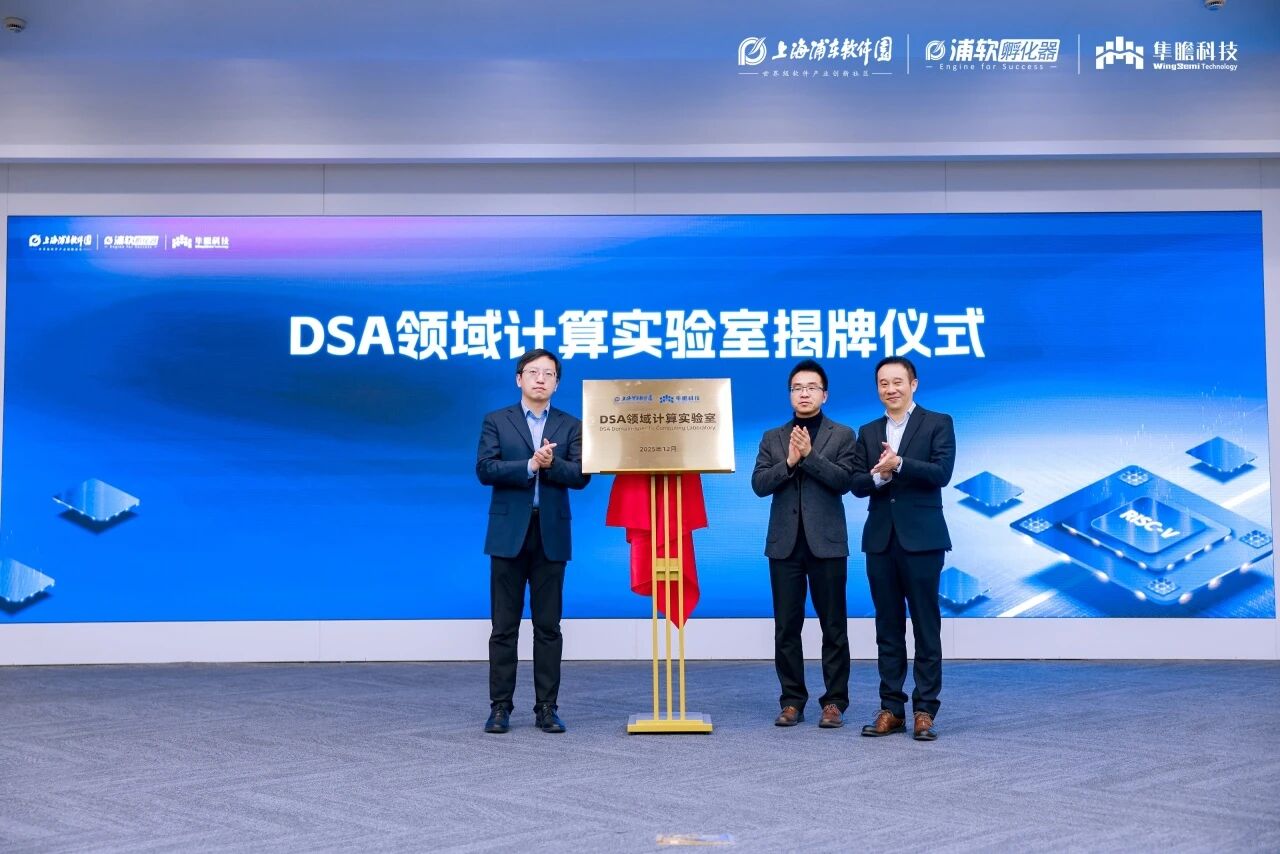
领域专用架构(DSA)领域计算实验室在沪揭牌
Xin Lang Cai Jing· 2025-12-27 06:22
领域专用架构是一种芯片设计方法,专注于为特定应用领域(如人工智能推理、高频交易或视频编解码)优化性能与能效。它通过定制化硬件单元(如专用 指令集和加速器),针对核心算法进行深度优化,从而在特定任务上显著超越通用处理器。2025年,中国领域专用架构的发展呈现出多技术路线并行、关键 应用场景突破和生态体系逐步完善的态势。 转自:新华财经 上海浦东软件园股份有限公司副总经理、浦软创投董事长童剑飞表示,上海浦东软件园携手隼瞻科技共建领域专用架构领域计算实验室,旨在进一步联动 产、学、研、用各方资源,以平台为纽带、以生态为依托,打造第五代精简指令集架构与人工智能融合创新的"引力场"和"加速器",推动更多前瞻性方案从 构想走向现实。 新华财经上海12月27日电(记者 高少华)领域专用架构(DSA)领域计算实验室26日在上海正式揭牌。该实验室由第五代精简指令集架构(RISC-V)工委 会牵头,上海浦东软件园与隼瞻科技联合发起,旨在促进成果转化及行业创新发展,未来将打造成为推动第五代精简指令集架构与人工智能协同创新、加速 专用处理器落地的重要载体。 隼瞻科技创始人兼首席执行官曾轶表示,在全球算力需求多元化升级、技术迭代周期持 ...
【IPO前哨】冲刺半导体“A+H”股,龙迅股份能否撬动千亿国产替代市场?
Sou Hu Cai Jing· 2025-12-26 05:55
Core Viewpoint - The semiconductor industry is experiencing a surge in "A+H" listings, with companies like Longxin Co., Ltd. and others pursuing dual listings to capitalize on market opportunities and enhance capital resources [2][3]. Company Overview - Longxin Co., Ltd. is a leading domestic high-speed mixed-signal chip designer, focusing on efficient and reliable data transmission for smart terminals and AI applications [4][6]. - The company has established a strong market position, ranking first in China and among the top five globally in the video bridge chip market [6]. Financial Performance - Longxin Co., Ltd. has demonstrated impressive financial metrics, with a gross margin exceeding 53% and a net profit margin around 30%, outperforming peers [7]. - The company reported a revenue of 389 million RMB for the first three quarters of 2025, reflecting a year-on-year growth of 16.67%, and a net profit of 125 million RMB, up 32.47% [6][7]. Revenue Breakdown - The company's revenue is primarily derived from smart visual terminals, which accounted for 79.3% of total revenue in the first three quarters of 2025 [8]. - The smart vehicle segment has shown significant growth but is currently facing challenges, while the AI & HPC segment remains small but is expected to grow due to ongoing investments in high-speed transmission protocols [8]. Market Opportunities - The high-speed mixed-signal chip sector presents substantial growth potential, with a current domestic localization rate below 5%, indicating significant room for domestic manufacturers to capture market share [9]. - The market for smart video and interconnect chips is projected to reach a scale of hundreds of billions by 2024, providing ample opportunities for domestic firms [9]. Industry Dynamics - The semiconductor industry is benefiting from supportive domestic policies and technological advancements, which are accelerating development and creating opportunities for local companies [11]. - Longxin Co., Ltd. faces intense competition in technology, particularly in core areas like vehicle SerDes, where it must invest heavily in R&D to keep pace with international leaders [12].


合肥芯片小巨人赴港,挑战 TI、ADI 霸权
是说芯语· 2025-12-26 03:40
Core Viewpoint - Longxin Semiconductor, a "little giant" enterprise specializing in high-speed mixed-signal chips, has submitted its prospectus to the Hong Kong Stock Exchange, marking a significant step towards entering the capital market [1]. Group 1: Company Overview - Founded in November 2006, Longxin Semiconductor focuses on high-speed mixed-signal chip design, aiming to create efficient and reliable "data highways" for smart terminals, devices, and AI applications [3]. - As a typical Fabless company, Longxin Semiconductor outsources wafer manufacturing and testing to external suppliers, concentrating resources on core technology research and product design, aligning with current industry trends [3]. Group 2: Market Position and Performance - According to authoritative data from Frost & Sullivan, Longxin Semiconductor ranks first in the domestic video bridge chip market and is among the top five Fabless design companies globally, with a projected revenue of 400 million yuan in 2024 and a market share of 3.7% in the global video bridge chip market [3]. - The company has developed a rich product matrix with 261 chip products as of September 30, 2025, including 151 smart video chips and 110 interconnect chips, widely used in smart visual terminals, automotive applications, AR/VR, and AI & HPC [4]. Group 3: Technology and Competitive Edge - Longxin Semiconductor's proprietary ClearEdge technology platform integrates high-bandwidth SerDes, protocol processing, encryption, and high-definition video processing, supporting single-channel transmission rates of up to 20 Gbps, with related IP achieving 100% mass production [4]. Group 4: Client Base and Market Challenges - The company's clients include well-known enterprises such as Visionox, Thunderbird, and Rokid, and it has established reference design collaborations with Nvidia and Qualcomm, laying a solid foundation for market promotion [7]. - Despite its leading position in the domestic market, Longxin Semiconductor faces significant competition from global giants, with Texas Instruments holding a 36.1% market share and Analog Devices at 21.2%, indicating substantial room for growth for Longxin's 3.7% market share [7]. - The company’s R&D expenditure for 2024 is 99.97 million yuan, significantly lower than the over 1 billion yuan spent by its top five global competitors, highlighting the pressure for technological iteration [7]. - Operational efficiency challenges are evident, with inventory turnover days exceeding the industry average by 80.6% and accounts receivable turnover days surpassing the average by 65.3%, indicating a need for improvement post-capital market entry [7].

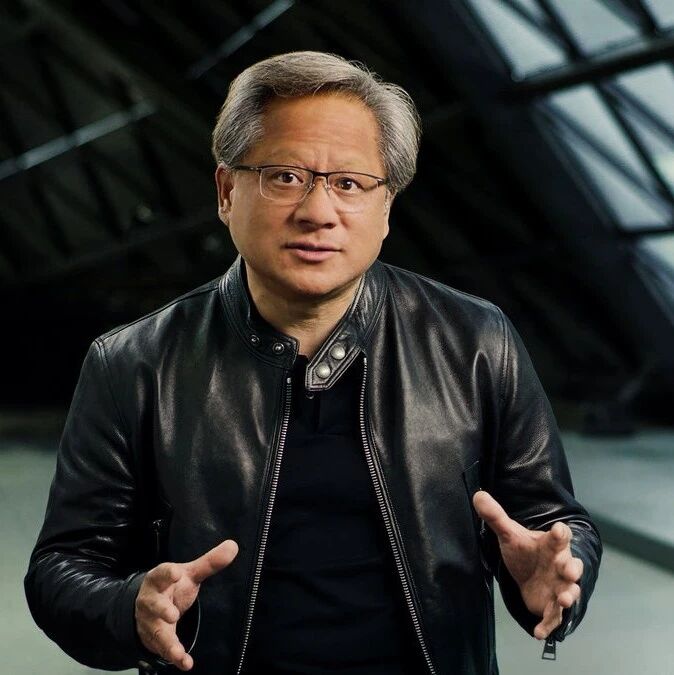
刚刚,黄仁勋回应
半导体芯闻· 2025-12-25 10:20
Core Viewpoint - NVIDIA has agreed to acquire Groq's intellectual property for $20 billion in cash, marking the largest acquisition in NVIDIA's history, although it does not involve the purchase of Groq as a company [2][3]. Group 1: Acquisition Details - The acquisition will allow NVIDIA to integrate Groq's low-latency processors into its AI factory architecture, expanding its capabilities for AI inference and real-time workloads [4]. - Groq's revenue target for this year is set at $500 million, driven by the increasing demand for AI acceleration chips [4]. - Groq will continue to operate as an independent company, with its cloud business, GroqCloud, remaining unaffected by the acquisition [3][4]. Group 2: Financial Context - Prior to this acquisition, NVIDIA's largest acquisition was the $6.9 billion purchase of Mellanox in 2019 [3]. - As of the end of October, NVIDIA holds $60.6 billion in cash and short-term investments, a significant increase from $13.3 billion at the beginning of 2023 [3].