
Agriculture

Search documents
清远:“五大百亿”领航,千亿集群扬帆
Nan Fang Nong Cun Bao· 2025-08-25 06:36
Core Viewpoint - The article discusses the strategic development of the agricultural industry in Qingyuan, focusing on the goal of establishing five major billion-dollar industries to enhance the overall agricultural output and competitiveness of the region [8][14][18]. Group 1: Industry Development Goals - Qingyuan aims to develop five major agricultural industries: Qingyuan chicken, Yingde black tea, Lianzhou vegetable, silk seed rice, and bamboo shoots, each targeting a billion-dollar output within approximately three years [13][14]. - The city has set a target for the comprehensive output value of these five industries to exceed 40 billion yuan by the end of 2024, with a growth rate of over 30% for two consecutive years [18][19]. Group 2: Strategic Measures - Qingyuan is implementing a "five transformations" strategy focusing on scale, aggregation, standardization, branding, and marketization to enhance the quality and efficiency of its agricultural sectors [16][23]. - The city has introduced ten measures to promote the full industrial chain construction of the five major industries, driving quality improvement and efficiency [17]. Group 3: Market Expansion and Brand Development - Qingyuan has successfully introduced several leading enterprises, including JD.com and Pinduoduo, to boost the standardization and branding of its agricultural products [22]. - The article highlights the growing popularity of Qingyuan's agricultural products in various markets, including Hong Kong and South Africa, indicating a strong demand and successful brand recognition [26][28][29]. Group 4: Technological Advancements - The article emphasizes the importance of agricultural mechanization in improving production efficiency and reducing labor costs, with plans to enhance the mechanization and modernization of agricultural equipment [36][40]. - Qingyuan is also focusing on the development of seed quality and resource protection, particularly for its unique agricultural products like Qingyuan chicken and bamboo shoots [43][48]. Group 5: Future Prospects - Qingyuan is exploring the "five major billion-dollar+" strategy to transform more local specialties into large-scale industries, aiming to create a modern agricultural industry cluster worth over 100 billion yuan [56][57]. - The city is committed to integrating agricultural production with tourism and health industries to enhance the added value of its agricultural products [51].


1500余家上市公司披露半年报六成净利润同比增长
Zhong Guo Zheng Quan Bao· 2025-08-22 20:10
Core Insights - A total of 1526 A-share listed companies disclosed their 2025 semi-annual reports, with 921 companies achieving year-on-year net profit growth, representing approximately 60.35% [1] - The electronic, transportation, agriculture, automotive, machinery, non-ferrous metals, home appliances, and social services sectors showed strong performance [1] Group 1: Company Performance - Among the 1526 companies, 761 reported net profit growth exceeding 10%, 501 exceeded 30%, 359 exceeded 50%, 210 exceeded 100%, and 66 exceeded 300% [1] - Notable companies with significant net profit growth include Shumatech, XianDa Co., Zhimingda, Rongzhi Rixin, Shijia Photon, and Suotong Development [1] - 567 companies reported net profits over 100 million yuan, 180 over 500 million yuan, 88 over 1 billion yuan, 19 over 5 billion yuan, and 8 over 10 billion yuan [2] - China Mobile, Kweichow Moutai, CATL, China Telecom, Sinopec, Industrial Fulian, Muyuan Foods, Huaneng International, and Luoyang Molybdenum were among the top net profit earners [2] Group 2: Industry Performance - The electronic, transportation, agriculture, automotive, machinery, non-ferrous metals, home appliances, and social services sectors showed strong revenue performance [3] - In the electronic sector, companies in consumer electronics and semiconductors performed exceptionally well [3] - In agriculture, companies in breeding and animal health sectors showed significant performance improvements [3] - Muyuan Foods achieved revenue of 764.63 billion yuan, a year-on-year increase of 34.46%, and net profit of 107.9 billion yuan, a year-on-year increase of 952.92% [3] Group 3: Dividend Announcements - A total of 265 A-share listed companies announced their 2025 mid-term dividend plans [4] - 188 companies plan to distribute cash dividends exceeding 1 yuan per 10 shares, 77 companies exceeding 3 yuan, 38 companies exceeding 5 yuan, and 15 companies exceeding 10 yuan [4] - Notable companies with high cash dividends include JiBit, Ninebot, Shuoshi Bio, China Mobile, Dongpeng Beverage, Siwei Liekong, Dong'a Ejiao, and Aimeike [4] - Among the 265 companies, 111 plan to distribute over 100 million yuan, 77 over 200 million yuan, and 37 over 500 million yuan in dividends [4] Group 4: Specific Company Announcements - China CNR announced revenue of 1197.58 billion yuan, a year-on-year increase of 32.99%, and net profit of 72.46 billion yuan, a year-on-year increase of 72.48% [5] - The company plans to distribute cash dividends of 31.57 billion yuan [5]






商品市场持仓与资金流向_全球商品市场持仓价值跌破 10 年季节性高位-Commodity Market Positioning & Flows_ Global commodity market open interest value dips below 10-year seasonal high
2025-08-22 01:00
Summary of J.P. Morgan Commodity Market Positioning & Flows Industry Overview - The report focuses on the global commodity market, specifically analyzing open interest values and investor positioning across various sectors including energy, precious metals, base metals, and agricultural commodities [3][7][10]. Key Points and Arguments Global Commodity Market Trends - The estimated value of global commodity market open interest declined by **1.0% week-over-week (WOW)**, decreasing by **$14 billion** to **$1.47 trillion**, falling below the 10-year seasonal high [3][7]. - The net investor position across global commodity futures markets decreased by **3.3% WOW**, amounting to **$124 billion** as of August 12 [3][14]. Sector-Specific Insights - **Energy Markets**: - Open interest value in energy markets decreased by **$6 billion WOW**, marking the third consecutive weekly decline, primarily due to price weakness amid ongoing geopolitical tensions [3][20]. - Global oil demand growth is tracking at **0.92 million barrels per day (mbd)**, slightly below the estimated **0.94 mbd** for the year-to-date [3]. - **Precious Metals**: - Open interest in precious metals markets fell by **5.9% WOW** to **$245 billion**, driven by significant outflows from gold markets totaling **$9.7 billion** [3][25]. - The People's Bank of China (PBoC) continued its gold buying streak, adding **2 tonnes** to its reserves in July, with year-to-date purchases reaching **21 tonnes** [4]. - **Base Metals**: - Open interest in base metals increased by **2.3% WOW** to **$175 billion**, with net inflows concentrated in copper and nickel [6][24]. - **Agricultural Commodities**: - Open interest value in agricultural markets rose by **1.4% WOW** to **$330 billion**, driven by rising prices in grains and oilseeds [6][27]. - The USDA reported record high US corn and soybean yields, with corn at **188.8 bushels per acre** and soybeans at **53.3 bushels per acre** [6]. Price Momentum and Market Signals - Price momentum across commodities was mixed, with declines in most metals and energy markets, while agricultural commodities showed increased momentum [6][47]. - Positive price momentum signals were observed for **CBOT Soybeans** and **ICE Coffee**, while short-term sell signals emerged for **ICE EUA's**, **COMEX Gold**, and **LME Lead** [6][47]. Investor Positioning - Managed Money net length in COMEX Gold futures decreased by **5.7k contracts** to approximately **148k contracts net long**, indicating a cautious investor sentiment [3][15]. - The net long position of Investment Funds in European Union Allowances (EUA's) increased by **39% WOW** to **28,856 lots** as of August 8 [6][23]. Additional Important Insights - The report highlights the importance of monitoring Federal Reserve Chair Powell's comments at Jackson Hole, particularly regarding gold markets, as sticky inflation suggests limited easing from the Fed [3]. - The report also cautions about potential short covering risks across grain, cotton, and sugar markets due to weak investor positioning [6]. This comprehensive analysis provides a detailed overview of the current state of the global commodity market, highlighting key trends, sector-specific insights, and investor behaviors that could influence future market movements.
The Andersons, Inc. Declares Cash Dividend for Fourth Quarter 2025
Prnewswire· 2025-08-21 20:05
Core Points - The Andersons, Inc. announced a fourth quarter 2025 cash dividend of 19.5 cents ($0.195) per share, payable on October 22, 2025, to shareholders of record as of October 01, 2025 [1] - This marks the 116th consecutive quarterly cash dividend since the company was listed on Nasdaq in February 1996 [1] Company Overview - The Andersons, Inc. is a North American agriculture company engaged in agribusiness and renewables sectors [2] - The company is committed to providing extraordinary service to customers, supporting employee development, aiding communities, and increasing company value [2]


主线切换下的红利配置机遇备受关注
Sou Hu Cai Jing· 2025-08-21 04:09
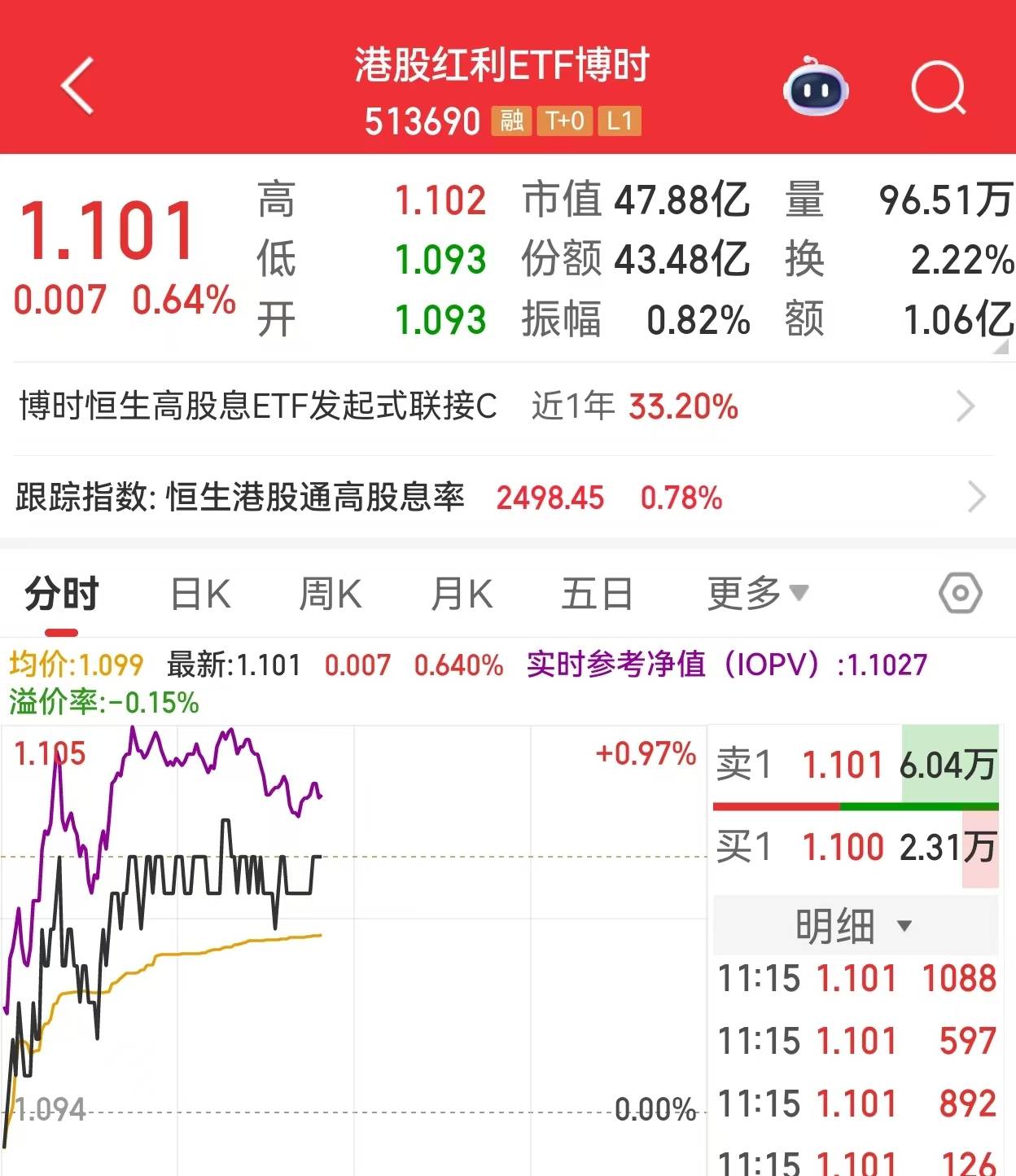
Market Overview - The market is experiencing structural differentiation, with AI and innovative pharmaceutical sectors showing volatility, while agriculture, beauty care, and retail sectors are leading in gains [1] - Defensive assets characterized by high dividends and stable cash flows continue to rise steadily [1] ETF Performance - The Hong Kong Dividend ETF (博时 513690) increased by 0.64%, with a turnover rate of 2.22% and a trading volume of 106 million [1] - The Low Volatility Dividend 100 ETF (红利低波100ETF 159307) rose by 0.55%, with a turnover rate of 0.57% and a trading volume of 7.022 million, showing a net inflow of 24 million over the past five days [3] - The All-Index Cash Flow ETF (全指现金流ETF基金 563830) increased by 0.36%, with a turnover rate of 17.20% and a trading volume of 3.987 million [3] Investment Insights - Recent market volatility has led to profit-taking in some popular sectors, indicating a potential internal market switch towards dividend and cash flow sectors that have seen sufficient pullbacks and increased attractiveness [5] - The logic favoring dividend sectors is reinforced by a low-interest-rate environment, which enhances the relative value of dividend stocks compared to other asset classes [3] - Historical data shows that when the dividend yield premium (股息率-10年国债收益率) is high, the CSI Dividend Total Return Index significantly outperforms the CSI All Share Total Return Index, particularly since 2021 [3] Sector Analysis - The Low Volatility Dividend 100 ETF currently has a dividend yield of 4.31%, with the top five sectors being banking (20.6%), transportation (13.3%), coal (7.4%), pharmaceuticals (6.2%), and basic chemicals (5.6%) [5] - The Hong Kong Dividend ETF has a dividend yield of 5.71%, with the leading sectors being real estate (17.6%), banking (15.3%), coal (10.8%), transportation (8.7%), and oil & petrochemicals (6.9%) [5] - The All-Index Cash Flow ETF has a dividend yield of 4.14%, with the top sectors being non-ferrous metals (15.2%), transportation (13.6%), food & beverage (10.8%), and oil & petrochemicals (9.5%) [5] Strategic Recommendations - Investors are encouraged to consider differentiated allocations between traditional dividend products and free cash flow products to enhance portfolio stability and return potential [4]
完善创新传承机制 为企业穿越周期构筑韧性
Shang Hai Zheng Quan Bao· 2025-08-20 19:18
Group 1 - The core mechanisms in enterprise succession are the investor mechanism and the management trustee mechanism, which must be evaluated based on actual scenarios [1] - The investor mechanism emphasizes centralized ownership and profit rights, leading to high decision-making efficiency but may suffer from personal experience limitations [1][12] - The management trustee mechanism provides stability and neutrality, especially during succession crises, ensuring basic operational logic and value preservation [1][13] Group 2 - A significant number of private enterprises are facing a generational transition, with an average chairman age of 57 years, and nearly 40% over 60 years old [2] - Only 15% of family businesses globally survive beyond three generations, with less than 40% of Chinese family businesses successfully passing to the second generation [2] - Wealth transfer involves complex factors beyond simple asset division, impacting enterprise continuity and investor interests [2] Group 3 - The imbalance between wealth structure and risk management poses challenges for private enterprises, as many lack proactive wealth planning and risk prevention [3] - Traditional reliance on family trust can obscure core issues like equity distribution and decision-making authority, leading to management conflicts [5][6] - Family businesses face increasing complexity in asset distribution and management rights, which can lead to internal conflicts affecting stability [7] Group 4 - The primary goal of wealth transfer is asset preservation and growth through professional management, as demonstrated by New Hope Group's 8.3% annual asset growth [8] - Risk isolation mechanisms are essential, including internal dispute separation and generational responsibility delineation, as seen in Fotile Group's "entrepreneurial inheritance" model [9] - Sustainable transfer requires balancing control and specialization, as well as aligning family interests with social responsibilities [10] Group 5 - The governance structure of listed companies is crucial for wealth transfer, as changes in ownership can disrupt governance stability [11] - Wealth transfer must adhere to governance rules, with shareholder meetings and compliance checks being necessary for equity inheritance [11] - The management trustee mechanism is essential for maintaining operational stability during crises, acting as a buffer against conflicts [14][15] Group 6 - Balancing trust and capability in management is vital, with mechanisms like equity incentives needed to align interests [16] - Establishing a detailed framework for rights and responsibilities can help ensure effective management and prevent conflicts [16] - The transition from individual-driven to system-driven governance is essential for sustainable enterprise succession [17][18]
Maui Land & Pineapple Q2 Loss Narrows Y/Y Amid Revenue Growth
ZACKS· 2025-08-20 16:51
Core Viewpoint - Maui Land & Pineapple Company, Inc. has experienced a decline in share price despite significant revenue growth, indicating investor caution regarding its financial performance and outlook [1] Financial Performance Overview - For Q2 2025, operating revenues reached $4.6 million, a 74% increase from $2.6 million in Q2 2024 [2] - Year-to-date revenues for the first half of 2025 surged 103% to $10.4 million from $5.1 million [2] - Leasing revenues increased by 46% in the first half of 2025, driven by higher occupancy and rental rates [2] Net Loss Analysis - The net loss for Q2 2025 was narrowed to $1 million, or 5 cents per share, compared to a loss of $1.9 million, or 10 cents per share, in the same quarter last year [3] - For the first half of 2025, the net loss widened to $9.6 million, or 49 cents per share, from a loss of $3.2 million, or 16 cents per share, in the prior year [4] - The increase in losses was primarily attributed to a $7.5 million pension settlement expense recognized in H1 2025 [4] Key Business Metrics - Commercial leasing occupancy improved from 86% at the end of 2024 to 89% by June 2025 [5] - Industrial properties had 89% occupancy, retail at 94%, and office space achieved 100% occupancy [5] - The Honokeana Homes Relief Housing Project generated $3.1 million in contracting revenues in the first half of 2025 [6] Management Commentary - The CEO emphasized the validation of the company's strategy to maximize land and commercial asset productivity [7] - The CFO noted that pension annuitization created significant non-cash GAAP expenses but will lead to a comprehensive gain in the next quarter [7] Factors Influencing Results - Pension settlement costs accounted for $7.5 million in expenses in the first half of 2025 [8] - General and administrative expenses increased due to new hires, while leasing costs rose by over 50% year over year [8] Other Income and Cash Flow - The company recognized $0.5 million in other income from a COVID-era Employee Retention Credit [9] - Distributions from its BRE2 joint venture contributed an additional $0.7 million to cash flow [9] Guidance - Management reiterated a focus on asset optimization and capital deployment towards development and diversification initiatives [10] - A non-cash gain related to pension plan termination is expected in Q3 2025, which will offset second-quarter expenses [10] Other Developments - The company advanced its agave venture by planting over 12,000 blue weber agave plants, supporting diversification into agriculture [11] - Asset recycling continued with the sale of non-strategic parcels, anticipated to fund development and conservation projects [11]


Maui Land & Pineapple Company, Inc. Reports Fiscal Second Quarter 2025 Results
Globenewswire· 2025-08-14 21:04
Core Insights - Maui Land & Pineapple Company, Inc. reported strong financial performance with a 103% increase in operating revenues for the first half of 2025 compared to the same period in 2024, totaling $10,406,000 [3][9] - The company is focusing on maximizing land productivity and diversifying revenue streams, including launching an agave venture and improving leasing revenues, which increased by 46% year-over-year [2][3] Financial Performance - Operating revenues for the six months ended June 30, 2025, were $10,406,000, up from $5,128,000 in the same period in 2024, marking an increase of $5,278,000 [3][9] - Land development and sales revenues rose to $3,442,000 from $200,000, primarily due to contracting revenues from the Honokeana Homes Relief Housing Project [3][9] - Leasing revenues increased to $6,421,000 from $4,388,000, attributed to improved occupancy and updated leases [3][9] Costs and Expenses - Total operating costs and expenses for the first half of 2025 were $12,897,000, compared to $8,409,000 in 2024, an increase of $4,488,000 [3][9] - The increase in operating costs was mainly due to land development and sales costs of $3,157,000 related to the Honokeana Homes project [3][9] - Water and conservation costs rose to $1,253,000 from $709,000, reflecting increased operations and maintenance costs [3][9] Net Loss and Adjusted EBITDA - The net GAAP loss for the first half of 2025 was ($9,639,000), or ($0.49) per share, compared to a loss of ($3,247,000) or ($0.16) per share in 2024 [3][9] - Adjusted EBITDA for the six months ended June 30, 2025, was ($192,000), an improvement of $55,000 from ($247,000) in the same period in 2024 [3][9] Cash and Investments - Cash and Investments Convertible to Cash totaled $7,028,000 on June 30, 2025, down from $9,522,000 at the end of 2024, primarily due to pension termination contributions and development expenditures [3][9]

Cresud: Excellent Real Estate Business And A Positive Outlook
Seeking Alpha· 2025-08-14 19:48
Group 1 - Cresud (NASDAQ: CRESY) is granted a Buy rating, indicating a positive outlook for the company in the coming years [1] - The Argentinian Government has reduced export taxes on agricultural products, which is expected to benefit Cresud [1] Group 2 - The analyst, Daniel Mellado, has a background in economics and statistics, with experience in analyzing agricultural commodities and managing trading and data analysis teams [1] - Mellado's expertise includes developing strategies for algorithmic trading and providing analysis and valuation for sectors such as commodities, banking, technology, and pharmaceuticals [1]


商品市场持仓及资金流:黄金关税风险推高商品市场资金流入-Commodity Market Positioning & Flows_ Gold tariff risks drive up commodity market inflows
2025-08-14 02:44
Summary of J.P. Morgan Commodity Market Positioning & Flows Industry Overview - The report focuses on the global commodities market, specifically analyzing market positioning and flows as of August 11, 2025. Key Points and Arguments Market Positioning - The estimated value of global commodity market open interest increased by 0.7% week-over-week (WOW) to approximately $1.49 trillion, which is still at the lower end of the 2025 range but up 10% year-to-date (YTD) as of August 8 [3][9][10]. - Contract-based inflows returned to 10-year average levels at $14.6 billion WOW, primarily driven by gold markets, which saw inflows of $12.4 billion WOW due to US tariff risks [3][4]. Tariff Risks and Economic Events - The US-China tariff truce is expected to end on August 12, with President Trump likely to extend it for another 90 days. This uncertainty is influencing market dynamics [3]. - A scheduled summit between President Trump and President Putin regarding a ceasefire in Ukraine is also noted, which may impact commodity prices [3]. Investor Positioning - The net investor position across global commodity futures markets decreased by 6.1% WOW, reaching $128 billion as of August 5 [3][15]. - Notional investor positioning in base metals decreased by 26% WOW, while energy markets saw a 50% decrease in positioning [3][15]. Precious Metals - The estimated value of open interest in precious metals surged by $17 billion WOW to $263 billion, driven by significant inflows into gold markets [3][27]. - Managed Money net length in COMEX Gold futures increased by 19.7k contracts to approximately 154k contracts net long, indicating strong bullish sentiment [4][17]. Energy Markets - The estimated value of open interest in energy markets declined by $19.5 billion WOW to $622 billion, marking a return to ten-week lows amid price weakness [3][22]. - Contract-based flows were muted, with outflows from refined product markets offset by inflows to natural gas markets [3]. Agricultural Markets - The estimated open interest value in agricultural markets increased by 1.7% WOW to $326 billion, driven by net contract-based inflows of $2 billion WOW [3][29]. - Trade uncertainty is highlighted, particularly regarding US soybean orders from China, which remain at zero for the new crop [3]. Price Momentum - Price momentum across commodities was mixed, with increases in most metals and agricultural markets, while energy prices declined [3][50]. - Specific trading signals indicate a positive momentum for COMEX Gold and Silver, while NYMEX Palladium has turned negative [3][50]. Additional Important Insights - The report emphasizes the impact of geopolitical events on commodity markets, particularly the influence of tariffs and international relations on investor sentiment and positioning [3]. - The dynamics of supply and demand in various sectors, such as energy and agriculture, are crucial for understanding future price movements and investment opportunities [3][4][5]. This comprehensive analysis provides insights into the current state of the commodities market, highlighting key trends, risks, and potential investment opportunities.