医疗检验

Search documents
金域医学20250825
2025-08-25 14:36
Summary of Jin Domain Medical Conference Call Industry Overview - Jin Domain Medical is facing challenges in the healthcare industry, including medical insurance cost control, declining testing prices, and industry standardization. However, these policies may benefit compliant companies and increase demand for outsourcing services, presenting growth opportunities for the company [2][4][8]. - The medical testing industry is experiencing dual pressures from price declines and medical insurance cost control, leading to a shrinking market size and lower testing project prices. Third-party independent laboratories are expected to gain larger market shares as hospitals may outsource testing to manage costs [2][10]. Company Performance and Strategy - In the first half of 2025, Jin Domain Medical's customer base remained stable, with a 5.43% year-over-year increase in the proportion of top-tier hospitals. Despite a 5.2% decline in sample volume, operational net profit margins and gross profit levels have been recovering quarterly, indicating robust fundamentals [3]. - The company is transitioning from old rules to new ones, facing performance pressure. It is responding to challenges through high-value services, cost control, and digital transformation, having invested in digitalization and intelligence since 2020 [2][12][13]. - Jin Domain Medical has achieved significant accomplishments in data governance, becoming the first medical institution in the country to establish a trusted data space, recognized by the National Data Bureau [2][16]. Digital Transformation and AI Integration - The digital transformation is divided into business digitalization and digital business, with the establishment of an AI and data science center to enhance AI, data, and ecosystem empowerment. The service model has expanded to hospitals and is now operational with fees [5][20]. - The company employs a "3+1+1" model in AI applications, focusing on project recommendations, report interpretations, and diagnostic inquiries, connecting doctors and patients through a platform and a trusted data space [22]. - AI technology is expected to significantly reduce the workload of doctors and laboratory staff, with projections indicating that AI-assisted diagnoses will increase from 6% to 12-15% in the coming year [32]. Market Challenges and Opportunities - The current economic environment presents uncertainties, particularly for the in vitro diagnostics (IVD) sector, with many companies facing closure. Local financial pressures and steadfast medical insurance cost control are expected to continue, alongside a decline in testing prices [4][10]. - The implementation of medical insurance cost control policies has led to significant price reductions, such as a 60% decrease in the price of glycated hemoglobin tests, directly impacting revenues but also increasing sample volumes [11][35]. - The company anticipates that the demand for outsourcing services will rise as hospitals focus on cost control, providing new growth opportunities [8][41]. Future Outlook and Development Strategy - Jin Domain Medical plans to maintain a long-term perspective, ensuring robust fundamentals through various reform measures while closely monitoring policy changes and market demands [7][8]. - The company aims to enhance its competitive edge through innovation and digital transformation, focusing on professional value and cost efficiency in line with national healthcare reform directions [24][26]. - Future growth is expected to stem from long-term partnerships with various enterprises, enhancing data capabilities, and improving AI applications in high-value medical scenarios [24][29]. Key Collaborations and Research - The company emphasizes collaboration with over 210 universities and hospitals, as well as partnerships with major tech firms like Tencent, Huawei, and Alibaba, to strengthen research capabilities and promote industrial ecosystem development [2][17][18]. Conclusion - Jin Domain Medical is navigating a challenging healthcare landscape with a focus on digital transformation, AI integration, and strategic partnerships. The company is poised to leverage these initiatives to enhance its market position and drive future growth while adapting to evolving industry dynamics.

龙江珠江共织云裳——黑龙江广东对口合作跑出“加速度”
Xin Hua Wang· 2025-08-12 06:05
Group 1: Core Insights - The collaboration between Guangdong and Heilongjiang provinces is creating new opportunities and driving high-quality regional development through mutual industrial complementarity and technological innovation [3][6][8] - The establishment of the Shenzhen (Harbin) Industrial Park has led to the registration of over 700 enterprises, focusing on digital economy, biomanufacturing, and high-end equipment manufacturing [6][11] - The partnership has resulted in the implementation of 122 cooperative projects with a total investment of 43 billion yuan, showcasing a multi-faceted industrial development approach [6][8] Group 2: Agricultural Cooperation - The collaboration between Guangzhou and Qiqihar in agriculture has led to successful marketing of local agricultural products in the Greater Bay Area, enhancing mutual benefits [9][10] - The "North Potato South Planting" initiative has increased farmers' incomes in Heilongjiang by over 15,000 yuan annually, with over 1,500 farmers from Guangdong participating [10][12] - The partnership aims to strengthen cooperation in agriculture, advanced manufacturing, and cultural tourism, leveraging the complementary strengths of both provinces [10][12] Group 3: Technological Innovation - Guangdong's strong regional innovation capabilities are being leveraged to support Heilongjiang's industrial base, fostering the growth of emerging industries [11][12] - The establishment of the Harbin Aviation Intelligent Equipment Co., a platform for research and development, is a key example of successful technology transfer and innovation [11][12] - Collaborative projects in traditional industries, such as the partnership between Guangzhou and Qiqihar in equipment manufacturing, are enhancing productivity and technological advancement [12] Group 4: Tourism and Cultural Exchange - The increase in tourism between Guangdong and Heilongjiang is evident, with 2.042 million visitors from Guangdong to Heilongjiang in the first five months of the year, a 26.6% increase [13] - Innovative products developed by local companies, such as traditional Chinese medicine snacks, are gaining popularity and contributing to the local economy [13][15] - The collaboration aims to expand domestic and international markets, enhancing the open economy development level of both provinces [14][15]

7.17犀牛财经早报:首批10只科创债ETF今日上市 年内公募高管变更超230人
Xi Niu Cai Jing· 2025-07-17 01:36
Group 1 - The first batch of 10 Sci-Tech Innovation Bond ETFs was listed on July 17, showcasing the market's strong interest in this product [1] - Active equity funds have seen a significant recovery in performance since 2025, with over 200 funds achieving annual returns exceeding 30% [1][2] - The public fund industry has experienced a high turnover of executives, with over 230 changes reported this year, indicating a trend of talent mobility [2][3] Group 2 - As of July 15, 775 companies in the Shenzhen market have disclosed their half-year performance forecasts, with nearly 60% expecting profit growth [3] - The mobile panel market is maintaining price stability in July, with different technology routes showing significant supply-demand dynamics [4] - Anker Innovations is exploring overseas share issuance to enhance its global strategy and brand image [7] Group 3 - Kingmed Diagnostics is expected to report its first half-year loss since its listing, primarily due to high accounts receivable and significant credit impairment losses [7] - The U.S. stock market saw all three major indices close higher, with the Dow Jones up 0.53% and the Nasdaq reaching a new closing high [8][9]
聚焦新质生产力系列之六:从算力到存力,解锁数据要素新价值
Huan Qiu Wang· 2025-07-10 02:30
Core Insights - The article emphasizes the critical role of data storage capacity, referred to as "存力" (storage power), in the context of the exponential growth of data driven by advancements in artificial intelligence (AI) technology [1][8] - It highlights the dual importance of computing power ("算力") and storage power as essential components for unlocking the value of data and fostering new infrastructure development [1][8] Industry Overview - The global data volume is expected to grow at an annual rate of 36%, reaching Yottabyte (YB) scale by 2030, necessitating efficient and secure data storage solutions [1] - The Chinese government has recognized the significance of storage power, with initiatives like the "算力基础设施高质量发展行动计划" aimed at enhancing the quality of computing and storage infrastructure [1][8] Company Insights - Guangzhou Huayin Kang Medical Group (华银康集团) is a leading independent medical testing and diagnostic service provider in China, focusing on pathology services [2] - The company has developed a comprehensive "AI + system + equipment + resources" service model, integrating advanced AI technologies to enhance diagnostic capabilities [5][7] Challenges and Solutions - Huayin Kang faces significant challenges in data storage, with an annual testing volume of approximately 40 million samples, each pathology image requiring nearly 1GB of storage [7] - The company has implemented a distributed storage system and advanced compression techniques to manage storage demands, although it still requires annual capacity expansions in the Petabyte (PB) range [7][8] Future Trends - The article discusses the evolving landscape of data storage, where traditional storage methods are becoming inadequate due to the increasing complexity and volume of data generated by AI applications [9][11] - It suggests that the establishment of storage centers will be crucial for integrating data across various sectors, enhancing data governance, and facilitating the development of new industries and job roles [12][15]
邹城市人民医院“智慧实验室”交付验收,县域检验迈入智能时代
Qi Lu Wan Bao Wang· 2025-07-08 06:29
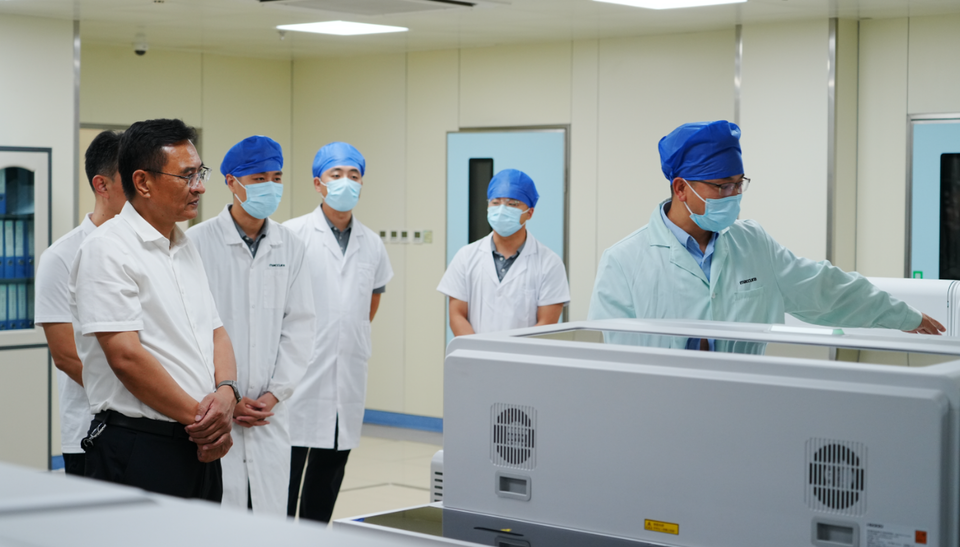
Core Insights - The successful delivery and acceptance of the "Smart Laboratory" at Zoucheng People's Hospital marks a significant milestone in the intelligent and efficient transformation of medical testing services in Shandong Province [1][6] Group 1: Automation and Efficiency - The smart laboratory implements a fully automated process, achieving a sample transmission speed of 600 samples per hour, with samples reaching the testing area in just 5 seconds, significantly reducing manual labor and error risks [3] - An automated assembly line utilizes intelligent sample identification to allow for bulk processing of samples, enabling simultaneous testing of multiple projects from a single sample [3] - The laboratory features multiple automation functions, including automatic power management, intelligent quality control, and smart scheduling, providing stable technical support for clinical diagnosis [3] Group 2: Information Technology Integration - The laboratory employs advanced MALAB software to create a comprehensive management system that integrates sample collection, data consolidation, and quality control, ensuring real-time tracking of sample information and testing data [4] - A big data visualization platform serves as a decision-making tool, monitoring key metrics such as sample volume and testing priorities, which aids in optimizing processes and resource allocation [4] Group 3: Project Implementation and Impact - The smart laboratory project was completed in 15 days of preparation and 30 days of core construction, designed to save space and energy while allowing for future functional expansion [6] - The successful launch of the smart laboratory is a landmark achievement in the high-quality development of Zoucheng People's Hospital and serves as a practical model for the intelligent construction of county-level medical institutions in Shandong Province [6]
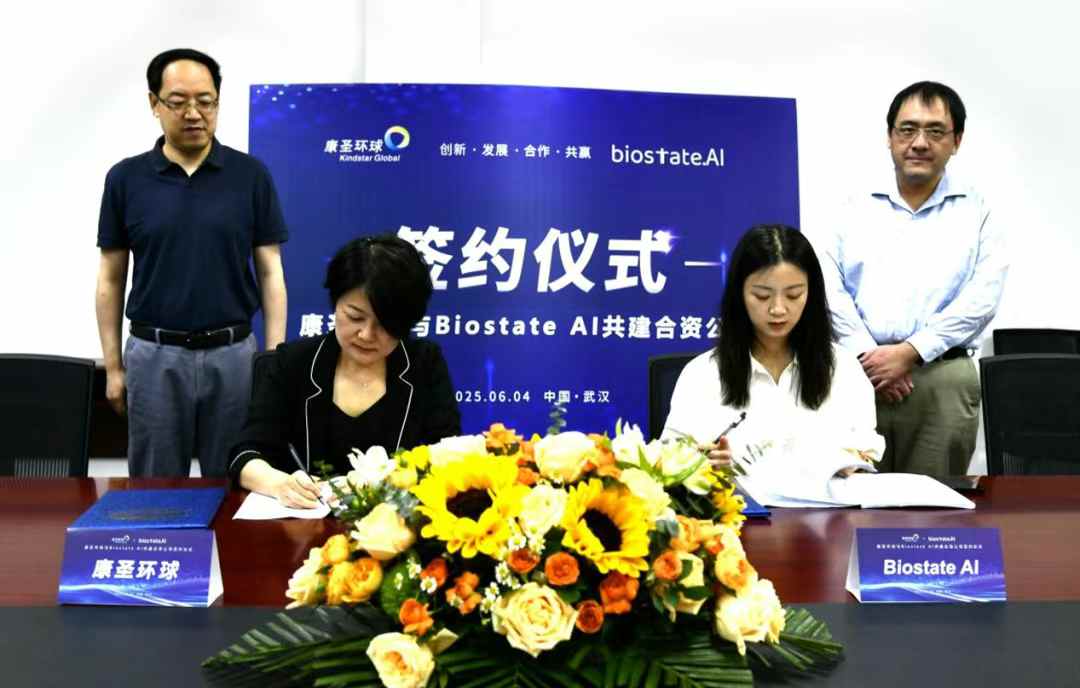
康圣环球(09960)与Biostate AI成立合资公司,携手共筑精准医疗新未来
智通财经网· 2025-06-12 07:17
Core Insights - Kindstar Global and Biostate AI have officially signed an agreement to establish a joint venture aimed at advancing AI-driven precision medical solutions globally, particularly in China [1] - The collaboration will leverage Kindstar Global's extensive clinical testing network covering over 3,000 hospitals in China and Biostate AI's innovative RNA sequencing and AI technology [2][3] - The joint venture will focus on developing innovative diagnostic solutions tailored to the clinical needs in China, enhancing Kindstar Global's leadership in the precision medicine sector [3][4] Company Overview - Kindstar Global is recognized as a leading clinical testing service provider in China, with a robust network that supports the integration of data, diagnostics, and AI [2] - Biostate AI aims to create an AI system that truly understands human biology, enabling personalized medical treatments based on real-time data analysis [2] - The joint venture will initially target five prevalent specialty diseases: autoimmune diseases, oral cancer, diabetes, lymphoma, and post-organ transplant management [4] Strategic Goals - The partnership is seen as a significant milestone in both companies' strategic development, combining Biostate AI's innovative capabilities in RNA sequencing and AI algorithms with Kindstar Global's market expertise [4] - The joint venture will focus on optimizing and validating Biostate AI's RNA sequencing technology for the Chinese population's disease spectrum [4] - The collaboration aims to create a leading global precision medical platform, providing efficient and accurate diagnostic tools for healthcare professionals and patients [4]
京津冀 1118 家医疗机构检验结果互认
Bei Jing Shang Bao· 2025-05-22 10:03
Core Viewpoint - The implementation of the "Quality and Technical Requirements for Medical Laboratories" standard in the Beijing-Tianjin-Hebei region aims to enhance the reliability and comparability of medical laboratory test results, facilitating mutual recognition of test results among medical institutions [1][2]. Group 1: Standard Development and Implementation - The new standard is a collaborative effort among market supervision and health departments from Beijing, Tianjin, and Hebei, building on the original "Beijing Standard" and incorporating feedback from over ten years of application [2][3]. - The standard has been officially implemented as of 2023, following three years of systematic research, expert validation, and inter-departmental coordination [2]. Group 2: Key Features of the Standard - The standard includes comprehensive requirements covering general laboratory requirements, clinical specimen management, equipment management, and reagent management, focusing on core laboratory processes [3]. - It establishes a quality management system that encompasses the entire process from specimen collection to reporting, defines roles and operational protocols, and mandates ongoing education and assessment for technical personnel [3]. Group 3: Impact on Medical Institutions - The mutual recognition of test results has expanded to 1,118 medical institutions and 60 test items across the Beijing-Tianjin-Hebei and Shandong regions, enhancing standardization and scientific management of laboratory testing [1][2]. - The standard aims to improve the quality and consistency of laboratory testing across various medical institutions, providing a model for other regions in China to follow in terms of laboratory quality and technical standardization [3].
泰安市妇幼保健院检验科再获“山东省临床实验室质量管理先进集体”称号
Qi Lu Wan Bao Wang· 2025-05-09 02:45
Core Insights - The Tai'an Maternal and Child Health Hospital's laboratory has been recognized as an advanced collective for clinical laboratory quality management in Shandong Province for the 2023-2024 period, marking the eighth consecutive year of receiving this honor [1] Group 1: Laboratory Recognition - The laboratory was selected from 1,365 participating laboratories, showcasing its excellence in quality management [1] - The recognition highlights the laboratory's commitment to maintaining high standards in clinical testing and quality assurance [1] Group 2: Laboratory Facilities and Personnel - The laboratory covers an area of 1,200 square meters and includes five specialized areas: clinical testing, clinical biochemistry, clinical immunology, clinical microbiology, and molecular biology [3] - It employs 28 professional technical staff, including 7 master's degree holders and 20 bachelor's degree holders, along with various senior technicians [3] Group 3: Testing Capabilities - The laboratory conducts over 300 types of tests, including routine clinical tests, disease-specific tests, and various specialized screenings, all supported by robust quality assurance measures [4] - Tests include those for liver, kidney, heart diseases, diabetes, cancer screening, and autoimmune diseases, among others [4] Group 4: Quality Management Practices - The laboratory emphasizes patient-centered care and quality management, implementing 5S management and enhancing internal quality control [5] - It actively participates in inter-laboratory quality evaluation activities and has been recognized as a leading unit in laboratory management in Shandong Province [5]

拆解医疗行业数据资源入表|应收账款占比超四成,借力数据要素布局精准医疗能否破题?
2 1 Shi Ji Jing Ji Bao Dao· 2025-04-28 10:32
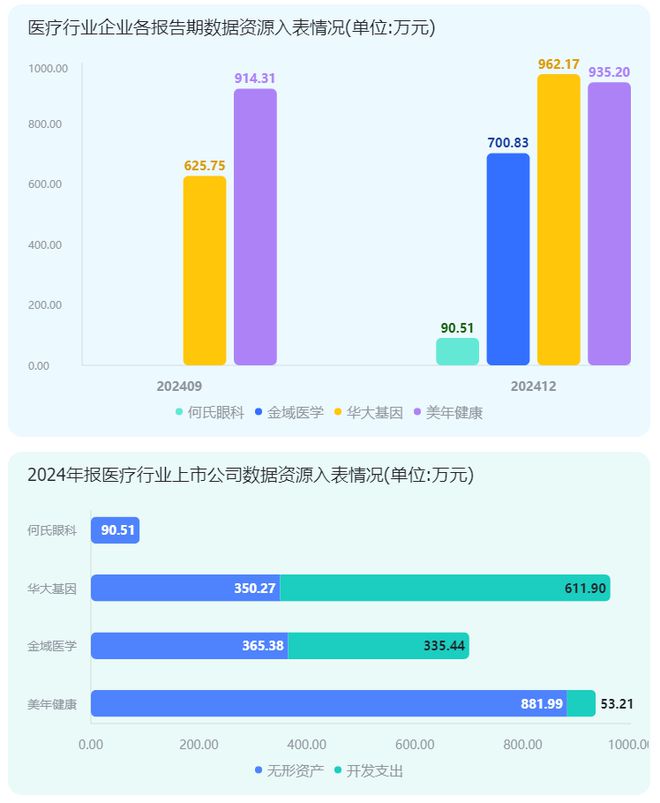
Core Insights - Jin Yu Medical (金域医学) reported a significant decline in revenue, with a 15.81% year-on-year decrease, resulting in total revenue of 7.19 billion yuan for 2024 [5][7] - The company faced challenges with accounts receivable, which accounted for 42.39% of total assets, amounting to 4.396 billion yuan [7] - Other medical companies, including Meinian Health (美年健康), He Shi Eye Hospital (何氏眼科), and BGI Genomics (华大基因), also reported declines in revenue and net profit, indicating a broader trend in the industry [5][13] Financial Performance - Jin Yu Medical's net profit for 2024 was -381 million yuan, a decrease of 159.26% compared to the previous year [5] - BGI Genomics reported a revenue of 3.867 billion yuan, down 11% year-on-year, with a net profit of -903 million yuan [5][13] - Meinian Health's data resource entry amounted to 9.352 million yuan, with a focus on developing health management products [15] Data Resource Integration - Jin Yu Medical disclosed data resource integration amounting to 7.0083 million yuan, with 3.3544 million yuan classified as development expenses and 3.6538 million yuan recognized as intangible assets [1] - BGI Genomics led the industry with a data resource entry of 9.6217 million yuan, primarily from external data governance platforms [13] - He Shi Eye Hospital reported 905,100 yuan in data resources, all classified as self-developed intangible assets [14] Market Trends - The medical industry is increasingly focusing on data-driven precision medicine, with companies like BGI Genomics and He Shi Eye Hospital investing in comprehensive data management systems [13][14] - Jin Yu Medical is actively participating in the data circulation market, having launched 11 data products for trading and establishing a trusted data space in Guangzhou [9][10] - The trend towards integrating data resources into healthcare solutions is expected to continue, with companies exploring innovative applications in medical decision-making and patient care [14][15]