智慧零售

Search documents
汉朔科技:公司为泛零售领域客户提供以电子价签系统为核心的智慧零售综合解决方案
Zheng Quan Ri Bao Wang· 2025-09-04 11:14
Group 1 - The company, Hanshu Technology (301275), provides smart retail comprehensive solutions centered around electronic price tag systems for clients in the pan-retail sector [1] - The company offers multiple product series and models of smart terminal electronic price tags, with varying price ranges [1] - According to the company's public information, the average unit price of multiple product series in the first half of 2024 is 42.10 yuan [1]
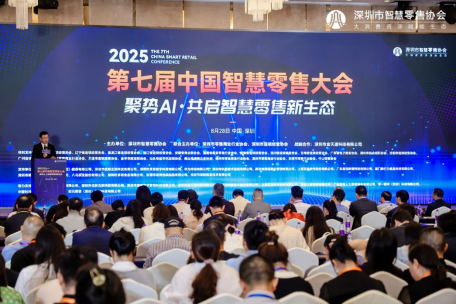
聚势AI·共启智慧零售新生态,第七届中国智慧零售大会在深成功举办
Zhong Guo Zhi Liang Xin Wen Wang· 2025-08-29 14:19
Core Insights - The seventh China Smart Retail Conference was successfully held in Shenzhen, focusing on the theme "Gathering AI, Co-initiating a New Ecology of Smart Retail" [1] - The conference aimed to explore the integration of AI technology with the retail industry, providing strong momentum for high-quality development in smart retail [1][3] Group 1: Conference Highlights - The conference featured six core segments, including the launch of the "Smart Retail Laboratory," the authoritative release of the "Smart Retail Ecological First Report," and the presentation of annual innovative case studies [1][3] - The "Smart Retail Ecological First Report" analyzed the current state of smart retail development and predicted future trends, offering important references for enterprises [3] - Three major "Smart Retail Innovation Achievements" were announced, recognizing nearly 30 companies for their outstanding contributions in technology innovation and industry impact [3] Group 2: Smart Retail Laboratory - The "Smart Retail Laboratory" was launched to explore paths for digital, intelligent, and smart upgrades for enterprises, aiming to reduce trial and error costs and foster innovation [5] - The laboratory seeks to establish a collaborative ecosystem for smart retail, promoting structural reforms in supply-side and supporting high-quality development in the retail sector [5] Group 3: Expert Insights - Experts shared insights on organizational, technological, ecological, and scenario dimensions, emphasizing the shift from traditional retail structures to customer-centric agile networks [7][8] - AI's role in enhancing efficiency and precision in retail operations was highlighted, with applications in areas such as franchise review, site selection, and marketing strategies [8] - The concept of "AI Smart Code" was introduced as a second-generation ID for products, enabling full lifecycle data integration and improving supply chain efficiency [10] Group 4: AI Solutions and Applications - The conference included a session on eight innovative AI solutions, with representatives from various companies presenting core solutions for digital upgrades in retail [11] - AI's potential to empower retail chains and enhance operational efficiency was discussed, with examples of successful AI applications in the retail sector [12] - A panel discussion addressed the challenges and future directions of AI in the retail industry, providing strategic insights for decision-making [13]

从“小店”到“工厂”,南京“新”中有“数”
Nan Jing Ri Bao· 2025-08-21 23:42
Core Insights - The article highlights the significant role of digital industries in enhancing productivity and integrating the real economy with the digital economy [1] Group 1: Digital Industry Development - The Yangtze River Delta's digital industry is evolving, with companies like Huitongda Network showcasing advancements in AI and digital solutions for local businesses [1][2] - Huitongda has launched five AI products aimed at improving retail operations and enhancing customer engagement in local stores [2] Group 2: AI Integration in Retail - Huitongda's collaboration with Alibaba Cloud focuses on creating comprehensive digital solutions for smart retail and supply chain management, particularly in lower-tier markets [2] - The introduction of the "AI Store Manager" app exemplifies how AI can streamline operations from procurement to sales, significantly benefiting local shop owners [1][2] Group 3: AI Model Development - The establishment of the Xuanwu Large Model Factory is pivotal for AI innovation, providing a platform for developing and deploying large models across various industries [3] - The factory has successfully launched multiple industry-specific models, demonstrating the effectiveness of a factory-like approach to AI development [3][4] Group 4: Future Prospects - The potential for embodied intelligent robots powered by large models to enter homes and production environments within the next three to five years is a promising outlook for the industry [5]
智慧零售如何重塑消费生态:从技术赋能到生活场景创新
Yang Shi Wang· 2025-08-14 10:17
Core Insights - The retail industry is undergoing a profound transformation driven by the digital economy and consumer upgrades, redefining the "people-goods-space" relationship [1] Group 1: Data Intelligence - Traditional retail faces challenges of data fragmentation, which innovators are addressing through self-developed intelligent management systems that create a closed loop from data collection to decision-making [2] - The intelligent management system features three core capabilities: dynamic product selection algorithms, intelligent site selection systems, and precise marketing engines [2] - The implementation of this system has led to significant improvements in single-point efficiency, with some terminals experiencing annual revenue growth rates exceeding the industry average [2] Group 2: Virtual-Real Integration - Modern smart vending devices have evolved beyond mere product sales to become multi-functional platforms that include brand communication and user experience [3] - Innovations include virtual product services through O2O models, customizable brand spaces, and media matrix functions that link screen advertising with mobile platforms [3] - This transformation allows individual terminals to serve multiple roles, enhancing commercial value through a multiplicative effect [3] Group 3: Ecological Development Trends - Leading companies are focusing on building intelligent device ecosystems to meet community and scenario-based consumer demands [4] - Key strategies include service extension into areas like laundry and coffee, data sharing through cross-industry analysis models, and strategic partnerships with infrastructure companies [4] - Companies that develop ecological systems see device usage frequency increase by over 40% compared to single-function devices [4] - The next phase of smart retail will focus on deep applications of AI decision systems, traceable carbon footprints in green retail, and experience optimization based on emotional computing [4]
中粮智尚:践行新质生产力,引领智慧零售新风潮
Sou Hu Wang· 2025-08-11 10:58
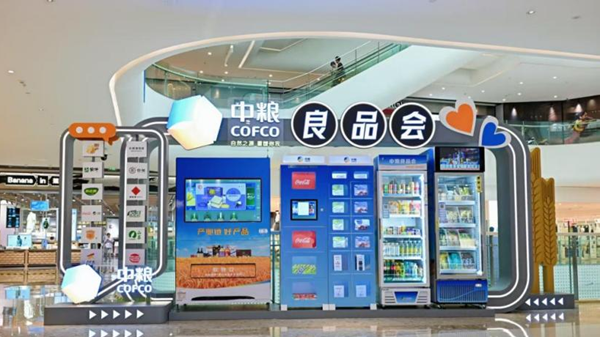
Core Insights - The article highlights the transformation in the retail industry driven by digital economy and consumption upgrades, with COFCO Group's emerging business segment, COFCO Zhishang, leading the way in smart retail through its innovative "Blue Jing Ling" system [1] Group 1: Technology Empowerment - The "Blue Jing Ling" system addresses the pain points of "data silos" and "operational inefficiency" in the retail sector by integrating multidimensional data, thus creating a "full-link intelligence" path for the industry [2] - This system supports over 300,000 smart terminals across 31 provinces and 350 cities in China, enhancing retail operations through big data-driven intelligent site selection, product insights, and marketing outreach [2][3] Group 2: Dual Value Proposition - The system introduces a "last item elimination system" that dynamically optimizes product structure based on sales and quarterly profit rankings, enabling precise selection and marketing tailored to individual machines [3] - COFCO Zhishang's revenue from its retail system is projected to exceed 1 billion yuan in 2024, demonstrating the effectiveness of technology in adapting to market scenarios and the company's deep market penetration [3] Group 3: Integration of Virtual and Physical - The "COFCO Good Products Club" combines sales growth with brand display, allowing for personalized promotional activities and the introduction of virtual products, thus creating a seamless online-offline integration [4][6] - This initiative has been successfully implemented in over ten cities, including Beijing and Guangzhou, showcasing the company's commitment to enhancing brand visibility and consumer engagement [6] Group 4: Ecosystem Development - COFCO Zhishang aims to build a closed-loop ecosystem by collaborating with companies like China Mobile, leveraging advertising and brand partnerships to stimulate consumer engagement and revenue sharing [8] - The company is also exploring new terminal types, such as smart washing machines and coffee machines, to create a comprehensive ecosystem that integrates consumption, services, and data [8] Group 5: State-Owned Enterprise Innovation - As a subsidiary of a state-owned enterprise, COFCO Zhishang emphasizes its role in enhancing both tangible and intangible assets through a "technology + retail + media" model, contributing to the digital transformation of the retail sector [9] - The company provides a quantifiable, replicable, and sustainable innovation path for state-owned enterprise reform by improving asset operation efficiency and accumulating data assets [9]
2025年中国智慧零售市场洞察:AI重塑线上线下消费体验
Tou Bao Yan Jiu Yuan· 2025-06-04 12:23
Investment Rating - The report does not explicitly provide an investment rating for the smart retail industry Core Insights - The smart retail industry is characterized by the integration of AI, big data, and IoT technologies to enhance consumer experience and operational efficiency, shifting from a product-centric to a consumer-centric model [12][13][27] - The future development trends of smart retail include internal system integration, instant delivery services, personalized recommendations, and catering to the aging population [6][18] Summary by Sections Research Purpose & Summary - The report aims to systematically outline the practical paths, development history, policy environment, application scenarios, and future trends of smart retail [2] Smart Retail Practice Path - The core principle of smart retail is to utilize emerging technologies to gain insights into consumer habits, predict consumption trends, and guide production, focusing on demand forecasting and store analysis [4][15] - Key applications include smart stores and instant retail, which aim to optimize supply chains and enhance consumer experiences through data integration [4][6] Smart Retail Industry Overview - Smart retail is defined as the reconstruction of the retail industry through AI, big data, and IoT, focusing on consumer experience rather than just products [12][13] - The evolution of China's retail industry has progressed through traditional retail, e-commerce, new retail, and now smart retail, with significant technological integration [18][19] Policy Environment - Since 2020, the government has introduced various policies to encourage the smart transformation of retail facilities and the application of technological achievements in consumer sectors, aiming to establish a modern retail system by 2029 [21] Application of Smart Retail - Smart stores serve as the core carriers of smart retail, utilizing technologies like facial recognition and AI to enhance customer interaction and operational efficiency [25][27] - Instant retail, as a significant branch of smart retail, leverages technology and local supply to provide rapid delivery services, with a strong growth trend in lower-tier markets [28][32] Industry Application by Sector - The report highlights various sectors such as supermarkets and restaurants, emphasizing the need for data-driven consumer insights and the integration of online and offline channels to enhance customer engagement and operational efficiency [34][35]
聚力同行 共赢未来 恒生活2025年度代理商大会擘画智慧零售新蓝图
Cai Fu Zai Xian· 2025-04-14 09:13
Core Insights - The digital economy is becoming a new driving force for economic and social development, with smart retail expected to exceed 1 trillion RMB by 2025 due to various factors including policy support and technological innovation [1][5] - Heng Life, a smart retail service platform, recently held its 2025 National Agent Conference, marking a significant milestone in its development and providing insights into the future direction of the smart retail industry [1][8] Industry Overview - Smart retail has transitioned from a trend to reality, with advancements such as intelligent cabinets and facial recognition payment systems [2] - The Chinese government is actively promoting digital economy and new consumption models, with policies supporting the digital transformation of retail [2] Company Strategy - Heng Life has expanded its services to over 340 cities, offering around 500 different service scenarios and serving 2 billion people since its establishment in 2020 [2][3] - The company utilizes a "IoT + Internet + Smart Life" model, focusing on optimizing product and service experiences while exploring future interactive fields [5][6] Product and Market Development - Heng Life's product line includes smart retail terminals, entertainment devices, and electric vehicle charging stations, aligning with national strategies for new energy and green travel [3][5] - The company is actively developing innovative payment solutions and collaborating with popular IPs to cater to younger consumers [6] Ecosystem and Collaboration - Heng Life emphasizes building a strong, open, and collaborative ecosystem as a core business philosophy, investing over tens of millions annually in R&D to support its agents [7] - The company is fostering cross-industry collaborations to enhance operational efficiency and improve user experience [7][8]