果汁饮料

Search documents
汇源果汁回A股有望?粤民投与文盛达成和解
2 1 Shi Ji Jing Ji Bao Dao· 2026-01-19 11:27
Core Viewpoint - The recent settlement between Guangdong Min Investment and Wen Sheng Asset may pave the way for Huiyuan Juice to return to the A-share market, following a series of legal disputes that previously hindered its restructuring efforts [1][2]. Group 1: Legal Developments - Guangdong Min Investment's associated enterprises reached a settlement with Wen Sheng Asset regarding an infringement liability dispute, leading to the withdrawal of the lawsuit and the lifting of the freeze on shares held by Shanghai Yongrui in Zhuji Wen Sheng Hui [1][4]. - Zhuji Wen Sheng Hui was established as a holding platform for Wen Sheng Asset to restructure Beijing Huiyuan Food and Beverage Co., which owns the Huiyuan Juice brand, holding 60% of its shares [1][4]. - The legal issues previously led to the termination of a planned acquisition by Guozhong Water, which aimed to gain control over Beijing Huiyuan through Zhuji Wen Sheng Hui [1][5]. Group 2: Financial Implications - Guozhong Water had invested 930 million yuan to acquire a 36.486% stake in Zhuji Wen Sheng Hui, indirectly holding 21.89% of Beijing Huiyuan, making it the second-largest shareholder [5]. - The company has faced continuous losses from 2018 to 2022, necessitating new growth avenues to improve its sustainable profitability [4]. - Following the settlement, Guozhong Water's stock price had dropped by 25.89%, with a total market value of approximately 4.1 billion yuan as of January 19, 2026 [7]. Group 3: Future Prospects - The resolution of disputes between Guangdong Min Investment and Wen Sheng Asset raises the possibility of Guozhong Water proceeding with its acquisition of Beijing Huiyuan, although uncertainties remain regarding ongoing conflicts with Huiyuan [10][12]. - The court had previously frozen 60% of Beijing Huiyuan's shares held by Zhuji Wen Sheng Hui due to unpaid capital commitments, complicating the restructuring process [11]. - Guangdong Min Investment's involvement may provide the necessary resources and willingness to support the long-term development of Huiyuan Juice, a national brand [13].


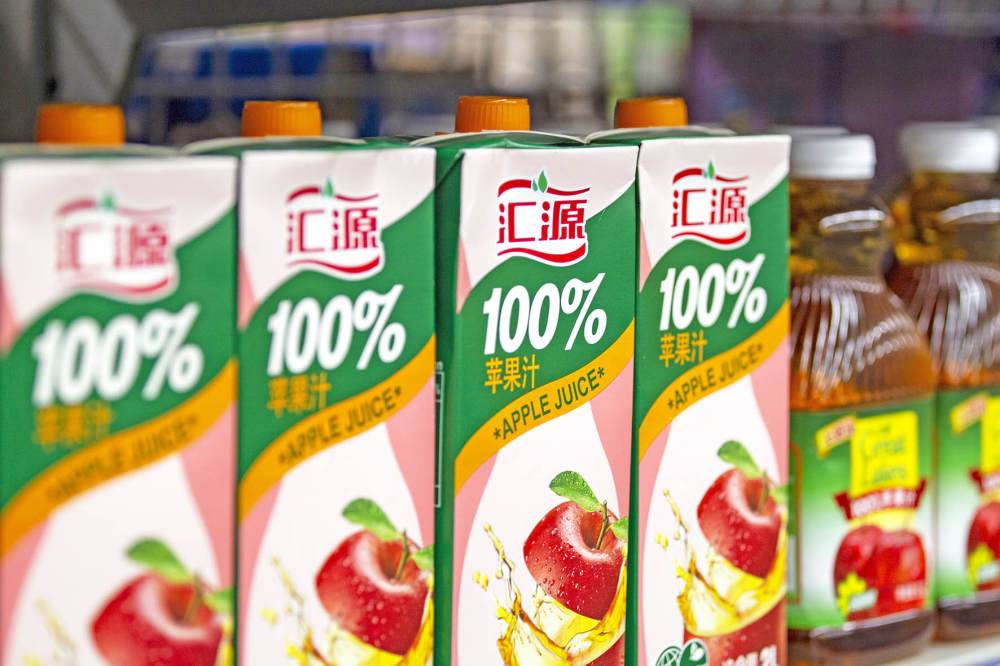
汇源果汁回A,有关键进展
21世纪经济报道· 2026-01-19 10:55
Core Viewpoint - The recent settlement between Guangdong Min Investment and Wen Sheng Asset may pave the way for Huiyuan Juice's return to the A-share market, following the resolution of legal disputes that previously hindered its acquisition process [1][4]. Group 1: Legal Developments - Guangdong Min Investment's related enterprises reached a settlement with Wen Sheng Asset regarding an infringement liability dispute, leading to the withdrawal of the lawsuit and the lifting of the freeze on shares of Zhuji Wen Sheng Hui [1][4]. - Zhuji Wen Sheng Hui was established by Wen Sheng Asset to restructure Beijing Huiyuan Food and Beverage Co., which owns the Huiyuan Juice brand, holding 60% of its shares [1][5]. - The legal issues previously caused the termination of the acquisition plan by Guozhong Water (600187.SH) for a controlling stake in Zhuji Wen Sheng Hui, which would have allowed it to consolidate Beijing Huiyuan's financials [1][5][6]. Group 2: Financial Context - Guozhong Water has faced declining financial performance, with its net profit excluding non-recurring items in losses for five consecutive years from 2018 to 2022, necessitating new growth avenues [5]. - In 2024, Guozhong Water planned to acquire at least 51% of Zhuji Wen Sheng Hui to become its controlling shareholder, but the acquisition was halted due to the frozen shares [5][6]. - Following the settlement, Zhuji Wen Sheng Hui's shareholding structure changed, with Shanghai Yongrui's stake decreasing from 52.47% to 38.75%, indicating a shift in ownership dynamics [9][11]. Group 3: Future Prospects - The resolution of disputes between Guangdong Min Investment and Wen Sheng Asset raises questions about the potential for Guozhong Water to resume its acquisition of Beijing Huiyuan, although uncertainties remain regarding ongoing conflicts with Huiyuan [12][14]. - The court had previously frozen 60% of Beijing Huiyuan's shares due to unpaid capital commitments by Zhuji Wen Sheng Hui, complicating the restructuring process [13][14]. - The involvement of Guangdong Min Investment, a leading domestic investment institution, may provide the necessary resources and willingness to support Huiyuan's long-term and healthy development [14].
粤民投与文盛达成和解 汇源果汁回A有望?
2 1 Shi Ji Jing Ji Bao Dao· 2026-01-19 09:19
Core Viewpoint - The recent settlement between Yue Min Investment and Wensheng Asset may pave the way for Huiyuan Juice's return to the A-share market, following the resolution of legal disputes that previously hindered the acquisition process by Guozhong Water [1][2][9]. Group 1: Legal Developments - Yue Min Investment has reached a settlement with Wensheng Asset, leading to the withdrawal of a lawsuit and the lifting of the asset freeze on Zhuhai Wenshenghui, which holds a 52.47% stake in Huiyuan Juice [1][2]. - The legal disputes arose from Wensheng Asset's liquidity issues and debt disputes with multiple entities under Yue Min Investment, which created risks for the capital operation [3][10]. - The court had previously frozen 60% of Huiyuan Juice's shares held by Zhuhai Wenshenghui due to Wensheng Asset's failure to fulfill its capital commitment of 1.6 billion yuan [10][11]. Group 2: Financial Implications - Guozhong Water, which has been struggling financially with a net profit loss for five consecutive years from 2018 to 2022, initially invested 930 million yuan to acquire a 36.486% stake in Zhuhai Wenshenghui, indirectly holding 21.89% of Huiyuan Juice [2][3]. - Following the termination of the acquisition due to the asset freeze, Guozhong Water's stock price fell by 25.89%, with a market capitalization of approximately 4.1 billion yuan as of January 19, 2026 [6]. Group 3: Future Prospects - The resolution of the legal disputes may allow Guozhong Water to proceed with its acquisition plans for Huiyuan Juice, although uncertainties remain regarding ongoing conflicts between Wensheng Asset and Huiyuan Juice [9][12]. - The involvement of Yue Min Investment, a leading investment institution, is expected to provide resources and support for Huiyuan Juice's long-term development [12].
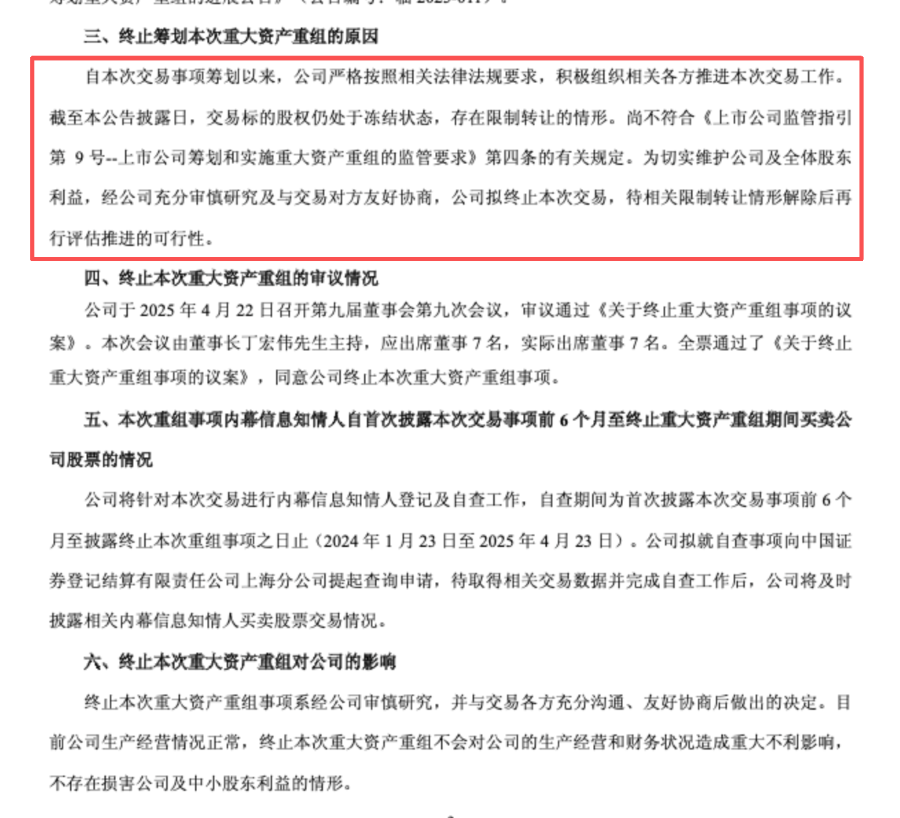
你喝了34年的汇源,可能要变山寨货了
36氪· 2026-01-18 09:08
Core Viewpoint - The article discusses the turmoil surrounding Huiyuan Juice, a once-popular brand in China, which has faced bankruptcy and internal conflicts after a takeover attempt by Wensheng Assets, leading to a split in the brand and ongoing legal battles [5][6][31]. Group 1: Background and Acquisition - Huiyuan Juice went bankrupt two years ago, prompting a search for a buyer to restructure the company [9]. - Wensheng Assets acquired 60% of Huiyuan's shares for 1.6 billion, but the partnership quickly deteriorated into public disputes [10][11]. - Wensheng Assets claimed to have rebranded Huiyuan Juice and started production independently, asserting their products were the "real" Huiyuan [11][14]. Group 2: Financial Disputes - The acquisition agreement stipulated a three-year payment plan, but Wensheng failed to pay the latter installments, leading to financial strain on Huiyuan [21][22]. - Huiyuan's management accused Wensheng of mismanaging funds, with most of the initial investment not being used for Huiyuan's operations [23][24]. - Wensheng profited from selling shares to another company while failing to fulfill their financial commitments to Huiyuan [25][26]. Group 3: Internal Conflicts - The conflict escalated with both parties engaging in legal actions, including Huiyuan suing Wensheng for mismanagement and Wensheng allegedly attempting to manipulate Huiyuan's governance [19][30]. - Allegations arose that Huiyuan's previous management had been siphoning funds to the original parent company, further complicating the financial situation [27][28]. Group 4: Market Position and Challenges - Huiyuan Juice, once a leading brand, has struggled to adapt to market changes and competition, leading to a significant decline in its market position [31][32]. - The company failed to innovate effectively, trailing behind competitors like Nongfu Spring, which capitalized on new trends and marketing strategies [37][38]. - Huiyuan's sales network has been poorly managed, resulting in decreased visibility and availability in retail channels, particularly among younger consumers [49][50]. Group 5: Future Outlook - Despite having strong brand recognition and production capabilities, Huiyuan's future remains uncertain due to ongoing internal conflicts and market challenges [64][65]. - The brand's reputation is at risk as the struggle for control continues, potentially leading to a further decline in consumer trust and market share [67].
汇源重整案陷“双生”困局,地方AMC跨界“翻车”
Hua Xia Shi Bao· 2026-01-13 05:31
Core Viewpoint - The ongoing dispute between Huiyuan Juice and its restructuring investor, Shanghai Wensheng Asset Management, has escalated into a battle over brand ownership, company control, and a 1.6 billion yuan investment, leading to confusion in the market regarding the authenticity of Huiyuan products [2][4]. Group 1: Company Background - Huiyuan Juice, with nearly 30 years of history, was once a staple on Chinese dining tables, known for its orange and peach juices [3]. - Shanghai Wensheng Asset Management, a private asset management company, is recognized for handling distressed assets and was initially seen as a "white knight" for Huiyuan [4]. Group 2: Restructuring and Investment Issues - The partnership began three years ago, with Shanghai Wensheng committing to invest 1.6 billion yuan to rescue Huiyuan, which had entered restructuring due to severe financial distress [4]. - The restructuring agreement allowed Shanghai Wensheng to gain control over Huiyuan through its subsidiary, while Huiyuan retained ownership of the brand [5]. - Disputes arose when Shanghai Wensheng failed to fulfill its investment commitments, leading to accusations of "funding defaults" and operational mismanagement [5][6]. Group 3: Legal and Operational Conflicts - On January 8, 2025, Huiyuan Group accused Shanghai Wensheng of fundamental breaches of the restructuring agreement, claiming that 850 million yuan of the promised investment was not paid [6]. - In response, the official Huiyuan Juice account claimed that Huiyuan Group was merely a contract manufacturer and that its trademark authorization had been terminated, labeling the products as infringing [6]. Group 4: Financial Structure and Vulnerabilities - The investment structure involved complex financial maneuvers, including the involvement of listed company Guozhong Water, which contributed approximately 930 million yuan to the restructuring [7]. - The financial model, characterized by high leverage, proved fragile when disputes led to the freezing of key shares, disrupting the funding chain and ultimately affecting the restructuring process [7][8]. Group 5: Industry Implications - The case highlights the challenges faced by local asset management companies (AMCs) in managing operational control while lacking experience in running businesses [10]. - Experts suggest that the failure of Huiyuan's restructuring underscores the need for stricter contractual and financial mechanisms within the AMC industry to prevent similar issues in the future [12].

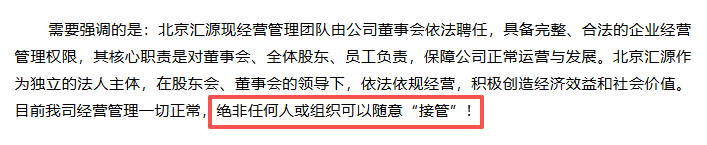
汇源集团宣布将接管北京汇源,北京汇源:绝非任何人或组织可以随意“接管”
Jin Rong Jie· 2026-01-12 11:00
Core Viewpoint - The dispute between Huiyuan Group and Shanghai Wensheng Asset Management Co., Ltd. centers around the alleged breach of the restructuring investment agreement by Wensheng, leading Huiyuan Group to claim control over Beijing Huiyuan and its juice ordering business [1][4]. Group 1: Dispute Background - The conflict traces back to the restructuring process of Huiyuan Juice, with Wensheng Asset having invested 1.6 billion yuan to become the controlling shareholder, primarily for operational upgrades [4]. - In 2009, a significant acquisition attempt by Coca-Cola was blocked, leading to financial difficulties for Huiyuan, which resulted in its delisting from the Hong Kong Stock Exchange in 2021 [4][7]. Group 2: Legal and Operational Issues - Huiyuan Group accused Wensheng of failing to fulfill investment obligations, claiming that 6.47 billion yuan of the 7.5 billion yuan received was not utilized for operational activities [7]. - Both parties are engaged in legal disputes over the control of company assets, including the ownership of the "Huiyuan" trademark, which Beijing Huiyuan asserts it holds exclusively [3][8]. Group 3: Market Impact - The ongoing disputes have severely affected Huiyuan's online sales channels, with major platforms like Tmall and JD.com reporting stock shortages [10][11]. - Huiyuan's market share has been declining, dropping from 5.08% in Q3 2023 to 3.45% in Q3 2025, although it remains a leader in the 100% juice segment [11].
高价泡面、用户底线、资本困局与零售终局:商业世界的信任博弈与模式重塑
Sou Hu Cai Jing· 2026-01-10 06:10
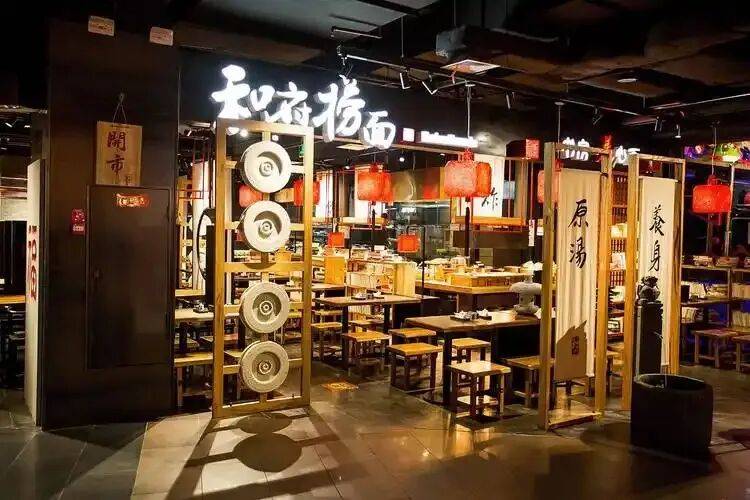
Group 1: Key Insights on HeFu Lao Mian - HeFu Lao Mian's positioning as a "health noodle" is contradicted by the revelation that staff use pre-packaged ingredients, leading to consumer skepticism about the authenticity of their "freshly made" claims [3][4] - The brand's reliance on a narrative of health and craftsmanship is undermined when the reality of industrialized food preparation is exposed, resulting in a significant loss of consumer trust [7][8] - This incident serves as a cautionary tale for all dining brands that depend on appealing narratives to justify premium pricing, highlighting the importance of genuine consumer experiences over marketing rhetoric [7][8] Group 2: Key Insights on Xiaomi - Xiaomi's founder Lei Jun's live-streaming session aimed to clarify multiple controversies, emphasizing that user trust is paramount and announcing the termination of partnerships with KOLs who attacked users [3][11] - The live-stream was a proactive strategy to manage public perception and redirect discussions towards factual and technical aspects, countering fragmented narratives that could harm the brand [11][12] - This approach reflects a broader strategy of reinforcing brand values and establishing a clear boundary regarding user respect and product integrity amidst a competitive landscape [12][13] Group 3: Key Insights on Huiyuan Juice - Huiyuan Group's public statement accused its major shareholder of financial misconduct and using unverified materials to produce counterfeit products, leading to a takeover of Beijing Huiyuan [3][14] - The conflict highlights the clash between financial restructuring strategies and the operational realities of the food industry, where quality and safety are non-negotiable [16][18] - This situation serves as a warning to other national brands seeking capital assistance, emphasizing that financial strategies must align with industry standards to avoid jeopardizing brand integrity [17][18] Group 4: Key Insights on IKEA - IKEA's decision to close several large stores in China marks a shift from its previous "destination retail" model to a focus on smaller stores and enhanced online presence, reflecting changing consumer behaviors [3][21] - The new strategy aims to reduce costs and improve flexibility in urban areas, addressing the challenges posed by local competitors and the rise of e-commerce [21][22] - This transition signifies a broader trend in foreign retail operations in China, indicating that success now requires deep localization and adaptability rather than a one-size-fits-all global approach [22][23]
微动态丨重整方案失败,汇源集团重掌“汇源”
Shang Hai Zheng Quan Bao· 2026-01-09 01:17
Group 1 - The core viewpoint of the article highlights the conflict between Huiyuan Group and its restructuring investor, Shanghai Wensheng Asset Management Co., Ltd., which has led to the failure of the restructuring plan and Huiyuan Group's decision to fully take over Beijing Huiyuan Food and Beverage Co., Ltd. [1][3] - Huiyuan Group accuses Shanghai Wensheng of breaching the agreement by sourcing juice materials from unapproved factories, undermining the brand's integrity and consumer safety [3][4] - The restructuring plan initiated due to Huiyuan's debt crisis has faced significant challenges, including delays in investment commitments from Wensheng and disputes over management control [4][5] Group 2 - The new factory established by Anhui Chuzhou Huaguan, which is linked to Wensheng, is identified as a "regular processing factory" and is set to produce products under the Huiyuan brand, leading to market competition between two entities using the same brand name [4][5] - Industry insiders express skepticism about Wensheng's ability to operate independently in the beverage sector, given its lack of experience and the established management systems of Huiyuan Group [5] - The ongoing dispute raises concerns about trademark compliance and potential legal risks for the processing factories involved, which could impact their future operations and financial stability [5]

重整方案失败 汇源集团重掌“汇源” 独家焦点
Shang Hai Zheng Quan Bao· 2026-01-08 22:10
Core Viewpoint - The Huyuan Group has officially declared the failure of its restructuring plan and announced a complete takeover of Beijing Huyuan Food and Beverage Co., Ltd. due to breaches by the restructuring investor, Shanghai Wensheng Asset Management Co., Ltd. [1] Group 1: Company Actions and Statements - Huyuan Group has taken unilateral measures to regain control, stating that Shanghai Wensheng lacks the necessary experience and management capabilities in juice production [2] - The group has declared all contracts signed by Beijing Huyuan with external processing companies during Wensheng's control as invalid, emphasizing that products not produced with Huyuan's raw materials cannot be sold under the Huyuan brand [2][3] - Huyuan Group will only return management rights to the new management of Beijing Huyuan after Wensheng fulfills the restructuring investment agreement and receives confirmation from the Beijing First Intermediate People's Court [2] Group 2: Background and Context - Huyuan's restructuring began due to a debt crisis, with the company once holding a significant market share in China's juice industry [3] - The restructuring plan involved an investment of 1.6 billion yuan over three years from Wensheng, which was intended to clear debts and support operations, but faced multiple obstacles [3] - Following the deterioration of relations, Wensheng has engaged an external factory for production, leading to competition between two entities using the Huyuan brand [4] Group 3: Industry Insights - Industry insiders suggest that Wensheng's lack of experience in the beverage sector makes it challenging to operate independently from Huyuan Group, especially in a highly competitive market [6] - Concerns have been raised regarding the legal risks for the external factory using unauthorized trademarks, which could lead to liability and impact future operations [6]

汇源集团“重掌”汇源,胜算几何
Xin Lang Cai Jing· 2026-01-08 16:56
Core Viewpoint - The control dispute over Huiyuan Group is intensifying, with Huiyuan Group announcing the takeover of Beijing Huiyuan Food and Beverage Co., Ltd. and Huiyuan Juice's corresponding orders, citing Shanghai Wensheng Asset Management Co., Ltd.'s lack of production experience and management capabilities as reasons for the takeover [1][3]. Group 1: Control and Management Issues - Huiyuan Group claims that Shanghai Wensheng has not fulfilled its investment commitments, with 850 million yuan overdue and 750 million yuan already invested but not managed according to the restructuring agreement, leading to financial strain on Beijing Huiyuan [3][4]. - The latest statement from Huiyuan Group highlights that the restructuring plan has not met expectations, and Shanghai Wensheng's violation of the agreement has left Huiyuan Group in a position of potential control [3][5]. Group 2: Legal and Contractual Aspects - Legal experts indicate that Huiyuan Group's assertion of fundamental breach of contract by Shanghai Wensheng provides a basis for Huiyuan to exercise its rights and suspend the agreement, thus justifying the takeover [5][6]. - The ongoing dispute centers around three main issues: financial compliance, brand control, and operational overreach, with Huiyuan Group aiming to invalidate contracts that allow Shanghai Wensheng to use the Huiyuan brand without proper authorization [5][6]. Group 3: Future Implications - Despite holding majority shares, Shanghai Wensheng's financial capacity and willingness to fulfill obligations are in doubt, which may influence the outcome of the control dispute [6]. - The resolution of this conflict will depend on judicial determinations regarding breach of contract and the dynamics of power between the two parties in terms of ownership and management [6].