植物肉

Search documents
人造肉第一股别样肉客被曝关闭天猫旗舰店 热度大不如前
Xi Niu Cai Jing· 2025-12-02 05:57
Core Viewpoint - The company "Beyond Meat," known for its plant-based meat products, is facing significant operational challenges, including plans to terminate its online store in China by November 2025 and a substantial decline in revenue and increasing losses over recent years [2][4]. Group 1: Company Overview - Beyond Meat, founded in 2009 and headquartered in El Segundo, California, is one of the earliest companies focused on the research and production of plant-based meat [4]. - The company went public on NASDAQ in 2019 and offers products such as plant-based beef patties, pork, and chicken [4]. Group 2: Financial Performance - Beyond Meat's revenue has been under pressure, with reported revenues of $419 million in 2022, $343 million in 2023, and projected $326 million in 2024, alongside net losses of $366 million, $338 million, and $160 million for the same years respectively [4]. - For the third quarter of 2025, the company reported revenues of $214 million, a year-over-year decrease of 14.37%, and a net loss of $193 million, which is an increase from a net loss of $115 million in the previous year [4]. Group 3: Strategic Decisions - In response to ongoing financial pressures, Beyond Meat announced a "cost-cutting" strategy, which included suspending operations in the Chinese market and reducing its workforce by 95% [4]. - The closure of its online channels in China appears to have been part of a premeditated plan due to the declining performance in the plant-based meat sector [4].


“页面找不到了”!知名品牌关店,退出中国
2 1 Shi Ji Jing Ji Bao Dao· 2025-12-02 00:51
Core Insights - Beyond Meat, known as the "first plant-based meat stock," has terminated its Tmall flagship store operations as of November 27, 2023, and its Pinduoduo store is no longer selling any products [1][11] - The company had previously announced plans to suspend its operations in China by the end of June 2023, including a significant reduction of its workforce by 95% [3][9] - The decline in interest for plant-based meat in China has led to major partners like Starbucks, KFC, and Nestlé ceasing their plant-based meat offerings [12][16] Company Operations - Beyond Meat was founded in 2009 in California and went public on NASDAQ in May 2019, with an initial stock price surge of 163%, reaching a market cap of approximately $3.83 billion [4] - The company initially viewed China as a strategic market, launching products in collaboration with Starbucks in April 2020 and expanding partnerships with KFC and other brands [6][8] - Despite early optimism, the company announced in February 2025 that it would officially pause operations in China, citing the need to improve profit margins [9] Market Trends - The plant-based meat market in China has seen a significant decline, with major brands like Starbucks and KFC no longer offering plant-based products [12][18] - Beyond Meat's revenue has been on a downward trend since 2022, with projected revenues of $465 million in 2021, dropping to $327 million in 2024, and a net loss of $193 million in the first three quarters of 2023 [12] - The company's U.S. market also experienced a decline, with retail channel revenues down 18.4% and food service revenues down 27.3% in the latest quarter [12][13] Industry Challenges - The overall demand for plant-based meat in China is weak, as consumers still prefer traditional meat options, making it difficult for plant-based alternatives to gain traction [18] - Other major companies, including Nestlé and Unilever, have also scaled back or exited their plant-based meat initiatives in China, indicating a broader trend of reduced interest in the category [16][18]

突然终止运营!曾宣布大裁员!很多深圳人吃过,有网友表示可惜
Sou Hu Cai Jing· 2025-12-02 00:36
Core Viewpoint - Beyond Meat, the first publicly traded plant-based meat company, has decided to suspend its operations in China, marking a significant retreat from a market it once viewed as strategic for growth [4][10]. Group 1: Company Operations - Beyond Meat's Tmall flagship store has ceased operations as of November 27, and its Pinduoduo store no longer sells any products [2][10]. - The company had previously announced plans to cut 95% of its workforce in China by the end of June 2023 to reduce operational costs [4][10]. - Despite inquiries about a potential return to the Chinese market, Beyond Meat has not provided any responses as of the latest report [4][10]. Group 2: Market Context - The demand for plant-based meat in China has significantly declined, with major brands like Starbucks, KFC, and Nestlé ceasing to offer plant-based products [10][11]. - Beyond Meat's revenue has been on a downward trend since 2022, with projected revenues of $4.65 billion in 2021, dropping to $3.27 billion in 2024, alongside increasing net losses [11]. - The company's U.S. market also reflects a decline, with retail channel revenues down 18.4% and food service revenues down 27.3% in the latest quarter [11][12]. Group 3: Industry Challenges - The overall market for plant-based meat in China is facing challenges, as consumer preferences lean towards traditional meat products, making it difficult for plant-based alternatives to gain traction [17]. - Other companies, including Nestlé and Unilever, have also exited or scaled back their plant-based meat operations in China, indicating a broader industry retreat [15][17].


植物肉退潮!别样肉客关旗舰店 雀巢联合利华相关业务暂停
Nan Fang Du Shi Bao· 2025-12-01 14:00
Core Viewpoint - Beyond Meat, known as the "first plant-based meat stock," has independently terminated its Tmall flagship store operations, reflecting a significant retreat from the Chinese market due to declining demand for plant-based products [1][5][8]. Group 1: Business Operations - Beyond Meat announced in February that it would suspend operations in China by the end of June, planning to reduce its workforce by 95% [5][8]. - The company had previously viewed China as a strategic market, launching products in collaboration with major brands like Starbucks and KFC [6][7]. - As of November 27, Beyond Meat's Tmall flagship store ceased operations, and its Pinduoduo store no longer sells any products [1][8]. Group 2: Market Challenges - The demand for plant-based meat in China has significantly declined, with major partners like Starbucks, KFC, and Nestlé halting or selling off their plant-based product lines [9][12][14]. - Beyond Meat's revenue has been on a downward trend since 2022, with projected revenues of $4.65 billion in 2021, dropping to $3.27 billion in 2024, and net losses increasing from $1.82 billion to $1.60 billion over the same period [9][11]. - In the U.S. market, Beyond Meat has also experienced a decline in sales, with retail channel revenues down 18.4% and food service revenues down 27.3% in the latest quarter [11]. Group 3: Industry Trends - The overall market for plant-based meat in China is cooling, with various brands, including local ones, also facing challenges in maintaining product offerings [12][13]. - Nestlé and Unilever have both scaled back their plant-based meat initiatives in China, indicating a broader industry trend of reassessing the market potential for plant-based products [13][14].

“植物肉第一股”别样肉客在华完成last dance:最后一家旗舰店关停,SEC文件称在华活动“基本停止”
3 6 Ke· 2025-12-01 07:14
Core Viewpoint - Beyond Meat has officially ceased its operations in the Chinese market, closing its Tmall flagship store and halting all e-commerce sales channels in China, following an earlier announcement to pause its business in the region [1][5]. Group 1: Company Actions - Beyond Meat closed its Tmall flagship store and has also stopped operations on Pinduoduo, marking the end of its e-commerce presence in China [1][3]. - The company announced in February 2024 that it would pause its Chinese operations as part of a global restructuring plan, with activities expected to cease by the end of the second quarter of 2025 [5]. - The decision to halt operations in China is part of cost-cutting measures aimed at reducing operational expenses, with expected savings of approximately $500,000 to $1 million in cash compensation costs [5]. Group 2: Financial Impact - In the third quarter of 2025, Beyond Meat reported a net revenue of $70.2 million, a year-on-year decline of 13.3%, with losses widening to $110.7 million compared to $26.6 million in the same period last year [5]. - The cessation of operations in China resulted in $1.7 million in related costs, including accelerated depreciation and inventory impairment, negatively impacting gross profit [5]. Group 3: Industry Context - Beyond Meat entered the Chinese market in 2020, which was considered the "year of plant-based meat" in China, alongside other brands like The Vegetarian Butcher and Garden Gourmet [6]. - Despite initial success, the plant-based meat industry in China began to cool down in the second half of 2021, leading to the exit of several brands, including Hey Meat, which had its business license revoked in April 2023 [6]. - Other brands, such as Garden Gourmet and The Vegetarian Butcher, have also faced challenges, with the latter being sold by Unilever and its team disbanded [7].
“植物肉”能当真肉吃吗?行业路向何方?四款产品测评
Bei Ke Cai Jing· 2025-11-25 07:23
Core Insights - The plant-based meat sector is experiencing renewed interest, highlighted by the stock price fluctuations of Beyond Meat, which saw a significant rise followed by a decline [1][24] - Despite initial hype, the plant-based meat industry has faced challenges such as taste, high prices, and market saturation, leading to a reevaluation of its potential [2][24] - Experts remain optimistic about the future of the domestic plant-based market, driven by increasing health and environmental awareness [2][26] Industry Overview - Plant-based meat was once considered a new trend in the food industry, with significant investment and market entry from various players between 2019 and 2022 [22][24] - The number of plant-based meat companies surged during this period, with 35 financing events recorded, primarily between 2019 and 2022 [22][24] - Major brands, including both local and international players, have entered the market, offering a variety of plant-based products in restaurants and retail [23][24] Product Evaluation - Recent evaluations of plant-based meat products revealed significant differences in taste and texture compared to traditional meat, with many products failing to meet consumer expectations [3][11] - Price comparisons show that some plant-based products are more expensive than their meat counterparts, raising concerns about consumer acceptance [4][15] - Nutritional assessments indicate that while some plant-based options offer lower energy and fat content, they may also contain higher sodium levels, which poses health risks [13][14] Market Challenges - The plant-based meat industry is undergoing a "shakeout," with many companies facing declining revenues and market exits due to high costs and product quality issues [24][25] - The industry's initial strategy of directly comparing plant-based products to meat has led to consumer disappointment, as many products do not deliver the expected taste and texture [24][25] - The need for a shift in marketing strategy is emphasized, focusing on the unique benefits of plant-based products rather than direct competition with meat [25][26] Future Directions - Industry experts suggest that the future of plant-based meat lies in emphasizing its unique nutritional and environmental benefits rather than positioning it as a meat substitute [25][26] - There is a call for improved product development, focusing on taste and cost-effectiveness to enhance consumer acceptance and encourage repeat purchases [26][27] - Collaboration with the restaurant sector is seen as crucial for increasing consumer exposure and acceptance of plant-based products [27]

净亏扩大 别样肉客抛弃“肉”
Bei Jing Shang Bao· 2025-11-13 15:45
Core Viewpoint - Beyond Meat, known as the "first plant-based meat stock," reported a 14.73% decline in revenue for the first three quarters of 2025, with net losses widening, prompting a strategic shift to expand beyond plant-based meat products and seek new growth models [1][2]. Financial Performance - For the first three quarters, Beyond Meat achieved a total revenue of $214 million, a year-on-year decrease of 14.37%, and a net loss of $193 million, compared to a net loss of $115 million in the same period last year [1][2]. - In Q3 alone, revenue was $70.22 million, down 13.32% year-on-year, with a net loss of $111 million, significantly larger than the $26.58 million loss in the same quarter last year [1][2]. Sales Decline Factors - The revenue decline is attributed to a 10.3% decrease in product sales and a 3.5% drop in average selling price, influenced by reduced distribution points in U.S. retail channels and decreased sales to fast-food clients in international food service [2]. - Non-operating factors, including non-cash impairment charges related to certain long-term assets, contributed to the widening net loss [2]. Market Challenges - The current demand weakness for plant-based meat is believed to stem from the products' inability to meet mainstream market needs, as indicated by the product lifecycle theory, suggesting that plant-based meat remains in a niche market without a solid consumer base [2]. - Significant gaps in taste, price, and nutritional composition compared to real meat, along with stable or declining prices for traditional meat, further compress the market space for plant-based alternatives [2]. Strategic Shift - To address the current challenges, Beyond Meat is implementing a transformation plan, shifting focus from meat imitation to traditional plant proteins, and gradually phasing out the "Meat" label [4]. - This strategic pivot is seen as rational, aligning with health food trends and leveraging existing supply chains to enhance gross margins, while also exploring new product forms like ready-to-eat protein bars and plant-based milk [4].
净亏损扩大 “植物肉第一股”别样肉客押注植物蛋白
Bei Jing Shang Bao· 2025-11-13 14:57
Core Viewpoint - Beyond Meat, known as the "first plant-based meat stock," reported a 14.37% decline in revenue for the first three quarters of 2025, with net losses widening, and projected fourth-quarter sales below market expectations [2][4][5] Financial Performance - For the first three quarters, Beyond Meat achieved revenue of $214 million, down 14.37% year-over-year, and a net loss of $193 million compared to a net loss of $115 million in the same period last year [4] - In Q3 alone, revenue was $70.22 million, a 13.32% decrease year-over-year, with a net loss of $111 million, significantly larger than the $26.58 million loss in the same quarter last year [4] - The revenue decline was attributed to a 10.3% decrease in product sales volume and a 3.5% drop in average selling price [4] - The U.S. retail channel saw a net revenue decline of 18.4% to $28.54 million, with a 12.6% drop in sales volume [4] Market Outlook - Beyond Meat's projected net revenue for Q4 2025 is between $60 million and $65 million, lower than the market expectation of $70.03 million [5] - Analysts suggest that the weak demand for plant-based meat may stem from its inability to meet mainstream market needs, as indicated by the product lifecycle theory [5][7] Industry Context - Since 2021, the enthusiasm in the capital market for plant-based meat has waned, with many companies exiting the sector [7] - The plant-based meat industry faces significant uncertainty, with consumer acceptance and business models still needing maturation [7][8] Strategic Transformation - To address current challenges, Beyond Meat is pursuing a transformation plan, including cost reduction and strategic growth initiatives [8][9] - The company has completed key transformation steps, including debt restructuring and increasing liquidity [8] - Beyond Meat aims to shift its focus from meat imitation to traditional plant proteins, launching products like "Beyond Ground" that do not mimic meat [9] - This strategic pivot is seen as aligning with health trends and enhancing profit margins by leveraging existing supply chains [9]
净亏损扩大,“植物肉第一股”别样肉客押注植物蛋白
Bei Jing Shang Bao· 2025-11-13 13:07
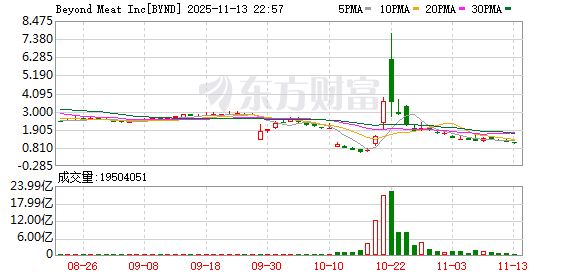
Core Viewpoint - Beyond Meat, known as the "first plant-based meat stock," reported a 14.37% decline in revenue for the first three quarters of 2025, with net losses widening, prompting a strategic shift to expand beyond plant-based meat products [1][3][6] Financial Performance - For the first three quarters, Beyond Meat achieved revenue of $214 million, down 14.37% year-over-year, and a net loss of $193 million, compared to a net loss of $115 million in the same period last year [3][6] - In Q3 alone, revenue was $70.22 million, a 13.32% decrease year-over-year, with a net loss of $111 million, significantly larger than the $26.58 million loss in the same quarter last year [3][6] - The decline in revenue is attributed to a 10.3% decrease in product sales volume and a 3.5% drop in average selling price [3][4] Market Dynamics - The U.S. market has seen the most significant decline, with net revenue from U.S. retail channels dropping 18.4% to $28.54 million and sales volume decreasing 12.6% [3][4] - The overall demand for plant-based meat appears weak, as the products struggle to meet mainstream market needs, remaining largely in niche segments [4][7] Strategic Shift - Beyond Meat is transitioning its focus from meat imitation to traditional plant proteins, as evidenced by the launch of "Beyond Ground," which contains only plant-based ingredients and no meat analogs [8][9] - The company aims to become a "global protein company" by diversifying its product offerings and enhancing its operational efficiency [8][9] Industry Context - The plant-based meat sector is facing significant challenges, with many companies exiting the market due to unmet consumer expectations regarding taste, price, and nutrition [7][8] - Analysts suggest that the capital market's enthusiasm for plant-based meat has waned, shifting towards more diverse protein solutions with technological barriers [7][8]
“鱿鱼游戏”搬上华尔街!韩国散户押注美股迷因股,海外持仓激增至1700亿美元
Hua Er Jie Jian Wen· 2025-11-12 13:40
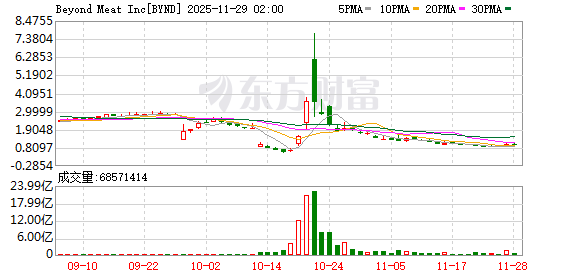
Core Insights - South Korean retail investors are increasingly adopting aggressive trading strategies reminiscent of the "Squid Game" on Wall Street, significantly impacting the meme stock phenomenon in the U.S. [1][8] Group 1: Investment Trends - As of the end of October, South Korean investors held a record $170 billion in U.S. stocks, nearly doubling since the beginning of the year [1] - South Korean investors own approximately $4.4 billion in shares of U.S. quantum computing company IonQ, representing nearly 20% of the company's total market capitalization [2] - In October, South Korean investors net purchased $239 million in shares of plant-based meat company Beyond Meat, which experienced significant price volatility during the month [5] Group 2: Market Dynamics - The influx of South Korean retail investors is intensifying the speculative nature of the U.S. stock market, particularly within the meme stock sector [1][9] - The South Korean stock market has performed well this year, with the Kospi index rising about 70%, but the S&P 500 index in Korean won terms has surged over 300%, prompting investors to seek opportunities abroad [10] - The depreciation of the Korean won by nearly 5% over the past three months is believed to be a contributing factor to the capital outflow and pressure on the exchange rate [10] Group 3: Behavioral Insights - South Korean retail investors exhibit a higher risk appetite compared to their counterparts in other countries, as noted by CLSA's strategist [8] - The ease of trading U.S. stocks through advanced mobile trading systems provided by local brokers has facilitated this trend, with investors describing the experience as addictive [10]