生态监测

Search documents
智联欧亚 携手前行
Shan Xi Ri Bao· 2025-09-24 23:03
Group 1: Global Governance and Cooperation - The article emphasizes the consensus among many countries to deepen connectivity and jointly implement global governance initiatives amid profound changes in the global governance system [1] - The 2025 Eurasian Economic Forum serves as a platform for domestic and international participants to discuss hot topics in Eurasian development and provide intellectual support for regional cooperation [1] Group 2: Digital Economy and Urban Development - The ninth Silk Road Economic Belt City Roundtable Conference highlights the digital economy as a core engine driving high-quality urban development [2] - Xi'an has been focusing on national digital economy strategies, enhancing digital infrastructure like 5G and data centers, and promoting the integration of digital technology with various sectors [3] Group 3: International Collaboration and Knowledge Sharing - The conference facilitated discussions on smart transportation, ecological digital monitoring, and cross-border data sharing, leading to potential cooperation intentions among participating countries [3] - The establishment of a think tank cooperation mechanism during the 2025 Eurasian Economic Forum aims to enhance policy communication and economic connectivity among Eurasian countries [8][9] Group 4: Reports and Research Findings - The "Belt and Road Initiative: Eurasian Economic Observation" report provides insights into the dynamics and trends in trade and industrial cooperation among Eurasian countries [9][10] - The "China-Central Asia Economic Cooperation Report" analyzes the cooperation mechanisms and policy optimization paths for China-Central Asia economic interactions, aiming to facilitate high-quality project and enterprise collaborations [10]
科技支撑生态文明建设,中国科学院副院长讲了三方面
Di Yi Cai Jing· 2025-09-16 09:55
Core Viewpoint - Scientific innovation is a key force supporting ecological civilization construction in China, as highlighted by the Chinese Academy of Sciences (CAS) during a recent press conference [1]. Group 1: Research Infrastructure - CAS has established a nationwide monitoring and research system that integrates sky, land, and sea, including national and institutional stations [1]. - The "China Ecosystem Research Network" and "China Biodiversity Monitoring and Research Network" provide critical support for the development of world biosphere reserves such as Dinghushan, Wolong, and Jiuzhaigou [1]. - The Xishuangbanna Ecological Station has conducted long-term observations of tropical rainforest ecosystems, providing a scientific basis for the restoration of habitats for Asian elephants and associated wildlife [1]. - The Southwest Wild Biological Germplasm Resource Bank has developed new models for rural revitalization through the conservation of new germplasm such as truffles and orchids, along with the development of supporting technologies [1]. Group 2: Compilation of Authoritative Records - CAS annually updates and publishes the Chinese biological species catalog, leveraging its long-term research accumulation [2]. - In collaboration with the Ministry of Ecology and Environment, CAS publishes the "Red List of China's Biodiversity," covering various topics including higher plants, vertebrates, and large fungi, which supports national biodiversity protection and ecological security [2]. Group 3: Strengthening the Role of Scientific Think Tanks - CAS scientists proposed and promoted the "Ten-Year Fishing Ban on the Yangtze River," which has become a significant decision for the high-quality development of the Yangtze Economic Belt and ecological restoration of the river basin [4]. - CAS leads major consulting projects such as "Scientific Support for the Construction of Ecological Barriers in Western China," organizing comprehensive scientific investigations in the Tibetan Plateau and Xinjiang, providing decision-making basis for ecological protection and high-quality development in these regions [4]. Group 4: Ecosystem Accounting System - The ecosystem production value accounting system proposed by CAS has been applied in several domestic world biosphere reserves and incorporated into the international standards of the United Nations' environmental economic accounting system [5]. - The fifth World Biosphere Reserve Conference, organized by UNESCO, will be held from September 22 to 25, 2025, in Hangzhou, Zhejiang [5]. - China has actively participated in the "Man and the Biosphere Program" initiated by UNESCO since joining in 1973, exploring scientific paths for biodiversity protection and sustainable development [5].


吉林市:构建立体监测网 守卫松花湖
Zhong Guo Huan Jing Bao· 2025-08-28 01:46
Core Viewpoint - The Jilin Ecological Environment Monitoring Center has dedicated 40 years to monitoring and protecting the ecological health of Songhua Lake, establishing a comprehensive water ecological monitoring system and contributing to ecological restoration efforts [1][2]. Group 1: Monitoring Efforts - Since the 1980s, the Jilin Center has faced challenges such as inadequate equipment and a lack of talent, yet it has successfully conducted exploratory monitoring of Songhua Lake [1]. - The center has developed a valuable biological sample library by systematically identifying plankton and benthic animals, filling a significant data gap [1]. Group 2: Technological Advancements - The Jilin Center has continuously improved its monitoring capabilities by updating professional monitoring vessels, building standard laboratories, and introducing over 20 types of specialized equipment [1]. - In 2023, the center optimized its monitoring system based on the latest national technical guidelines, establishing a three-dimensional monitoring network at key points in Songhua Lake [1]. Group 3: Research Collaborations - The center has actively promoted research collaborations, including a 2016 study with universities on the relationship between nutrients, algae, and pH levels in Songhua Lake [1]. - In 2024, the center will collaborate with the Nanjing Institute of Environmental Sciences to establish a comprehensive ecological quality monitoring station for the Songhua River [1]. Group 4: Ecological Impact - The Jilin Center has identified 109 genera of phytoplankton, 29 genera of zooplankton, and 60 genera of large benthic animals, creating a scientifically sound water ecological monitoring system [2]. - The extensive data accumulated by the center has laid a solid foundation for precise management and ecological restoration, enhancing the ecological reputation of Songhua Lake as a beautiful ecological landmark in Jilin [2].
遥感“天眼”助力生物多样性保护 共建地球生命共同体|生物多样性治理系列解读⑥
Zhong Guo Huan Jing Bao· 2025-08-20 00:18
Core Viewpoint - The article emphasizes the importance of biodiversity protection for sustainable development and highlights the role of technology, particularly remote sensing, in enhancing biodiversity monitoring and governance efforts globally [1][7]. Group 1: Importance of Biodiversity Protection - The theme for the 2025 International Day for Biological Diversity is "Coexistence and Sustainable Harmony," calling for a harmonious relationship between humans and nature to advance global biodiversity governance [1]. - Policies such as "Opinions on Further Strengthening Biodiversity Protection" and "China's Biodiversity Protection Strategy and Action Plan (2023-2030)" stress the need for accelerating the application of satellite and drone remote sensing technologies [1][2]. Group 2: Technological Advancements in Biodiversity Monitoring - The Satellite Environment Application Center has integrated various remote sensing technologies, including satellites, drones, and LiDAR, with artificial intelligence to overcome traditional monitoring limitations and establish a comprehensive biodiversity monitoring system [2][3]. - The 2024 release of the "Remote Sensing Survey Technical Guidelines for Biodiversity (Terrestrial Ecosystems)" aims to standardize ecosystem classification and remote sensing methods, providing a scientific basis for biodiversity protection measures [2]. Group 3: Ecosystem Health Assessment - Remote sensing technologies enable the rapid acquisition of detailed vegetation structure parameters and ecosystem function metrics, which are crucial for assessing ecosystem health [3]. - The Satellite Center has developed monitoring models for tree quantity and height in national nature reserves and conducted assessments of grassland and wetland ecosystems to understand their health status and changes over time [3]. Group 4: Habitat Monitoring and Species Protection - The establishment of a regular remote sensing monitoring mechanism for critical species habitats is emphasized, utilizing satellite data to assess habitat conditions and human activities [4]. - For instance, the habitat range for snow leopards in the Sanjiangyuan region has decreased by 28,000 square kilometers, highlighting the need for precise spatial data to inform conservation planning [4]. Group 5: Drone Technology in Species Identification - Drone remote sensing offers significant advantages over traditional ground surveys, allowing for extensive monitoring and high-resolution data collection for species identification [5][6]. - The Satellite Center has successfully implemented automated data collection in Inner Mongolia, achieving an 88.6% accuracy rate in identifying various grassland plant species [6]. Group 6: Global Biodiversity Governance - The article discusses the need for a global biodiversity data-sharing platform, integrating remote sensing data with ground observation data to enhance monitoring capabilities [8]. - The establishment of a monitoring framework based on the "Kunming-Montreal Framework" aims to strengthen China's role in global biodiversity governance and address new challenges such as climate change and human-wildlife conflict [9].
助力产业升级,市场监管总局批准106项国家标准样品
news flash· 2025-07-23 09:13
Group 1 - The State Administration for Market Regulation (SAMR) has approved the release of 106 national standard samples to support industrial upgrades, public welfare, and ecological governance [1] - In materials, 45 standard samples for metals and non-metals cover areas such as non-ferrous metals, construction materials, and petrochemicals, aiding in the independent research and development of key strategic materials [1] - In biosafety, 25 qualitative and sensory standard samples will enhance the efficiency and accuracy of quarantine inspections at ports, improving national biosecurity [1] Group 2 - 17 standard samples for consumer goods provide a foundation for a quality assurance system, including 11 samples for food and agricultural products that measure beneficial or harmful substance content [1] - 5 textile standard samples support related textual standards for assessing fabric pilling and color fastness, while 1 audio standard sample ensures accurate sound quality assessment [1] - SAMR has extended the validity of 19 standard samples related to persistent organic pollutants, heavy metals, and volatile organic compounds to improve ecological monitoring data quality [1]
新华视点|创新驱动 数智领航——以科技创新引领产业创新一线观察
Xin Hua She· 2025-06-14 01:42
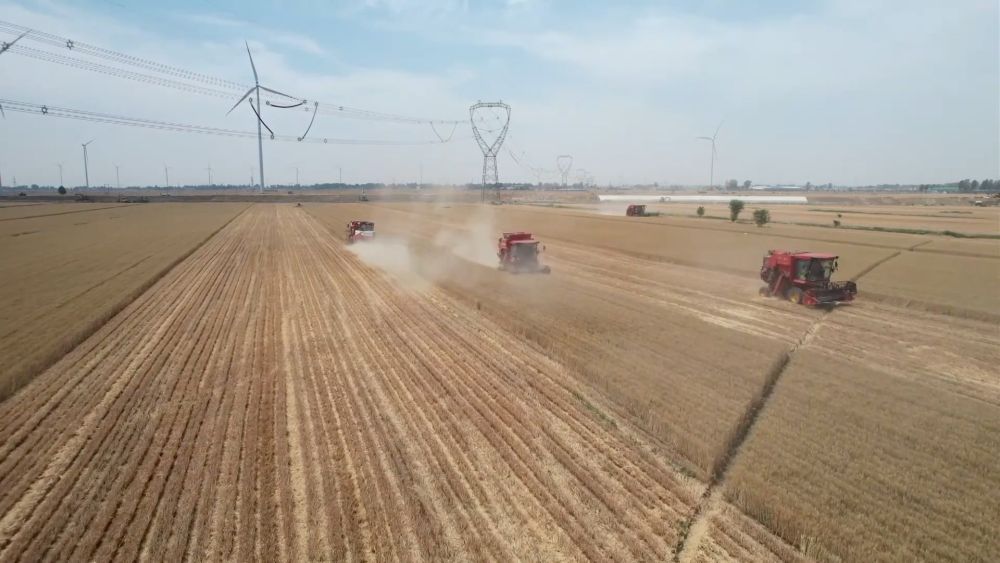
Group 1: Agricultural Innovation - The 5G digital agriculture demonstration park in Hebi City, Henan Province, spans over 3,000 acres of high-standard farmland, showcasing modern agricultural practices with large combine harvesters [1] - The park is equipped with soil moisture monitoring devices, weather stations, and pest monitoring equipment, which collect comprehensive data on soil moisture, nutrient content, weather conditions, and pest issues, integrating traditional farming with modern technology [3] Group 2: Environmental Transformation in Industry - The engineering rubber industry in Hengshui, Hebei, has over 60% market share domestically but faced pollution issues, prompting a shift from passive pollution control to proactive pollution reduction through "smart manufacturing and governance" [5] - Hengshui High-tech Zone has invested nearly 100 million yuan to establish a "technical support-rating incentive-smart supervision" system, guiding over 60 engineering rubber companies in environmental upgrades [6] Group 3: Bamboo Industry Upgrading - Yong'an City in Fujian Province, known as the "Bamboo and Bamboo Shoot Capital," is accelerating the transformation of its bamboo industry through digital technology, monitoring soil temperature and humidity in real-time for intelligent irrigation [6] - The bamboo processing sector is diversifying, utilizing CNC equipment to transition from manual to automated processes, improving product variety, precision, and quality [9] Group 4: Smart Environmental Monitoring - The Maowei Sea Intelligent Comprehensive Monitoring Base in Qinzhou City, Guangxi, utilizes various monitoring methods, including satellite remote sensing and drone patrols, to assess water quality parameters automatically [8] - The base, which began operations in March, integrates AI, big data, and cloud computing to create a multi-dimensional ecological monitoring system, supporting sustainable development in the region [11]
深读|环境DNA技术实现朱鹮监测“从无形到有形”转变
Zhong Guo Huan Jing Bao· 2025-04-24 01:49
Core Viewpoint - The application of environmental DNA (eDNA) technology for monitoring the endangered crested ibis in China represents a significant breakthrough, providing a new method for precise and efficient monitoring of this species and potentially other endangered species [1][19]. Group 1: Environmental DNA Technology - The research team from the Shaanxi Provincial Environmental Monitoring Center has successfully implemented eDNA technology to monitor the crested ibis by collecting air samples to detect residual DNA, overcoming the limitations of traditional monitoring methods [1][12]. - The eDNA sampling process involves capturing air samples that may contain particles from the crested ibis, such as feces and feather fragments, allowing for non-invasive monitoring [3][5]. - The team has established a genetic database for the crested ibis by collecting environmental samples and natural shedding materials, which aids in the design of specific primers for targeted monitoring [5][8]. Group 2: Monitoring Process and Results - The monitoring process includes setting up sampling points in key areas such as breeding, foraging, and migratory stopovers, with a systematic approach to ensure representative and scientifically valid samples [12][14]. - The team has successfully detected crested ibis DNA from air samples at 21 out of 22 sampling points, indicating the effectiveness of air as a monitoring medium compared to water and soil [14][15]. - The concentration of crested ibis DNA detected in air samples was approximately 37 DNA sequences per microliter, significantly higher than in soil and water samples, highlighting the advantages of air sampling for this species [14][15]. Group 3: Future Implications and Applications - The integration of eDNA technology into the monitoring framework for the crested ibis is expected to enhance the understanding of its population dynamics and distribution, supporting conservation efforts [19][21]. - This innovative approach not only benefits the crested ibis but also sets a precedent for the monitoring of other endangered species, contributing to broader conservation strategies [21]. - The collaboration of various monitoring methods, including traditional techniques and GPS tracking, is emphasized as essential for achieving comprehensive and effective monitoring of the crested ibis population [20][21].