网约车服务

Search documents
鞍马出行被罚
Qi Lu Wan Bao· 2025-10-15 03:02
Core Points - Shandong Anma Travel Technology Co., Ltd. Wenzhou Branch was fined by Wenzhou Transportation Bureau for operating vehicles without the necessary operating permits [1] - The total fine amounted to 20,000 yuan, resulting from two separate violations identified during inspections [1] Summary by Sections Company Overview - Shandong Anma Travel Technology Co., Ltd. was established in 2019 with a registered capital of 10 million yuan [1] - The legal representative is Wang Cunqiang, and the company is registered in Huaiyin District, Jinan City [1] - The company offers a diverse range of travel services including ride-hailing, airport transfers, intercity carpooling, corporate transportation, and taxi services [1] Regulatory Issues - On July 4, 2025, Wenzhou Transportation Bureau discovered that the company was providing services with vehicles that lacked operating permits during an inspection at Haoyu Square [1] - A second violation was noted on February 24, 2025, during an inspection at Shangyue Garden (North Gate) to Longwan Phoenix City (Southwest Gate) [1] - Both incidents highlight the company's non-compliance with transportation regulations [1]
Alipay+与Grab达成全球合作:多个“支付宝”用户去东南亚可直接打Grab
Zhong Jin Zai Xian· 2025-09-16 08:56
Core Insights - The article highlights the preparations made by overseas merchants to welcome Chinese tourists during the upcoming "Golden Week" holiday, emphasizing the convenience of using Alipay+ for cross-border services [1][2]. Group 1: Alipay+ and Cross-Border Services - Alipay+ has partnered with Grab, Southeast Asia's largest ride-hailing platform, allowing users from Alipay, AlipayHK, and GCash to book rides directly through their home wallet apps in Southeast Asia [2]. - The service covers eight Southeast Asian countries, enabling Chinese tourists to book Grab rides in their native language and pay in RMB, along with exclusive discounts [2][4]. - Alipay's cross-border payment services are now available in over 70 countries and regions, providing tailored travel solutions and discounts for various destinations [4]. Group 2: Enhancements for Chinese Tourists - In Singapore, public transport services are now accessible to Chinese tourists through Alipay, allowing them to purchase NETS cards for seamless travel across the city [4]. - The Fairprice Group in Singapore has integrated Alipay+ across over 500 stores, enabling tourists from 12 countries to use their home wallets for payments [7]. - Cheers convenience stores in Singapore are preparing to launch a dedicated mini-program on Alipay, enhancing the shopping experience for Chinese visitors [5][8]. Group 3: Expanding Payment Options - Alipay+ connects with 36 e-wallets and national QR payment systems, reaching over 1.7 billion users and 100 million merchants, primarily small and medium-sized enterprises [10]. - The service addresses common pain points for tourists, such as cashless payments for public restrooms and vending machines in Europe, enhancing the overall travel experience [10]. - New features on Alipay's "overseas travel" section include booking services for popular attractions, allowing users to interact with a smart assistant for personalized travel recommendations [10].


车到即走!港珠澳大桥珠海口岸网约车服务区新升级
Nan Fang Du Shi Bao· 2025-07-21 12:34
Core Insights - The article highlights the successful implementation of an intelligent upgrade to the ride-hailing service area at the Zhuhai Port of the Hong Kong-Zhuhai-Macao Bridge, significantly reducing the time from order to departure to under 5 minutes [1][6][7] Group 1: Service Upgrade - The upgrade addresses traditional issues such as unclear positioning and communication difficulties, which previously led to long wait times and congestion [2][3] - The new system features real-time binding of vehicle license plates to parking spaces, allowing passengers to easily locate their rides [2][3] - The average time from order to departure has been reduced from over 10 minutes to less than 5 minutes [3][6] Group 2: Passenger Experience - The service area includes a 107 square meter waiting area and a 350 square meter quick boarding area, equipped with amenities like air conditioning, seating, and free Wi-Fi [4][5] - Clear instructions for first-time users are provided, ensuring a seamless experience from ordering to boarding [5][6] Group 3: Operational Efficiency - The design includes 58 waiting spots and 21 quick boarding spots, effectively managing vehicle flow and reducing safety hazards [3][6] - Since the upgrade, ride-hailing demand has increased by 45% year-on-year, indicating a significant improvement in service efficiency [6][7] Group 4: Broader Impact - The Zhuhai Port has seen over 10 million travelers since its opening, marking a record increase of over 18.9% [7] - The upgrade serves as a model for cross-border travel services in the Greater Bay Area, enhancing connectivity and convenience for travelers [7]
“大厂”助力残障人士跨越就业门槛
Zhong Guo Qing Nian Bao· 2025-06-05 14:40
Core Viewpoint - The article highlights the increasing employment opportunities for disabled individuals, particularly those with hearing impairments, in the gig economy, facilitated by technology and supportive company policies [1][4][9]. Group 1: Employment Opportunities for Disabled Individuals - Over 9,000 disabled riders are currently working for Meituan, with many finding success in flexible job roles such as delivery riders and online content creators [5][9]. - Companies like Meituan and Didi are implementing features to assist disabled workers, such as real-time voice-to-text communication tools and special identification for disabled riders [8][9][15]. - The gig economy is becoming a viable option for disabled individuals, with many reporting higher earnings compared to traditional jobs [5][6]. Group 2: Technological Advancements - Meituan launched the "Hearing-impaired Rider Care" feature, which allows for instant messaging communication, significantly improving the interaction between riders and customers [8]. - Didi provides tools for hearing-impaired drivers, including signage and voice broadcast systems, to facilitate communication with passengers [6][9]. - New technologies, such as AI coding assistants, are being developed to support visually impaired individuals in the tech industry, enhancing their employment prospects [10][11]. Group 3: Supportive Policies and Initiatives - The Chinese government has introduced various policies aimed at improving employment conditions for disabled individuals, including financial support and training programs [9][14]. - Internet companies are increasingly adopting inclusive hiring practices and creating supportive environments for disabled employees [15][16]. - The implementation of the "14th Five-Year Plan for the Protection and Development of Disabled Persons" emphasizes the importance of flexible employment opportunities for disabled individuals [14].

【深度】盛威时代港股IPO:阿里输血撑起增长神话,盈利与独立性成疑
Sou Hu Cai Jing· 2025-04-30 10:35
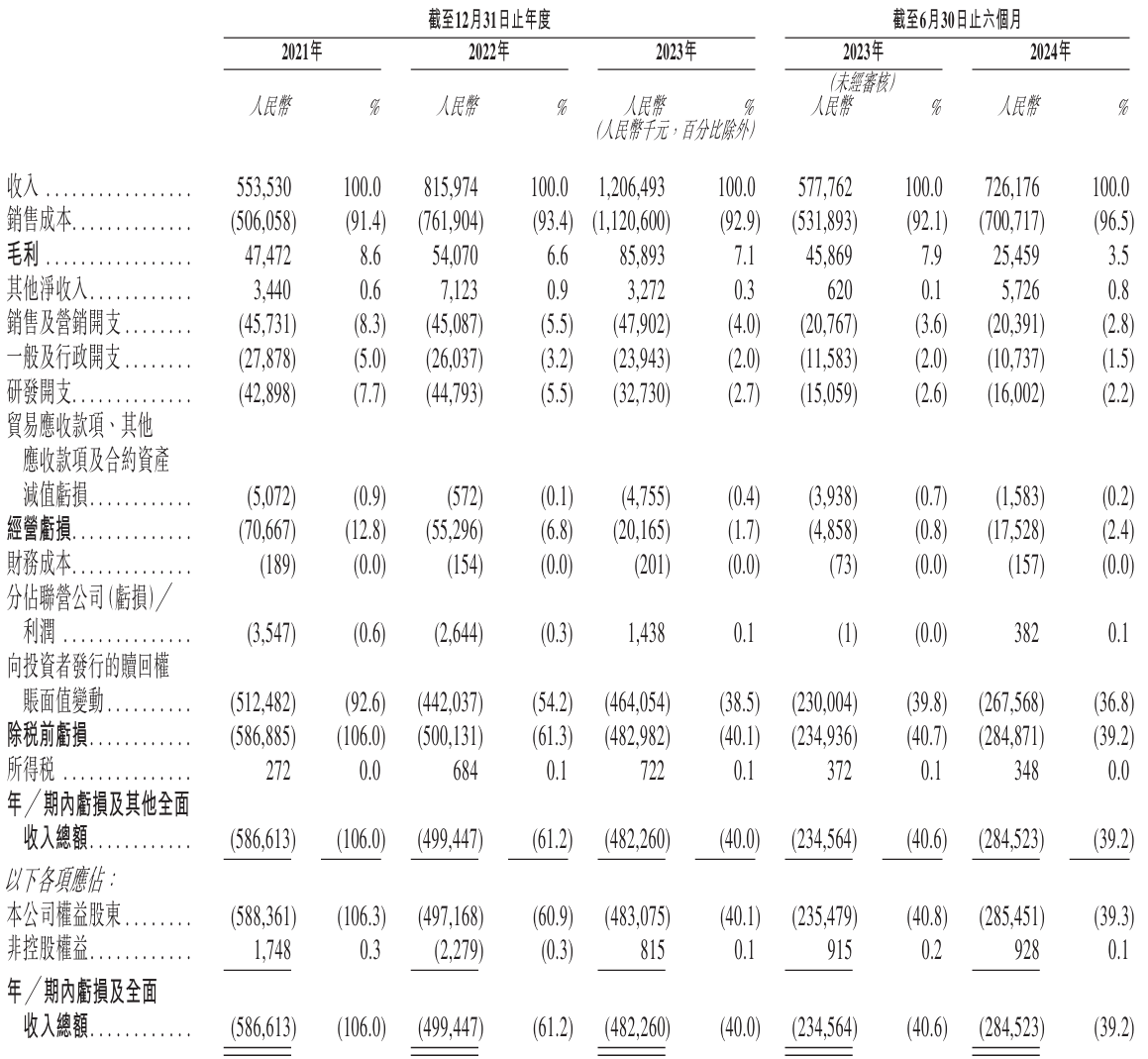
Core Viewpoint - Shengwei Times Technology Co., Ltd. is facing significant challenges on its path to an IPO in Hong Kong, as its rapid growth is underpinned by various risks, including heavy reliance on Alibaba, questionable profitability, and independence issues [1] Financial Performance - Revenue for Shengwei Times increased from RMB 553.53 million in 2021 to RMB 1,206.49 million in 2023, reflecting a growth rate of 47.80% [2] - The company reported a net loss of RMB 483 million in 2023, with a continued loss of RMB 285 million in the first half of 2024, indicating a persistent negative net margin [7][14] - Gross profit margins have fluctuated, with gross profit of RMB 85.89 million in 2023, representing a margin of 7.1% [2] Revenue Composition - Over 80% of Shengwei Times' revenue is derived from Alibaba and its affiliates, particularly through the Gaode platform, which accounts for a significant portion of its ride-hailing service revenue [3][4] - The company's ride-hailing services accounted for 84.7% of total revenue in 2021, increasing to 88.5% in 2023 [4][5] - Despite low direct revenue from Alibaba, the dependence on Gaode for ride-hailing services creates a "nominal independence, substantial binding" revenue structure [6] Business Model and Market Position - Shengwei Times positions itself as a leading provider of intercity and urban transportation information services, but its growth is largely driven by internal cycles within the Alibaba ecosystem rather than market expansion [7][9] - The company operates with a high commission rate of 9% paid to Gaode, which is higher than competitors, indicating a lack of control over its business terms [7][10] - The governance structure shows a lack of independence, with major shareholders controlling approximately 42.20% of voting rights, further complicating its position as a standalone entity [13] Market Perception and Future Outlook - The market remains skeptical about Shengwei Times' valuation, as it is heavily reliant on future cash flow assumptions rather than current business fundamentals [14] - The company's growth is primarily driven by internal revenue transfers within the Alibaba ecosystem, raising concerns about its ability to compete in the broader market [14][15] - To gain market acceptance, Shengwei Times must demonstrate technological independence and the ability to attract customers outside the Alibaba ecosystem [14][15]