黑色金属矿采选业

Search documents
前十一月我省经济运行总体平稳
Liao Ning Ri Bao· 2025-12-19 01:09
Core Viewpoint - The economic performance of the province from January to November shows steady growth in industrial output, expanding market sales, and rapid export growth, indicating overall economic stability [1] Industrial Performance - The province's industrial added value increased by 1.1% year-on-year, with high-tech manufacturing growing by 3.3% [1] - Mining industry added value rose by 6.8%, while manufacturing grew by 0.5%, and the electricity, heat, gas, and water production and supply sector declined by 1.6% [1] - Among 40 major industrial sectors, 23 experienced year-on-year growth, resulting in a growth rate of 57.5% [1] - Notable growth sectors include chemical fiber manufacturing (up 7.3 times), transportation equipment manufacturing (up 41%), and non-ferrous metal mining (up 17.6%) [1] Product Performance - Civil steel ship production increased by 88.3%, transformers by 48%, and synthetic ammonia by 21.2% [2] - Sales of wearable smart devices surged by 16.3 times, while energy-efficient home appliances and smartphones both grew by 1.1 times [3] Investment and Sales - Investment in high-tech manufacturing rose by 14.1%, indicating strong growth in this sector [3] - The total retail sales of consumer goods reached 956.5 billion yuan, with a year-on-year growth of 2.3% [3] - Basic living goods saw stable sales growth, with food retail up by 12.2% and daily necessities by 9.3% [3] Export Performance - The province's total import and export value reached 684.07 billion yuan, with exports at 373.48 billion yuan, growing by 9.4% [3] - Key export products included agricultural products (310.5 billion yuan, up 9.2%) and electromechanical products (1,891.2 billion yuan, up 9.3%) [3]
2025年11月物价数据点评:CPI持续回升,PPI偏降
Shanghai Securities· 2025-12-11 13:11
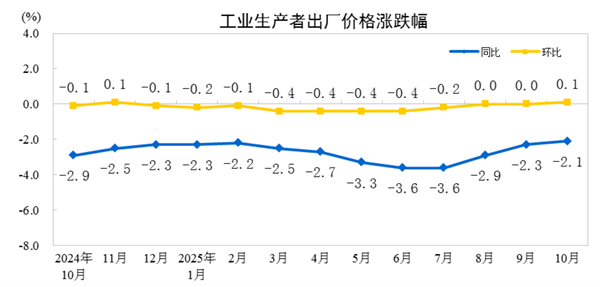
CPI Analysis - In November 2025, the Consumer Price Index (CPI) rose by 0.7% year-on-year, an increase of 0.5 percentage points, marking the highest level since March 2024[4] - The CPI decreased by 0.1% month-on-month, primarily influenced by non-food prices[4] - Food prices turned positive, contributing positively to the CPI, with fresh vegetable prices increasing by 14.5%[15] - Core CPI, excluding food and energy, remained stable at a 1.2% year-on-year increase, maintaining above 1% for three consecutive months[15] PPI Analysis - The Producer Price Index (PPI) decreased by 2.2% year-on-year, with a slight widening of the decline by 0.1 percentage points[12] - Month-on-month, PPI increased by 0.1%, marking two consecutive months of growth[20] - Key sectors such as black metal mining and coal mining saw a narrowing of price declines, while oil extraction and processing experienced expanded price drops[22] Economic Policy Implications - The low CPI and PPI levels create room for more proactive macroeconomic policies, including increased fiscal measures and moderate monetary easing[5] - The political bureau meeting emphasized the need for stronger counter-cyclical and cross-cyclical adjustments to promote effective qualitative and reasonable quantitative economic growth[5] Risk Factors - Potential risks include worsening geopolitical events, changes in international financial conditions, and unexpected shifts in China-U.S. policies[6]
鲜菜鲜果涨价支撑食品改善,服务价格相对稳固
China Post Securities· 2025-12-11 07:48
Group 1: CPI Trends - CPI year-on-year growth has shown a recovery trend for three consecutive months, with a November increase of 0.7%, up 0.5 percentage points from the previous value[8] - Food prices have significantly contributed to the CPI improvement, with fresh vegetables and fruits accounting for 54.29% of the food price increase[12] - The two-year compound growth rate of CPI in November was 0.45%, reflecting a marginal improvement[8] Group 2: Food Price Dynamics - Fresh vegetables and fruits saw year-on-year price increases of 14.5% and 0.7%, respectively, due to supply shortages caused by extreme weather[12] - Beef and lamb prices also maintained stable year-on-year growth, with increases of 6.2% and 3.7% respectively, driven by declining livestock numbers[12] Group 3: PPI Trends - PPI year-on-year growth was -2.2% in November, lower than the expected -2.03%, indicating a continued low-level fluctuation[19] - The year-on-year growth rate of production materials was -2.4%, while living materials saw a decline of -1.5%[20] Group 4: Sector Analysis - The upstream mining sector showed relative price stability, with coal mining and black metal mining prices improving marginally[23] - Downstream consumer prices exhibited weak recovery, with food and beverage prices continuing to show weakness, reflecting ongoing demand issues[24]
2025年1-10月黑色金属矿采选业企业有1537个,同比下降0.97%
Chan Ye Xin Xi Wang· 2025-12-10 04:00
数据来源:国家统计局,智研咨询整理 2025年1-10月,黑色金属矿采选业企业数(以下数据涉及的企业,均为规模以上工业企业,从2011年 起,规模以上工业企业起点标准由原来的年主营业务收入500万元提高到年主营业务收入2000万元)为 1537个,和上年同期相比,减少了15个,同比下降0.97%,占工业总企业的比重为0.29%。 2016-2025年1-10月黑色金属矿采选业企业数统计图 上市公司:中信特钢(000708),河钢股份(000709),中南股份(000717),本钢板材(000761), 新兴铸管(000778),太钢不锈(000825),鞍钢股份(000898),河钢资源(000923),华菱钢铁 (000932),沙钢股份(002075),包钢股份(600010),宝钢股份(600019) 相关报告:智研咨询发布的《2026-2032年中国黑色金属矿采选业行业市场全景调查及投资前景预测报 告》 知前沿,问智研。智研咨询是中国一流产业咨询机构,十数年持续深耕产业研究领域,提供深度产业研 究报告、商业计划书、可行性研究报告及定制服务等一站式产业咨询服务。专业的角度、品质化的服 务、敏锐的市场洞察 ...


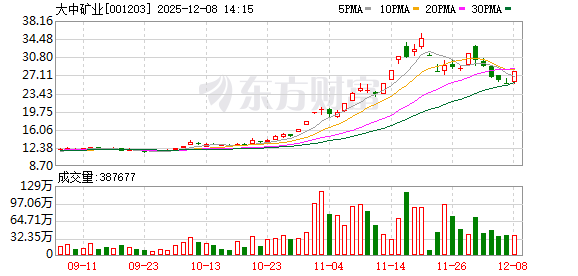
大中矿业:目前在湖南与四川项目共拥有3台盾构机,具备重复使用的能力
Mei Ri Jing Ji Xin Wen· 2025-12-08 06:15
每经AI快讯,有投资者在投资者互动平台提问:贵公司用的盾构机可以重复使用吗? 大中矿业(001203.SZ)12月8日在投资者互动平台表示,公司目前在湖南与四川项目共拥有3台盾构 机。其在完成规范检修与技术调试后,具备重复使用的能力。如湖南项目近期始发的"拓展号"盾构机, 即是由原有"龙源号"经全面检修与升级后重新投入使用的。公司将持续通过专业的运维管理,提升关键 设备的利用效率。 (文章来源:每日经济新闻) ...
丽江鑫岳矿业有限公司成立,注册资本2000万人民币
Sou Hu Cai Jing· 2025-12-04 17:34
经营范围含煤炭及制品销售;环境保护专用设备销售;集贸市场管理服务;企业管理咨询;供应链管理 服务;人工智能公共服务平台技术咨询服务;资源循环利用服务技术咨询;技术服务、技术开发、技术 咨询、技术交流、技术转让、技术推广;新型金属功能材料销售;生物质能资源数据库信息系统平台; 信息技术咨询服务;工程管理服务;矿山机械销售;非金属矿及制品销售;金属矿石销售;有色金属合 金销售;高性能有色金属及合金材料销售;非金属废料和碎屑加工处理;建筑材料生产专用机械制造; 稀土功能材料销售;固体废物治理。(除依法须经批准的项目外,凭营业执照依法自主开展经营活动) 许可项目:煤炭开采。(依法须经批准的项目,经相关部门批准后方可开展经营活动,具体经营项目以 相关部门批准文件或许可证件为准) 企业名称丽江鑫岳矿业有限公司法定代表人苗峡注册资本2000万人民币国标行业采矿业>黑色金属矿采 选业>其他黑色金属矿采选地址云南省丽江市华坪县中心镇华兴社区永皓新天地商业区企业类型有限责 任公司(法人独资)营业期限2025-12-4至无固定期限登记机关华坪县市场监督管理局 来源:市场资讯 天眼查显示,近日,丽江鑫岳矿业有限公司成立,法定代表人为 ...
2025年10月物价数据点评:CPI回正,PPI连续改善
Shanghai Securities· 2025-11-14 09:21
Group 1: CPI Analysis - In October 2025, the national consumer price index (CPI) increased by 0.2% year-on-year, with urban areas rising by 0.3% and rural areas declining by 0.2%[12] - Food prices decreased by 2.9%, while non-food prices increased by 0.9%[12] - Core CPI rose by 1.2%, marking the highest increase since March 2024, indicating steady demand growth[15] Group 2: PPI Trends - The producer price index (PPI) fell by 2.1% year-on-year in October 2025, but the decline narrowed by 0.2 percentage points compared to the previous month[14] - PPI showed a month-on-month increase of 0.1%, marking the first rise in 2025[20] - Key industries such as black metal mining and coal mining saw price declines narrow or recover, indicating ongoing improvement in PPI[22] Group 3: Policy Implications - The low CPI and PPI levels create room for more aggressive macroeconomic policies, including proactive fiscal measures and moderate monetary easing[5] - Continuous improvement in industrial product prices suggests a stable economic recovery trend[30] Group 4: Risks - Potential risks include worsening geopolitical events, changes in international financial conditions, and unexpected shifts in China-U.S. policies[6]
国家统计局工业司首席统计师孙晓解读10月份工业生产数据
Guo Jia Tong Ji Ju· 2025-11-14 07:03
Core Insights - The overall industrial production in China is stable with significant growth in various sectors, indicating a solid advancement towards high-quality development [1] Group 1: Industrial Production Overview - In the first ten months of the year, the industrial added value for large-scale industries increased by 6.1% year-on-year, surpassing the previous year's growth by 0.3 percentage points [1] - In October, the industrial added value grew by 4.9% year-on-year, with a month-on-month increase of 0.17% after seasonal adjustments [1] - Among the three major sectors, manufacturing increased by 4.9%, while mining and electricity, heat, gas, and water production and supply grew by 4.5% and 5.4%, respectively [1] - Out of 41 major industrial categories, 29 experienced year-on-year growth, resulting in a growth coverage of 70.7% [1] - Of the 623 major industrial products tracked, 313 saw an increase in production, representing a growth coverage of 50.2% [1] Group 2: Equipment Manufacturing Sector - The added value of large-scale equipment manufacturing increased by 8.0% year-on-year, accounting for 36.1% of the total industrial output, which is an increase of 1.5 percentage points compared to the entire year of 2024 [2] - All eight industries within equipment manufacturing reported growth, with the automotive and electronics sectors leading at growth rates of 16.8% and 8.9%, contributing 22.8% and 19.3% to the overall industrial growth, respectively [2] - The railway, shipbuilding, and aerospace sectors have maintained double-digit growth since December 2024, with a growth rate of 15.2% in October [2] - High-end equipment products are steadily developing, with production increases of 71.3% for railway locomotives, 21.4% for civil steel ships, and 16.9% for generator sets [2] Group 3: Emerging Industries and Digital Integration - The integration of the real economy and digital economy is deepening, with high-tech manufacturing and digital product manufacturing increasing by 7.2% and 6.7% year-on-year, respectively, both exceeding the overall industrial growth by 2.3 and 1.8 percentage points [3] - Specific sectors such as electronic materials, integrated circuits, and smart vehicle equipment saw substantial growth rates of 35.5%, 33.7%, and 28.4%, respectively [3] - The rapid development of "artificial intelligence+" has led to production increases of 34.0% for servers and 17.7% for integrated circuits; the robotics sector is also thriving, with production of robot reducers and industrial robots increasing by 4.6 times and 17.9%, respectively [3] Group 4: Traditional Industries - The petroleum processing industry saw an 8.1% year-on-year increase in added value, with the biofuel processing sector growing by 19.1%, contributing 1.9 percentage points more than the same period in 2024 [4] - The chemical fiber industry grew by 7.3%, with bio-based materials manufacturing increasing by 26.3%, contributing 13.3 percentage points more than the same period in 2024 [4] - Other traditional industries also showed positive growth, with chemical and coal industries increasing by 7.1% and 6.5%, respectively; non-ferrous and ferrous metal mining grew by 6.2% and 5.9% [4] - The long-term positive conditions and trends for China's industrial economy remain unchanged, although challenges such as insufficient effective demand and pressure on corporate profits persist [4]
2025年1-9月黑色金属矿采选业企业有1538个,同比增长0.2%
Chan Ye Xin Xi Wang· 2025-11-09 03:38
Core Viewpoint - The report highlights the current state and future outlook of the black metal mining industry in China, indicating a slight increase in the number of enterprises and their contribution to the industrial sector [1]. Industry Overview - As of January to September 2025, the number of enterprises in the black metal mining sector reached 1,538, which is an increase of 3 compared to the same period last year, reflecting a year-on-year growth of 0.2% [1]. - The black metal mining enterprises account for 0.29% of the total industrial enterprises in China [1]. Related Companies - The report mentions several listed companies in the black metal mining sector, including CITIC Special Steel, Hebei Iron and Steel, and Baosteel, among others [1].

10月PPI同比下降2.1%
Di Yi Cai Jing· 2025-11-09 01:52
Core Insights - In October 2025, the national industrial producer's ex-factory prices decreased by 2.1% year-on-year, with a narrowing decline of 0.2 percentage points compared to the previous month, while month-on-month, prices increased by 0.1% [1][9] - The average industrial producer's ex-factory prices from January to October 2025 fell by 2.7% compared to the same period last year [1][9] Group 1: Year-on-Year Changes - In October, the prices of production materials decreased by 2.4%, contributing approximately 1.77 percentage points to the overall decline in industrial producer's ex-factory prices [2] - The mining industry saw a significant price drop of 7.8%, while raw materials and processing industries experienced declines of 2.5% and 1.9%, respectively [2][9] - Prices for living materials decreased by 1.4%, with food prices down by 1.6% and durable consumer goods down by 3.2% [2][9] Group 2: Month-on-Month Changes - In October, the prices of production materials increased by 0.1%, contributing approximately 0.08 percentage points to the overall increase in industrial producer's ex-factory prices [7] - The mining industry prices rose by 1.0%, while raw materials remained stable and processing industry prices increased by 0.1% [7][9] - Living materials prices remained unchanged, with food and clothing prices both decreasing by 0.1% [7][9] Group 3: Industrial Purchase Prices - The industrial producer's purchase prices decreased by 2.7% year-on-year, with a 3.2% decline on average from January to October 2025 [9] - Fuel and power prices fell by 7.4%, while prices for non-ferrous metals and wires increased by 7.5% [6][9] - The prices of agricultural and sideline products decreased by 5.2%, and chemical raw materials saw a decline of 5.0% [6][9]