Industrial Software

Search documents
中国工业软件_需求温和复苏下亮点仍存-China Industrial Software _ Bright spots remain amid a mild demand recovery
2025-12-29 01:04
Summary of Key Points from the Equity Research Report Industry Overview - **Industry**: China's Industrial Software Sector - **Current Demand**: Mild recovery in demand observed in 9M25, with overall industrial digitalization demand remaining lukewarm. Many software players are experiencing low capital expenditure willingness and delayed project implementations [3][8] - **Market Performance**: Share prices of Baosight and BOCHU corrected by 29% and 4% YTD, respectively, while Longshine's share price increased by 26% YTD, outperforming the CSI 300 index which rose by 17% YTD [3] Company-Specific Insights Longshine (300682 CH) - **Recommendation**: Upgraded to Buy from Hold with a target price lowered to RMB19.00 from RMB22.00. Expected net profit CAGR of 42% from 2025 to 2027, driven by growth in grid digitalization, EV charging platform nearing breakeven, and power trading [4][18] - **Valuation**: Currently trading at a 0.6x 2026 PEG, compared to the peer average of 0.8x, indicating attractive valuation post-correction [19] - **Earnings Estimates**: 2025 net profit estimates reduced by 14% to RMB446 million, and 2026 estimates lowered by 6% to RMB666 million due to lower online utility payment trading volume and EV charging volume [10][28] - **Revenue Estimates**: Total revenue estimates for 2025 adjusted down by 1% to RMB4.726 billion, with stable growth expected in energy digitalization [11][28] BOCHU (688188 CH) - **Recommendation**: Maintained Buy rating with a target price lowered to RMB153.00 from RMB160.71. Expected net profit CAGR of 22% from 2025 to 2027 [35][46] - **Earnings Estimates**: 2025 net profit estimates reduced by 4% to RMB1.067 billion, with slight increases in revenue estimates for 2025, 2026, and 2027 [39][43] - **Market Position**: Anticipated growth in smart welding and precision processing, despite challenges from intense competition in the laser cutting equipment sector [38][52] Baosight (600845 CH) - **Recommendation**: Maintained Buy rating with a target price lowered to RMB23.00 from RMB32.00. Expected net profit CAGR of 16% over 2025-2027, despite short-term demand pressure in steel digitalization [4][43] - **Earnings Estimates**: Significant cuts in revenue estimates for 2025-2027 by 30-37% due to underestimated impacts from destocking in the downstream steel industry [4][43] Key Risks and Considerations - **Longshine**: - High client concentration with top five clients representing 66% of total revenue, leading to potential revenue volatility [27] - Competition from state-owned enterprises could intensify, impacting market share [27] - Goodwill impairment risk due to significant goodwill on the balance sheet [27] - **BOCHU**: - Intense market competition may lead to gross margin deterioration [52] - Potential share reduction by major shareholders could pressure share price [52] Conclusion - The industrial software sector in China is experiencing a mild recovery, with specific companies like Longshine and BOCHU showing potential for growth despite facing challenges. Longshine is favored for its robust earnings recovery and attractive valuation, while BOCHU is recognized for its overseas expansion and smart welding progress. Baosight, while facing short-term challenges, is still expected to benefit from long-term digitalization trends in the steel industry.



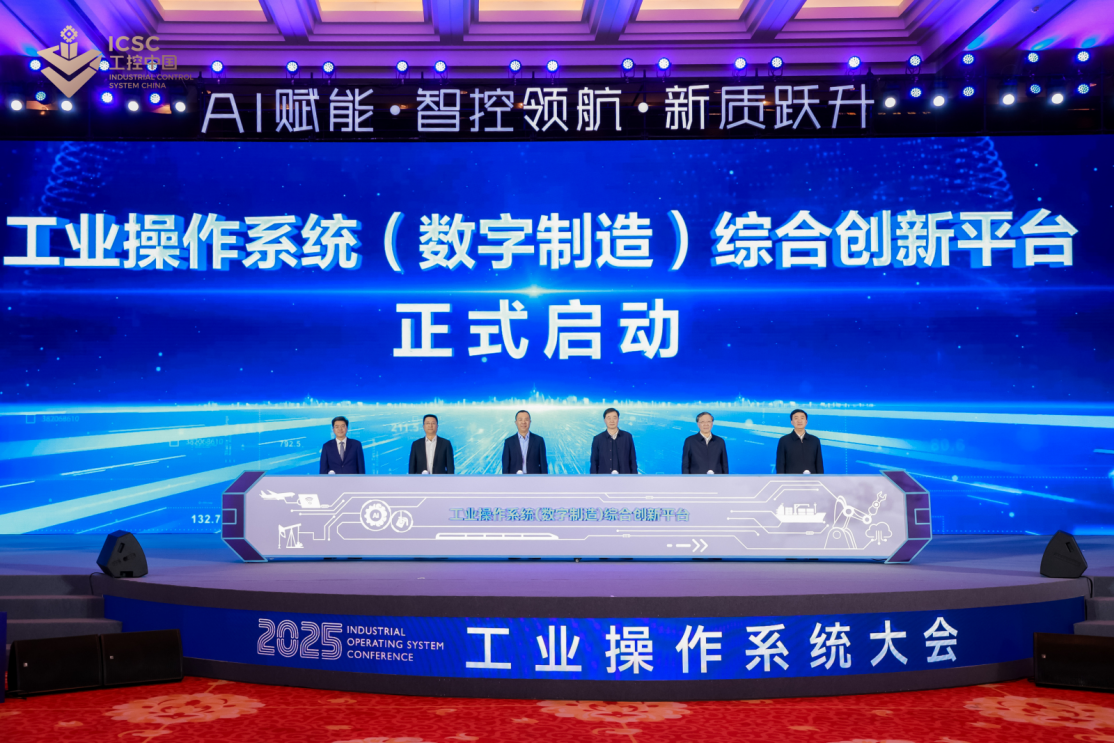
2025工业操作系统大会在苏州吴中召开 吹响协同创新集结号
Zhong Guo Jin Rong Xin Xi Wang· 2025-12-13 08:37
Core Insights - The 2025 Industrial Operating System Conference emphasizes the strategic importance of industrial operating systems as the core of industrial production and the soul of intelligent manufacturing, focusing on collaborative innovation and ecosystem building [1][6] - The conference highlights the rapid development of new-generation artificial intelligence technologies and the accelerated integration of IT and OT, pushing industrial operating systems towards a new phase of networking, openness, and intelligence [1] Group 1: Conference Highlights - The conference gathered key players from the entire industrial operating system ecosystem, including government, industry, academia, and research, to discuss the development path during the "14th Five-Year Plan" period [1][6] - Multiple sub-forums were set up to explore new trends, challenges, and achievements in the industry, aiming for high-quality development through demand-driven, technology-driven, and collaborative ecosystem approaches [2][1] Group 2: Key Discussions and Innovations - Experts discussed the integration of innovative technologies such as embodied intelligence and AI large models with industrial operating systems, addressing common challenges and building consensus for development [2] - The conference featured practical sharing on the development direction and trends of industrial operating systems under the backdrop of artificial intelligence, with contributions from leading companies in various sectors [2] Group 3: New Platforms and Initiatives - The conference announced the establishment of several collaborative innovation platforms, including a national industrial operating system testing and certification service platform, aimed at ensuring the safety of critical infrastructure in key industries [3] - The Open Atom Purple Gold Zone headquarters will focus on key areas like RISC-V and industrial software, fostering impactful open-source technology outcomes [3] Group 4: Regional Development and Industry Growth - The Wuzhong District is focusing on developing a "robotics + artificial intelligence" industry cluster, promoting the rapid development of core areas such as industrial control systems and AI models [5] - The district has established significant platforms and funds to support the integration of industrial software and manufacturing scenarios, enhancing collaboration among leading enterprises and research institutions [5]

信达证券:计算机板块“牛市旗手”属性凸显 基本面与流动性共振
智通财经网· 2025-12-01 03:18
Core Viewpoint - The computer sector has shown a four-phase trend in 2023: initial buildup, peak in February, mid-year adjustment, and breakthrough in September, influenced by the continuation of the 924 market, phenomenon-level catalysts like DeepSeek, and structural improvements in fundamentals [1] Group 1: AI+Coding - The global AI coding tools market is projected to grow from $6.7 billion in 2024 to $25.7 billion by 2030, with a compound annual growth rate (CAGR) of 25.2% from 2024 to 2030 [2] - In China, the AI code generation market is expected to increase from 6.5 billion RMB in 2023 to 33 billion RMB by 2028, with a CAGR of 38.4% [2] - High penetration rates in the internet and gaming industries are attributed to the characteristics of industry development, such as intensive project-based work and rapid iteration [2] Group 2: AI+Office - The AI+office software market in China is forecasted to reach 30.864 billion RMB in 2024 and grow to 191.137 billion RMB by 2028, reflecting a CAGR of 57.75% [3] - The core user base for AI office products is stabilizing, with a trend towards integrated product forms [3] - Quark leads the market with over 80 million visits, followed by major players like Tencent Docs and WPS AI, indicating a concentration of over 80% of top products in the hands of internet companies [3] Group 3: AI+Cybersecurity - Major manufacturers are increasingly utilizing machine learning and natural language processing to enhance security detection efficiency and accuracy, transitioning from traditional to proactive defense strategies [4] - The market for AI-driven security applications in China is expected to reach $1.6 billion by 2028, with a CAGR exceeding 230% [4] Group 4: Intelligent Driving - The VLA architecture is a new technology that translates visual information into understandable logic for vehicle operation, aiming for Level 5 full autonomous driving [5] - Sales of highway NOA (Navigation on Autopilot) are projected to rise from 363,000 units to 2.65 million units from January 2023 to January 2025, with penetration increasing from 8.7% to 35.7% [5] Group 5: Industrial Software - The capital expenditure in downstream industries is declining, with the steel sector showing a stabilization in growth at 0.8% year-on-year [6] - High-end design software, particularly those leveraging physical AI for advanced simulation, is emerging as a breakthrough direction with strong valuation elasticity [6] Group 6: Investment Recommendations - Companies to watch in AI+Coding include Zhuoyi Information; in AI+Office: Kingsoft Office, Foxit Software, Zhiyuan Interconnection, and Fanwei Network; in AI+Finance: Jiufang Investment and Tonghuashun; in AI+Cybersecurity: Deepin Technology and Anheng Information; in intelligent automotive: Horizon Robotics, Desay SV, and Zhongke Chuangda; in industrial software: Zhongkong Technology, Rongzhi Rixin, and Saiyi Information [8]

全球工业科技_具身智能-物理 AI 的崛起-Global Industrial Technology & Mobility_ Embodied Intelligence_ The Rise of Physical AI
2025-12-01 00:49
Summary of Key Points from the Conference Call Industry Overview - The focus is on the **Industrial Technology and Mobility** sector, specifically the rise of **Physical AI** as a transformative technology in industrial markets [1][12][49]. Core Insights and Arguments - **Growth Potential**: There is a projected **double-digit percentage growth** in AI-enabled edge devices, including Autonomous Mobile Robots (AMR) and robotics, as well as in design/simulation software driven by generative design [2][28]. - **Capital Expenditure Growth**: The adoption of Physical AI is expected to contribute a **mid-single digit percentage** to annual customer capital expenditure growth as capital investments replace labor [2][36]. - **Data Requirements**: Industrial AI requires substantial amounts of data, categorized into real-world data from intelligent devices and simulated data for design stages [3][49]. - **Cloud vs. Edge AI**: Both cloud and edge AI are essential, with cloud offering scalability and cost advantages, while edge AI addresses latency and security concerns [4][49]. - **Robotics Adoption**: Task-specific automation and intelligent robotic arms are deemed optimal for over **90% of manufacturing tasks**, indicating significant potential for AI in traditional automation [5][49]. - **M&A Activity**: Recent mergers and acquisitions, such as Siemens/Altair, are integrating simulation capabilities with real-time data to enhance AI adoption in industrial settings [3][49]. Stock Implications - A basket of **28 global stocks** has been identified as beneficiaries of the Physical AI trend, with companies like Siemens, Rockwell Automation, and ABB highlighted for their exposure to industrial control and design/simulation software [6][22][19]. Additional Insights - **AI Adoption in Industry**: AI adoption in industrial applications is still in its infancy, with only **15%** of advanced industrial customers using AI in supply chain management and **13%** in manufacturing [48][49]. - **Future Projections**: The installed base of industrial robots is expected to grow significantly, with projections suggesting a **CAGR of over 20%** over the next decade, driven by AI's ability to displace manufacturing tasks [28][29]. - **Strategic Considerations**: Companies are encouraged to focus on pricing for value and adapting to new SaaS models that reflect AI-driven efficiencies [63][64]. Conclusion - The era of Physical AI presents substantial opportunities for growth and innovation in the industrial sector, with significant implications for capital expenditure, robotics adoption, and stock performance in related companies. The integration of AI into industrial processes is expected to enhance efficiency and productivity, marking a pivotal shift in how industries operate [1][49][63].
3D工业软件学习曲线排行
Sou Hu Cai Jing· 2025-11-28 01:09
Overview - The article discusses the learning curves associated with various 3D industrial software, highlighting user experiences and preferences based on a survey of 327 professionals in the mechanical, mold, and additive manufacturing sectors [3][4]. Ranking Summary - CAXA 3D is rated as the easiest to learn with a score of 2 for initial difficulty and 3 for mastery, praised for its user-friendly Chinese interface [3]. - SolidWorks follows with a score of 2.5 for initial difficulty and 4 for mastery, noted for its extensive tutorials [3]. - Fusion 360 has a score of 3 for initial difficulty and 3.5 for mastery, recognized for its cloud collaboration features [3]. - Siemens NX and CATIA both score 4 and 5 respectively for initial and mastery difficulty, with CATIA being particularly challenging for newcomers [3]. Learning Dimensions - Language accessibility is crucial, with CAXA 3D fully localized in Chinese, while CATIA's translations are often criticized for being poorly done [4]. - Command logic varies significantly, with CAXA 3D offering a straightforward interface compared to NX's complex multi-level menus [4]. - Resource availability is highlighted, with CAXA 3D having a wealth of Chinese tutorials and community support, while CATIA struggles with limited resources [6][8]. Community and Training - CAXA 3D boasts a vibrant community with numerous online groups and training centers across China, making it accessible for learners [7][8]. - In contrast, NX and CATIA have limited training resources concentrated in major cities, making it difficult for learners in smaller cities [7]. Industry Application - CAXA 3D is favored in manufacturing settings due to its integration with national standards and ease of use, while CATIA is preferred in automotive industries for its advanced modeling capabilities [9]. - Educational institutions are increasingly adopting CAXA 3D for teaching, with significant textbook sales indicating its popularity among students [10]. Cost Considerations - Time costs are significant, with CAXA 3D requiring an average of 40 hours to reach competency, compared to 110 hours for NX [11]. - CAXA offers a free educational version, while CATIA and NX have high costs associated with their licenses, making CAXA a more attractive option for small businesses [12]. Future Outlook - The integration of AI and cloud technologies is expected to further ease the learning curve for 3D software, with CAXA already implementing AI features [14]. - Educational strategies are recommended to combine CAXA for foundational skills and advanced software for specialized training [14]. Conclusion - CAXA 3D stands out in terms of user-friendliness, resource availability, and cost-effectiveness, making it a preferred choice for many in the industry [15].

Beijing Deltaphone Technology Co., Limited(H0165) - Application Proof (1st submission)
2025-11-13 16:00
The Stock Exchange of Hong Kong Limited and the Securities and Futures Commission take no responsibility for the contents of this Application Proof, make no representation as to its accuracy or completeness and expressly disclaim any liability whatsoever for any loss howsoever arising from or in reliance upon the whole or any part of the contents of this Application Proof. Application Proof of BEIJING DELTAPHONE TECHNOLOGY CO., LIMITED 北京德風新征程科技股份有限公司 (the "Company") (A joint stock company incorporated in t ...
北京德风新征程科技股份有限公司(H0165) - 申请版本(第一次呈交)
2025-11-13 16:00
香港聯合交易所有限公司與證券及期貨事務監察委員會對本申請版本的內容概不負責,對其準確性或完整 性亦不發表任何意見,並明確表示概不就因本申請版本全部或任何部分內容而產生或因倚賴該等內容而引 致的任何損失承擔任何責任。 BEIJING DELTAPHONE TECHNOLOGY CO., LIMITED 北京德風新征程科技股份有限公司 (「本公司」) (於中華人民共和國註冊成立的股份有限公司) 的申請版本 本申請版本乃根據香港聯合交易所有限公司(「聯交所」)及證券及期貨事務監察委員會(「證監會」)的要求 而刊發,僅用作提供資訊予香港公眾人士。 本申請版本為草擬本,其內所載資訊並不完整,亦可能會作出重大變動。 閣下閱覽本文件,即代表 閣 下知悉、接納並向本公司、其獨家保薦人、整體協調人、顧問或包銷團成員表示同意: 倘於適當時候向香港公眾人士提出要約或邀請,準投資者務請僅依據呈交香港公司註冊處處長註冊的本公 司招股章程作出投資決定;有關文本將於發售期內向公眾刊發。 (i) 本文件僅為向香港公眾人士提供有關本公司的資料,概無任何其他目的。投資者不應根據本文件中 的資料作出任何投資決定; (ii) 在聯交所網站登載本文件 ...
Emerson(EMR) - 2025 Q4 - Earnings Call Presentation
2025-11-05 13:30
2025 Performance Highlights - Q4 underlying orders growth was 6%[7] - Full year underlying sales growth was 3%, impacted by softer book-to-ship in Europe and China[7] - Adjusted EPS for 2025 was $6.00, a 9% year-over-year increase[7] - Free cash flow reached $3.24 billion, up 12% year-over-year[7] - Annual Contract Value (ACV) was $1.56 billion, a 10% increase year-over-year[7] 2026 Guidance - Sales growth is projected at approximately 5.5%, with underlying growth of around 4%[7] - Adjusted segment EBITA margin is expected to be approximately 28%[7] - Adjusted EPS is guided to $6.35 – $6.55[7] - The company plans to return approximately $2.2 billion to shareholders through share repurchases of around $1 billion and a 5% dividend per share increase[7] Regional Outlook - Sustained momentum is expected in North America, India, and the Middle East, offset by continued softness in Europe and China[13] - China is expected to be approximately flat in terms of underlying sales growth[27] Financial Details - The company anticipates free cash flow between $3.5 billion and $3.6 billion[30] - Price is expected to contribute approximately 2.5 percentage points to sales growth[30] - The tax rate is projected to be around 21.5%[30]

AVEVA将于ADIPEC展示AI工业智能平台CONNECT
Shang Wu Bu Wang Zhan· 2025-10-30 13:24
Core Insights - AVEVA, a global leader in industrial software, will showcase its AI-driven industrial intelligence platform, CONNECT, at the 2025 ADIPEC exhibition, aimed at helping energy companies achieve digitalization and sustainable operations [1] - The platform covers the entire lifecycle from design, construction, operation to maintenance through augmented reality and virtual reality demonstrations [1] - Jesus Hernandez, Senior Vice President of AVEVA, stated that the company's technology is facilitating the industry's transition to net-zero [1] - During the exhibition, AVEVA will present innovative results of digital twin and AI integration at booth 4410 in Hall 4 [1]
Siemens and Capgemini deepen partnership to empower industries for the next era of manufacturing
Globenewswire· 2025-10-30 07:30
Core Insights - Siemens and Capgemini are expanding their strategic partnership to co-develop AI-native digital solutions for product engineering, manufacturing, and operations, focusing on 16 high-impact capability areas to enhance production efficiency, time-to-market, quality, and sustainability [1][2] Partnership Details - The collaboration aims to address long-standing challenges in integrating IT and operational systems by leveraging technologies such as industrial AI, digital twins, and next-generation automation [2] - The partnership will utilize orchestrated AI agents to enhance collaboration across engineering and manufacturing silos [2] Leadership Statements - Siemens' CEO Cedrik Neike emphasized the partnership's role in guiding customers through digital transformation with speed and precision, while Capgemini's CEO Aiman Ezzat highlighted the ambition to help clients achieve operational efficiency and tangible business impact [3] Client Case Studies - For Airbus, the partnership is focused on decarbonizing four industrial locations, targeting a 20% reduction in energy consumption and an 85% reduction in Scope 1 and 2 emissions by 2030, utilizing energy system twins for optimal decarbonization roadmaps [3][4] - In the case of Sanofi, the collaboration is standardizing production processes and accelerating the rollout of Manufacturing Execution Systems (MES), resulting in a 70% reduction in review time and an 80% decrease in deviations [4] - For GravitHy, the partnership aims to digitalize industrial processes, targeting a hydrogen production cost reduction of up to 10% [6] Industry Focus - The joint initiative will concentrate on key industries such as aerospace, automotive, and life sciences, as well as emerging markets like hydrogen and water/wastewater [7] - Capgemini plans to expand its pool of certified experts to enhance its Siemens technology capabilities [7] Company Background - Siemens generated revenue of €75.9 billion and net income of €9.0 billion in fiscal 2024, employing around 312,000 people globally [10] - Capgemini reported global revenues of €22.1 billion in 2024, with a workforce of 420,000 team members across more than 50 countries [11]