
休闲零食

Search documents
良品铺子卖身,徐新套现4亿
创业家· 2025-07-24 09:57
Core Viewpoint - The article discusses the significant changes in the snack food industry in China, focusing on the strategic investment by Wuhan's state-owned enterprise, Changjiang Guomao, in Liangpinpuzi, marking a pivotal moment in the company's history and reflecting broader industry transformations [4][17]. Group 1: Strategic Investment - Liangpinpuzi announced a strategic investment from Changjiang Guomao, with a total transaction amount of 1.49 billion yuan [4][6]. - The deal involves the transfer of 21% of shares from the controlling shareholder and 8.99% from the second-largest shareholder, Today Capital, making Changjiang Guomao the new controlling shareholder with a 29.99% stake [6][7]. - The company aims to enhance its core competitiveness and transition from "quality snacks" to a "quality food" ecosystem through this partnership [7][15]. Group 2: Company Performance - Liangpinpuzi's market value has drastically decreased from over 34 billion yuan at its peak in 2020 to approximately 5.5 billion yuan, losing over 28 billion yuan [11]. - The company's revenue for 2023 was 8.046 billion yuan, a year-on-year decline of 14.76%, with net profit dropping by 46.26% to 180 million yuan [11]. - The company is projected to face a net loss of 46.1 million yuan in 2024, with further losses expected in the first half of 2025 [11][12]. Group 3: Industry Competition - The competitive landscape has shifted dramatically, with discount snack stores like "Mingming Hen Mang" rapidly gaining market share, achieving a GMV of 55.5 billion yuan in 2024 [12][13]. - Liangpinpuzi previously held a 3% stake in "Zhao Yiming," which merged with "Mingming Hen Mang," leading to a significant loss of market share for Liangpinpuzi [13]. - In response to competitive pressures, Liangpinpuzi initiated a large-scale price reduction strategy, lowering prices on 300 products by an average of 22% [13][14]. Group 4: Future Outlook - The entry of state-owned capital is seen as a crucial attempt for Liangpinpuzi to break through in a consolidating industry [15]. - Analysts suggest that the partnership with Changjiang Guomao could help Liangpinpuzi address supply chain challenges and enhance its competitive position [15][16]. - However, the company still faces risks, including regulatory approvals and ongoing competitive pressures in the market [16].



良品铺子卖身,徐新套现4亿
首席商业评论· 2025-07-24 03:54
Core Viewpoint - The recent strategic investment by Wuhan's state-owned enterprise, Changjiang International Trade Group, in Liangpin Shop marks a significant turning point for the company, which has faced challenges since its peak as a leading snack brand in China [3][4][24]. Group 1: Transaction Details - Liangpin Shop announced the signing of a share transfer agreement with Changjiang International Trade Group, involving a total transaction amount of 1.49 billion yuan, with a share price of 12.42 yuan per share for 21% of the shares [5][6]. - Following the transaction, Changjiang International will hold 29.99% of Liangpin Shop's shares, becoming the new controlling shareholder, while the original founder will remain in a management position [6][8]. - The investment aims to enhance Liangpin Shop's core competitiveness and facilitate its transition from "quality snacks" to a "quality food" ecosystem [8][20]. Group 2: Company Performance and Challenges - Liangpin Shop's market value has significantly declined from over 34 billion yuan at its peak to approximately 5.5 billion yuan, losing over 28 billion yuan [12]. - The company's revenue for 2023 was 8.046 billion yuan, a year-on-year decrease of 14.76%, with a net profit of 180 million yuan, down 46.26% [12][14]. - The competitive landscape has shifted dramatically, with discount snack stores like "Zero Snacks" and "Zhao Yiming Snacks" rapidly gaining market share, leading to Liangpin Shop's loss of market position [15][17]. Group 3: Future Prospects - The entry of state-owned capital is seen as a crucial attempt for Liangpin Shop to break through in a consolidating snack industry [19][25]. - Analysts suggest that the collaboration with Changjiang International could help Liangpin Shop address supply chain challenges and enhance its competitive edge [19][20]. - However, the company still faces risks, including ongoing legal disputes and the need for regulatory approvals for the transaction [21][22].
良品铺子控股股东涉诉被法院受理,广州轻工回应:已提起诉讼,仍保持克制
Guang Zhou Ri Bao· 2025-07-21 16:28
Core Viewpoint - The ownership transition of the snack brand Liangpin Shop has encountered legal challenges, specifically a lawsuit involving its controlling shareholder, Ningbo Hanyi, and Guangzhou Light Industry Group, which may affect the control transfer to Wuhan Changjiang International Trade Group [2][6][7] Group 1: Legal Proceedings - On July 21, Liangpin Shop announced a lawsuit involving its controlling shareholder, Ningbo Hanyi, and Guangzhou Light Industry Group regarding a share transfer dispute, with Liangpin Shop as a third party [2] - The lawsuit, filed by Guangzhou Light Industry Group, claims a breach of contract by Ningbo Hanyi, with a disputed amount of 996 million yuan (approximately 9.96 billion) [3] - The Guangzhou Intermediate People's Court has accepted the case, and the outcome remains uncertain, potentially impacting the control transfer to Wuhan Changjiang International Trade Group [2][7] Group 2: Share Transfer Agreement - On July 17, Liangpin Shop announced the introduction of Wuhan state-owned capital, specifically Wuhan Financial Holding Group, as a strategic investor, which will become the new controlling shareholder [4] - Ningbo Hanyi agreed to transfer 72,239,880 shares at a price of 12.42 yuan per share to Wuhan Changjiang, totaling 10.46 billion yuan, representing 21% of Liangpin Shop's total share capital [4][5] Group 3: Implications of Ownership Change - The introduction of state-owned capital is expected to optimize the shareholder structure and enhance the company's creditworthiness and risk resistance, thereby promoting stable development [5] - The ownership change aims to alleviate Ningbo Hanyi's debt risks, as it seeks to divest part of its stake in Liangpin Shop [6]
良品铺子“卖身”国资,“风投女王”累计套现15亿
阿尔法工场研究院· 2025-07-21 12:10
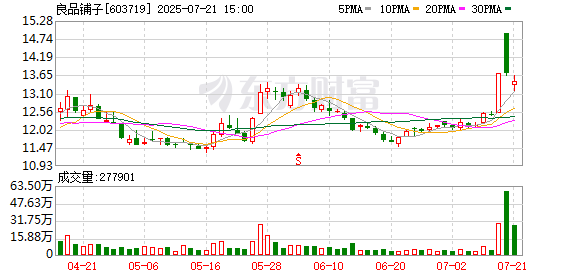
Core Viewpoint - The article discusses the significant strategic investment by Wuhan's state-owned enterprise, Changjiang Guomao, in Liangpin Shop, marking a pivotal moment in the company's history and reflecting the broader changes in China's snack food industry [2][3][21]. Group 1: Transaction Details - Liangpin Shop announced a strategic investment from Changjiang Guomao, with a total transaction amount of 1.49 billion yuan [2]. - The deal involves the transfer of 21% of shares from the controlling shareholder Ningbo Hanyi and 8.99% from the second-largest shareholder, Today Capital, totaling approximately 1.046 billion yuan and 445 million yuan respectively [5][6]. - After the transaction, Changjiang Guomao will hold 29.99% of Liangpin Shop's shares, becoming the new controlling shareholder [6]. Group 2: Company Performance and Challenges - Liangpin Shop's market value has significantly declined from over 34 billion yuan at its peak to around 5.5 billion yuan, losing more than 28 billion yuan [15]. - The company reported a revenue of 8.046 billion yuan in 2023, a year-on-year decrease of 14.76%, and a net profit of 180 million yuan, down 46.26% [15]. - The company is projected to face a net loss of 46.1 million yuan in 2024 and an estimated loss of 75 million to 105 million yuan in the first half of 2025 [16]. Group 3: Industry Context and Competition - The snack food industry is undergoing significant transformation, with discount snack stores like "Zero Snacks" and "Zhao Yiming Snacks" rapidly gaining market share, leading to increased competition for Liangpin Shop [19]. - The merger of "Zero Snacks" and "Zhao Yiming Snacks" has created a new industry giant with a GMV of 55.5 billion yuan and nearly 14,400 stores, far surpassing Liangpin Shop's 2,500+ stores [19]. - Liangpin Shop's previous stake in "Zhao Yiming" was sold shortly before the merger, resulting in a loss of market share [19]. Group 4: Future Outlook - The entry of state-owned capital is seen as a crucial attempt for Liangpin Shop to break through in a competitive market, transitioning from product competition to supply chain ecological competition [21]. - Analysts believe that the collaboration with Changjiang Guomao could address key industry pain points such as raw material sourcing and cost control [21]. - The board of Liangpin Shop will be restructured post-transaction, with a commitment to maintain market-oriented operations and stability in core business [22].
良品铺子卖身,徐新套现4亿
商业洞察· 2025-07-21 09:38
Core Viewpoint - The recent strategic investment by Wuhan State-owned Enterprises in Liangpinpuzi marks a significant shift in the company's trajectory, reflecting the intense changes in the Chinese snack food industry [2][4]. Group 1: Strategic Investment - Liangpinpuzi announced the introduction of Changjiang Guomao as a strategic investor, with a total transaction amount of 1.49 billion yuan [2][4]. - The deal involves the transfer of 21% of shares at a price of 12.42 yuan per share, totaling 1.046 billion yuan, making Changjiang Guomao the new controlling shareholder [4][6]. - The founder, Yang Hongchun, will remain in a senior management position despite losing control [4][6]. Group 2: Company Performance and Challenges - Liangpinpuzi's market value has plummeted from over 34 billion yuan at its peak to approximately 5.5 billion yuan, a loss exceeding 28 billion yuan [10]. - The company's revenue for 2023 was 8.046 billion yuan, a year-on-year decline of 14.76%, with net profit dropping by 46.26% to 180 million yuan [11]. - The company is projected to face a net loss of 46.1 million yuan in 2024, with further losses expected in the first half of 2025 [11][12]. Group 3: Industry Dynamics - The competitive landscape has shifted dramatically, with discount snack stores like "Ling Shi Hen Mang" rapidly gaining market share, leading to Liangpinpuzi's declining position [12]. - Liangpinpuzi's previous stake in "Zhao Yiming" was sold shortly before the latter's merger with "Ling Shi Hen Mang," resulting in a significant loss of market share for Liangpinpuzi [12][13]. - The company initiated a large-scale price reduction strategy in late 2023, but this did not reverse the downward trend [12][13]. Group 4: Future Prospects - The entry of state-owned enterprises is seen as a potential turning point for Liangpinpuzi, aiming to transition from product competition to supply chain ecological competition [15]. - Analysts believe that the collaboration with Changjiang Guomao could address key industry pain points such as raw material sourcing and cost control [15][16]. - The board of directors will undergo restructuring, with a commitment to maintain market operations and stability in core business areas [16].
创始人“转身”不“退场”!武汉国资接棒良品铺子控股权
Nan Fang Du Shi Bao· 2025-07-21 03:18
Core Viewpoint - The introduction of Wuhan Changjiang International Trade Group as a strategic investor and new controlling shareholder of Liangpinpuzi is a proactive choice for the company's long-term development strategy, aiming to achieve breakthroughs in supply chain optimization, channel expansion, and R&D innovation [2][5][11]. Company Summary - Liangpinpuzi has announced the transfer of control to Wuhan Changjiang International Trade Group, which is a large international trade platform approved by the Wuhan government, with a registered capital of 8 billion yuan [5][6]. - The financial performance of Changjiang International Trade Group shows rapid growth, with projected revenues of 38.31 billion yuan, 60.22 billion yuan, and 86.01 billion yuan from 2022 to 2024, and net profits turning from a loss of 263,440 yuan in 2022 to a profit of 5.63 million yuan in 2024 [5][6]. - The transaction involves the transfer of 21% of shares from the current controlling shareholder, Ningbo Hanyi, and 8.99% from the second-largest shareholder, Dayong Limited, totaling approximately 1.494 billion yuan [7][8]. Industry Summary - The entry of state-owned capital into Liangpinpuzi is seen as a potential breakthrough for the snack food industry, which is currently facing homogenization and intense competition [5][13]. - The shift from "product competition" to "supply chain ecological competition" is expected to drive the industry towards a new phase of high-quality development [5][12][13]. - The snack food market in China is projected to grow from 1,081.6 billion yuan in 2019 to 1,344.0 billion yuan in 2024, with a compound annual growth rate of 4.4% [12]. Strategic Implications - The partnership with Changjiang International Trade Group is anticipated to enhance Liangpinpuzi's supply chain capabilities, allowing for a more integrated and efficient operational model [11][12]. - Liangpinpuzi aims to transition from "quality snacks" to "quality food" by leveraging Changjiang's strengths in supply chain services and logistics, which will help reduce operational costs and improve product competitiveness [11][12]. - The strategic shift is expected to stabilize the company's governance structure and ensure the continuity of its management team, with the founders remaining involved in daily operations [9][10].
休闲零食品牌的“山姆定制”危机
Bei Jing Shang Bao· 2025-07-20 14:30
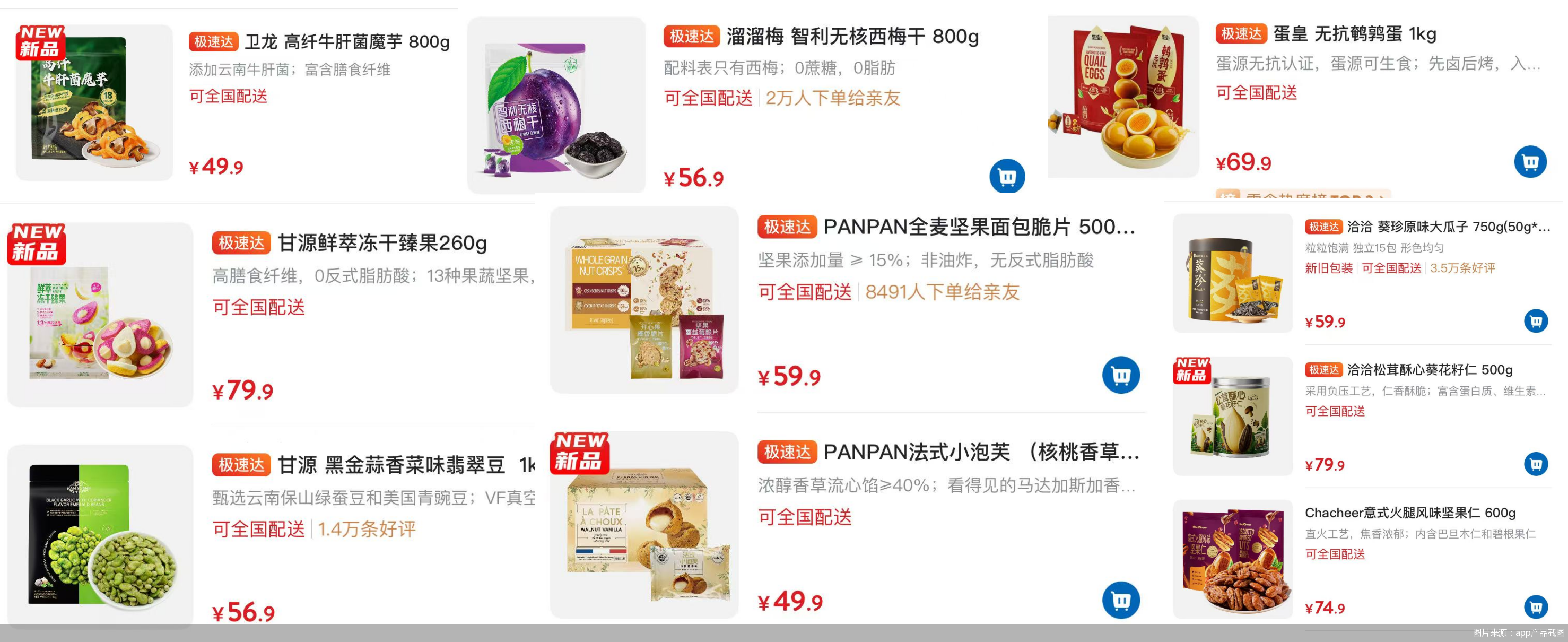
Core Viewpoint - Recent controversies involving brands like Holley, Panpan, and Liuliu Mei at Sam's Club highlight the increasing scrutiny on snack brands and their collaboration with the retailer, emphasizing the need for high-quality standards across the entire supply chain [1][8][9] Group 1: Brand Collaboration with Sam's Club - Sam's Club has established a customized cooperation model with various snack brands, leading to the introduction of "Sam's exclusive" products [8][9] - Brands such as Ganyuan Foods and Youyou Foods have successfully launched products specifically for Sam's, which have gained significant market traction [9][10] - The entry of snack brands into Sam's Club is seen as a pathway to higher market recognition and increased sales [1][9] Group 2: Product Quality and Consumer Perception - The perception of high-end quality is associated with products sold at Sam's Club, which is known for its strict selection standards [8][9] - Some consumers express skepticism about the actual quality improvements of products featuring high-end ingredients, viewing them as marketing strategies rather than genuine enhancements [12][13] - Experts suggest that brands need to focus on real quality improvements and not just on high-end concepts to maintain consumer trust [12][13] Group 3: Market Performance and Sales Data - Companies like Qiaqia Foods reported approximately 200 million yuan in sales through Sam's Club in 2024, marking a 50%-60% year-on-year increase [9] - Liuliu Mei's exclusive product quickly topped the new product popularity chart within eight days of launch at Sam's Club, indicating strong consumer interest [9] - Youyou Foods' duck feet product consistently ranks among the top three in sales within the meat snack category at Sam's Club, with monthly sales exceeding 200,000 units [9][10]


良品铺子易主 创始人将留任
Zheng Quan Ri Bao· 2025-07-18 16:08
Core Viewpoint - The strategic investment by Wuhan Financial Holding Group through Changjiang International Trade Group aims to enhance the core competitiveness of Liangpinpuzi for the next decade, marking a significant shift in the company's control structure and strategic direction [2][3]. Company Summary - Liangpinpuzi plans to transfer 72,239,900 shares (18.01% of total shares) from its current controlling shareholder, Ningbo Hanyi Venture Capital, to Changjiang International Trade Group at a price of 12.42 yuan per share [3]. - The actual controller will change to the State-owned Assets Supervision and Administration Commission of Wuhan Municipal People's Government upon completion of the transaction [3]. - The founder, Yang Hongchun, will remain in a senior management position and retain significant shareholder status, ensuring continuity in leadership [3]. Strategic Direction - Liangpinpuzi aims to transition from a "quality snack" brand to a "quality food" operator, focusing on product innovation and supply chain integration [3][4]. - The company has established 14 exclusive raw material bases, enhancing its supply chain advantages and product competitiveness [4]. - The collaboration with state-owned resources is expected to facilitate breakthroughs in supply chain optimization, channel expansion, and research innovation [3][4]. Industry Context - The move reflects a broader trend of state-owned enterprises in Hubei province engaging in mergers and acquisitions, with multiple companies undergoing similar transitions [6]. - The integration of state capital is seen as a means to enhance industrial synergy and optimize resource allocation, thereby improving overall industry competitiveness [7]. - The regulatory environment supports such mergers and acquisitions as a tool for economic transformation and high-quality development [6].
“高端零食第一股”良品铺子控股权生变 武汉国资10亿入主
Xin Lang Zheng Quan· 2025-07-18 07:52
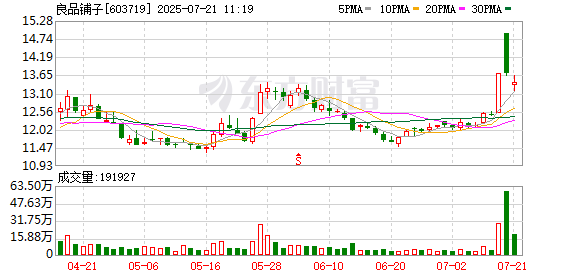
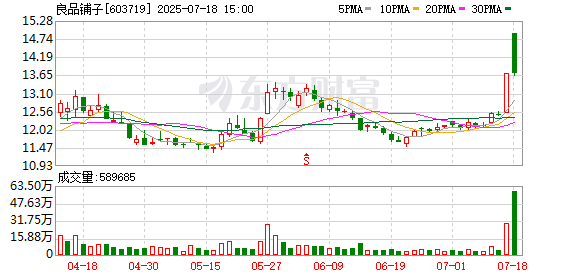
Core Viewpoint - The controlling shareholder of Liangpinpuzi, a leading high-end snack company, is changing from Ningbo Hanyi to Wuhan Changjiang International Trade Group, with the actual controller shifting to the Wuhan State-owned Assets Supervision and Administration Commission [1][3]. Group 1: Shareholder Change - Ningbo Hanyi will transfer 72,239,900 shares (18.01% of total shares) to Changjiang Guomao, while Liangpin Investment will transfer 11,970,100 shares (2.99% of total shares) [2]. - The transfer price is set at 12.42 CNY per share, totaling 1.046 billion CNY [3]. Group 2: Company Strategy and Future Outlook - The transaction is seen as a strategic move to enhance supply chain optimization, channel expansion, and innovation, aiming to evolve from "quality snacks" to "quality food" and from product seller to industry ecosystem organizer [4][5]. - The founder team will remain in senior management positions and retain significant shareholder status, ensuring continuity in leadership [5]. Group 3: Financial Performance - Liangpinpuzi's revenue grew from 7.894 billion CNY in 2020 to 9.440 billion CNY in 2022, but faced a decline in 2023 with revenue of 8.046 billion CNY, down 14.76% year-on-year [7]. - In 2024, the company reported a further decline in revenue to 7.159 billion CNY, down 11.02%, and a net loss of 46.1045 million CNY, marking its first annual loss since listing [7]. - The first quarter of 2025 showed continued challenges with revenue of 1.732 billion CNY, down 29.34%, and a net loss of 36.1486 million CNY [7]. Group 4: Industry Context - The entry of state-owned capital into enterprises is becoming a significant path for industrial upgrading, with over 20 A-share companies transferring control to local state-owned enterprises this year [8]. - Liangpinpuzi is positioned to become the first nationally recognized snack platform controlled by local state capital, potentially enhancing its profitability and shareholder returns [8].
武汉国资斥资14.9亿,入主良品铺子
Huan Qiu Lao Hu Cai Jing· 2025-07-18 06:59
Core Viewpoint - The company, Liangpinpuzi, is undergoing a significant change in its ownership structure by introducing a strategic investor, Changjiang Guomao, which will become the new controlling shareholder, aiming to leverage the investor's resources for transformation and development [1][2]. Group 1: Ownership and Share Transfer - Liangpinpuzi announced that it will transfer a total of 722,398,800 shares (21% of total shares) from its current controlling shareholders, Ningbo Hanyi and Liangpin Investment, to Changjiang Guomao [1]. - The total transaction amount for the share transfer is approximately 1.491 billion yuan [1]. - After the transfer, Changjiang Guomao will hold 29.99% of the shares, becoming the controlling shareholder, while Ningbo Hanyi will retain 17.22% as the second-largest shareholder [1]. Group 2: Management and Strategic Direction - The founder, Yang Hongchun, will remain in a senior management position and retain significant shareholder status despite the ownership change [2]. - The company aims to utilize Changjiang Guomao's expertise in supply chain services and logistics to enhance its operational capabilities and develop a comprehensive industrial ecosystem [2]. Group 3: Financial Performance - Liangpinpuzi's revenue has declined from 9.324 billion yuan in 2021 to 8.046 billion yuan in 2023, and net profit has decreased from 282 million yuan to 180 million yuan during the same period [2]. - In 2022, the company reported a revenue of 7.159 billion yuan, a year-on-year decrease of 11.02%, and a net loss of 46.1045 million yuan, a decline of 125.57% [3]. - For the first quarter of 2023, the company achieved a revenue of 1.732 billion yuan, down 29.34% year-on-year, with a net loss of 36.1486 million yuan, a decrease of 157.85% [3].