
仓储物流

Search documents
跨境仓储物流加速全球化转型
Bei Jing Shang Bao· 2025-09-25 12:01
Core Insights - The total social logistics volume in China reached 201.9 trillion yuan from January to July 2025, with a year-on-year growth of 5.2%, indicating sufficient supply to support the healthy operation of the national economy [1] - The logistics industry faces structural contradictions, with a need for improved efficiency and reduced costs [1] Group 1: Industry Trends - Demand growth in the logistics sector is shifting from rapid to moderate, expected to align closely with GDP growth, maintaining a range of 4%-5% [1] - The organizational structure is transitioning towards supply chain integration, requiring logistics companies to consolidate resources across the entire chain and offer comprehensive solutions [1] - Technological advancements are penetrating deeply into logistics, with "AI+" initiatives driving the intelligent transformation of warehousing, transportation, and scheduling processes [1] - The focus of development is shifting towards value creation, moving from merely reducing costs and improving efficiency to enhancing supply chain resilience and flexibility, supporting the exploration of "new consumption, new supply, and new value" during economic transformation [1] - Globalization and green low-carbon initiatives are becoming essential, with dual circulation strategies and green transformation policies guiding industry upgrades [1] Group 2: Cross-Border Logistics - The "Belt and Road" initiative and accelerated industrial overseas expansion have shifted cross-border logistics from a cost-driven approach to a new phase that emphasizes resilience, safety, and value creation [2] - The Beijing Municipal Bureau of Commerce is facilitating deep cooperation with logistics partners that possess global networks and localized service capabilities [2] - The "Beijing Enterprises Overseas Comprehensive Service Platform" provides policy information, legal, and financial services to support companies going abroad [2] - The Bureau plans to continue enhancing the "going out" service system, using efficient logistics networks to help Beijing brands and manufacturing enter global markets and gain competitive advantages [2]
山东高速集团签署马来西亚智慧仓储项目框架协议
Zheng Quan Shi Bao Wang· 2025-09-23 14:17
人民财讯9月23日电,据山东高速(600350)集团官微,9月23日,在中国山东—马来西亚经贸合作交流 会上,山东高速集团与马来西亚PTT协同集团正式签署马来西亚智慧仓储项目框架协议。马来西亚智慧 仓储项目拟在雪兰莪、柔佛、彭亨、登嘉楼等地为行业客户定制化建设智慧仓库,托盘位总数共计200 万个,合同额60亿林吉特(102亿元人民币) ...

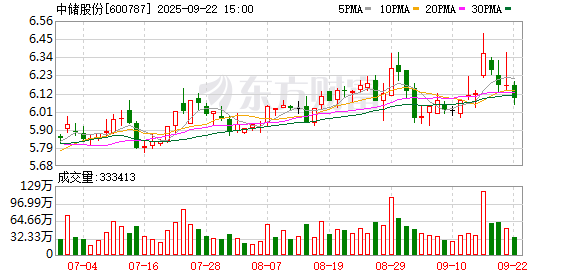
中储股份:关于为中国物资储运天津有限责任公司在银行申请的综合授信额度提供担保的公告
Zheng Quan Ri Bao· 2025-09-22 14:04
Core Viewpoint - The company, China National Materials Storage and Transportation Corporation, has signed a maximum guarantee contract with Bank of Communications Tianjin Branch, providing a joint liability guarantee for its wholly-owned subsidiary's credit limit application of 150 million RMB [2] Group 1 - The guarantee amount provided by the company is 150 million RMB [2] - The guarantee is specifically for the comprehensive credit limit application of its subsidiary, China Materials Storage and Transportation Tianjin Co., Ltd. [2] - The announcement was made on the evening of September 22 [2]


黑龙江依之梦麻制品有限公司成立 注册资本2000万人民币
Sou Hu Cai Jing· 2025-09-19 23:57
Company Overview - Heilongjiang Yizhimeng Hemp Products Co., Ltd. has been established with a registered capital of 20 million RMB [1] - The legal representative of the company is Xu Jiangfeng [1] Business Scope - The company operates in various sectors including clothing manufacturing, knitting or crocheting products manufacturing, and information consulting services [1] - It is involved in technology services, development, consulting, and promotion, as well as import and export of goods [1] - The company also engages in grain and primary agricultural products purchasing, storage services for grain and oil, and cultivation of hemp crops (excluding cannabis) [1] Sales and Processing - The company is involved in the sale of cotton, hemp, and textile products, as well as the processing of fabrics [1] - It handles both edible and non-edible agricultural products, including wholesale and retail of edible agricultural products [1] - The company provides services for crop harvesting, seed management, straw processing, and fertilizer sales [1] Licensing and Regulatory Compliance - The company has licensed projects including road cargo transportation (excluding hazardous goods) and fertilizer production [1] - It is required to obtain approval from relevant authorities for certain projects before commencing operations [1]
沪市债券新语|需求回升韧性凸显 仓储物流REITs交上半年“成绩单”
Xin Hua Cai Jing· 2025-09-19 13:53
Core Viewpoint - The domestic warehousing and logistics industry is steadily recovering, reflecting resilience in public REITs market performance, which shows a stable and positive operational trend [1] Group 1: Overall Performance - Five publicly listed warehousing and logistics REITs in Shanghai reported a combined revenue of approximately 413 million yuan and a combined EBITDA of about 281 million yuan for the first half of 2025 [2] - The total distributable amount for these REITs reached approximately 306 million yuan, with a total dividend distribution of about 252 million yuan for three specific projects [2] Group 2: Individual Project Performance - China Aviation Easy Business Warehousing Logistics REIT maintained a rental rate of 87.68% and a rent collection rate of 97.93%, with a total distributable amount of 49.06 million yuan for the first half of 2025 [2] - Huazhong Waigaoqiao REIT achieved a rental rate of 92.33% and a rent collection rate of 98.99%, with a cash distribution rate of 1.94% for the same period [3] - Jia Shi JD Warehousing Infrastructure REIT reported a 100% rental and collection rate, with a total distributable amount of approximately 37.18 million yuan [3] - Huitianfu Jiuzhoutong Pharmaceutical REIT generated a combined revenue of 36.02 million yuan and a net profit of 12.86 million yuan, with a cash distribution rate of 1.31% [3] - Zhongjin Pulos REIT maintained a rental rate above 90%, with a year-on-year increase of 6.6 percentage points in rental rates [4] Group 3: Market Dynamics - The warehousing logistics REITs' stable performance is attributed to an optimized supply-demand structure, continuous improvement in the logistics industry, and strong policy support [5] - In the first half of 2025, the national retail sales of consumer goods reached 24.55 trillion yuan, with online retail sales growing by 8.5% [5] - The logistics industry is experiencing a significant expansion, with the logistics business volume index remaining in the expansion range for six consecutive months [6] Group 4: Expansion Plans - The characteristics of warehousing logistics REITs suggest a focus on quality over quantity, with plans for asset expansion primarily through existing projects [7] - Companies are actively working on revitalizing existing assets and integrating acquisitions to enhance their REIT platforms [7][8] - The China Aviation Easy Business Warehousing Logistics REIT has also initiated asset screening for expansion to improve cash flow stability and optimize risk management [8]
中金普洛斯REIT举办2025年中期业绩说明会
Zhong Zheng Wang· 2025-09-19 10:22
Core Viewpoint - 中金普洛斯REIT held a mid-year performance briefing for 2025, discussing its mid-term performance, infrastructure project operations, asset management initiatives, and the logistics market situation [1] Financial Performance - In the first half of the year, 中金普洛斯REIT achieved revenue of approximately 216 million yuan, with a consolidated EBITDA of about 138 million yuan, and a distributable amount of around 167 million yuan [1] Operational Strategies - As the original equity holder and external management institution, 普洛斯 enhanced tenant retention and park competitiveness through refined operations and asset renewal [1] - The company is advancing a systematic park renovation plan, exemplified by the upgrades at the 普洛斯 (Chongqing) urban distribution logistics center, which included facade renovation, landscaping upgrades, and road repairs to improve park image and operational efficiency [1] Communication with Investors - 中金普洛斯REIT has established various communication mechanisms, such as performance briefings, investor open days, and underlying asset research, to timely address investor concerns and enhance the quality of information disclosure [1]
中储股份:9月18日召开董事会会议
Mei Ri Jing Ji Xin Wen· 2025-09-19 10:04
Core Viewpoint - 中储股份 announced a significant restructuring decision to cancel its supervisory board and amend its articles of association, indicating a shift in corporate governance strategy [1] Financial Performance - For the year 2024, 中储股份 reported the following revenue composition: - Smart transportation platform construction and operation accounted for 63.01% - Bulk commodity supply chain services represented 32.96% - Warehousing and logistics infrastructure comprehensive services made up 3.7% - Other services contributed 0.26% - Additional business segments accounted for 0.07% [1] Market Position - As of the report date, 中储股份 has a market capitalization of 13.4 billion yuan [1]
天津港远晟仓储有限公司成立
Zheng Quan Ri Bao Wang· 2025-09-18 10:41
Core Insights - Tianjin Port (600717) has established a new subsidiary, Tianjin Port Yuansheng Warehousing Co., Ltd., with a registered capital of 320 million yuan [1] Company Summary - The legal representative of the new company is Li Hanyong [1] - The business scope includes bonded warehouse operations, customs supervision of goods storage services, road freight transportation, loading and unloading services, general cargo storage services, packaging services, coal washing and selection, container maintenance, and container leasing services [1] - Tianjin Port (600717) holds 100% ownership of the newly established company [1]

海航科技股价跌5.07%,南方基金旗下1只基金位居十大流通股东,持有1463.09万股浮亏损失365.77万元
Xin Lang Cai Jing· 2025-09-18 06:54
Group 1 - HNA Technology's stock price dropped by 5.07% to 4.68 CNY per share, with a trading volume of 390 million CNY and a turnover rate of 3.11%, resulting in a total market capitalization of 13.569 billion CNY [1] - The company, established on March 6, 1982, and listed on September 9, 1996, operates in IT product distribution, warehousing and logistics, internet finance, and cloud computing, with revenue composition of 65.77% from merchandise trade, 33.27% from shipping, and 0.96% from other sources [1] Group 2 - Southern Fund's Southern CSI 1000 ETF (512100) is among the top ten circulating shareholders of HNA Technology, having increased its holdings by 1.1435 million shares to a total of 14.6309 million shares, representing 0.5% of circulating shares, with an estimated floating loss of approximately 3.6577 million CNY [2] - The Southern CSI 1000 ETF was established on September 29, 2016, with a latest scale of 64.953 billion CNY, achieving a year-to-date return of 28.17% and a one-year return of 72.87%, ranking 1822 out of 4222 and 1263 out of 3804 respectively [2]

天津港3.2亿成立新仓储公司
Xin Lang Cai Jing· 2025-09-17 07:09
Core Viewpoint - Tianjin Port Yuansheng Warehousing Co., Ltd. has been established with a registered capital of 320 million RMB, indicating a strategic move in the logistics and warehousing sector by Tianjin Port [1] Company Summary - The legal representative of the newly established company is Li Hanyong [1] - The company is wholly owned by Tianjin Port (stock code: 600717) [1] - The business scope includes bonded warehouse operations, customs supervision of goods storage services, road cargo transportation, loading and unloading services, general cargo storage services, packaging services, coal washing and selection, container maintenance, and container leasing services [1]