
建筑

Search documents
罗马尼亚拟于2026年引入9万名外籍劳工,应对多行业用工短缺
Shang Wu Bu Wang Zhan· 2026-01-20 17:21
Core Insights - Romania plans to introduce 90,000 foreign workers by 2026 to address labor shortages across various sectors [2] Labor Market Situation - The labor shortage is primarily concentrated in the service, construction, and transportation sectors [2] - Specific job vacancies include: - 26,275 courier positions - 20,912 cargo handlers - 20,484 renovation workers - 17,799 construction workers - 16,246 commercial service personnel - Significant shortages also exist for drivers, chefs, and security personnel [2] Immigration and Work Permits - As of September 30, 2025, Romania issued 83,914 foreign labor employment and dispatch permits, which is lower than the 105,977 permits issued in 2024 [2] - Additionally, 61,954 temporary residence permits for employment and 156 dispatch residence permits were issued, compared to 110,365 and 339 in 2024, respectively [2] - The Romanian Ministry of Foreign Affairs reported that 42,544 work visas were granted, with 9,851 long-term work and dispatch visa applications denied [2]
克罗地亚建筑业上调薪资,工资将增长10%
Shang Wu Bu Wang Zhan· 2026-01-20 17:21
Core Viewpoint - The construction industry in Croatia is set to increase wages by 10% starting in February, along with enhancements to tax-free benefits, in response to ongoing labor shortages and to improve worker conditions [1] Group 1: Wage Increase and Benefits - A collective agreement amendment has been signed by the Croatian Employers' Association and the construction union, mandating a 10% increase in the basic total income for all construction workers [1] - In addition to the wage increase, 15 to 20 tax-free benefits will also be enhanced [1] Group 2: Industry Challenges - Despite the mandatory nature of the agreement, some foreign and local companies are reportedly engaging in "under-the-table" transactions and reducing compensation, which undermines fair competition [1] - The president of the Employers' Association, Habijanec, criticized these practices, stating they result in an annual loss of approximately 1 billion euros to the national treasury [1] Group 3: Labor Market and Economic Impact - Currently, wages in the construction sector are 20% lower than the national average, prompting the union to advocate for better pay and stricter regulations to address labor shortages [1] - The construction industry is a vital sector for Croatia, contributing about 8% to the GDP, and the aim is to ensure its sustainable development through improved worker conditions [1]
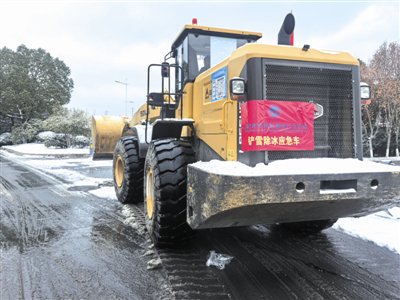
合肥庐阳区建筑行业 除冰扫雪保畅通
Xin Lang Cai Jing· 2026-01-20 16:47
Group 1 - The core viewpoint of the article emphasizes the proactive response of the Hefei Luyang District Housing and Urban-Rural Development Bureau to the city's snow removal initiative, ensuring public safety during extreme weather conditions [2] - The Luyang District Housing Bureau, in collaboration with the local construction industry association, mobilized member enterprises to participate in snow and ice removal efforts, activating an emergency mechanism [2] - On January 19, the bureau coordinated the deployment of 25 specialized snow removal vehicles and equipment, including snowplows and spreaders, to ensure comprehensive coverage across 11 townships and streets in the district [2] Group 2 - The emergency response included the preparation of anti-slip chains, rescue tools, emergency lighting, and warming supplies, ensuring readiness for immediate action [2] - The district implemented round-the-clock emergency monitoring to guarantee prompt deployment for rescue operations as needed [2]

大额买入与资金流向跟踪(20260112-20260116)
GUOTAI HAITONG SECURITIES· 2026-01-20 11:45
Quantitative Factors and Construction Methods 1. Factor Name: Large Order Transaction Amount Ratio - **Factor Construction Idea**: This factor captures the buying behavior of large funds by analyzing the proportion of large order transaction amounts relative to the total daily transaction amount[7] - **Factor Construction Process**: 1. Use tick-by-tick transaction data to identify buy and sell orders based on bid and ask sequence numbers 2. Filter transactions by order size to identify large orders 3. Calculate the proportion of large buy order transaction amounts to the total daily transaction amount Formula: $ \text{Large Order Transaction Amount Ratio} = \frac{\text{Large Buy Order Transaction Amount}}{\text{Total Daily Transaction Amount}} $ - **Factor Evaluation**: This factor effectively reflects the buying behavior of large funds[7] 2. Factor Name: Net Active Buy Amount Ratio - **Factor Construction Idea**: This factor measures the active buying behavior of investors by calculating the net active buy amount as a proportion of the total daily transaction amount[7] - **Factor Construction Process**: 1. Use tick-by-tick transaction data to classify each transaction as either active buy or active sell based on trade direction 2. Subtract the active sell transaction amount from the active buy transaction amount to obtain the net active buy amount 3. Calculate the proportion of the net active buy amount to the total daily transaction amount Formula: $ \text{Net Active Buy Amount Ratio} = \frac{\text{Active Buy Amount} - \text{Active Sell Amount}}{\text{Total Daily Transaction Amount}} $ - **Factor Evaluation**: This factor provides insights into the active buying behavior of investors[7] --- Factor Backtesting Results 1. Large Order Transaction Amount Ratio - **Top 5 Stocks by 5-Day Average**: 1. 惠博普 (92.6%, 99.6% percentile)[9] 2. 美年健康 (89.6%, 99.2% percentile)[9] 3. 志特新材 (89.2%, 99.2% percentile)[9] 4. 津滨发展 (88.4%, 99.6% percentile)[9] 5. 江南高纤 (87.7%, 98.8% percentile)[9] 2. Net Active Buy Amount Ratio - **Top 5 Stocks by 5-Day Average**: 1. 杭萧钢构 (16.7%, 99.8% percentile)[10] 2. 纬德信息 (15.4%, 100.0% percentile)[10] 3. 中科微至 (15.0%, 99.6% percentile)[10] 4. 新风光 (13.8%, 100.0% percentile)[10] 5. 联合水务 (13.3%, 97.5% percentile)[10] 3. Broad-Based Indices - **Large Order Transaction Amount Ratio (5-Day Average)**: - 上证指数: 73.8% (12.8% percentile)[12] - 上证50: 70.6% (64.2% percentile)[12] - 沪深300: 73.1% (64.2% percentile)[12] - 中证500: 73.0% (6.6% percentile)[12] - 创业板指: 71.6% (90.1% percentile)[12] - **Net Active Buy Amount Ratio (5-Day Average)**: - 上证指数: -5.8% (86.8% percentile)[12] - 上证50: -12.9% (90.5% percentile)[12] - 沪深300: -8.8% (89.3% percentile)[12] - 中证500: -3.4% (86.0% percentile)[12] - 创业板指: -4.4% (84.8% percentile)[12] 4. Industry-Level Results - **Top 5 Industries by Large Order Transaction Amount Ratio (5-Day Average)**: 1. 房地产: 79.8% (90.1% percentile)[13] 2. 煤炭: 78.5% (66.3% percentile)[13] 3. 钢铁: 78.2% (42.8% percentile)[13] 4. 建筑: 77.9% (24.3% percentile)[13] 5. 综合: 77.8% (50.6% percentile)[13] - **Top 5 Industries by Net Active Buy Amount Ratio (5-Day Average)**: 1. 房地产: -9.5% (95.1% percentile)[13] 2. 电子: 2.2% (78.6% percentile)[13] 3. 汽车: 0.9% (60.9% percentile)[13] 4. 家电: 0.1% (84.4% percentile)[13] 5. 通信: -4.7% (89.7% percentile)[13] 5. ETFs - **Top 5 ETFs by Large Order Transaction Amount Ratio (5-Day Average)**: 1. 华泰柏瑞中证A500ETF (92.9%, 96.3% percentile)[15] 2. 易方达中证A500ETF (91.6%, 100.0% percentile)[15] 3. 国泰中证A500ETF (91.5%, 15.6% percentile)[15] 4. 华泰柏瑞沪深300ETF (91.0%, 99.2% percentile)[15] 5. 易方达沪深300ETF (91.0%, 99.6% percentile)[15] - **Top 5 ETFs by Net Active Buy Amount Ratio (5-Day Average)**: 1. 东财上证科创板50成份ETF (23.4%, 100.0% percentile)[16] 2. 海富通上证城投债ETF (20.9%, 88.5% percentile)[16] 3. 国泰上证10年期国债ETF (15.6%, 61.3% percentile)[16] 4. 富国创业板人工智能ETF (14.3%, 65.9% percentile)[16] 5. 嘉实中证稀土产业ETF (14.1%, 92.6% percentile)[16]


晚间公告|1月20日这些公告有看头
Di Yi Cai Jing· 2026-01-20 10:42
Corporate Announcements - Vanke A announced that bondholders of "21 Vanke 02" can choose to sell back their bonds to the company at a price of 100 yuan per bond during the redemption period from December 9 to December 15, 2025, with a total of 10.32 million bonds eligible for redemption [2] - Kangxin New Materials plans to acquire 51% of Wuxi Yubang Semiconductor for 392 million yuan, aiming to transform and upgrade its business towards the semiconductor industry [3] - Lio Co. has completed its stock suspension review and will resume trading on January 21, 2026, with no significant changes in its business operations [4] - ST Saiwei is at risk of being delisted due to an expected negative net asset value at the end of 2025 [5] - Kailong High-Tech is planning to acquire control of Shenzhen Jinwangda Electromechanical Co., with stock suspension effective from January 21, 2026 [6] - Guangdong Hongtu plans to invest up to 95 million yuan to establish a wholly-owned subsidiary in Thailand for automotive parts production [7] - Debon Holdings intends to voluntarily withdraw its A-shares from the Shanghai Stock Exchange, with trading suspension starting January 21, 2026 [8] - Zangzi Island received an administrative regulatory decision due to failure to disclose financial support issues, leading to a warning for its chairman and secretary [9] - Qizheng Tibetan Medicine's "Ten Flavor Longdan Flower Capsules" has been approved as a second-level protected traditional Chinese medicine, enhancing its market competitiveness [10] Performance Forecasts - Longzi Co. expects a net profit of 900 million to 1.05 billion yuan for 2025, representing a year-on-year increase of 245.25% to 302.80% [12] - Tonghuashun forecasts a net profit of 2.735 billion to 3.282 billion yuan for 2025, an increase of 50% to 80% year-on-year [13] - Pulai Ke anticipates a net profit of 176 million to 195 million yuan for 2025, up 89.64% to 110.11% year-on-year [14] - Zhongfu Industrial expects a net profit of 1.55 billion to 1.7 billion yuan for 2025, an increase of 120.27% to 141.59% year-on-year [15] - Putailai forecasts a net profit of 2.3 billion to 2.4 billion yuan for 2025, an increase of 93.18% to 101.58% year-on-year [17] - Tongfu Microelectronics expects a net profit of 1.1 billion to 1.35 billion yuan for 2025, an increase of 62.34% to 99.24% year-on-year [18] - Hikvision reported a net profit of 14.188 billion yuan for 2025, a year-on-year increase of 18.46% [19] - Bright Dairy anticipates a net loss of 120 million to 180 million yuan for 2025, compared to a profit of 722 million yuan in the previous year [20] - Aerospace Changfeng expects a net loss of 170 million to 200 million yuan for 2025, with a reduction in losses compared to the previous year [21] - Guosheng Technology forecasts a net loss of 325 million to 650 million yuan for 2025, impacted by low component prices in the photovoltaic industry [22] Share Buybacks - Haier Smart Home plans to repurchase up to 2 million euros or a maximum of 1 million shares of its D-shares, which will be canceled to reduce registered capital [24] Major Contracts - Anhui Construction announced winning two projects with total contract values of 562 million yuan and 814 million yuan, respectively [26] - Guodun Quantum plans to sign a technology implementation license contract with the University of Science and Technology of China, involving multiple patents and proprietary technologies [27] - Huadian Technology signed a contract worth approximately 374 million yuan for wind power tower procurement related to a hydrogen production project [28] - Huaqin Technology signed sales contracts totaling 328 million yuan for special functional materials used in aircraft engines [29]

瑞达期货股指期货全景日报-20260120
Rui Da Qi Huo· 2026-01-20 09:23
Report Industry Investment Rating - Not provided Core Viewpoints - A-share major indices closed collectively lower, with the three major indices opening higher and closing lower. The Shanghai Composite Index briefly fell below 4,100 points in the morning. Small and medium-cap stocks were weaker than large-cap blue-chip stocks, and the Shanghai 50 was the most resilient among the four broad-based indices. As of the close, the Shanghai Composite Index fell 0.01%, the Shenzhen Component Index fell 0.97%, and the ChiNext Index fell 1.79%. Trading volume in the Shanghai and Shenzhen stock markets rebounded slightly. Most industry sectors rose, with the petroleum and petrochemical, and building materials sectors leading the gains, while the communication sector fell sharply. [3] - Overseas, on January 17, the United States imposed additional tariffs on eight European countries over the Greenland issue, intensifying market distrust of US dollar assets and further weakening the US dollar index. Domestically, in terms of the economic fundamentals, China's GDP further declined in the fourth quarter, but the annual economic growth target of 5% was still successfully achieved. In December, except for the added value of industrial enterprises above the designated size, fixed asset investment, social retail sales, and exports all declined year-on-year compared to November. [3] - Among the companies that have released their 2025 performance forecasts, only one-third have reported positive news. However, it is worth noting that most of the companies with positive profit forecasts are concentrated in high-tech industries such as artificial intelligence. Overall, there are still many positive factors in the A-share market. Although many economic indicators further declined in December, industrial production has grown steadily driven by industries representing new productive forces such as aerospace and artificial intelligence, which has weakened the negative impact of the decline in other economic indicators on the market to a certain extent. [3] - Since listed companies' annual report performance forecasts also echo this phenomenon, and listed companies related to aerospace and artificial intelligence have the largest weight in the CSI 500, they have a significant pulling effect on the CSI 500 index. Finally, driven by the foreign exchange settlement needs of export enterprises and the expectation of economic recovery, the RMB is still in an appreciation channel. Coupled with overseas risk events weakening the value of the US dollar, the strong RMB exchange rate supports the expectation of loose monetary policy in the first quarter, and the stock market is gradually converging with the foreign exchange market. The spring market is still advancing. [3] Summary by Relevant Catalogs Futures Disk - The latest prices of the IF (CSI 300) main contract (2603) and the IH (Shanghai 50) main contract (2603) are 4,708.6 and 3,075.4 respectively, with a decline of 18.4 and 3.0 respectively. The prices of the IF and IH sub-main contracts (2602) also declined. The latest prices of the IC (CSI 500) main contract (2603) and the IM (CSI 1000) main contract (2603) are 8,248.8 and 8,120.8 respectively, with a decline of 41.0 and 84.6 respectively. The prices of the IC and IM sub-main contracts (2602) also declined. [2] - The spreads between different contracts, such as the IF-IH, IC-IF, IM-IC, etc., also showed certain changes, with most spreads declining. The spreads between different quarters and the current month of each contract also changed, with some showing an upward trend and some showing a downward trend. [2] Futures Positions - The net positions of the top 20 in the IF, IC, and IM contracts all declined, while the net position of the top 20 in the IH contract increased. [2] Spot Prices - The spot prices of the CSI 300, Shanghai 50, CSI 500, and CSI 1000 all declined. The A-share trading volume was 28,042.35 billion yuan, and the margin trading balance was 27,231.75 billion yuan. The northbound trading volume was 3,237.70 billion yuan. [2] Market Sentiment - The proportion of rising stocks decreased, and the Shibor increased. The closing prices and implied volatilities of IO at-the-money call and put options also changed. The 20-day volatility of the CSI 300 index increased, and the trading volume PCR and position PCR both decreased. [2] Wind Market Strength and Weakness Analysis - The scores of the entire A-share market, technical aspect, and capital aspect all declined. [2] Industry News - In 2025, China's GDP was 14,018.79 billion yuan, a year-on-year increase of 5.0% at constant prices. The added value of industrial enterprises above the designated size increased by 5.9% year-on-year. National fixed asset investment (excluding rural households) decreased by 3.8% year-on-year, and real estate development investment decreased by 17.2% year-on-year. Social consumer goods retail总额 increased by 3.7% year-on-year. The average urban surveyed unemployment rate was 5.2%. [2] - In January 2026, the 1-year LPR was 3.0%, and the 5-year LPR was 3.5%, remaining stable for eight consecutive months since May 2025. [2] - As of January 20, 2026, 495 A-share listed companies had disclosed their 2025 performance forecasts, with 168 reporting positive news (104 with pre-increases, 35 with slight increases, 27 with turnarounds, and 2 with continued profits), a positive news ratio of 33.94%. 322 reported negative news, and 5 had uncertain performance. [2]
两头堵 | 谈股论金
水皮More· 2026-01-20 08:49
Market Overview - The A-share market showed a mixed performance today, with the Shanghai Composite Index slightly down by 0.01% closing at 4113.65 points, while the Shenzhen Component Index fell by 0.97% to 14155.63 points, and the ChiNext Index dropped by 1.79% to 3277.98 points [2][6] - The total trading volume in the Shanghai, Shenzhen, and Beijing markets reached 280.44 billion, an increase of 72 billion compared to the previous day [2] Market Dynamics - The market is experiencing a cooling trend, which can occur through either active or passive means. Currently, the market is responding rationally to regulatory signals, with state-owned entities playing a significant role in guiding market trends [4] - The broad-based ETFs, particularly the CSI 1000 ETF, have taken a leading role in market movements, indicating a shift in investment focus towards low-valuation sectors [4] Sector Performance - Significant outflows were observed in sectors such as CPU-related stocks, with NewEase ranked first in capital outflow. The photovoltaic sector also saw over 7 billion in outflows, affecting major stocks like Longi Green Energy and Tongwei Co. [5] - In contrast, sectors related to real estate, such as building materials and construction, showed relative stability, suggesting a migration of funds towards undervalued sectors [5] Regulatory Impact - The current regulatory approach aims to suppress excessive speculation in individual stocks by allowing indices to adjust moderately, which is intended to maintain a stable market environment leading up to the Spring Festival [6] - The overall market sentiment reflects a clear cooling trend, with a net outflow of nearly 100 billion in major funds, indicating the core objective of regulatory measures [6]

股评两头堵 | 谈股论金
Xin Lang Cai Jing· 2026-01-20 08:39
Group 1 - The market is experiencing a cooling trend, which can occur through either active or passive means, with the current situation reflecting a relatively rational market response to regulatory signals [1] - The China Securities 1000 ETF played a leading role in the market today, influencing the overall market trend alongside other major ETFs [1] - Structural differences in the market are notable, with major state-owned enterprises and financial stocks maintaining positive performance, while broad-based ETFs exerted downward pressure on speculative stocks [1] Group 2 - Significant capital outflows were observed in sectors such as CPU-related stocks and the photovoltaic sector, with over 7 billion yuan flowing out of the latter [2] - In contrast, sectors related to real estate, such as building materials and construction, showed relative stability, indicating a shift of funds towards undervalued sectors [2] - The regulatory goal is to suppress excessive speculation in individual stocks by gradually adjusting major indices to influence market sentiment [2] Group 3 - The market indices showed a clear cooling trend, with the Shanghai Composite Index down 0.01%, the Shenzhen Component down 0.97%, and the ChiNext Index down 1.79% [3] - The total trading volume reached 2.77 trillion yuan, with a net outflow of nearly 100 billion yuan, reflecting the core objective of regulatory cooling [3] - The current adjustment aims to maintain a stable market outlook before the Spring Festival while avoiding excessive market bubbles [3]
2025年1-11月罗马尼亚服务贸易进出口情况报告
Shang Wu Bu Wang Zhan· 2026-01-20 07:27
Core Insights - Romania's service trade totalled €687.6 billion from January to November 2025, marking a 13.4% increase [1] - Exports reached €398.7 billion, up 12.1%, while imports were €288.9 billion, increasing by 15% [1] - The service trade surplus was €109.8 billion, reflecting a growth of 4.9% [1] Group 1: Transportation Services - Transportation services trade amounted to €143.8 billion, a growth of 11.2%, accounting for 20.9% of total service trade [1] - Exports in this sector were €99.8 billion, up 15.8%, while imports were €44 billion, remaining stable [1] - Road transport services dominated with a trade value of €92.1 billion, representing 64% of transportation services [1] Group 2: Other Business Services - Other business services recorded a trade value of €171.3 billion, increasing by 21%, making up 24.9% of total service trade [2] - Exports were €94.4 billion, up 14.7%, and imports were €76.9 billion, rising by 30.8% [2] - Technical, trade-related, and other business services accounted for €88.8 billion, growing by 20.5% [2] Group 3: Communication, Computer, and Information Services - Trade in communication, computer, and information services reached €139.5 billion, a 10.7% increase, comprising 20.3% of total service trade [3] - Exports were €101.6 billion, up 11.8%, while imports were €37.9 billion, increasing by 7.6% [3] Group 4: Tourism Services - Tourism services trade totalled €140.6 billion, growing by 4.4%, and accounted for 20.4% of total service trade [4] - Exports were €48.9 billion, up 4.7%, and imports were €91.7 billion, increasing by 4.2% [4] Group 5: Processing Trade Services - Processing trade services saw a decline, with a total trade value of €27.5 billion, down 2.9%, representing 3.9% of total service trade [5] - Exports were €26.3 billion, decreasing by 2.6%, while imports remained stable at €1.2 billion [5] - The five sectors mentioned accounted for 90.4% of total service trade [5] Additional Insights - Financial services trade surged to €15.79 billion, a remarkable growth of 101% [5] - Intellectual property fees trade reached €12.23 billion, increasing by 18.5% [5] - Construction services trade was €14 billion, up 2.8%, while insurance and pension services trade was €5.38 billion, growing by 13.7% [5]
央企共赢ETF(517090)涨超1%,关注“产业升级-利润修复”驱动新范式机遇
Mei Ri Jing Ji Xin Wen· 2026-01-20 06:26
Group 1 - The core viewpoint is that China's economic growth engine is transitioning from a "debt-real estate" driven model to a new paradigm focused on "industrial upgrading and profit recovery" [1] - The policy focus is shifting from demand-side stimulus to supply-side optimization, primarily through "anti-involution" policies aimed at driving economic "profit recovery" [1] - The effects of this transition can be tracked through a three-layer framework: - Framework one addresses resource/monopoly industries (e.g., coal, electricity) by managing capacity and pricing to ensure stable profits and cash flow, serving fiscal and financial stability, thus becoming a high-dividend, low-valuation "value ballast" [1] - Framework two targets strategic emerging manufacturing industries (e.g., photovoltaic, lithium batteries) by regulating energy consumption and technology thresholds to accelerate the exit of inefficient capacity, guiding prices above cost lines, and driving industry profitability recovery with "cyclical growth elasticity" [1] - Framework three focuses on market-oriented overseas industries (e.g., new energy vehicles), where companies engage in global competition through R&D, branding, and channel development, achieving "survival of the fittest" and pricing power, representing "long-term growth aspirations" [1] Group 2 - The Central Enterprise Win-Win ETF (517090) tracks the FTSE China State-Owned Enterprises Open Win Index, which selects 100 Chinese state-owned enterprises from A-share and Hong Kong markets, including 80 A-shares and 20 Hong Kong stocks [2] - The index emphasizes the global layout and sustainable development capabilities of enterprises, focusing on overseas revenue and green income, while leaning towards quality, low volatility, and high dividend styles in its selection [2] - The industry distribution is highly concentrated, primarily covering sectors such as oil and petrochemicals, construction, and telecommunications, reflecting the overall performance of Chinese state-owned enterprises with open and win-win characteristics [2]