
风力发电

Search documents
立起来的高铁:“海上巨人”启航风电新征程
Ren Min Wang· 2025-11-17 03:02
编者按 千万IP创科普,共筑科技强国梦。为普及科学知识,弘扬科学精神,提高全民科学文化素质,助力实现 高水平科技自立自强,中国科协科普部与人民网联合策划推出"见证科技之路"主题报道,聚焦国家科技 战略政策、重要科技奖项、"卡脖子"关键核心技术等,深入基层一线开展采访调研,推出一批生动鲜活 的科普精品,大力弘扬科学家精神,为建设科技强国汇聚磅礴力量。 0:00 "启航号"20MW漂浮式海上风电机组被称为"竖立起来的中国高铁",它骨子里流着和高铁相同的技术血 液。今天,让我们跟随工程师的脚步,共同探索这座"海上巨人"的硬核科技。 ...

江苏新能跌2.07%,成交额2067.77万元,主力资金净流出78.53万元
Xin Lang Cai Jing· 2025-11-17 02:05
Core Viewpoint - Jiangsu Xineng's stock price has experienced fluctuations, with a year-to-date increase of 31.65% but a recent decline in the last five trading days by 3.48% [2] Group 1: Stock Performance - As of November 17, Jiangsu Xineng's stock price is 12.77 CNY per share, with a market capitalization of 11.384 billion CNY [1] - The stock has seen a net outflow of 785,300 CNY in principal funds, with no large purchases recorded [1] - Year-to-date, the stock has appeared on the leaderboard seven times, with the most recent occurrence on May 28 [2] Group 2: Financial Performance - For the period from January to September 2025, Jiangsu Xineng reported a revenue of 1.526 billion CNY, a year-on-year decrease of 2.07%, and a net profit attributable to shareholders of 390 million CNY, down 7.93% year-on-year [2] - The company's main business revenue composition includes 95.52% from electricity sales, 3.78% from steam and water supply, and 0.70% from other sources [2] Group 3: Shareholder Information - As of September 30, 2025, the number of shareholders is 36,600, a decrease of 15.20% from the previous period, with an average of 24,334 circulating shares per shareholder, an increase of 17.92% [2] - The top ten circulating shareholders include Hong Kong Central Clearing Limited, which increased its holdings by 38,390 shares, and several ETFs that have seen changes in their holdings [3]

世界最大、重要突破!上周,我国多领域捷报频传
Huan Qiu Wang Zi Xun· 2025-11-16 23:33
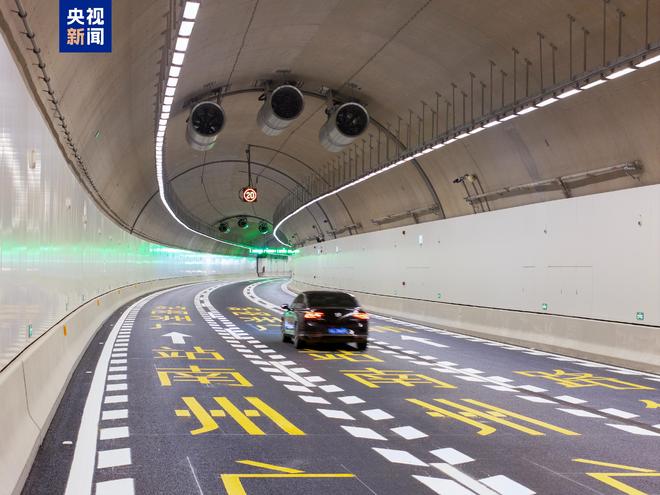
Core Achievements - China's research team has made a significant breakthrough in lunar science by discovering micron-sized hematite and magnetite crystals in samples returned from the Chang'e 6 mission, revealing the lunar oxidation-reduction state and magnetic anomalies [1][3] - The Shenzhou 22 mission has been initiated, with plans to launch a spacecraft carrying supplies and equipment for astronauts and the space station [3][5] - A domestically developed 3D-printed engine has successfully completed its first flight test, marking a major advancement in engineering applications [5] - Key breakthroughs have been achieved in 6G communication and nuclear power control technologies, indicating substantial progress in China's frontier technology development [7][8] Technological Developments - The first phase of 6G technology trials has been completed, with over 300 key technology reserves established, positioning China at the forefront of global 6G development [8] - A new generation of digital control systems for nuclear power plants has been launched, featuring 100% domestically produced components, enhancing safety and operational efficiency [10] - The completion of the Haizhu Bay Tunnel in Guangzhou improves connectivity within the Guangdong-Hong Kong-Macao Greater Bay Area, showcasing advancements in infrastructure [12] - The "Haixun 176," the largest and most advanced buoy tender in China's transportation system, has been officially commissioned, enhancing maritime navigation support capabilities [14][16] - The world's largest high-altitude wind power harvesting parachute has successfully completed trials, marking a significant step in the engineering application of high-altitude wind energy technology [17]
3天1700亿元! 从高交会成绩单看科技创新的“中国机遇”
Shang Hai Zheng Quan Bao· 2025-11-16 17:55
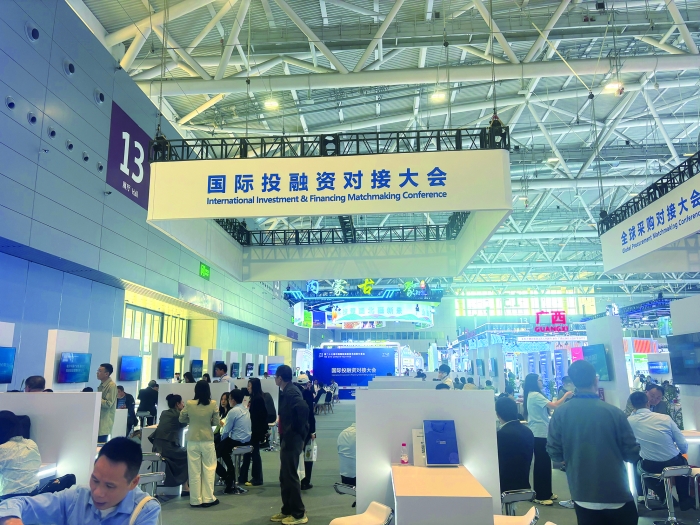
Core Insights - The 27th China International High-Tech Achievements Fair (High-Tech Fair) concluded with a record-breaking intention transaction and financing amount exceeding 170 billion yuan, reflecting strong momentum in China's high-tech innovation [2][5] - The event attracted over 450,000 attendees from more than 120 countries, showcasing over 5,000 new products and achievements, and facilitating 1,023 supply-demand matches and financing project signings [2][5] Group 1: Event Overview - The High-Tech Fair featured various cutting-edge sectors including artificial intelligence, semiconductors, consumer electronics, new energy vehicles, and low-altitude economy, highlighting the forefront of new productive forces [2] - Major state-owned enterprises and leading companies such as BYD, Tencent, and Huawei presented advanced technologies and products, showcasing China's innovative capabilities [5][6] Group 2: Industry Highlights - The robotics sector was prominently featured, with over 90% of physical exhibits showcasing high-tech products, including humanoid robots and exoskeletons, attracting significant attention from international buyers [3][4] - The renewable energy sector also performed well, with over 80 international procurement teams engaging in discussions with domestic companies during specialized events [3][4] Group 3: Investment Opportunities - The fair facilitated global procurement and investment matching, attracting over 1,036 procurement teams from countries like the UK, Russia, and Canada, indicating strong international interest in Chinese innovations [7][8] - Companies like Zero Point and Kenjing Technology reported strong overseas demand for their robotic products, with intentions for applications in various local scenarios [8]
驭风于天!高空风力发电开辟风能利用新疆界
Ke Ji Ri Bao· 2025-11-16 12:13
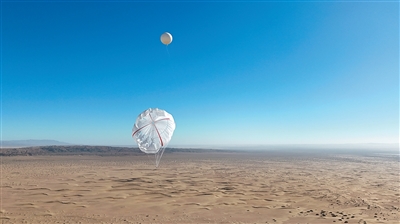
Core Insights - The successful launch of the world's largest 5000 square meter high-altitude wind energy capturing umbrella marks a significant step in China's high-altitude wind power technology and its engineering application [1][3] Group 1: High-altitude Wind Power Technology - High-altitude wind power generation utilizes airborne components tethered to capture wind energy above 300 meters, converting it into electrical energy [3] - The technology involves a three-tier energy transfer path: airborne energy capture, cable energy transmission, and ground-based power generation [3][5] - The system employs a helium balloon for initial lift, a working umbrella for wind energy capture, and a cable made of ultra-high molecular polyethylene capable of withstanding hundreds of tons of tension [5] Group 2: Advantages and Opportunities - High-altitude wind energy presents a strategic opportunity to overcome the limitations faced by traditional wind power, such as limited near-surface wind resources and the intermittent nature of wind energy [5][8] - Research indicates that the high-altitude region (300 to 10,000 meters) contains abundant and underutilized wind energy resources, with theoretical reserves exceeding global electricity consumption needs by over 100 times [8] - High-altitude wind energy offers significant advantages, including increased energy density, stable wind direction and speed, and widespread global distribution, which can enhance the stability and peak-shaving capabilities of new power systems [8] Group 3: Commercialization and Application - The first engineering trial project for high-altitude wind energy generation in China, located in Anhui, successfully generated power using the umbrella-based technology, with a total installed capacity at the megawatt level [9] - The umbrella-based land-based high-altitude wind power technology demonstrates significant commercial potential and application flexibility, supporting various deployment schemes such as mobile, distributed, and centralized systems [12] - This technology can be deployed in resource-rich areas like Inner Mongolia and Qinghai, provide clean power to remote locations, and serve as an emergency response system in urban settings, enhancing the resilience of multi-energy systems [12]


“会飞的电站”如何发电
Ren Min Ri Bao· 2025-11-14 22:03
Core Viewpoint - The successful testing of the world's largest 5000 square meter high-altitude wind power capturing kite in Inner Mongolia marks a significant step forward in the engineering application of high-altitude wind power technology in China [1][2]. Group 1: High-altitude Wind Power Technology - High-altitude wind power technology captures wind energy at altitudes above 300 meters, converting it into electrical energy through a process similar to flying a kite [1]. - The system consists of three main components: aerial components, traction cables, and ground components, utilizing a kite-like structure to harness wind energy [2]. Group 2: Efficiency and Output - The proposed "flying power station" has a rated power of 5 megawatts, with a single power generation cycle taking approximately 20 minutes, yielding about 500 kilowatt-hours per ascent [2]. - The estimated annual power generation under normal conditions can reach 10 million kilowatt-hours, equivalent to saving approximately 3000 tons of standard coal [2]. Group 3: Advantages and Future Prospects - High-altitude wind energy has advantages such as high wind energy density, stable wind direction, and widespread distribution, with theoretical reserves exceeding global electricity consumption by over 100 times [3]. - Compared to conventional onshore wind power, high-altitude wind power can save up to 90% in land use and steel consumption, and reduce electricity costs by about 30% [3]. - The industry is still in the early stages of development, with plans for further testing and a goal to enter the power generation testing phase by the end of next year [3].
今年以来93只新股已发行,共募资978.44亿元
Zheng Quan Shi Bao Wang· 2025-11-14 08:05
Core Points - A new stock, Hai'an Group, issued 46.49 million shares at a price of 48.00 yuan, raising 2.232 billion yuan [1] - As of November 14, 93 companies have gone public this year, raising a total of 97.844 billion yuan, with an average fundraising of 1.052 billion yuan per company [1] - The most funds raised by a single company this year is 18.171 billion yuan by Huadian New Energy, primarily for wind and solar power projects [1] Fundraising Overview - The total number of new stocks issued this year includes 21 from the Shanghai main board raising 41.405 billion yuan, 11 from the Shenzhen main board raising 10.157 billion yuan, 28 from the ChiNext board raising 22.030 billion yuan, 11 from the Sci-Tech Innovation board raising 17.746 billion yuan, and 22 from the Beijing Stock Exchange raising 6.506 billion yuan [1] - 22 companies raised over 1 billion yuan, with 1 company exceeding 10 billion yuan [1] Price and Regional Distribution - The average initial public offering (IPO) price this year is 20.79 yuan, with 4 companies priced above 50 yuan, the highest being Tianyouwei at 93.50 yuan [2] - The majority of new stocks are concentrated in Jiangsu, Guangdong, and Zhejiang, with fundraising amounts led by Fujian, Guangdong, and Jiangsu [2]
龙源电力跌1.09%,成交额6157.49万元,今日主力净流入12.43万
Xin Lang Cai Jing· 2025-11-14 07:53
来源:新浪证券-红岸工作室 资金分析 今日主力净流入-84.32万,占比0.02%,行业排名40/102,该股当前无连续增减仓现象,主力趋势不明 显;所属行业主力净流入-16.92亿,连续3日被主力资金减仓。 11月14日,龙源电力跌1.09%,成交额6157.49万元,换手率0.07%,总市值1442.90亿元。 异动分析 抽水蓄能+绿色电力+风电+新疆振兴 1、龙源电力与黑龙江省铁力市人民政府签订353万千瓦新能源发电项目合作开发框架协议。根据合作协 议,由龙源电力与新农创投资发展有限公司联合成立龙源盛达合资公司,并与铁力市政府展开合作,共 同开发300万千瓦抽水蓄能项目。 2、龙源电力集团股份有限公司的主营业务是风力、光伏发电。公司的主要产品是电力、热力。 风力、 光伏发电。 3、公司主要从事风电场的设计、开发、建设、管理和运营。 4、公司在新疆的在运风电装机容量为159.08万千瓦。 (免责声明:分析内容来源于互联网,不构成投资建议,请投资者根据不同行情独立判断) 截至9月30日,龙源电力股东户数3.42万,较上期减少16.42%;人均流通股0股,较上期增加0.00%。 2025年1月-9月,龙源电力 ...

中闽能源股价涨5.01%,国海富兰克林基金旗下1只基金重仓,持有1.4万股浮盈赚取4060元
Xin Lang Cai Jing· 2025-11-14 05:36
Group 1 - The core point of the news is that Zhongmin Energy's stock price increased by 5.01% to 6.08 CNY per share, with a trading volume of 409 million CNY and a turnover rate of 3.62%, resulting in a total market capitalization of 11.57 billion CNY [1] - Zhongmin Energy, established on May 26, 1998, and listed on June 2, 1998, is primarily engaged in the development, construction, and operation of onshore wind power projects, with wind power accounting for 96.16% of its main business revenue [1] - The company also has minor contributions from other energy sources, including biomass power generation (1.16%), photovoltaic power generation (1.06%), and supplementary income (1.61%) [1] Group 2 - Guohai Franklin Fund has a significant holding in Zhongmin Energy, with the Guofu Tianyi Mixed A Fund (005652) reducing its holdings by 6,700 shares, now holding 14,000 shares, which represents 0.92% of the fund's net value, ranking it as the fifth-largest holding [2] - The Guofu Tianyi Mixed A Fund was established on March 27, 2018, with a current size of 6.0113 million CNY, achieving a year-to-date return of 4.58% and a one-year return of 6.27% [2] - The fund's performance ranks 7096 out of 8140 in its category year-to-date and 6330 out of 8056 over the past year, with a cumulative return of 53.66% since inception [2] Group 3 - The fund managers of Guofu Tianyi Mixed A are Wang Li and Gao Yanyun, with Wang Li having a tenure of 9 years and 300 days, managing assets totaling 32.722 billion CNY, achieving a best return of 46.64% and a worst return of -0.71% during her tenure [3] - Gao Yanyun has a tenure of 3 years and 130 days, managing assets of 763 million CNY, with a best return of 42.52% and a worst return of 8.55% during her tenure [3]

中闽能源股价涨5.01%,南方基金旗下1只基金位居十大流通股东,持有696.35万股浮盈赚取201.94万元
Xin Lang Cai Jing· 2025-11-14 05:36
Core Insights - On November 14, Zhongmin Energy's stock rose by 5.01%, reaching 6.08 CNY per share, with a trading volume of 409 million CNY and a turnover rate of 3.62%, resulting in a total market capitalization of 11.57 billion CNY [1] Company Overview - Zhongmin Energy Co., Ltd. is located in Fuzhou, Fujian Province, and was established on May 26, 1998, with its listing date on June 2, 1998 [1] - The company's main business involves the development, construction, and operation of onshore wind power projects [1] - Revenue composition is as follows: wind power 96.16%, other (supplementary) 1.61%, biomass power generation 1.16%, and photovoltaic power generation 1.06% [1] Shareholder Insights - Among the top ten circulating shareholders of Zhongmin Energy, a fund under Southern Fund holds a position [2] - The Southern CSI 1000 ETF (512100) reduced its holdings by 108,000 shares in the third quarter, now holding 6.9635 million shares, which accounts for 0.37% of circulating shares [2] - The estimated floating profit from this position is approximately 2.0194 million CNY [2] - The Southern CSI 1000 ETF was established on September 29, 2016, with a latest scale of 76.63 billion CNY and has achieved a year-to-date return of 28.92% [2] - The fund manager, Cui Lei, has a total asset scale of 122.76 billion CNY, with the best fund return during her tenure being 175.92% [2]