在线音乐
Search documents
腾讯音乐200亿“闪婚”喜马拉雅:从“双巨头”到“超级巨无霸”
3 6 Ke· 2025-06-12 07:19
Core Insights - Tencent Music Entertainment Group announced a merger agreement with Ximalaya for a total consideration of approximately $12.6 billion in cash and stock, making it one of the most significant acquisitions in the Chinese internet sector in recent years [2] - Post-acquisition, Ximalaya will operate as a wholly-owned subsidiary of Tencent Music, maintaining its brand and operational independence [2][4] - The merger is expected to create a dominant player in the music and audio content market, consolidating Tencent Music's existing platforms and significantly increasing its market share [4][5] Company Overview - Tencent Music has been a leader in the digital music market since its establishment in 2016, with a steady increase in market share and profits [4] - Ximalaya holds a dominant position in the online audio sector, with a user penetration rate of 77.8% and over 60% of total listening time among audio users [4][5] - The merger will combine Tencent Music's younger user demographic with Ximalaya's broader age coverage, enhancing user engagement and monetization opportunities [5][6] Market Impact - The merger is likely to reshape the competitive landscape of the online audio industry, potentially leading to a monopolistic environment that could stifle innovation and limit choices for users and creators [5][15] - The combined entity will have unprecedented control over user engagement, content resources, and creator relationships, which may lead to increased market concentration and reduced competition [7][15] - Concerns have been raised regarding the potential for anti-competitive behavior, given Tencent's history with regulatory scrutiny over past acquisitions [8][12] Regulatory Considerations - The merger may trigger regulatory scrutiny due to the high market concentration it creates, reminiscent of previous investigations into Tencent's business practices [8][13] - The potential for anti-competitive practices could lead to increased oversight from regulatory bodies, especially considering Tencent's past violations of antitrust laws [9][12] User and Creator Implications - The merger could negatively impact content creators by reducing their negotiating power and limiting their options for collaboration, potentially leading to a decrease in income and opportunities [17][20] - Users may face higher prices and reduced access to content as the merged entity seeks to maximize profits, which could diminish the overall user experience [20][23] - The consolidation of power may lead to a homogenization of content, reducing diversity and innovation in the audio and music sectors [19][23]
港股腾讯音乐市值超百度
第一财经· 2025-06-12 07:00
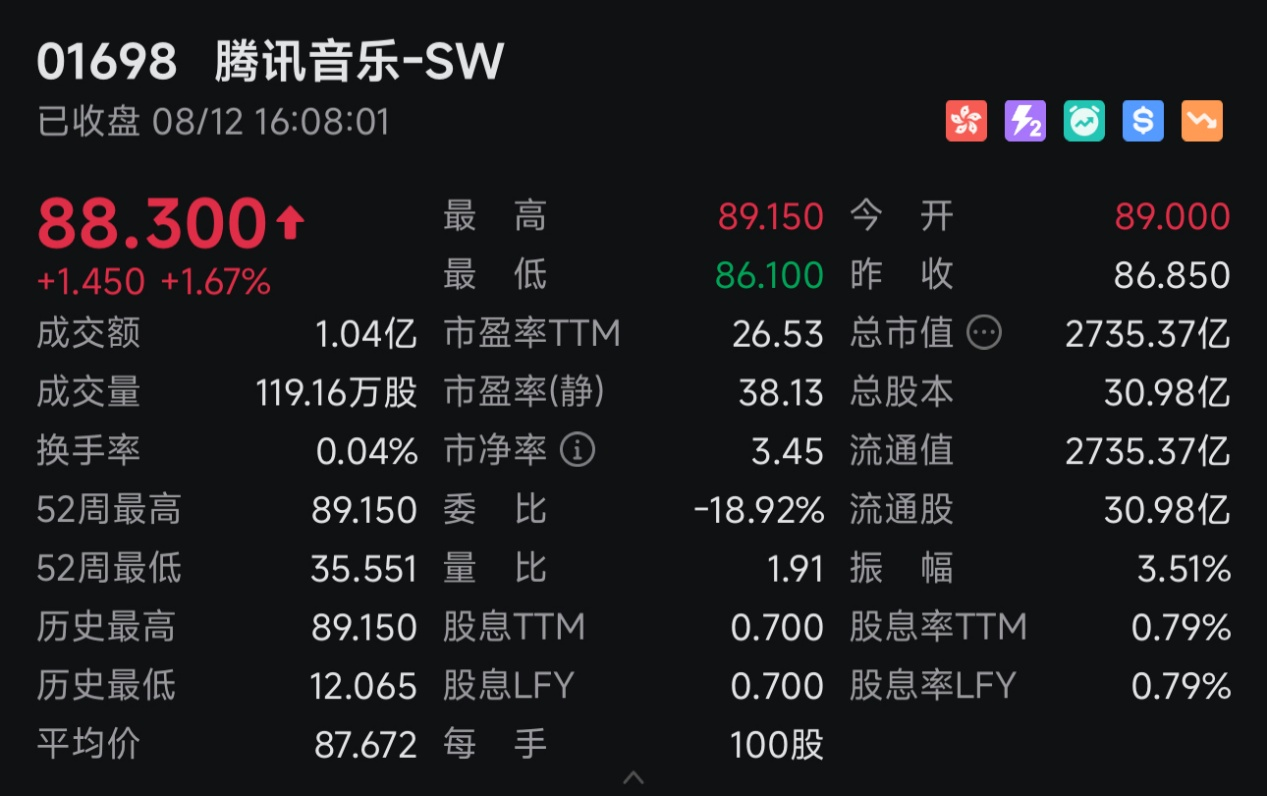
6月12日下午,截至第一财经记者发稿,腾讯音乐港股盘中涨超5.6%至76.7港元/股,市值达2376亿 港元,一度超过百度2372亿港元的市值。在过去半个月时间,腾讯音乐市值与百度市值差距在20亿 美元左右并不断缩小。 ...
喜马拉雅200亿“打折卖身”腾讯音乐,音频平台“捅不破”商业化天花板?
Sou Hu Cai Jing· 2025-06-12 00:54
Group 1: Acquisition Details - Tencent Music announced the acquisition of Ximalaya for a total consideration of approximately $2.8 billion, which includes $1.26 billion in cash and 5.1986% of Class A common stock [1][3] - The acquisition price represents a significant discount compared to Ximalaya's peak valuation of $5 billion in 2021, reflecting current market conditions [1][3] - Following the announcement, Tencent Music's stock rose by 8% in pre-market trading [1] Group 2: Ximalaya's Financial Performance - Ximalaya's revenue for 2021, 2022, and 2023 was reported at 5.86 billion, 6.06 billion, and 6.16 billion yuan respectively, with adjusted net profits of -718 million, -296 million, and 224 million yuan [5] - The company achieved its first quarterly profit in Q4 2022 and turned profitable in 2023, primarily through cost-cutting measures, including a nearly 40% reduction in full-time employees [5][10] - Ximalaya's sales and marketing expenses as a percentage of total revenue decreased from 44.9% in 2021 to 33.6% in 2023 [5] Group 3: Market Position and Strategy - Ximalaya holds a 60.5% market share in mobile listening time and approximately 25% market share in online audio revenue, making it the largest online audio platform in China [6][10] - The average monthly active users for Ximalaya reached 303 million in 2023, with a growth rate of only 4% year-on-year [10] - The company has struggled with user engagement, as the percentage of users listening to UGC content decreased from 45.4% in 2021 to 33.2% in 2023 [10] Group 4: Industry Context and Challenges - The online audio industry in China is projected to grow to 28.7 billion yuan in 2024, with a compound annual growth rate of 35.12% over the past five years [8] - The competitive landscape is challenging, with ByteDance's entry into the audio market posing significant threats to existing players [11] - Ximalaya's attempts to diversify revenue streams through podcasts and short dramas have not yielded significant results [10][11] Group 5: Future Outlook - The acquisition is expected to enhance Tencent Music's content ecosystem and user engagement, addressing its declining monthly active user numbers [6][11] - Ximalaya is focusing on AI and IoT as key growth areas, with AI-generated content accounting for 6.6% of its audio offerings by the end of 2023 [11][12] - The future of the audio market remains uncertain, with ongoing challenges in balancing commercial viability and user experience [12]
喜马拉雅“打折卖身”,是音频平台的商业化困境?
Hu Xiu· 2025-06-11 23:45
Group 1 - Tencent Music announced plans to acquire Himalaya for a total consideration of approximately $2.8 billion, which includes $1.26 billion in cash and 5.1986% of Class A common stock [1] - The acquisition price represents a significant discount compared to Himalaya's peak valuation of $5 billion in 2021, indicating a favorable outcome given the current market environment [1] - Following the announcement, Tencent Music's stock surged by 8% in pre-market trading [1] Group 2 - The acquisition of Himalaya is part of a broader trend where companies are integrating "IPO difficulties" into their portfolios, with Tencent Music also acquiring a 9.38% stake in SM Entertainment for $1.29 billion [3] - Himalaya has faced multiple failed IPO attempts, with four unsuccessful attempts leading to a loss of investor patience, ultimately resulting in the decision to sell [3][4] - From 2021 to 2023, Himalaya's revenue showed modest growth, with figures of 5.86 billion, 6.06 billion, and 6.16 billion yuan respectively, while achieving its first quarterly profit in Q4 2022 [5] Group 3 - Himalaya has significantly reduced its workforce from 4,342 employees in 2021 to 2,637 in 2023, a nearly 40% reduction, alongside a 50% cut in executive salaries [6] - The company's sales and marketing expenses as a percentage of total revenue decreased from 44.9% in 2021 to 33.6% in 2023, indicating a focus on cost management [7] - Despite the acquisition, Himalaya has committed to maintaining its brand, product independence, and core management team, while fulfilling existing contracts with partners [7] Group 4 - The acquisition is expected to enhance Tencent Music's competitive position against ByteDance, as it aims to create a comprehensive entertainment ecosystem combining online music streaming, social entertainment, and audio content [8] - In Q1 2023, Tencent Music reported a decline in monthly active users for 14 consecutive quarters, highlighting the need for user engagement strategies [8] - Himalaya holds a 60.5% market share in mobile audio listening time and 25% in online audio revenue, making it a strategic asset for Tencent Music [8] Group 5 - The online audio industry in China is projected to grow to 28.7 billion yuan in 2024, with a compound annual growth rate of 35.12% over the past five years [11] - Despite being the leading player, Himalaya's average monthly active users grew only 4% year-on-year in 2023, indicating challenges in user engagement and monetization [14] - Himalaya's advertising revenue is heavily reliant on opening screen ads, which limits its ability to expand advertising opportunities [15] Group 6 - The audio business faces significant challenges, with competition from ByteDance and other platforms, leading to a fragmented market landscape [10][17] - Himalaya has attempted to diversify its revenue streams through podcasts and short dramas, but these efforts have not yielded significant results [16] - The future of the audio market remains uncertain, with companies like Himalaya and Tencent Music seeking to balance commercial viability with user experience [20]
中金:维持腾讯音乐-SW(01698)“跑赢行业”评级 目标价80港元
智通财经网· 2025-06-11 03:53
Group 1 - The core viewpoint of the report maintains Tencent Music's Non-IFRS net profit forecasts for 2025 and 2026, with corresponding P/E ratios for Hong Kong and US stocks indicating potential upside [1] - The estimated total consideration for the acquisition of Ximalaya is approximately $2.854 billion, which includes $1.26 billion in cash and stock issuance [2] - Ximalaya, a leading long audio platform in China, has a strong user base and brand effect, with 72.23 million mobile MAUs and a revenue of 6.163 billion yuan in 2023 [3] Group 2 - The acquisition is expected to maintain Ximalaya's independent operation and brand identity, with no changes to its core management team or strategic direction [2] - Long audio and music users are complementary, with only 9.9% overlap between Ximalaya and QQ Music users, suggesting potential for enhanced user engagement [4] - The differentiated content rights from the acquisition are anticipated to support the sustainable growth of ARPPU for Tencent Music [4]
腾讯音乐买下喜马拉雅,但字节还在猛攻一切
3 6 Ke· 2025-06-11 02:14
Group 1: Acquisition Details - Tencent Music is acquiring Ximalaya for $1.26 billion in cash and approximately 5.2% equity, totaling around $2.7 to $2.8 billion [1] - Tencent Music was already a shareholder in Ximalaya, holding about 5.33% of its shares [1] - Ximalaya has raised nearly 10 billion RMB over 12 funding rounds but has struggled to go public, leading to the decision to sell to Tencent [1] Group 2: Market Context - The acquisition comes at a significant discount compared to Ximalaya's peak valuation of approximately 30 billion RMB (over $4 billion) in 2021, representing a nearly 30% decline [6] - Ximalaya's monthly active users (MAU) have decreased to under 200 million, down about one-third from its peak in 2021, due to competition from short video platforms and aggressive commercialization [8][6] Group 3: Strategic Implications for Tencent Music - The acquisition will enhance Tencent Music's product offerings, filling a gap in the long audio content segment, which includes podcasts and audiobooks [8][9] - Tencent Music aims to integrate audio content into its existing platforms, potentially offering a unified membership service that includes music and audio content [10][11] - The acquisition positions Tencent Music to better compete against rivals like NetEase Cloud Music and ByteDance, which are disrupting the market with free models [12][14] Group 4: Competitive Landscape - ByteDance's free music streaming app, Soda Music, has rapidly gained 60 million MAU, posing a direct challenge to Tencent Music's paid subscription model [12][14] - The competition between Tencent and ByteDance spans multiple content areas, including short videos, long videos, literature, and audio [15] - The industry is witnessing a shift towards mixed monetization models, balancing subscription services with free content to attract a broader user base [16][17]
12.6亿美元,腾讯音乐要收购喜马拉雅了
母基金研究中心· 2025-06-11 01:46
Core Viewpoint - Tencent Music has announced a merger agreement with Ximalaya, which will make Ximalaya a wholly-owned subsidiary after the transaction closes [1][5]. Group 1: Transaction Details - The transaction involves the cancellation of equity securities held by Ximalaya's shareholders and employee stock plan participants in exchange for $1.26 billion in cash and Tencent Music shares [2][5]. - Tencent Music will issue Class A common stock not exceeding 5.1986% of the total shares outstanding as of five business days before the transaction closes, along with an additional issuance of up to 0.37% of total shares to founding shareholders post-transaction [5]. - The completion of the transaction is subject to regulatory approvals and other closing conditions [5]. Group 2: Market Reaction - Following the announcement, Tencent Music's stock surged over 11% in pre-market trading, and by the end of the trading day, it had increased by 2.43% in Hong Kong [4]. Group 3: Ximalaya's Future Plans - Ximalaya will undergo a restructuring of certain existing businesses related to the transaction, while maintaining its brand, product independence, core management team, and strategic direction [6]. - Ximalaya has committed to fulfilling all contracts with partners and ensuring customer rights are protected [6]. - The company aims to embrace AI to lead industry transformation [7]. Group 4: Tencent Music's Market Position - Tencent Music is the largest online music platform in China, holding approximately 70% market share, and has developed a comprehensive music entertainment ecosystem [8]. - In Q1, Tencent Music reported total revenue of 7.36 billion yuan, a year-on-year increase of 8.7%, with adjusted net profit rising by 22.8% to 2.23 billion yuan [8]. - Online music service revenue grew by 15.9% to 5.80 billion yuan, with the number of paying users increasing by 8.3% to 12.29 million [8].
腾讯音乐收购喜马拉雅:又一次靠并购走出流量焦虑
2 1 Shi Ji Jing Ji Bao Dao· 2025-06-11 01:22
Core Viewpoint - Tencent Music has finalized the acquisition of Ximalaya for a total cash consideration of $1.26 billion, which includes the issuance of Class A ordinary shares [1] Group 1: Acquisition Details - The acquisition involves a total cash payment of $1.26 billion, with Tencent Music issuing Class A ordinary shares not exceeding 5.1986% of the total shares outstanding prior to the transaction [1] - Ximalaya will undergo a restructuring of certain existing businesses related to the transaction [1] - The completion of the transaction is subject to regulatory approvals and other closing conditions [1] Group 2: Recent Transactions - On May 30, HYBE sold its entire stake in SM Entertainment to Tencent Music's Hong Kong entity for approximately 243.3 billion KRW, equivalent to about 1.29 billion RMB, representing 9.38% of SM Entertainment [2][3] Group 3: Financial Performance - In Q1 2025, Tencent Music reported revenue of 7.356 billion RMB, a year-on-year increase of 8.7%, and an adjusted net profit of 2.226 billion RMB, up 22.8% [5] - Online music revenue grew by 15.9% year-on-year to 5.8 billion RMB, with subscription revenue increasing by 16.6% to 4.22 billion RMB [6] - The number of online paid users rose by 8.3% to 122.9 million, with average revenue per paying user (ARPPU) increasing by 0.3 RMB to 11.4 RMB [6] Group 4: User Engagement Challenges - Monthly active users (MAUs) for Tencent Music's online music services declined by 4.0% year-on-year to 555 million [7] - The decline in MAUs poses a direct constraint on Tencent Music's revenue potential [8] Group 5: Strategic Focus - Tencent Music is shifting its focus towards paid users, a strategy common among Tencent's subsidiaries [8] - The company has decided to no longer separately disclose operational metrics for its social entertainment segment, which saw a revenue decline of 11.9% to 1.55 billion RMB in Q1 [9] Group 6: Potential Benefits of Acquisition - The acquisition of Ximalaya is expected to provide Tencent Music with significant traffic, as Ximalaya reported 303 million MAUs in 2023, with 133 million being mobile users [13] - Ximalaya has developed a unique UGC content ecosystem and holds numerous audiobook copyrights, which could offer substantial monetization opportunities [13] - Tencent Music has a history of successful acquisitions, which have been pivotal in establishing its current market position [13]
腾讯音乐拟收购喜马拉雅控股;苹果称Siri的AI升级功能短期内不会推出
Mei Ri Jing Ji Xin Wen· 2025-06-10 23:17
点评:这一并购不仅将强化腾讯在内容生态领域的地位,更凸显出音频赛道在流量红利见顶背景下的稀 缺价值。通过将头部播客平台纳入麾下,腾讯音乐可有效补足其"听"场景的短板,构建"音乐+有声内容 +社交"的全链条服务体系,与网易云音乐等竞品形成差异化竞争。 丨 2025年6月11日星期三丨 NO.1腾讯音乐:拟以12.6亿美元收购喜马拉雅 6月10日,腾讯音乐在港交所发布公告称,腾讯音乐娱乐集团与喜马拉雅控股及若干其他订约方就其拟 议收购喜马拉雅订立并购协议及计划。腾讯音乐称,交易交割后,喜马拉雅将成为公司的全资附属公 司。据公告,此次交易总价为12.6亿美元现金,喜马拉雅相关股东及喜马拉雅的雇员持股计划参与者持 有的喜马拉雅权益性证券须予以注销。此外,根据并购协议,喜马拉雅将进行与交易有关的若干现有业 务的重组。 NO.3Siri的AI升级功能短期内不会推出 当地时间6月10日,苹果在WWDC上宣布了Apple Intelligence的一系列新功能,并向开发者开放苹果的 基础模型。据悉,苹果此次推出全新的软件界面设计"液态玻璃",应用于iPhone等旗下多种硬件设备的 操作系统,iPhone迎来2013年来首次O ...
大涨超10%!腾讯音乐大动作,并购喜马拉雅!
券商中国· 2025-06-10 14:30
Core Viewpoint - Tencent Music Entertainment Group announced a merger agreement to acquire Ximalaya for $1.26 billion in cash and stock, aiming to enhance user experience and creator revenue through resource sharing and joint development [1][3][4]. Group 1: Acquisition Details - The acquisition will involve a total payment of $1.26 billion in cash and the issuance of Class A common stock, not exceeding 5.1986% of Tencent Music's total shares outstanding prior to the transaction [2]. - Ximalaya will become a wholly-owned subsidiary of Tencent Music upon completion of the transaction, which is subject to regulatory approvals and other conditions [2][4]. Group 2: Ximalaya's Operations Post-Acquisition - Ximalaya will maintain its brand, product independence, core management team, and strategic direction after the acquisition [3][4]. - The company aims to continue its mission of sharing human wisdom through sound and providing high-quality audio products and services to users, creators, and partners [4]. Group 3: Financial Performance - Ximalaya's revenue for 2021, 2022, and 2023 was reported at 5.86 billion yuan, 6.06 billion yuan, and 6.16 billion yuan respectively, with a gross margin of 54%, 51.9%, and 56.3% [5]. - The adjusted net profit for Ximalaya was -718 million yuan in 2021, -296 million yuan in 2022, and 224 million yuan in 2023, indicating a turnaround in profitability [5]. - Tencent Music reported a total revenue of 28.401 billion yuan in 2024, a year-on-year increase of 2.34%, with a net profit of 6.644 billion yuan, up 35.04% [5].