
水利工程

Search documents
调水超845亿立方米!南水北调11年效益显著
Xin Hua She· 2025-12-21 08:29
Core Insights - The South-to-North Water Diversion Project's Eastern and Central Line has celebrated its 11th anniversary, having delivered over 84.5 billion cubic meters of water to northern regions, showcasing its significant impact on water resource management and regional development [1][2]. Group 1: Project Achievements - The project has established an automated scheduling system for water delivery, utilizing digital twin technology for real-time monitoring and control, enhancing operational efficiency [1]. - The project has successfully withstood extreme weather events, including severe floods and droughts, demonstrating its resilience and safety benefits [1]. - Approximately 195 million people have benefited from the project, improving living standards and supporting local industries along the water diversion routes [2]. Group 2: Environmental and Ecological Impact - The project has significantly improved the water quality of rivers such as the Fuyang River in Hebei, leading to increased biodiversity and revitalization of local ecosystems [3]. - The Eastern and Central Line has provided ecological replenishment to over 50 rivers in northern China, addressing ecological water shortages in the region [3]. Group 3: Future Developments - The company plans to accelerate the construction of key national water network projects, enhancing connectivity and resource allocation between different water networks, thereby ensuring safe drinking water and ecological restoration [4].
数说“新”变化丨400.03亿元 2025年新疆超计划完成水利固定资产投资目标任务
Xin Lang Cai Jing· 2025-12-20 15:59
Core Insights - Xinjiang has completed a fixed asset investment of 400.03 billion yuan in water conservancy, exceeding the planned target of 386 billion yuan for 2025 [3][4]. Investment Overview - The investment aims to address the uneven distribution of water resources in Xinjiang through modern and intelligent methods, contributing to high-quality development [3][4]. - The water network project is a crucial part of the national water network construction [3]. Project Developments - Significant projects include the completion of the Dashi Gorge water conservancy hub and the operation of the first unit of the Kuerge water conservancy hub [5]. - Construction is accelerating for 49 small and medium-sized reservoirs, including the Galekule Reservoir in Nilka County [6]. Economic Impact - The water network system supports the establishment of a stable agricultural and livestock product supply base, contributing positively to economic stability and employment [7]. - Ongoing modernization and renovation of large and medium-sized irrigation areas are part of the strategy [7]. Water Resource Management - The effective utilization rate of irrigation water has reached 65%, with significant improvements in water resource allocation [8]. - The water conservancy system is focused on both flood prevention and effective use of floodwaters, enhancing ecological protection [9].


四川青峪口水库首台发电机组启动安装
Xin Lang Cai Jing· 2025-12-20 12:56
Core Viewpoint - The successful installation of the core components for the first hydropower generator unit at the Qingyukou Reservoir project marks a significant milestone in the construction of this major water conservancy project in Sichuan Province [1] Group 1: Project Details - The Qingyukou Reservoir project, undertaken by China Railway 11th Bureau, involves the installation of three hydropower generator units, each with a capacity of 6.67 megawatts, leading to a total installed capacity of 20 megawatts [1] - The project serves multiple functions, including flood control, water supply, and power generation [1] - The Qingyukou Reservoir is part of the national plan, being one of the 150 major water conservancy projects and one of the 102 major projects outlined in the 14th Five-Year Plan [1]

国家重大水利工程重庆藻渡水库大坝完成填筑
Zhong Guo Xin Wen Wang· 2025-12-20 06:33
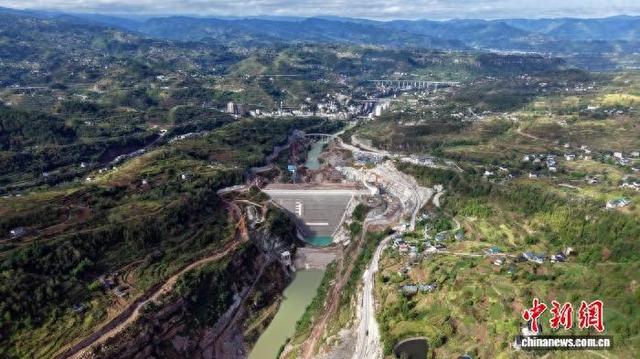
中新网重庆12月20日电 (张旭)12月20日,国家重大水利工程重庆藻渡水库大坝实现封顶,标志着大坝填 筑作业全面完成。 重庆藻渡水库是国家172项节水供水和国务院150项重大水利工程之一,工程任务以防洪、供水、灌溉为 主,兼有水系连通、环境保护及发电等综合利用功能。工程批复总投资101.23亿元,总工期为60个月, 水库正常蓄水位375米,总库容2.01亿立方米。 项目建成后,可提高下游重庆綦江城区的防洪能力,每年新增供水量约1.79亿立方米,新增灌溉面积17 万亩,改善灌溉面积6.5万亩,可为重庆南岸、綦江、巴南、江津等区县提供用水保障。水库利用下泄 生态流量和弃水发电,电站装机1.2万千瓦,年均发电量4494万千瓦时。 重庆藻渡水库项目由重庆市水利局、重庆水务环境集团监督管理,中交上海航道局有限公司、中交第二 航务工程局有限公司和长江勘测规划设计研究有限责任公司联合实施。该项目由枢纽工程与输水工程组 成,其中枢纽工程大坝结构形式为混凝土面板堆石坝,最大坝高104.5米。 大坝填筑是水利工程施工中至关重要的一环,填筑质量直接关乎大坝能否实现蓄水、防洪、供水和发电 等核心功能,直接影响大坝运营稳定性和安全性 ...
盐城市水利工程提速攻坚 为高质量发展蓄势赋能
Yang Zi Wan Bao Wang· 2025-12-20 02:18
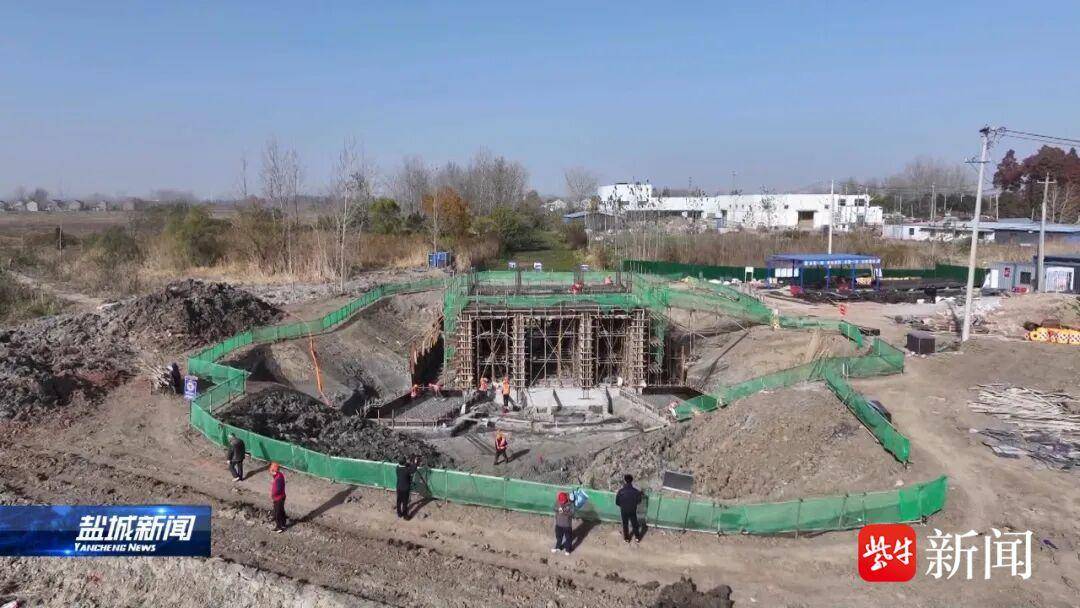
连日来,盐城市多个水利工程施工现场呈现一派火热景象,施工人员争分夺秒奋战一线,以"拼"的姿态、"抢"的劲头推进重点水利工程建设,为全年高质 量发展注入强劲"水动能"。 近日,记者在淮河入海水道二期滨海枢纽工程施工现场看到,南北船闸主体结构已全部完工。施工人员正集中进行上下游引航道模袋护坡浇筑、临时围堰 拆除等收尾作业,据现场负责人介绍,目前,引航道的施工进度已超90%,北堤防汛交通桥计划于12月下旬合龙。为保障工期,施工单位已增派人力与设 备,全力保障进度按节点稳步推进。 据淮河入海水道二期工程滨海枢纽工程技术负责人王天荣介绍,目前,南北船闸在工人数约230人左右,投入了挖机25台、挖泥船3艘、泥舶船4艘、装载 机4台,目前总渠南堤公路桥已验收通车。 滨海枢纽工程是淮河入海水道二期工程的第四级枢纽,位于入海水道与通榆河交汇处,是全线控制性关键节点。工程主要包括扩建立交地涵及上下游引 河、新建北堤防汛交通桥等。项目建成后,将大幅提升区域防洪排涝能力,为构建淮河入海水道二级航道、连通连申线航道,完善江苏现代水网体系提供 核心支撑。 淮河入海水道二期工程滨海枢纽工程技术负责人王天荣介绍:下一步,我们将继续以时时放心 ...
涉3市15个县(区)!安徽这一改造工程获批
Xin Lang Cai Jing· 2025-12-20 01:35
Core Insights - The Anhui Provincial Development and Reform Commission has officially approved the feasibility study report for the modernization of the Pishihang irrigation area, laying a significant foundation for the project's full implementation [1] - The project is included in the national and provincial key water conservancy construction projects, covering all counties and districts in Liu'an City, parts of Hefei City, and Shou County in Huainan City [1] - Key construction components include water supply and distribution systems, drainage systems, tailwater replenishment pump stations, management facilities, and information technology projects [1] - The implementation of the project is crucial for ensuring the safety of irrigation works, improving the water resource allocation and security system, and advancing the modernization process of the irrigation area by 2035 [1] - By 2035, the irrigation design guarantee rate for the Pihe and Hangbu River irrigation areas is expected to reach 85%, while the Shihe irrigation area is projected to achieve a guarantee rate of 80% [1]
穿塬越渭送“甘露”
Shan Xi Ri Bao· 2025-12-20 00:20
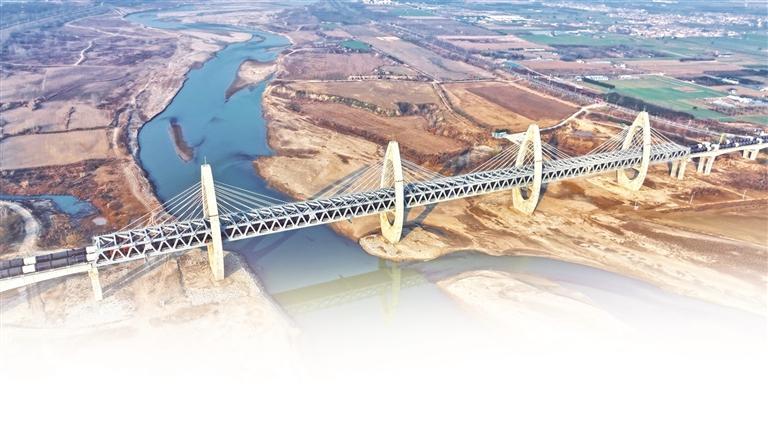
Core Viewpoint - The successful completion of the northern line of the Yinhang Jihui Phase II project marks a significant milestone in addressing water scarcity in the Weibei region, with the project expected to provide reliable water supply from the Han River to various areas in Shaanxi Province by 2026 [2][3][11]. Group 1: Project Overview - The northern line of the Yinhang Jihui Phase II project spans 89.54 kilometers, connecting the Huangchigou water distribution hub in the south to the Fen Shui Kou in the north [6][8]. - Once operational, the project will supply nearly 100 million cubic meters of water annually to the main urban area of Xi'an, benefiting approximately 2 million residents [11]. Group 2: Technical Challenges and Solutions - The construction faced significant challenges, including the need to tunnel through soft soil conditions and the requirement to safely navigate under critical infrastructure [14][17]. - Innovative construction techniques, such as combining shield tunneling with conventional excavation, were employed to overcome these challenges, ensuring minimal disruption to surface structures [16][18]. Group 3: Environmental and Economic Impact - The project emphasizes ecological sustainability, with measures in place to prevent soil erosion and promote green construction practices [22]. - The introduction of Han River water is expected to stabilize water quality and reduce production costs for local industries, such as the Shaanxi Rainbow Optoelectronics Technology Company, which relies heavily on water for its operations [19][21].
钱江水利开发股份有限公司 2026年度日常关联交易预计的公告
Zhong Guo Zheng Quan Bao - Zhong Zheng Wang· 2025-12-19 10:19
Core Viewpoint - The company plans to conduct daily related transactions in 2026, with an estimated total amount of approximately 292.4 million yuan, which exceeds 5% of the latest audited net assets and requires shareholder approval [2][4]. Group 1: Daily Related Transactions Overview - The estimated total amount for daily related transactions in 2026 is approximately 292.4 million yuan, which will be subject to actual occurrences [2][3]. - The transactions involve purchasing training services, design consulting, smart dosing systems, and management services from China Water Investment Group and its subsidiaries, while selling equipment and engineering installation services to subsidiaries of China Power Construction Group [3][6]. - The independent directors have reviewed and approved the proposal for the 2026 daily related transactions, which will be submitted to the board for further approval [3][8]. Group 2: Impact and Purpose of Related Transactions - The daily related transactions do not harm the interests of the company or minority shareholders and do not affect the company's independence [7][8]. - These transactions are expected to achieve complementary advantages and benefit the company's development [7]. Group 3: Approval Process - The independent directors held a special meeting to review the daily related transactions, confirming that the pricing is fair and complies with internal control systems and relevant laws [8]. - The board meeting approved the proposal with a unanimous vote, excluding related directors from the voting process [3][8].

大禹节水子公司联合预中标琼海市博鳌东海村养殖区排水整治项目
Zhi Tong Cai Jing· 2025-12-19 09:04
大禹节水(300021)(300021.SZ)公告,公司子公司甘肃大禹节水集团水利水电工程有限责任公司(简 称"水电公司")(联合体牵头人)与中建一局水利水电建设有限公司、中交水运规划设计院有限公司组成的 联合体预中标海南省琼海市博鳌东海村养殖区排水整治项目EPC(设计、施工总承包)。根据联合体协议 约定,水电公司承担本项目工程施工、设备材料采购及安装等相关后续服务的40%。项目预中标金额 1.4亿元。 ...

大禹节水(300021.SZ)子公司联合预中标琼海市博鳌东海村养殖区排水整治项目
智通财经网· 2025-12-19 09:04
智通财经APP讯,大禹节水(300021.SZ)公告,公司子公司甘肃大禹节水集团水利水电工程有限责任公司 (简称"水电公司")(联合体牵头人)与中建一局水利水电建设有限公司、中交水运规划设计院有限公司组 成的联合体预中标海南省琼海市博鳌东海村养殖区排水整治项目EPC(设计、施工总承包)。根据联合体 协议约定,水电公司承担本项目工程施工、设备材料采购及安装等相关后续服务的40%。项目预中标金 额1.4亿元。 ...