家纺

Search documents
一年卖出 300 多万个枕头,亚朵跨行做对了什么丨晚点周末
晚点LatePost· 2025-10-26 11:09
Core Viewpoint - The article emphasizes that Atour is successfully transforming its retail business by focusing on user experience and product innovation, akin to technology companies, rather than merely selling hotel-related products [2][3]. Group 1: Retail Performance - In 2024, Atour sold over 3 million deep sleep pillows and 770,000 deep sleep quilts, with retail revenue growth exceeding 120%, now accounting for half of its hotel business revenue [2]. - Atour's retail brand "Atour Planet," established only four years ago, ranks among the top four in China's home textile industry, with its core products leading in e-commerce platform categories [2][6]. Group 2: Strategic Focus - Atour's founder, Yelv Yin, emphasizes the importance of understanding user changes rather than focusing on competitors, dedicating time to engage with user feedback on platforms like Xiaohongshu [3][4]. - The decision to significantly reduce SKUs and concentrate on sleep-related products was made to enhance resource allocation and focus on a specific market segment, despite the short-term revenue sacrifice [5][10]. Group 3: Product Development - Atour's approach to product design shifted from making pillows that users adapt to, to creating pillows that adapt to users, resulting in the development of the deep sleep pillow Pro 1.0 [6][7]. - The deep sleep pillow quickly became the top-selling product across platforms, demonstrating that addressing real user pain points is crucial for success [7][12]. Group 4: Supply Chain and Standards - Atour is transforming its supply chain by setting high standards and collaborating closely with suppliers to ensure product quality, similar to Apple's approach with iPhone production [10][12]. - The establishment of "deep sleep standards" quantifies comfort through metrics like dynamic pressure stability and temperature control, moving beyond traditional industry parameters [13][14]. Group 5: Market Positioning - Atour's online sales strategy has rapidly evolved, with over 90% of its revenue coming from online channels, contrasting with traditional home textile brands that lag behind in digital transformation [14][15]. - The company's ability to leverage its hotel network as a testing ground for products has provided a unique advantage in the market, allowing for direct consumer engagement [14][15]. Group 6: Management and Adaptation - Atour's management philosophy includes rapid response to customer feedback and a commitment to long-term value creation, moving away from short-term performance metrics [17][19]. - The company has implemented a "no overnight negative reviews" policy to ensure quick resolution of customer issues, enhancing service quality and customer satisfaction [17][19]. Group 7: Continuous Innovation - Atour believes in continuous iteration of both hotel and retail products, with annual updates to core offerings, ensuring they remain competitive in a rapidly evolving market [21][22]. - The focus on maintaining a vibrant organizational culture and innovative product development is seen as essential for long-term success in the traditional home textile industry [21][22].


反对!反对!反对!知名上市公司,内乱不止
Shen Zhen Shang Bao· 2025-10-26 09:55
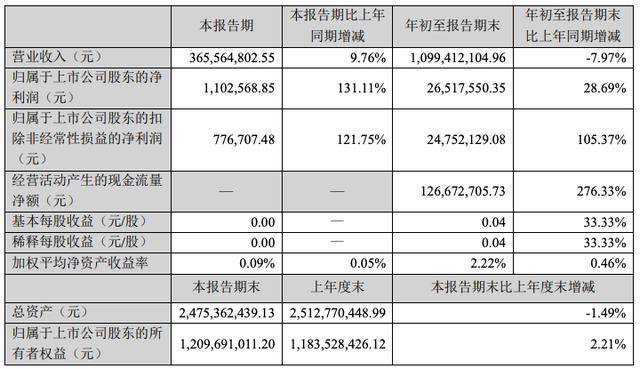
老牌家纺企业梦洁股份2025年三季度报告看似亮眼,却再次遭董事陈洁投反对票。而自2023年2月3日当选董事以来,董事陈洁对该公司年报、季报几乎每 次都要投下反对票或弃权票,在A股实属罕见。 10月26日晚间,梦洁股份(002397)发布2025年第三季度报告,公司第三季度营收为3.66亿元,同比增长9.76%;净利润为110.26万元,同比增长 131.11%。公司前三季度营收为10.99亿元,同比下降7.97%;净利润为2651.76万元,同比增长28.69%。 | | 本报告期 | 本报告期比上年 | 年初至报告期末 | 年初至报告期末 | | --- | --- | --- | --- | --- | | | | 同期增减 | | 比上年同期增减 | | 营业收入(元) | 365,564,802.55 | 9.76% | 1.099.412.104.96 | -7.97% | | 归属于上市公司股东的净 | 1,102,568.85 | 131.11% | 26,517,550.35 | 28.69% | | 利润(元) | | | | | | 归属于上市公司股东的扣 除非经常性损益的净利润 | 77 ...


梦洁股份(002397.SZ):前三季度净利润同比增长28.69%
Ge Long Hui A P P· 2025-10-26 09:48
Core Insights - The company, Mengjie Co., Ltd. (002397.SZ), reported a revenue of 366 million yuan for Q3 2025, representing a year-on-year increase of 9.76% [1] - The net profit for Q3 2025 was 1.1026 million yuan, showing a significant year-on-year growth of 131.11% [1] - For the first three quarters of 2025, the total revenue was 1.099 billion yuan, which reflects a year-on-year decline of 7.97% [1] - The net profit for the first three quarters was 26.5176 million yuan, indicating a year-on-year increase of 28.69% [1]
财务真实性存疑?梦洁股份三季报净利暴增131%,董事陈洁却再次投反对票!
Sou Hu Cai Jing· 2025-10-26 09:43
Core Viewpoint - Despite a seemingly positive third-quarter report for 2025, Mengtian Co., Ltd. faces internal dissent from board member Chen Jie, who has consistently voted against the company's financial reports since joining the board in February 2023 [1][2]. Financial Performance Summary - The company reported a third-quarter revenue of 365,564,802.55 yuan, a 9.76% increase year-on-year, but a year-to-date revenue of 1,099,412,104.96 yuan, reflecting a 7.97% decrease compared to the previous year [1]. - Net profit attributable to shareholders reached 1,102,568.85 yuan, marking a significant increase of 131.11% year-on-year, while year-to-date net profit was 26,517,550.35 yuan, up 28.69% [1]. - The net profit excluding non-recurring gains and losses was 776,707.48 yuan, up 121.75% year-on-year, with a year-to-date figure of 24,752,129.08 yuan, an increase of 105.37% [1]. - Cash flow from operating activities showed a substantial increase of 276.33%, totaling 126,672,705.73 yuan year-to-date [1]. - Basic and diluted earnings per share were both reported at 0.00 yuan for the third quarter, but increased to 0.04 yuan for the year-to-date, reflecting a 33.33% rise [1]. Internal Governance Issues - Chen Jie voted against the third-quarter report, citing concerns over the company's financial management and internal controls, particularly regarding a loan of 63.3763 million yuan to Ye Yifeng, which has not been actively pursued for repayment [2][3]. - The company received a warning from the Hunan Securities Regulatory Bureau regarding inadequate financial management and failure to recover the loan from Ye Yifeng [2][3]. - Chen Jie criticized the company's decision to fully provision for the bad debt without board approval, arguing it reflects a lack of proper financial procedures [3]. Legal and Regulatory Actions - The company has initiated legal proceedings against Ye Yifeng to recover the outstanding loan, having signed a debt confirmation and repayment arrangement agreement [4][5]. - The Quanzhou Arbitration Commission has accepted the case against Ye Yifeng, indicating ongoing legal efforts to resolve the financial dispute [5]. Financial Restructuring Plans - Mengtian Co., Ltd. plans to use 106,727,588.75 yuan from surplus reserves and 261,832,575.01 yuan from capital reserves, totaling 368,560,163.76 yuan, to cover accumulated losses [6]. - The company acknowledged that its high-end strategy has not met expectations, leading to revenue declines and significant losses in 2021 and 2022 [6]. - Following the loss compensation plan, the company's surplus reserves will be reduced to zero, and capital reserves will decrease to 404,527,971.09 yuan [6].
梦洁股份发布2025年三季报,董事陈洁再投反对票
Bei Jing Shang Bao· 2025-10-26 09:41
Core Viewpoint - The company Dream Jie Co., Ltd. (002397) faces internal dissent regarding its financial reporting and management decisions, particularly concerning the handling of bad debts and revenue recognition issues [1][2]. Financial Performance - For the first three quarters of 2025, Dream Jie reported revenue of approximately 1.099 billion yuan, a year-on-year decrease of 7.97% [2]. - The company achieved a net profit attributable to shareholders of approximately 26.52 million yuan, reflecting a year-on-year increase of 28.69% [2]. Internal Governance Issues - Director Chen Jie opposed the financial report, citing inadequate recovery efforts for a loan of 63.3763 million yuan owed by a subsidiary, which was fully provisioned as bad debt without board approval [1]. - Chen also raised concerns about the company's failure to address issues related to revenue and cost recognition, as well as employee compensation, leading to distorted financial data and potential misleading statements [1]. Voting Behavior - Since becoming a director on February 3, 2023, Chen has consistently voted against or abstained from multiple resolutions, including the reappointment of the accounting firm and the use of reserves to cover losses [2].
梦洁股份(002397.SZ)发布前三季度业绩,归母净利润2651.76万元,同比增长28.69%
智通财经网· 2025-10-26 08:45
Core Viewpoint - The company reported a decline in revenue for the first three quarters of 2025, while net profit showed significant growth, indicating a mixed financial performance [1] Financial Performance - The company achieved an operating income of 1.099 billion yuan, representing a year-on-year decrease of 7.97% [1] - The net profit attributable to shareholders was 26.5176 million yuan, reflecting a year-on-year increase of 28.69% [1] - The net profit attributable to shareholders after deducting non-recurring gains and losses was 24.7521 million yuan, showing a substantial year-on-year growth of 105.37% [1]
梦洁股份:2025年前三季度净利润约2652万元
Mei Ri Jing Ji Xin Wen· 2025-10-26 08:32
每经AI快讯,梦洁股份(SZ 002397,收盘价:3.98元)10月26日晚间发布三季度业绩公告称,2025年 前三季度营收约10.99亿元,同比减少7.97%;归属于上市公司股东的净利润约2652万元,同比增加 28.69%;基本每股收益0.04元,同比增加33.33%。 每经头条(nbdtoutiao)——金价大"崩盘":12年来最大单日跌幅背后,四大指标早已预警!后市怎么 走?华尔街吵翻了 (记者 王瀚黎) 截至发稿,梦洁股份市值为30亿元。 ...
梦洁股份:董事陈洁对公司2025年第三季度报告投反对票
Zhi Tong Cai Jing· 2025-10-26 08:32
Core Viewpoint - The company faces significant governance and financial reporting issues, as highlighted by a dissenting board member regarding the accuracy and integrity of the Q3 2025 financial report [1][2]. Group 1: Board Meeting and Dissent - The company's seventh board meeting was held on October 23, 2025, where board member Chen Jie voted against the Q3 2025 report [1]. - Chen Jie expressed concerns about the company's handling of a loan of 63.3763 million yuan owed by a subsidiary, indicating that the full provision for bad debts was a sign of negligence in pursuing repayment [1]. Group 2: Financial Reporting Issues - The company did not adjust or address the issues raised in the Q3 2025 report, leading to distorted financial data and a lack of credibility [2]. - The report was criticized for containing false records and misleading statements, particularly regarding revenue recognition and employee compensation [2].
梦洁股份:前三季度净利润同比增长28.69%
Mei Ri Jing Ji Xin Wen· 2025-10-26 08:20
每经AI快讯,10月26日,梦洁股份(002397.SZ)发布2025年第三季度报告,前三季度营收为10.99亿元, 同比下降7.97%;净利润为2651.76万元,同比增长28.69%。 (文章来源:每日经济新闻) ...
新华视点丨虚标支数、标签造假……小心“高端四件套”以次充好
Xin Hua Wang· 2025-10-26 01:55
Core Viewpoint - The article highlights the prevalence of counterfeit labeling and false quality claims in the high-end bedding market, particularly regarding "high-end four-piece sets" that are marketed with misleading specifications and prices, raising concerns about consumer protection and market regulation [1][5][7]. Group 1: Market Issues - Many bedding products labeled as "high-end" are found to be falsely advertised, with actual quality significantly lower than claimed, such as a product labeled as 180 threads per inch actually measuring only 38.6 and 61.4 threads [1][3]. - The pricing of these falsely labeled products can reach two to three thousand yuan, indicating a substantial markup based on misleading claims [1][4]. - The industry standard indicates that products with a thread count above 100 are considered high-end, and discrepancies in pricing can signal potential fraud [4][6]. Group 2: Regulatory Challenges - Regulatory bodies have initiated inspections and testing of bedding products, revealing that a significant portion of the products tested had falsely marked specifications [1][4]. - The current penalties for false labeling are insufficient to deter fraudulent practices, as the maximum fine is only three times the product's value, which is not a strong enough deterrent compared to the profit margins from such practices [6][9]. - There is a lack of stringent oversight in both online and offline sales channels, allowing misleading products to proliferate in the market [5][9]. Group 3: Proposed Solutions - Experts suggest implementing a comprehensive traceability system for bedding products, allowing consumers to verify the authenticity of the products through a unique code [9]. - Strengthening regulatory measures and increasing the frequency of inspections are recommended to combat the issue of false labeling and ensure product quality [9]. - Platforms and marketplaces are urged to take responsibility for the products they sell, enhancing their vetting processes for sellers and implementing stricter quality control measures [9].