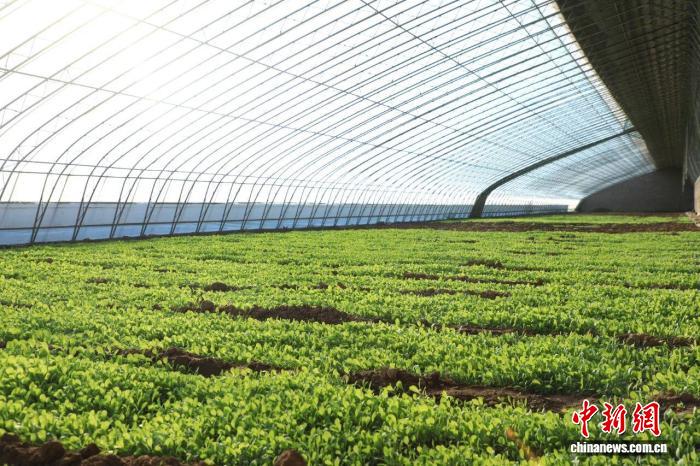
蔬菜种植

Search documents
初冬菜价为何不降反升
Jing Ji Ri Bao· 2025-11-25 22:42
去年秋冬季蔬菜价格高企,今年农户种植意愿较强,蔬菜种植面积有所上升,稳产保供基础较为牢固。 据国家气候中心预测,今年冬季我国大部地区气温接近常年同期到偏高,天气条件总体有利于蔬菜生 长、采收及运输。不过,冬季气候不确定性增大,极端低温、冰雹、霜冻等异常天气时有发生且难以精 准预测,可能会对蔬菜生产消费形成多重冲击,造成蔬菜价格剧烈波动。因此,后期仍需继续加强蔬菜 生产田间管理,强化不利天气预测预警,加强区域间蔬菜的应急调配能力,做好蔬菜市场运行监测。 "展望后市,北方设施蔬菜将陆续上市,市场供应量不断增加。同时,蔬菜供应产地转换陆续进行,随 着南菜北运、西菜东进,蔬菜市场供应将有保障。总体来看,预计后期蔬菜市场保持平稳运行,菜价有 望回落。"农业农村部蔬菜市场分析预警团队首席分析师孔繁涛说。 (文章来源:经济日报) 天气渐冷,蔬菜价格的"热度"却在上升,不少消费者近期对此感受颇深。根据蔬菜市场价格季节性波动 规律,一般情况下,9月份入秋后,菜价会逐步下行,至11月份降至低点,然后逐步回升。然而,今年 10月份以来全国蔬菜价格总体呈现上升态势。今年全国蔬菜价格为何出现反季节上涨?后期供应是否有 保障?记者采访了 ...
河南虞城:12万亩荠菜迎来丰收季
Zhong Guo Xin Wen Wang· 2025-11-25 05:23
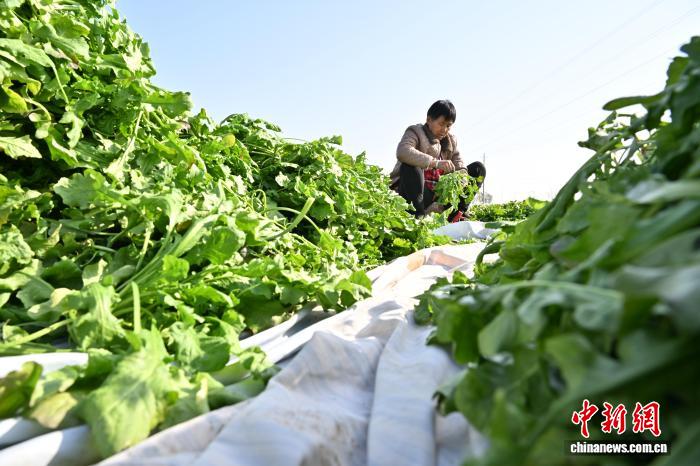
河南虞城:12万亩荠菜迎来丰收季 图为11月24日,农户在虞城县利民镇采收荠菜。 李恒 摄 图为11月24日,农户在虞城县利民镇采收荠菜。 李恒 摄 图为11月24日,工人在荠菜生产车间内工作。 李恒 摄 图为11月24日,商户在荠菜采收现场直播带货。 李恒 摄 图为11月24日,工人在荠菜生产车间内工作。 李恒 摄 图为11月24日,工人在荠菜生产车间内工作。 李恒 摄 图为11月24日,工人在荠菜生产车间内工作。 李恒 摄 图为11月24日,工人在车间里包荠菜馅包子。 李恒 摄 来源:中国新闻网 编辑:熊思怡 广告等商务合作,请点击这里 本文为转载内容,授权事宜请联系原著作权人 中新经纬版权所有,未经书面授权,任何单位及个人不得转载、摘编或以其它方式使用。 关注中新经纬微信公众号(微信搜索"中新经纬"或"jwview"),看更多精彩财经资讯。 ...

山东:从物理整合迈向化学融合 片区化推进乡村振兴
Xin Hua Wang· 2025-11-24 02:46
Core Insights - The article highlights the successful implementation of regional cooperation in agricultural production and marketing in Shandong, exemplified by the collaboration of vegetable cooperatives in Shouguang and the development of a rural revitalization route in Weihai [1][2] Group 1: Regional Cooperation and Market Integration - Shouguang's vegetable cooperatives have unified standards, branding, and sales, significantly enhancing their market bargaining power [1] - The "Golden Route" in Weihai connects 56 unique areas and over 900 villages, facilitating resource flow and industrial integration [1] Group 2: Policy and Strategic Framework - Shandong is committed to deepening regional construction as part of its rural revitalization strategy, transitioning from mere coverage to effective implementation [2][3] - The provincial government is focusing on systematic improvements and comprehensive development in rural areas, aligning with national planning [3][4] Group 3: Agricultural Development and Challenges - Shandong has achieved record agricultural outputs, but challenges remain, such as weak industries in some villages and low collective economic income [4] - The province aims to address these issues through continued regional cooperation and focused revitalization efforts [4][5] Group 4: Population and Urbanization Trends - By 2024, Shandong's urbanization rate is projected to reach 66.48%, with plans to increase it to around 75% by 2035, indicating a shift of rural populations to urban areas [5] - This demographic change necessitates the integration of geographically adjacent and resource-complementary villages into development communities [5] Group 5: Effective Resource Allocation - The article emphasizes that physical connections in regional construction are just the starting point; the real challenge lies in facilitating internal resource flow and achieving synergistic effects [6][7] - Shandong has initiated the construction of 2,070 regional units, many of which face challenges in resource flow and governance efficiency [6] Group 6: Systematic and Strategic Implementation - The article stresses the importance of systematic approaches in advancing regional development, avoiding fragmented efforts and ensuring coordinated actions [8][9] - Prioritizing projects based on local conditions and capabilities is essential for effective implementation [9] Group 7: Innovation and Market Dynamics - The integration of market mechanisms is crucial for activating resources and promoting industrial development within regions [11][12] - Successful examples include the "Mingshan Xiushui" area, which leverages urban proximity to supply organic products, and the "Dahu Zhuangyuan" area, which has developed a mountain biking track to stimulate local economy [12] Group 8: Collaborative Governance and Community Engagement - Effective rural revitalization requires collaboration across various levels of government and active participation from local communities [14][15] - Engaging farmers in decision-making processes ensures that revitalization efforts align with their needs and aspirations [15] Group 9: External Partnerships and Resource Mobilization - The article highlights the importance of integrating external resources and expertise to enhance regional development [17][18] - Addressing challenges such as funding shortages and market access is vital for activating rural resources and achieving sustainable growth [18]
山东青岛胶州大白菜年产值近10亿元
Xin Lang Cai Jing· 2025-11-23 13:48
Core Insights - The harvesting season for 65,000 acres of cabbage in Jiaozhou, Qingdao, Shandong has begun, with major cities like Shanghai and Beijing already placing orders [1] - Local agricultural departments have enhanced food safety supervision and implemented standardized planting and product quality traceability systems to ensure stable quality of Jiaozhou cabbage [1] - A representative from a local agricultural cooperative stated that a QR code can display the entire traceability process of the cabbage from planting to harvesting, including irrigation and fertilization management [1] - The planting area for Jiaozhou cabbage has reached 65,000 acres, with an annual output exceeding 350,000 tons and a total output value of nearly 1 billion yuan [1]
广西南宁:智慧农业“椒”出丰收答卷
Zhong Guo Xin Wen Wang· 2025-11-23 04:20
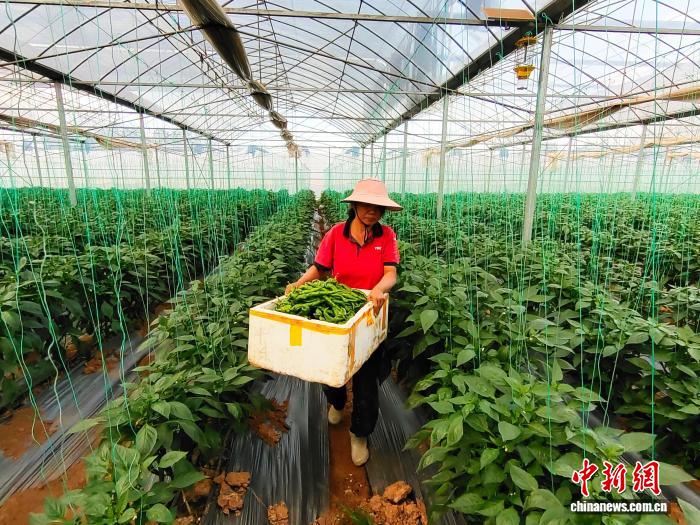
广西南宁:智慧农业"椒"出丰收答卷 图为工人在采收辣椒。中新网记者 黄艳梅 摄 图为当地现代设施蔬菜基地。中新网记者 黄艳梅 摄 图为当地现代设施蔬菜基地。中新网记者 黄艳梅 摄 图为工人将辣椒分拣装箱。中新网记者 黄艳梅 摄 来源:中国新闻网 编辑:熊思怡 图为辣椒挂满枝头。中新网记者 黄艳梅 摄 图为工人在采收辣椒。中新网记者 黄艳梅 摄 图为工人将辣椒分拣装箱。中新网记者 黄艳梅 摄 图为新鲜采摘的辣椒。中新网记者 黄艳梅 摄 图为技术人员在查看基地农业环境网络型传感器的运行情况。中新网记者 黄艳梅 摄 广告等商务合作,请点击这里 本文为转载内容,授权事宜请联系原著作权人 中新经纬版权所有,未经书面授权,任何单位及个人不得转载、摘编或以其它方式使用。 关注中新经纬微信公众号(微信搜索"中新经纬"或"jwview"),看更多精彩财经资讯。 ...

青海高原冷凉蔬菜热销
Jing Ji Ri Bao· 2025-11-21 22:41
Core Insights - The article highlights the transformation of the agricultural landscape in Huangzhong District, Qinghai Province, where the cold climate has been leveraged to develop a thriving cool-season vegetable industry, significantly increasing farmers' incomes and promoting rural revitalization [1][2]. Group 1: Agricultural Development - The cool-season vegetable industry in Huangzhong District has turned previously idle land into productive agricultural bases, with farmers like Qi Ruying earning around 200 yuan per day from harvesting spinach [1]. - The district has adopted advanced agricultural techniques, such as water and fertilizer integration, which has expanded the area under cultivation from 300 acres in 2018 to 1,700 acres currently [1][2]. - The use of plastic film for soil temperature management has been crucial in overcoming the challenges posed by the high-altitude climate, allowing for effective cold and drought resistance [2]. Group 2: Economic Impact - The village of Banzhongying has developed a modern vegetable production base with over 1,200 greenhouses, achieving a total vegetable output of over 6,000 tons in 2024, generating an annual output value exceeding 19 million yuan [2]. - Farmers in Xichai Village have seen their incomes rise significantly, with one farmer reporting an increase of over 20,000 yuan in 2023 due to collaboration with agricultural experts [3]. - The average annual income for villagers in Gonghe Town has reached 15,000 yuan, showcasing the economic benefits of the agricultural initiatives [3][4]. Group 3: Brand and Market Development - Brand development is essential for the success of the cool-season vegetable industry, with Banzhongying Village establishing a brand sales system that combines online and offline sales channels, reaching major cities like Lanzhou and Shanghai [3]. - The introduction of an order-based agricultural model has ensured stable sales for farmers, with cooperative agreements established with merchants in Xi'an and Lanzhou [4]. - The cooperative's land transfer model provides farmers with stable rental income and job opportunities, contributing to an average annual income increase of 2,000 yuan for participating farmers [4].
河南方城:“头雁”领航聚合力 产业振兴谱新篇
Zhong Guo Jing Ji Wang· 2025-11-21 15:15
Core Insights - The article highlights the successful development of high-standard greenhouse vegetable cultivation in the Bo Wang Town of Fangcheng County, Henan Province, showcasing a vibrant agricultural scene despite the cold winter season [1] Group 1: Agricultural Development - Bo Wang Town has focused on the revitalization of its specialty industries, particularly greenhouse vegetables, golden pears, roses, and grapes, with a total planting area exceeding 40,000 acres [1] - The town has seen the emergence of 27 "leading representatives" since 2022, who have helped over 2,000 farmers improve their livelihoods [2] - The introduction of winter-warm plastic greenhouses has led to the construction of over 380 new greenhouses this year, significantly increasing the economic benefits and crop rotation efficiency [3] Group 2: Innovative Techniques - Representative Li Yuzhong has pioneered an efficient planting model combining off-season tomatoes with cucumbers or peppers, achieving an average annual income of 30,000 yuan per acre [2] - Innovative pest control techniques, such as the use of "soil pesticides and biological traps," have effectively reduced pest outbreaks, resulting in a yield of 6,500 pounds of high-quality tomatoes per acre, with a profit of 13,000 yuan [2] - The adoption of the "four arches and four membranes" technology has improved greenhouse temperatures by 5-10 degrees during winter, allowing for year-round planting and increased economic returns [3]
“供港蔬菜”掀起采购热潮 永州“菜篮子”消费升级
Sou Hu Cai Jing· 2025-11-21 12:42
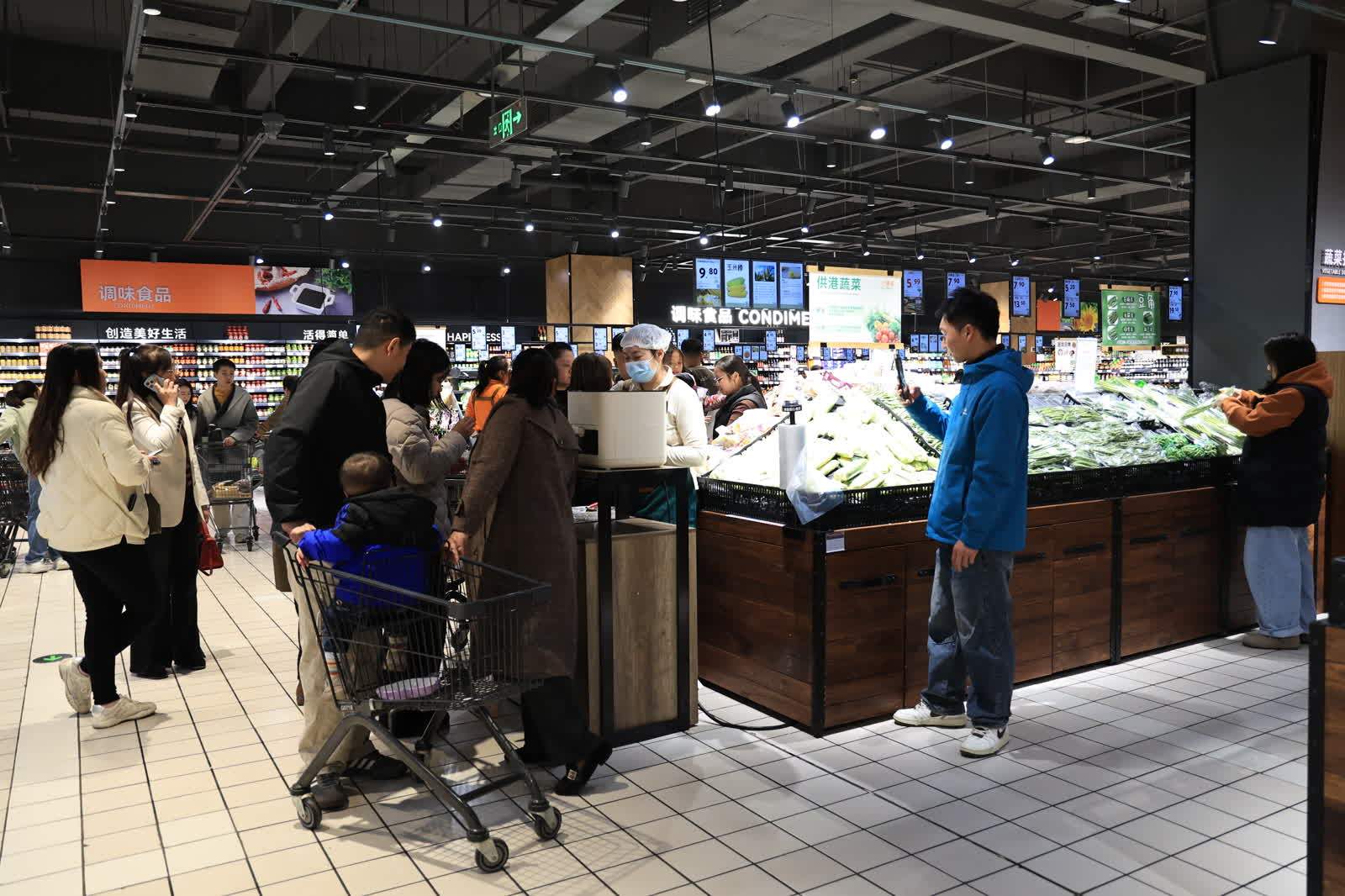
Group 1 - A surge in the procurement of "vegetables for Hong Kong" has emerged in Yongzhou, with high-quality vegetables from Xintian Dongsheng Farm entering large supermarkets in the city [1][2] - The vegetables, including corn, sweet potatoes, carrots, and mushrooms, are priced 20% to 40% higher than ordinary vegetables, yet consumer enthusiasm remains high due to their superior quality and freshness [1][2] - The supply of vegetables for Hong Kong is strictly monitored throughout the entire production chain, ensuring high quality and safety standards, which allows local consumers to enjoy premium agricultural products [2] Group 2 - The purchasing manager of Yongzhou's Bubu Gao Shunde Supermarket stated that efforts will be made to ensure a steady supply of vegetables for Hong Kong, including customer tasting events to enhance consumer experience [3]
天津:沙窝萝卜迎来丰收季
Xin Hua She· 2025-11-21 00:57
Core Insights - The harvesting period for the Shawo radish in Xinkou Town, Xiqing District, Tianjin has commenced, with local farmers actively engaged in harvesting, packaging, and shipping [2] Summary by Categories Agricultural Production - Approximately 8,100 acres of Shawo radish have been planted in the town this year, with an expected total yield of 70 million pounds [2]
山西太原小店区:“菜棚子”租出好“钱”景 特色农业激活集体经济
Zhong Guo Xin Wen Wang· 2025-11-19 06:24
Core Viewpoint - The article highlights the successful transformation of the agricultural industry in the Xiwenzhuang Township of Taiyuan's Xiaodian District, Shanxi Province, through a model of collective investment in modern agricultural facilities and professional operation, which has significantly boosted the local economy and created job opportunities for residents [1][6]. Group 1: Agricultural Development Model - The agricultural park covers approximately 90 acres and features 24 high-standard greenhouse structures, with a total construction area of 31,824 square meters, equipped with advanced irrigation and storage facilities [1][3]. - The land used for the park is collectively owned by the community, and the cooperative has invested in building the greenhouses, which are then leased to experienced agricultural teams for professional management [3][6]. - This "collective investment and professional operation" model reduces operational risks for the community while enhancing the value of agricultural products [3][6]. Group 2: Employment and Economic Impact - The agricultural park has created job opportunities for over ten local villagers in various roles such as planting, management, harvesting, and distribution, leading to increased income for the community [6]. - The park is expected to produce 180,000 boxes of sprout vegetables, 500,000 pots of potted vegetables, and 12,000 jin (approximately 6,000 kg) of seasoning vegetables annually, contributing significantly to the cooperative's income and becoming a vital pillar of collective economic development [6]. Group 3: Product Innovation and Market Reach - The park has developed a unique product matrix, including high-nutrition oil sunflower sprouts, rare varieties like creamy white cabbage and purple-backed amaranth, and other specialty vegetables that cater to high-end dining markets [6]. - The park supplies fresh produce to over 70 restaurants in the city, indicating a strong market presence and demand for its products [3].