Workflow
食品制造业
icon
Search documents
河南省新乡市市场监督管理局关于13批次食品不合格情况的通告 (2025年3号)
Core Viewpoint - The recent food safety inspection in Xinxiang City revealed that out of 259 food samples tested, 246 were compliant while 13 were found to be non-compliant, highlighting ongoing concerns regarding food safety standards in the region [1][4]. Non-compliant Products - A total of 13 batches of food products were identified as non-compliant, including: - One batch of spoons from Yanbo Restaurant in Yanhui Town, which tested positive for coliform bacteria and anionic synthetic detergent at 0.26 mg/100 cm², where the standard requires none [1][2]. - One batch of ginger from Xinxiang Yucai High School, with pesticide residues of thiamethoxam at 1.5 mg/kg (standard ≤0.2 mg/kg) and imidacloprid at 2.4 mg/kg (standard ≤0.3 mg/kg) [1][3]. - Other non-compliant items included bowls and plates from various restaurants, also showing contamination with coliform bacteria and synthetic detergents [2][3]. Regulatory Actions - The Xinxiang Market Supervision Administration has mandated that the responsible parties for the non-compliant products conduct thorough investigations, identify the batches and quantities involved, and take corrective actions such as product recalls [4][5]. - Consumers are urged to remain vigilant about food safety and report any issues to the authorities [4]. Compliant Products - The inspection covered a wide range of food categories, including biscuits, tea, nuts, dairy, and more, with 246 out of 259 samples passing the safety standards [1][6].
宗庆后的三个异母生子女与宗馥莉宫斗,娃哈哈该何去何从?
首席商业评论· 2025-07-15 04:23
Core Viewpoint - The key issue is the resolution of the control rights of Wahaha Group amidst a family inheritance dispute following the death of its founder, Zong Qinghou [1][10]. Group 1: Inheritance Dispute - Zong Qinghou's daughter, Zong Fuli, is being sued by three alleged half-siblings for control over assets and a $2.1 billion trust promised by their father [5][19]. - The three claimants are Zong Jichang, Zong Jieli, and Zong Jisheng, with allegations that their mother is a former senior employee of Wahaha [6][10]. - The inheritance battle has revealed complexities in Zong Qinghou's family structure, including non-marital children and potential asset mismanagement [4][9]. Group 2: Trust and Asset Management - Zong Qinghou established three independent trusts at HSBC, each worth $700 million, for his overseas children, which complicates the inheritance claims [17][35]. - As of May, the HSBC account reportedly holds $1.8 billion, down from the promised $2.1 billion, raising concerns about asset management by Zong Fuli [19][35]. - Legal disputes are centered around the validity of Zong Qinghou's wills and the management rights of the trusts, with potential implications for Wahaha's corporate governance [33][36]. Group 3: Corporate Governance and Future Outlook - The ongoing disputes have led to operational challenges for Wahaha, including factory shutdowns and management restructuring [10][28]. - Zong Fuli's leadership is questioned, with reports suggesting her father had reservations about her management capabilities [28][39]. - The resolution of these disputes is critical for Wahaha's stability and future, as unresolved control issues may deter business operations and investor confidence [36][39].
国家统计局:二季度汽车制造业产能利用率71.3%
news flash· 2025-07-15 02:15
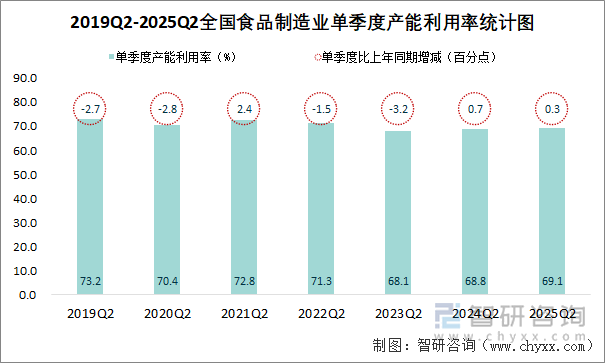
Core Insights - The capacity utilization rate of the automotive manufacturing industry in the second quarter of 2025 is reported at 71.3% [1] - Other industries have varying capacity utilization rates, with the highest being in the black metal smelting and rolling processing industry at 80.8% [1] - The lowest capacity utilization is observed in the non-metal mineral products industry at 62.3% [1] Industry Summaries - Coal mining and washing industry: 69.3% capacity utilization [1] - Food manufacturing industry: 69.1% capacity utilization [1] - Textile industry: 77.8% capacity utilization [1] - Chemical raw materials and chemical products manufacturing: 71.9% capacity utilization [1] - General equipment manufacturing: 78.3% capacity utilization [1] - Specialized equipment manufacturing: 76.5% capacity utilization [1] - Electrical machinery and equipment manufacturing: 73.5% capacity utilization [1] - Computer, communication, and other electronic equipment manufacturing: 77.3% capacity utilization [1] - Non-ferrous metal smelting and rolling processing: 77.7% capacity utilization [1]
2025年二季度全国规模以上工业产能利用率为74.0%
Guo Jia Tong Ji Ju· 2025-07-15 02:00
Group 1 - The industrial capacity utilization rate for Q2 2025 is reported at 74.0%, showing a decrease of 0.9 percentage points compared to the same period last year [4] - The mining industry capacity utilization rate stands at 72.7%, down by 3.3 percentage points year-on-year [4] - The manufacturing sector's capacity utilization rate is 74.3%, reflecting a decline of 0.9 percentage points from the previous year [4] Group 2 - The electricity, heat, gas, and water production and supply industry has a capacity utilization rate of 71.5%, which is an increase of 0.1 percentage points compared to last year [4] - In the coal mining and washing industry, the capacity utilization rate is 69.3%, down by 3.5 percentage points year-on-year [4] - The petroleum and natural gas extraction industry shows a high capacity utilization rate of 90.9%, with a slight decrease of 0.9 percentage points from the previous year [4] Group 3 - The food manufacturing industry has a capacity utilization rate of 69.1%, which is an increase of 0.3 percentage points compared to last year [4] - The textile industry reports a capacity utilization rate of 77.8%, down by 1.3 percentage points year-on-year [4] - The chemical raw materials and chemical products manufacturing industry has a capacity utilization rate of 71.9%, reflecting a decrease of 4.5 percentage points from the previous year [4] Group 4 - The black metal smelting and rolling processing industry has a capacity utilization rate of 80.8%, which is an increase of 1.1 percentage points compared to last year [4] - The non-metallic mineral products industry shows a capacity utilization rate of 62.3%, down by 1.9 percentage points year-on-year [4] - The automotive manufacturing industry reports a capacity utilization rate of 71.3%, reflecting a decrease of 1.7 percentage points from the previous year [4] Group 5 - The electrical machinery and equipment manufacturing industry has a capacity utilization rate of 73.5%, down by 1.2 percentage points compared to last year [5] - The computer, communication, and other electronic equipment manufacturing industry shows a capacity utilization rate of 77.3%, which is an increase of 1.1 percentage points year-on-year [5] - The overall survey covers approximately 110,000 industrial enterprises, including both large and medium-sized enterprises [6]
山东大学旗下“小巨人”、雅培集团“小伙伴”,两只新股今日申购
Group 1: Shanda Electric Power (山大电力) - Shanda Electric Power is an indirect holding enterprise of Shandong University, focusing on the research, manufacturing, sales, and service of smart grid monitoring and new energy products [1][3] - The company has a market capitalization of 17.91 billion yuan and an issuance price of 14.66 yuan per share, with an issuance P/E ratio of 19.57 [2] - The revenue structure is stable, with the smart grid monitoring sector contributing 87.94% of the total revenue in 2024, while the new energy sector accounts for 12.06% [4] - The company has established long-term partnerships with major clients such as State Grid and Southern Power Grid, enhancing its competitive edge in the smart grid monitoring and new energy sectors [3][4] - The company plans to invest 1.35 billion yuan in smart grid fault analysis and distribution network intelligence projects, and 1.80 billion yuan in R&D center projects [2][3] Group 2: Jiyuan Group (技源集团) - Jiyuan Group specializes in the research and industrialization of dietary nutritional supplements, with a focus on products like HMB and glucosamine [5][10] - The company has a market capitalization of 38.08 billion yuan and an issuance price of 11.09 yuan per share, with an institutional offering price of 10.88 yuan [6] - Jiyuan Group is the largest global supplier of HMB raw materials and has established partnerships with major companies such as Abbott and Nestlé [10][11] - The revenue from nutritional raw materials is projected to be 5.71 billion yuan in 2022, increasing to 6.47 billion yuan by 2024, maintaining a revenue share of over 60% [10][11] - The company plans to invest 2.06 billion yuan in the construction of a nutritional health raw material production base and 1.47 billion yuan in the expansion of its production line [9][10]
国投中鲁: 国投中鲁关于股票交易风险提示的公告
Zheng Quan Zhi Xing· 2025-07-11 16:13
Core Viewpoint - The stock of Guotou Zhonglu Juice Co., Ltd. has experienced significant fluctuations, with a cumulative increase of 61.13% over five consecutive trading days, which is notably higher than the Shanghai Composite Index during the same period [1][2]. Group 1: Stock Performance - The company's stock reached a trading halt for five consecutive days from July 7 to July 11, 2025, resulting in a total increase of 61.13% [1][2]. - The stock price volatility is highlighted, and investors are cautioned about the risks associated with trading in the secondary market [1][2]. Group 2: Financial Performance - For the fiscal year 2024, the company reported a net profit attributable to shareholders of 29.2537 million yuan, representing a year-on-year decline of 49.75% compared to 2023 [2]. Group 3: Asset Restructuring - The company is in the process of planning a major asset restructuring involving the acquisition of 100% of China Electronic Engineering Design Institute Co., Ltd. through share issuance to specific investors [3]. - The audit, evaluation, and due diligence for the target assets are still ongoing, leading to uncertainties regarding the approval and implementation of the transaction [3]. Group 4: Information Disclosure - The company emphasizes that all information should be verified through designated media, including China Securities Journal and Shanghai Securities Journal, as well as the Shanghai Stock Exchange website [3].
6月通胀数据解读:金价、油价,如何影响通胀?
Huachuang Securities· 2025-07-10 05:00
Report Industry Investment Rating No relevant content provided. Core View of the Report - In June 2025, CPI increased by 0.1% year-on-year, and PPI decreased by 3.6% year-on-year. Gold prices and oil prices affected inflation, with gold contributing to the rise of core CPI but not being the main factor, and the increase in oil prices being offset by the off - season of domestic production and the weakening of the "rush - export" effect on PPI [6][9]. Summary According to the Table of Contents I. Two Core Concerns about Prices Amid Gold and Oil Price Fluctuations (1) Is the Recovery of Core CPI Driven by Gold Prices or the Recovery of the Demand Side? - Core CPI can be split into services, core consumer goods (excluding gold), and gold. In the first half of 2025, core CPI increased by 0.5% cumulatively month - on - month, with gold contributing 0.13%, services contributing 0.17%, and other core consumer goods contributing 0.2%. Gold boosted core CPI but was not the main factor. The core consumer goods excluding gold were weaker in Q2 than in Q1, and a new round of consumption stimulus policies may be introduced [12]. (2) Why Did PPI Decrease Year - on - Year in June Despite the Sharp Increase in Oil Prices? - In June, the month - on - month decline of PPI remained at - 0.4%. Although the 9% increase in crude oil prices pulled PPI up by about 0.3 percentage points, the off - season of domestic production and the weakening of the "rush - export" effect offset this impact. In the off - season of domestic production, industries such as ferrous metal smelting and rolling processing, non - metallic mineral products, coal - related industries, and power and heat production and supply affected PPI to decline by about 0.33 percentage points. After the weakening of the "rush - export" effect, the prices of some export - oriented industries continued to fall [16]. II. June CPI: Food Performed Better than Seasonal Trends, and Oil and Gold Prices Supported the Month - on - Month Recovery, with the Year - on - Year Increase Reaching 0.1% (1) Food Items - The month - on - month decline of the CPI food item in June fell back to around - 0.4%, better than the seasonal trend, affecting CPI to decline by about 0.09 percentage points. Pork prices decreased by 1.2% due to oversupply. Fresh food prices were better than the seasonal trend, with freshwater fish and fresh vegetables rising by 4.3% and 0.7% respectively, while eggs and fresh fruits dragged down the CPI [20]. (2) Non - food Items - The month - on - month of the CPI non - food item recovered to around 0. Oil prices rebounded, with gasoline prices rising by 0.4%. Core consumer goods were mainly dragged down by clothing and automobiles, while gold prices were the main supporting factor, affecting CPI to decline by about 0.01 percentage points. Tourism was weaker than the seasonal trend, and rent increased during the graduation season, with little change in overall service prices [21][27][30]. III. June PPI: The Off - season of Domestic Production and the Drag of Some Export Industries Led to a Year - on - Year Decline to - 3.6% (1) Overall - The month - on - month decline of PPI remained around - 0.4%, mainly dragged down by production materials, and consumer goods also weakened. Production materials prices decreased by 0.6%, and consumer goods prices turned negative [35]. (2) By Industry - In June 2025, the number of industries with falling prices among industrial producers remained around two - thirds. The main supporting factor was the crude oil industry chain. The drag factors included raw material manufacturing industries such as building materials, energy prices of coal and electricity, and export - related industries such as electronic equipment, electrical machinery, and textiles [37][41][43].
千基云禾(江苏)食品有限公司成立,注册资本2000万人民币
Sou Hu Cai Jing· 2025-07-09 08:19
来源:金融界 经营范围含许可项目:食品生产;食品销售;食品互联网销售;餐饮服务;道路货物运输(不含危险货 物)(依法须经批准的项目,经相关部门批准后方可开展经营活动,具体经营项目以审批结果为准)供 应链管理服务;农产品的生产、销售、加工、运输、贮藏及其他相关服务;水产品冷冻加工;普通货物 仓储服务(不含危险化学品等需许可审批的项目);低温仓储(不含危险化学品等需许可审批的项 目);货物进出口;进出口代理;食品进出口;技术进出口;劳务服务(不含劳务派遣);五金产品零 售;办公用品销售;机械设备销售;日用百货销售;日用品销售;包装材料及制品销售;农副产品销 售;餐饮管理;技术服务、技术开发、技术咨询、技术交流、技术转让、技术推广;企业管理咨询;企 业管理;信息技术咨询服务;品牌管理(除依法须经批准的项目外,凭营业执照依法自主开展经营活 动) 企业名称千基云禾(江苏)食品有限公司法定代表人王勇注册资本2000万人民币国标行业制造业>食品 制造业>其他食品制造地址江苏省徐州市泉山区(港务区)庞庄街道前港智慧医疗产业园7#厂房医药制 造中心二1层101企业类型有限责任公司营业期限2025-7-8至无固定期限登记机关徐州 ...
A股回购热度不减 多行业上市公司积极行动
Zheng Quan Ri Bao· 2025-07-08 15:46
Group 1 - The trend of share buybacks among A-share listed companies remains strong this year, with many companies announcing buyback plans focused on employee incentives [1][2] - For instance, Suzhou Fushilai Pharmaceutical Co., Ltd. plans to use between 20 million to 40 million yuan for a buyback, aiming to repurchase approximately 1 million shares, which is about 1.09% of its total share capital [1] - Various industries, including electronic manufacturing, biomedicine, lithium battery materials, and food processing, have seen a surge in companies initiating buyback programs since June [1] Group 2 - Zhejiang Wufangzhai Industrial Co., Ltd. announced a buyback plan with a total fund of no less than 35 million yuan and no more than 70 million yuan, aimed at employee stock ownership plans or equity incentives [2] - The Ministry of Industry and Information Technology expert Pan Helin stated that share buybacks reflect a deep recognition of a company's value, indicating that current stock prices do not reflect true value [2] - A significant proportion of buybacks are linked to employee incentives, which can enhance employee motivation and operational efficiency, while also signaling confidence in future development [2] Group 3 - Some companies are also planning to cancel repurchased shares to optimize their capital structure, thereby conveying confidence in their valuation [3] - For example, China Communications Construction Company plans to use between 500 million to 1 billion yuan for a buyback, with all repurchased shares to be canceled [3] - The practice of canceling shares is seen as a way to adjust share capital proactively, signaling that the stock price is undervalued and enhancing metrics like earnings per share and net asset value [3]
读研报 | “反内卷”,市场这样划重点
中泰证券资管· 2025-07-08 09:54
Core Viewpoint - The recent discussions on "anti-involution" are driven by policy guidance and market expectations, with a focus on promoting product quality and orderly competition while addressing low-price chaos in various industries [2] Group 1: Impacted Industries - The industries most affected by the current "anti-involution" include upstream raw materials related to real estate and infrastructure (such as coal, steel, and cement), equipment manufacturing overlapping with new productive forces (including automotive, electrical machinery, and electronic device manufacturing), and certain downstream consumer goods sectors (such as pharmaceuticals and food manufacturing) [3] - Emerging industries may experience a greater impact from "anti-involution," as recent government reports emphasize the need to cultivate new and future industries while addressing homogeneous competition in sectors like new energy vehicles and photovoltaics [4] Group 2: Policy Implementation and Observations - The consensus is that the approach to "anti-involution" will be moderate, considering the significant presence of private enterprises in affected industries, with many sectors having a high proportion of private companies [6] - Employment concerns are also crucial, as the new industries most affected by "involution" employ a substantial number of workers, making abrupt capacity reductions potentially harmful to job stability [6] - The market is currently in a wait-and-see mode regarding the form and intensity of "anti-involution" policies, with future market movements dependent on clearer policy signals [7] Group 3: Need for Comprehensive Policy Support - High-intensity capacity reduction may require comprehensive policy support, balancing social stability and the specifics of capacity overhang, including timelines for exit and risk mitigation strategies [8] - Observations should not only focus on supply-side changes but also on demand-side updates, as changes in supply structure are necessary but not sufficient for industry recovery [8]