加工制造

Search documents
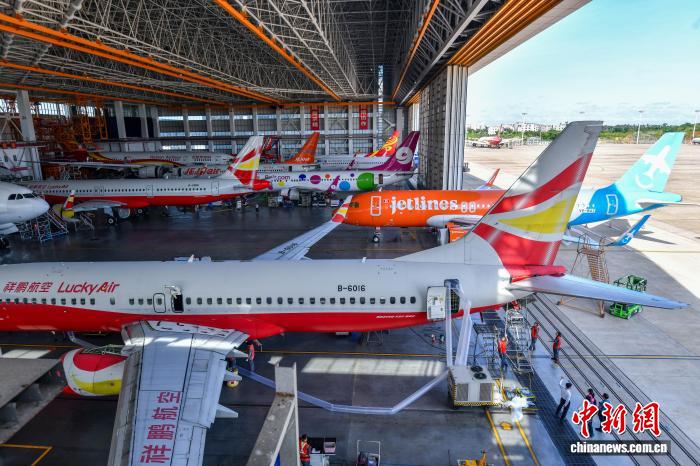
(活力中国调研行)制度型开放推动海南外向型经济蓬勃发展
Zhong Guo Xin Wen Wang· 2025-09-23 05:07
Core Insights - The article highlights the robust development of Hainan's outward-oriented economy driven by institutional openness since 2020, with significant increases in foreign investment and trade activities [1][3]. Economic Growth Metrics - Hainan has attracted a total of 102.5 billion yuan in actual foreign investment since 2020, with an annual growth rate of 14.6% [1]. - The establishment of foreign enterprises in Hainan reached 8,098, growing at an annual rate of 43.7% [1]. - The province has seen an average annual growth of 31.3% in goods trade and 32.3% in service trade [1]. Policy Initiatives - The "Hainan Free Trade Port Construction Overall Plan" initiated on June 1, 2020, aims to enhance trade and investment liberalization and establish a high-level policy system [3]. - A key policy introduced is the tax exemption on processed goods for domestic sales, which has been implemented across Hainan, benefiting over 50 enterprises and covering various industries [3][4]. - The policy has resulted in a cumulative exemption of 810 million yuan in import tariffs, significantly promoting the development of Hainan's real economy [3]. Foreign Investment Environment - Hainan has implemented the shortest negative list for foreign investment in China, reducing the number of restrictions to 24 [5]. - The province has also initiated pilot projects for foreign-owned hospitals and stem cell technology, further enhancing its attractiveness to foreign investors [5]. Trade Facilitation Measures - Hainan has adopted a "one line open, one line controlled" policy to improve trade facilitation and has implemented a negative list management system for cross-border service trade [5]. - The province is actively aligning with high-standard trade agreements such as RCEP and DEPA, enhancing its international trade competitiveness [5][6]. Future Development Goals - Hainan aims to become a significant open portal for China, focusing on high-quality development and the establishment of a modern industrial system [6]. - The province is preparing for the next phase of reform and opening up post-closure, with plans to further develop its outward-oriented economy [6].

截至今年7月中国对上合组织其他成员国各类投资存量超840亿美元
Ren Min Ri Bao Hai Wai Ban· 2025-08-28 00:03
Core Insights - As of July 2025, China's investment stock in other member countries of the Shanghai Cooperation Organization (SCO) is expected to exceed 84 billion USD, with cooperation expanding from traditional sectors like oil and gas to emerging fields such as digital economy and green development [1] Investment Cooperation - The scale of investment cooperation in the SCO region is continuously expanding under the high-quality construction of the Belt and Road Initiative, with deepening supply chain collaboration [1] - China has signed investment protection agreements with all member countries, and in the past year, upgraded investment agreements with Russia, Kazakhstan, and Tajikistan to enhance mutual investment protection and improve investment access levels [1] - A service trade and investment agreement was signed with Belarus, providing a solid legal foundation and guarantee for investments between China and SCO member countries [1] Trade Growth - Trade volume between China and other member countries reached a historical high, with an estimated trade amount of approximately 512.4 billion USD in 2024, reflecting a year-on-year growth of 2.7%, which is double the amount during the Qingdao Summit in 2018 [1] - In the previous year, China imported nearly 90 billion USD worth of crude oil, natural gas, and coal from other member countries, along with agricultural products worth 13.66 billion USD, with energy products accounting for about one-fifth of total imports [1] - China exported 210 billion USD worth of electromechanical products to SCO member countries, making up 63% of its total exports, contributing to the industrialization, economic transformation, and improvement of local livelihoods in member countries [1]
截至7月中国对上合组织其他成员国 投资存量超840亿美元
Zhong Guo Zheng Quan Bao· 2025-08-27 20:39
Group 1 - The 2025 Shanghai Cooperation Organization (SCO) Summit will be held in Tianjin from August 31 to September 1, 2025, highlighting the ongoing investment cooperation between China and SCO member countries [1] - As of July 2025, China's investment stock in other SCO member countries exceeds $84 billion, with cooperation expanding from traditional sectors like oil and gas to emerging fields such as digital economy and green development [1] - China has signed investment protection agreements with all member countries, including upgraded agreements with Russia, Kazakhstan, and Tajikistan, enhancing mutual investment protection and improving investment access [1] Group 2 - Trade between China and other SCO member countries reached a record high of approximately $512.4 billion in 2024, a 2.7% increase year-on-year, doubling the trade volume since the 2018 Qingdao Summit [2] - In the previous year, China imported nearly $90 billion worth of oil, natural gas, and coal from SCO member countries, with energy products accounting for about one-fifth of China's total imports [2] - The establishment of a connectivity network among SCO countries is rapidly progressing, with significant infrastructure projects like the China-Russia Tongjiang Railway Bridge and the China-Kyrgyzstan-Uzbekistan Railway [2] Group 3 - Following the Tianjin Summit, the Ministry of Commerce will send a delegation to Russia for the 24th SCO Economic Ministers' Meeting on September 6, focusing on implementing the economic outcomes from the Tianjin Summit [2] - Future regional economic cooperation within the SCO will focus on integrated trade and investment development, deepening international supply chain cooperation, and enhancing connectivity [2]
截至7月中国对上合组织其他成员国投资存量超840亿美元
Zhong Guo Zheng Quan Bao· 2025-08-27 20:17
Group 1 - The 2025 Shanghai Cooperation Organization (SCO) Summit will be held in Tianjin from August 31 to September 1, 2025, highlighting the ongoing investment cooperation between China and SCO member countries [1] - As of July 2025, China's investment stock in other SCO member countries exceeds $84 billion, with cooperation expanding from traditional sectors like oil and gas to emerging fields such as digital economy and green development [1] - China has signed investment protection agreements with all member countries, including upgraded agreements with Russia, Kazakhstan, and Tajikistan, enhancing mutual investment protection and improving investment access [1] Group 2 - Trade between China and other SCO member countries reached a record high of approximately $512.4 billion in 2024, representing a year-on-year increase of 2.7%, and is double the trade volume during the 2018 Qingdao Summit [2] - In the previous year, China imported nearly $90 billion worth of oil, natural gas, and coal from other member countries, with energy products accounting for about one-fifth of China's total imports [2] - The connectivity network between China and SCO countries is rapidly forming, with significant infrastructure projects like the China-Russia Tongjiang Railway Bridge and the China-Kyrgyzstan-Uzbekistan Railway underway [2] Group 3 - Following the Tianjin Summit, the Ministry of Commerce will send a delegation to Russia for the 24th SCO Economic Ministers' Meeting on September 6, focusing on implementing the economic outcomes from the Tianjin Summit [3] - Future regional economic cooperation within the SCO will focus on integrated trade and investment development, deepening international supply chain cooperation, and enhancing connectivity [3] - The Ministry of Commerce aims to further improve the regional economic cooperation framework by upgrading trade and investment agreements with more member countries and promoting the coordinated development of goods, services, and digital trade [3]
精达股份:特华投资累计质押股份为3000万股
Mei Ri Jing Ji Xin Wen· 2025-08-26 11:49
Group 1 - The actual controller of Jingda Co., Ltd. has pledged part of its shares, with a total of 30 million shares pledged, accounting for 37.38% of the shares held by the pledging entity, and 1.4% of the total share capital of the company [1] - As of the announcement date, the total number of pledged shares by the actual controller and its concerted actions amounts to 78 million shares, representing 39.13% of their shareholding and 3.63% of the company's total share capital [1] - The revenue composition of Jingda Co., Ltd. for the year 2024 is projected to be 96.7% from manufacturing and 3.3% from other businesses [1] Group 2 - The market capitalization of Jingda Co., Ltd. is currently valued at 19.1 billion yuan [1]

海南自贸港对当地人有什么好处?与香港有什么不同?一文了解
Sou Hu Cai Jing· 2025-08-04 13:32
Core Points - The article discusses the differences between Hainan Free Trade Port and Hong Kong, highlighting their unique policies and benefits for local residents [3][16]. Group 1: Tax and Duty Policies - Hainan implements a "one line open, one line control" policy where foreign goods entering Hainan are duty-free, but goods taken to mainland China incur duties [3][4]. - In contrast, Hong Kong operates as a free port with zero tariffs on most goods, allowing easy transfer to mainland China without additional duties [5][6]. - Hainan's tax incentives include a 15% corporate tax rate for encouraged industries, while Hong Kong has a more flexible tax regime with no restrictions on capital flow [23][25]. Group 2: Financial Regulations - Hainan has foreign exchange controls, requiring approval for cross-border transfers, while Hong Kong allows free currency exchange and capital movement [7][8]. - The financial environment in Hainan is more regulated compared to Hong Kong's status as an international financial center [11][12]. Group 3: Legal Framework - Hainan follows the mainland legal system, which is subject to central government authorization, while Hong Kong operates under a common law system with judicial independence [9][10]. - This legal distinction affects foreign investment and business operations, with Hainan requiring compliance with a negative list for foreign investment [9][10]. Group 4: Economic Focus - Hainan focuses on tourism, duty-free shopping, and manufacturing, while Hong Kong is centered around financial services and international trade [9][11]. - The development strategies of both regions complement each other, with Hainan serving as a testing ground for domestic policies and Hong Kong facilitating international capital flow [16]. Group 5: Impact on Local Residents - Hainan residents benefit from lower prices on imported goods due to tax exemptions, with expectations of significant price reductions on items like cars and electronics post-closure [17][18]. - The healthcare sector in Hainan is improving with access to international medical devices and drugs, reducing costs for local patients [18]. - Employment opportunities are increasing in Hainan, with local industries providing jobs and income for residents [19]. - Housing affordability is being addressed through the introduction of affordable housing projects for essential workers [20]. - Community improvements and enhanced safety measures are being implemented, contributing to a better quality of life for residents [21][22]. Group 6: Company Registration Differences - Before the closure, companies in Hainan can enjoy a 15% corporate tax rate and simplified registration processes, while post-closure regulations will be stricter [23][24]. - The range of zero-tariff products will expand significantly after the closure, benefiting businesses engaged in import and export [27]. - The registration process will become more stringent, with increased scrutiny on the legitimacy of business operations [33][34].