旅游消费

Search documents
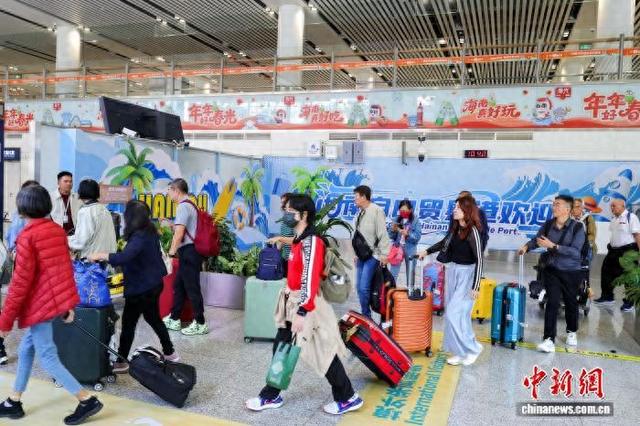
海南封关看变化:封关两个月新增经营主体数量同比增长超三成
Xin Lang Cai Jing· 2026-02-26 07:20
Core Insights - Hainan Free Trade Port has been operating smoothly since its full closure on December 18, 2025, with continuous policy benefits being released [1] - The province has seen a significant increase in new business entities, with 47,900 new registrations in two months, representing a year-on-year growth of 30.15% [1][2] Group 1: Port Operations - "First-line" ports have shown efficient and convenient passage, with a total of 557,700 inbound and outbound travelers recorded from December 18, 2025, to February 17, 2026, including 141,000 visa-free foreign visitors [1] - A total of 3,955 flights and 984 vessels have entered and exited through these ports during the same period [1] - During the Spring Festival, the value of imported goods under "zero tariff" reached 48.6 million yuan, with tax reductions amounting to 9.4232 million yuan [1] Group 2: Second-line Ports - "Second-line" ports have also operated smoothly, with 68,400 flights, 23,334 vessels, and 1,225,300 vehicles recorded entering and leaving the island from December 18, 2025, to February 17, 2026 [2] - An estimated 22.368 million passengers are expected to be transported during the Spring Festival period, marking a year-on-year increase of over 5.3% [2] Group 3: Business Growth - The release of closure policy benefits has effectively stimulated market investment and entrepreneurial enthusiasm, leading to the establishment of several foreign enterprises, including Siemens Energy and Mayoly [2] - The first wholly foreign-owned hospital in the province, Singapore Fulong Hospital, has been inaugurated [2] - New international cooperation projects, such as the China-UAE International Science and Technology Innovation Park, have commenced construction [2] Group 4: Tourism and Consumption - Since the opening of the first five duty-free shops for daily consumer goods on February 11, shopping amounts have reached 8.7461 million yuan [5] - During the Spring Festival, the total amount of duty-free shopping for departing tourists reached 2.72 billion yuan, a 30.8% increase compared to the previous year [5] - The total number of tourists received in Hainan reached 12.3205 million during the Spring Festival, reflecting a year-on-year growth of 14.6% [5]

上城“国潮嬉游” 解锁新春文旅新场景
Hang Zhou Ri Bao· 2026-02-14 03:17
Group 1 - The core theme of this year's Spring Festival cultural and tourism promotion activities in Shangcheng is "Most Hangzhou · Most New Year Flavor" [1] - The activities will run until the end of March, featuring over a hundred events, including traditional performances and modern entertainment [2] - The integration of traditional heritage with contemporary entertainment, such as the "National Trend Happy Tour" concept, has created a vibrant New Year atmosphere [1] Group 2 - Nighttime foot traffic has significantly increased compared to the previous year, effectively boosting consumption in sectors like dining and cultural creativity [2] - Events such as the "Taiping Year" stamp collection and the "Horse Year Good Cover" photo opportunities at historical sites are part of the promotional strategy [2] - The addition of comedy shows during the Spring Festival period aims to provide a space for relaxation and enjoyment for visitors [1]
培育旅游消费超级品牌,推动三张“金字招牌”能级跃升
Xin Lang Cai Jing· 2026-01-28 16:48
Core Insights - In 2025, Hainan's tourism economy is expected to enter a new development phase, with a projected 106 million domestic and international visitors, representing a 9.1% year-on-year increase, and total visitor spending reaching 225.43 billion yuan, up 10.5% [1] - The province aims to enhance its international tourism appeal, with inbound visitors expected to reach 1.5005 million, a 35.2% increase, and overnight international tourists at 5.9429 million nights, up 59.0% [1] - The provincial government plans to implement consumption expansion measures, attracting 270 conferences, 44 exhibitions, 279 sports events, and 27 large-scale performances, which are estimated to boost consumption by 16.7 billion yuan [1] Group 1: Tourism Development Strategies - The provincial tourism department will focus on cultivating super brands in tourism consumption, promoting "duty-free shopping," "high-end medical services," and "studying in Hainan" as key attractions [1] - New emerging brands in marine tourism, health and wellness tourism, and aerospace tourism will be developed to enhance the tourism landscape [2] Group 2: Enhancing Tourism Supply - The government will implement five key projects to enrich international tourism supply, including revitalizing marine tourism attractions, improving coastal resorts, and developing marine-themed districts [2] - There will be a focus on multi-dimensional development of aerospace tourism, including space travel, health services, and educational initiatives [2] Group 3: Building Tourism Consumption Hubs - Haikou and Sanya will be further developed as high-level tourism consumption centers, with plans to establish Danzhou as a "Cultural and Entertainment Capital," Wenchang as an "Aerospace Tourism Capital," and Qionghai as a "Medical Tourism Capital" [2] - The construction of high-quality consumption clusters will be promoted, including duty-free shopping areas in Haikou and Sanya, and wellness tourism zones in Wuzhishan and Baoting [2] Group 4: Improving Tourism Environment - Efforts will be made to enhance global accessibility and service quality in tourism, including the introduction of travel insurance and the promotion of a "Safe Consumption in Hainan" brand [2]
三亚:力争引进“三类500强”60家
Hai Nan Ri Bao· 2026-01-24 00:52
Core Insights - Sanya aims to develop an open economy by focusing on attracting foreign investment, enhancing foreign trade, and increasing the presence of foreign individuals in the city [2] Group 1: Foreign Investment - Sanya plans to actively attract high-quality foreign investment projects, encouraging multinational companies to establish regional headquarters, functional headquarters, settlement centers, and R&D centers in the city [2] - The city will promote landmark foreign investment projects in tourism consumption, healthcare, and commercial logistics [2] - Sanya targets to attract 60 companies from the "three categories of Fortune 500," 11 subsidiaries of central enterprises, and 10 headquarters enterprises, with a goal of adding at least 37,000 new business entities throughout the year [3] Group 2: Foreign Trade - The city aims to enhance its goods trade by expanding the import of "zero tariff" products and increasing the import and export of agricultural products [2] - Sanya will innovate in service trade development by leveraging policies such as the negative list for cross-border service trade and establishing itself as a national base for traditional Chinese medicine service exports and cultural trade [2] Group 3: Talent and Tourism - Sanya will implement more open talent recruitment policies to increase the scale of talent and foreign tourists [2] - The city plans to expand international air and cruise routes, increasing flight frequencies to boost tourist capacity at airports and cruise ports [2] Group 4: Investment in Major Projects - Sanya will ensure the implementation of major projects, including the completion of the China Hainan International Cultural and Art Trading Center, the third phase expansion of Phoenix Airport, and the construction of the new airport [3] - The city will accelerate the construction of significant projects like the Sanya River Estuary Channel Project [3] Group 5: Consumer Potential - Sanya is focused on enhancing consumption potential by promoting duty-free shopping and large-scale cultural tourism activities, integrating various consumer scenarios to convert traffic into consumption growth [3] - The city supports the launch of new products and events, aiming to develop a year-round diverse consumption model [3]
2026年首场“知音湖北 超级文旅日”暨第五届非遗嘉年华活动将在武汉启动
Xin Lang Cai Jing· 2026-01-14 04:07
Core Insights - The "Zhiyin Hubei Super Cultural Tourism Day" was officially launched by Hubei's Department of Culture and Tourism at the 2025 China Cultural Tourism Industry Expo, aiming to transform public cultural tourism consumption into a predictable and participatory festive experience [2] - The first event of this brand IP will take place from January 16 to 18, 2026, in Wuhan, featuring a blend of cultural experiences, shopping, and folk entertainment to celebrate the New Year [2] - The event will include various performances, cultural showcases, and promotional policies to attract visitors, including a total of 60 million yuan in consumer gift packages and 24 million yuan in ski and hot spring vouchers [2][3] Event Highlights - The "Fifth Non-Heritage Carnival" will feature a market showcasing the essence of Hubei's 17 cities, offering traditional crafts, local delicacies, and interactive experiences [6] - The "Jingchu Intangible Cultural Heritage International Reception Hall" will be inaugurated, providing live demonstrations and classes from heritage artisans [7] - A series of traditional performances, including Huangmei Opera, Peking Opera, and Chu Opera, will be held, allowing attendees to enjoy a variety of classic shows [9][10] Promotional Activities - Online sales of Hubei's intangible cultural heritage products will be available from January 16 to 22, with specific promotions on platforms like Taobao and Douyin [3] - Attendees can participate in a social media campaign to win prizes by sharing their experiences during the event [15] - Public transportation is encouraged for attendees, with free parking available at the venue during the event [17]

四川全民健身冰雪季启幕 “冰雪+N”激活冰雪经济
Zhong Guo Xin Wen Wang· 2026-01-05 13:19
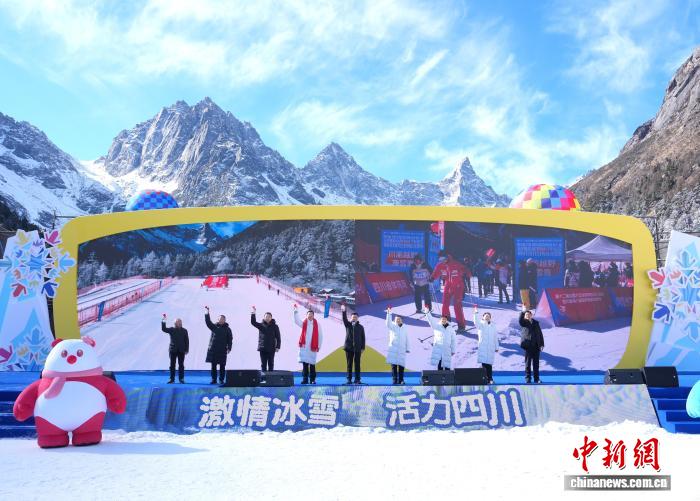
Core Viewpoint - The twelfth National Mass Ice and Snow Season (Sichuan sub-venue) and the eighth Sichuan Provincial Mass Fitness Ice and Snow Season have commenced, aiming to activate the ice and snow economy through a comprehensive "Ice and Snow + N" model [1][3]. Group 1: Event Overview - The event, themed "Passionate Ice and Snow, Vibrant Sichuan," will last for three months and cover 19 snow venues and 12 ice venues across Sichuan Province [1][3]. - The opening ceremony featured real-time connections to five sub-venues, showcasing local ice and snow cultural activities [3]. Group 2: Economic Impact - The event is expected to directly involve over 20,000 participants and drive more than 6 million people in skiing experiences and training, with online participation projected to exceed 10 million [3]. - The anticipated economic benefit from the event is over 100 million yuan [3]. Group 3: Policies and Incentives - Various inclusive policies have been introduced, including free tickets, discounted tickets, and family packages at multiple ice and snow venues [5]. - The Aba Prefecture is issuing 100,000 consumer vouchers worth a total of 1 million yuan, aimed at both local residents and national tourists [5]. Group 4: Historical Context and Future Plans - Since its inception in 2019, the ice and snow season has attracted over 57 million participants and distributed more than 23.4 million yuan in subsidies, generating over 400 million yuan in related consumption [5]. - The current ice and snow season will continue until March 2026, leveraging digital platforms for precise promotion of discounts and seamless consumer access [5].
2025,中国旅游消费彻底变了
Sou Hu Cai Jing· 2026-01-01 01:48
Core Insights - In 2025, domestic tourism consumption in China experienced an unexpected trend where major economic hubs like Beijing and Shanghai saw a decline in tourism spending, while less developed regions such as Northeast (Heilongjiang, Jilin, Liaoning), Northwest (Gansu, Qinghai), and Southwest (Yunnan, Guizhou) exhibited a surge in tourism activity [2][4][9]. Group 1: Consumption Patterns - Beijing and Shanghai have been categorized as "cautious consumers," indicating that residents in these economically advanced cities are spending less on tourism compared to their counterparts in less affluent regions [3][4]. - The decline in tourism spending in Beijing and Shanghai is attributed to high living costs and economic pressures, leading residents to reduce their travel budgets significantly [4][5]. - In contrast, residents in the Northeast, despite lower incomes, are more willing to spend on tourism due to lower living costs and stable incomes, resulting in a higher propensity for travel [10][11]. Group 2: Changing Consumer Behavior - A notable trend in 2025 is the shift towards camping and high-cost performance experiences, with many tourists opting to sleep in tents rather than expensive hotels during peak travel times [12][13]. - The concept of "high cost performance" has become crucial in influencing tourism consumption decisions, with consumers seeking value for money and unique experiences [14][19]. - The demand for high cost performance is not limited to tourism but reflects a broader global consumer trend towards purposeful spending [16][18]. Group 3: Ineffectiveness of Traditional Stimulus Measures - Traditional measures to stimulate tourism, such as free admission and consumption vouchers, have become less effective, prompting the need for new strategies [20][21]. - New initiatives, including the introduction of school autumn breaks and local cultural festivals, have emerged as effective means to boost tourism consumption [21][22]. - The rise of local intangible cultural heritage as a tourism draw has shown significant potential, with many regions successfully leveraging these cultural elements to attract visitors [24]. Group 4: Future Opportunities - The tourism industry is witnessing a shift in focus towards high-activity markets like Northeast China, with new tourism products and services being developed to meet changing consumer preferences [26][27]. - The introduction of new public holidays and school breaks is expected to further stimulate tourism consumption in the coming years, with predictions of increased government-led cultural and tourism festivals [27][28]. - The evolving landscape of tourism consumption presents opportunities for businesses that can adapt to the demand for high cost performance and unique experiences [28][29].

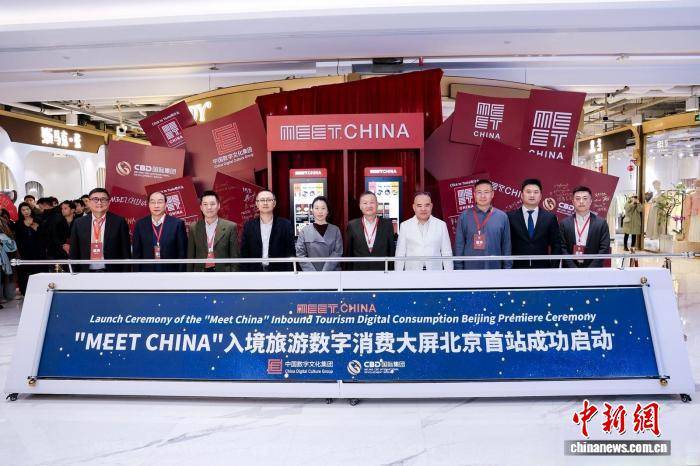
中国首个入境自助消费平台Meet China落地北京,解锁跨境消费新体验
Sou Hu Cai Jing· 2025-12-31 15:04
Core Insights - The "Meet China" initiative marks a significant shift in Beijing's inbound tourism consumption from "traffic aggregation" to "service enhancement," injecting strong digital momentum into the trillion-level inbound consumption market [1][3]. Group 1: Project Overview - "Meet China" is China's first self-service consumption platform aimed at inbound tourists, addressing key issues in the current inbound tourism market such as "understanding, selection, and payment" [3][10]. - The project is a collaboration between China Digital Culture Group and CBD International Group, with the goal of creating a friendly consumption environment in Chaoyang District, known as "China's first foreign-related district" [3][5]. Group 2: Features and Functionality - The platform offers a comprehensive digital solution that includes multi-language interpretation, intelligent product recommendations, and seamless payment integration, enhancing user experience and operational efficiency [5][11]. - "Meet China" features a dedicated multi-language corpus that provides practical information on food ingredients and cultural stories, facilitating a deeper understanding of Chinese culture for foreign tourists [10][11]. Group 3: Market Impact and Future Plans - The initiative aims to reduce the selection cost for tourists by offering visual recommendations and curated products like "must-buy souvenirs" and "intangible cultural heritage experience packages" [10][11]. - The platform collaborates with major global payment institutions to support various payment methods, allowing tourists to complete transactions without the need for unfamiliar apps or cash exchanges [11].
中国首个入境自助消费平台“Meet China”在北京首发
Sou Hu Cai Jing· 2025-12-29 13:29
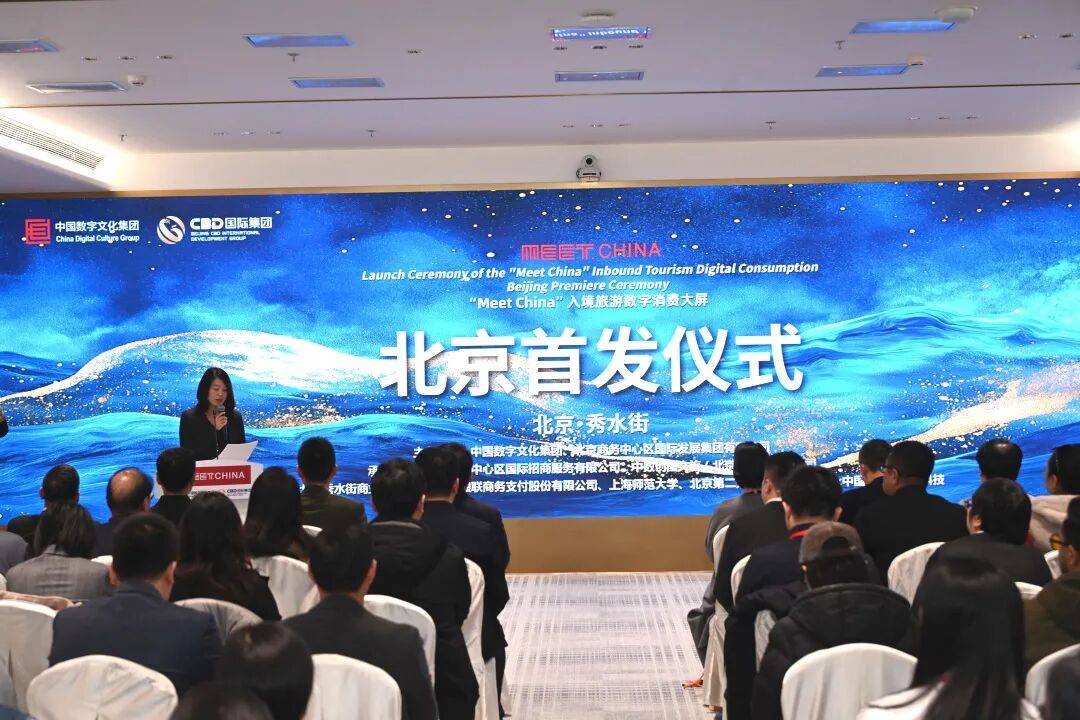
Core Insights - The "Meet China" self-service consumption platform for inbound tourists has officially launched in Beijing, aiming to enhance the international tourism experience and boost consumer spending [1][3]. Group 1: Platform Overview - "Meet China" is designed to address the challenges faced by foreign tourists, such as language barriers and payment difficulties, by providing a comprehensive digital solution that includes a multilingual cultural database and seamless payment options [4]. - The platform aims to create a national-level demonstration brand that facilitates understanding of Chinese culture while enabling smooth consumption for international visitors [4]. Group 2: Market Context - The launch of "Meet China" comes at a time when China's inbound tourism market is recovering, making it crucial for Beijing to convert international visitor traffic into consumer spending [3]. - The initiative is part of Beijing's strategy to establish itself as an international consumption center, with the first implementation site being the popular shopping area of Silk Street [3]. Group 3: Future Plans - The project will expand from its initial location in Chaoyang to other key commercial districts and cultural landmarks in Beijing, enhancing the overall service experience for international tourists [4]. - The "Meet China" team plans to continuously improve service functions and operational models to establish the platform as a trusted symbol for foreign tourists in China [6].
海南封关,布局这几个领域就是抢占最后财富窗口期
Sou Hu Cai Jing· 2025-12-23 18:45
Core Insights - The core viewpoint of the news is that the implementation of the Hainan Free Trade Port policy, effective from December 18, 2025, will create significant market opportunities through zero tariffs and low tax rates, benefiting both consumers and businesses [1][3]. Group 1: Policy Overview - The "closure" of Hainan is a misunderstanding; it is about upgrading policy benefits, allowing for freer movement of goods and capital between Hainan and foreign countries, with 6,637 items achieving zero tariffs, covering 74% of goods [3]. - The policy framework includes "one line open," "two lines controlled," and "freedom within the island," facilitating a favorable business environment with a corporate tax rate as low as 15% and personal income tax for high-end talent capped at 15% [3][4]. Group 2: Cross-Border E-Commerce - Cross-border e-commerce is highlighted as a key growth area, with a target of 20% annual growth in import and export scale by 2030, supported by reduced logistics costs and improved customs efficiency [5]. - Opportunities for individuals include starting cross-border e-commerce stores selling zero-tariff products or collaborating with e-commerce parks for supply chain and logistics services [5]. Group 3: Manufacturing Sector - The manufacturing sector benefits from a dual advantage of zero tariffs on imported raw materials and exemption from tariffs on domestic sales of products with over 30% added value, leading to significant cost savings [6]. - Industries such as grain and oil processing, meat processing, and medical device manufacturing are expected to see substantial profit margins due to these policies [6]. Group 4: Tourism and Consumer Experience - The tourism sector is evolving from a focus on duty-free shopping to a combination of duty-free, cultural tourism, and health care, expanding market potential [7]. - Data shows that duty-free sales in Sanya surged to 3.31 billion yuan in the first three days post-closure, with the annual sales expected to exceed 20 billion yuan [8]. Group 5: High-Tech Industry - The high-tech sector is receiving significant support, with 70% of industrial funding directed towards it, and the number of high-tech enterprises in Hainan surpassing 5,000, growing at an annual rate of 40% [9]. - Key focus areas include digital economy, marine technology, and new energy, with favorable tax incentives and policies to attract investment [9]. Group 6: Strategic Considerations - Companies are advised to comply with regulations, avoid blindly following trends, and stay updated on policy changes to seize opportunities effectively [10]. - The emphasis is on finding familiar fields to invest in, aligning with official policies to benefit from the wealth opportunities presented by the new trade environment [10].