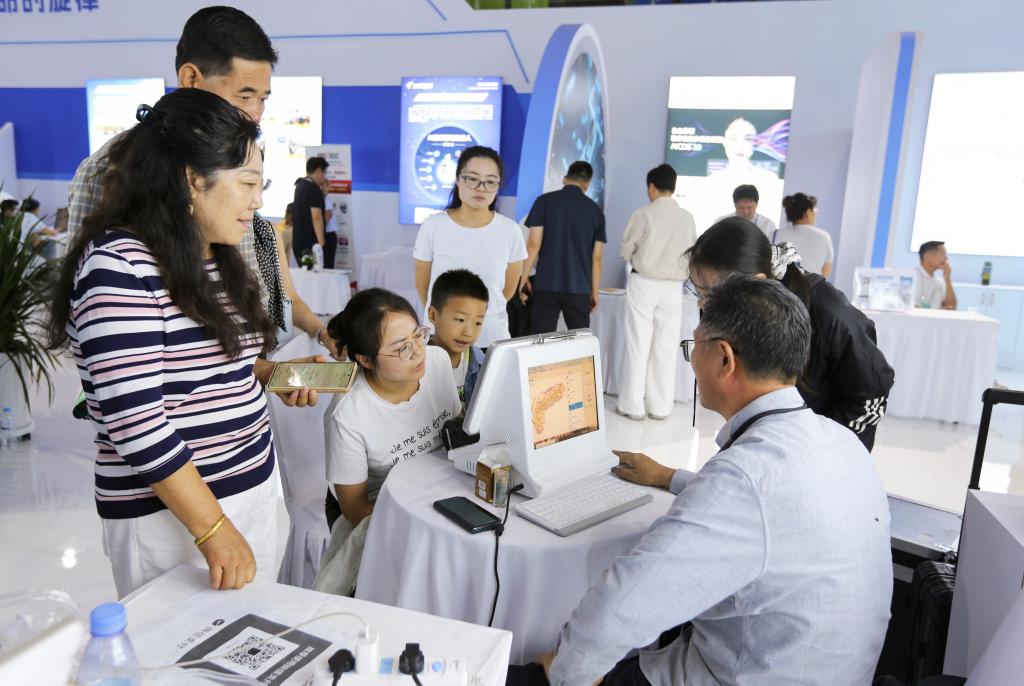
医疗人工智能

Search documents
【2025医疗人工智能报告】:价值计量与支付探索,医疗人工智能的两个困局
3 6 Ke· 2025-12-17 00:27
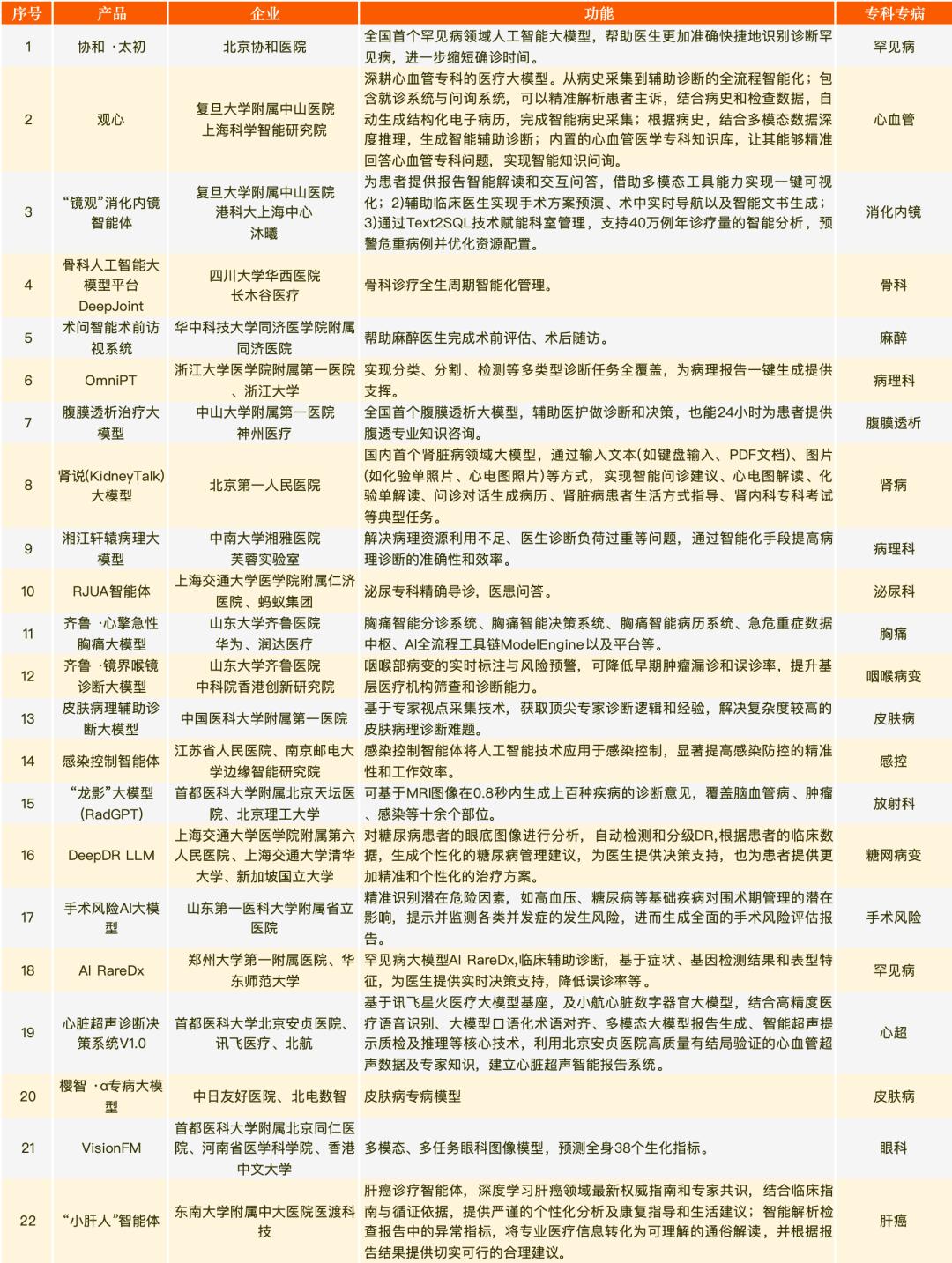
Core Insights - The medical AI industry is experiencing high growth despite not yet achieving scalable profitability, with the Chinese solutions market projected to grow from 16.4 billion yuan in 2024 to 35.3 billion yuan by 2030, reflecting a CAGR of 13.63% [1] - Significant changes in medical AI by 2025 include breakthroughs in large models and increased participation from medical institutions [1] - The deployment of large models in hospitals is accelerating, with all top 100 hospitals in China having completed large model deployments by May 2025, and 38 hospitals developing 55 vertical medical models tailored to their needs [1] Market Growth - The medical AI market in China is expected to expand significantly, with a projected market size of 35.3 billion yuan by 2030 [1] - The integration of various disciplines such as computer science, industrial engineering, and medicine is driving the growth of medical AI [1] Technological Advancements - The introduction of DeepSeek-R1 has lowered the entry barriers for large models, prompting hospital administrators to actively deploy necessary infrastructure [1] - Innovations such as parameter-efficient fine-tuning (PEFT) and mixture of experts (MoE) are enhancing the capabilities of large models [1] Doctor Engagement - Doctors are showing greater enthusiasm for practical applications of large models compared to traditional AI, with some circumventing procurement restrictions to continue research [2] - Over 90% of doctors who have used related AI tools report positive feedback, indicating that AI can enhance surgical precision and reduce complication rates [4] Policy Support - Recent policies are increasingly supportive of AI in healthcare, aiming to establish high-quality data sets and trusted data spaces by 2027 [6] - The implementation of guidelines for AI and medical applications is expected to create a conducive environment for the development of large models [6] Challenges in Commercialization - The value generated by AI in different deployment environments is inconsistent, making it difficult for hospitals to accurately assess benefits and hindering commercialization [7] - Short-term interests of hospitals and doctors often conflict, with AI deployment benefiting doctors but not necessarily translating to immediate hospital gains [8] Long-term Perspectives - In the long term, improved surgical quality through AI could enhance hospital reputation and attract more patients, benefiting both departments and doctors [10] - AI's ability to save time for doctors may lead to increased research opportunities, enhancing both individual and institutional capabilities [11] Specialty Focus: Thoracic Surgery - Thoracic surgery has a high demand for AI to improve operational efficiency and reduce redundant diagnostics [16] - AI applications in thoracic surgery have shown significant efficiency improvements, with diagnostic times reduced by up to 84% in some cases [18] - The introduction of AI in complex surgical planning has been shown to optimize procedures and reduce risks associated with needle placement [19] Data Governance and Assetization - The establishment of data as a production factor is accelerating the exploration of data assetization in healthcare, with a focus on efficient data governance and reuse [27] - The development of trusted data spaces is crucial for facilitating secure data sharing among healthcare stakeholders, promoting deeper integration and utilization of medical data [30]

医疗 + AI = 未来!实训营带你抢占行业先机!
思宇MedTech· 2025-12-14 01:11
PART1 课程背景 医疗人工智能 实训营 第一期 当前,医疗AI在影像诊断、精准治疗和药物研发等场景广泛应用,但医疗机构普遍面临跨学科 人才短缺、技术落地难的挑战,制约了医疗智能化转型进程。 上海交通大学医学院联合上海交通大学生物医学工程学院、学生创新中心、附属医院等优势技 术与临床资源,针对人工智能在医疗领域快速渗透的行业趋势,聚焦医生、工程技术人员及科 研人员以及企业界对AI应用技能的迫切需求,推出医疗人工智能实训营。本课程通过系统化实 战训练,精准衔接临床需求与AI技术,为培养复合型人才提供核心支撑。 PART2 课程特色 01 临床痛点精准匹配 01 临床痛点精准匹配 直击医生在诊断、治疗,科研人员在药物研发中的数据处理与模型部署难题,提 供可直接落地的AI技能训练。 02 实战导向的完整课程体系 从AI基础、医学数据处理到临床案例实操,形成"理论-分析-应用-实操"闭环学习 路径。 03 双领域权威协同 医学专家与AI工程师联合设计并授课,内容严格遵循临床规范与技术前沿,保障 专业性与实用性。 PART3 开课信息 PART4 课程安排 图片 第一天:《人工智能基础》 结合医疗场景讲解核心算法原理 ...
医疗AI:从“替代医生”伪命题到“赋能医者”的价值回归
Yang Shi Wang· 2025-11-28 08:37
Core Insights - The essence of medicine is human-centered, and the consensus is that fully automated healthcare facilities are not feasible in the foreseeable future [1] - Since the launch of the first AI medical imaging product in 2017, the exploration of artificial intelligence in healthcare has deepened, with the Ministry of Science and Technology prioritizing medical imaging in national AI initiatives [1] Group 1: The Rational Return of Medical AI - The underlying logic of medical AI has fundamentally changed, moving away from the notion of "replacing doctors" to a focus on enhancing the capabilities of healthcare professionals [2] - AI cannot independently prescribe, write diagnostic reports, or perform surgeries; the value of doctors extends beyond data interpretation to include comprehensive patient assessments [2] - The current emphasis is on demonstrating that "doctors using AI perform better than those not using AI" [2] Group 2: Repositioning the Value of Tools - AI should be positioned as a tool to assist and liberate doctors rather than replace them, as current consultation times are only 5-10 minutes with high patient volumes [3] - The core value of AI tools lies in freeing healthcare personnel from repetitive tasks, allowing them to focus on diagnosis and patient communication [3] - Leading tech organizations are building business models around this concept, balancing idealism with commercial viability to support long-term health value [3] Group 3: The Digital Future of Healthcare Systems - The healthcare system faces ongoing pressure due to demographic changes, and AI is seen as a potential transformative technology [4] - Future applications of AI in healthcare may follow an "80/20 rule," where 80% of common diseases can be addressed with general models, while 20% of complex cases require specialized models for improved diagnostic accuracy [4] - Building a healthier healthcare system necessitates public engagement in self-health management, which is essential for achieving a "Healthy China" [4] - The development of medical AI is not a competition to replace humans but a collaborative exploration alongside time [4]
医渡科技(02158)2026财年中期业绩:经调整EBITDA翻倍 新增订单激增 会计报表几近盈亏平衡
智通财经网· 2025-11-27 07:08
Core Insights - Yidu Technology reported a total revenue of RMB 358 million for the first half of the 2026 fiscal year, representing an 8.7% year-on-year growth, with adjusted EBITDA doubling to approximately RMB 54 million [1][3] - The company has achieved near breakeven in its financial statements, ahead of management's previous expectations by one year [1] Business Growth - The core business segments showed strong growth, with new order amounts in the big data platform and solutions segment increasing by 19.7%, and the life sciences solutions segment seeing a remarkable 61.1% increase [3] - The company’s AI technology has been implemented in over 30 top-tier hospitals, with the Doctor Copilot achieving nearly 1,000 daily calls per hospital [3] YiduCore Developments - YiduCore, the company's core algorithm engine, processed over 1.3 billion patient visits and nearly 7 billion authorized medical records, covering over 10,000 hospitals [3] - The accuracy of the TNM staging assessment for tumors improved significantly, with T-stage accuracy rising from 58% to 90% and N-stage accuracy from 62% to 80% [4] Industry Recognition - The company received accolades at the 11th China Health Information Processing Conference (CHIP 2025), winning the championship in "Medical NLP Code Automatic Generation Evaluation" and the "Best Paper Award" [5] Business Segments Performance - The AI for Medical segment generated RMB 153 million in revenue, a 14.6% increase year-on-year, providing solutions to 127 top hospitals and 44 regulatory bodies [6] - The AI for Life Science segment achieved RMB 138 million in revenue, supporting the accelerated approval of several innovative drugs [7] - The AI for Care segment reported revenue of RMB 66.67 million, a 30.3% increase, with significant participation in health insurance projects across multiple provinces [8] Health Management Initiatives - The company's diabetes digital therapy expanded to multiple regions, managing nearly 100,000 patients, with a 27.04% increase in fasting blood sugar compliance [9] - The active transaction user count on the health management platform exceeded 22 million [9] Future Outlook - The company aims to deepen the integration of large model technology with real-world scenarios, leveraging its cash reserves and operational efficiency to capture future market opportunities [9]

联影智能:聚焦临床需求 持续推动医疗AI创新落地
Zhong Guo Zheng Quan Bao· 2025-11-13 22:14
Core Insights - Recently, the AI-assisted evaluation software for children's hand X-ray images and the CT image triage software for liver focal lesions developed by the company have been officially approved by the National Medical Products Administration of China as Class III medical devices [1] - The company has launched over 100 medical AI products, with 17 applications approved by the National Medical Products Administration of China and 15 applications certified by the FDA, leading globally with 31 applications certified by the EU [1][2] - The company aims to drive medical progress through technological innovation, focusing on clinical needs and practical applications [1][4] Company Overview - Established at the end of 2017, the company is dedicated to integrating advanced AI technology into medical imaging analysis, intelligent diagnostic assistance, and medical data management [2] - The company has achieved significant milestones in the medical imaging field, which is a key area for AI application, due to the global DICOM standard that allows data from different devices to be read by AI [2] Product Development - The company has received 5 additional Class III certificates from the National Medical Products Administration since 2025, totaling 17 certificates [2] - The company has developed over 100 AI products that optimize hospital processes, reduce marginal costs, and transition from single-point AI applications to comprehensive digital solutions [2] Market Penetration - The company's AI products are implemented in over 4,000 hospitals across China, including top-tier hospitals and grassroots healthcare facilities, enhancing the quality of medical services [3] Technological Innovation - The company has launched the YuanZhi medical large model, which integrates text, voice, and visual understanding capabilities, adapting to various medical scenarios [4][5] - The YuanZhi model has produced over 10 medical intelligent agents covering multiple scenarios, including imaging diagnosis and clinical treatment [5] Collaboration and Research - The company collaborates with hospitals to develop intelligent agents capable of detecting multiple diseases from imaging data, showcasing significant advancements in diagnostic efficiency [5][6] - The company completed a Series A financing round of 1 billion yuan, which will accelerate innovation and product deployment [6]
联影智能:聚焦临床需求持续推动医疗AI创新落地
Zhong Guo Zheng Quan Bao· 2025-11-13 20:03
Core Insights - Recently, the AI-assisted evaluation software for children's hand X-ray images and the CT image triage software for liver focal lesions developed by the company have been officially approved by the National Medical Products Administration of China as Class III medical devices [1][2] - The company has launched over 100 medical AI products, with 17 applications approved by the National Medical Products Administration of China and 15 applications certified by the FDA, leading in the EU with 31 CE-certified applications [1][2] - The company aims to continuously drive medical AI innovation and transform technology into practical medical productivity, focusing on clinical needs and application scenarios [1][5] Company Development - The company was established at the end of 2017 in Shanghai and has been dedicated to integrating advanced AI technology into medical imaging analysis, intelligent diagnostic assistance, and medical data management [1][2] - As of now, the company's AI products have been implemented in over 4,000 hospitals across China, including top-tier hospitals and grassroots healthcare facilities, promoting high-quality medical service development [3][4] AI Application in Medical Imaging - The medical imaging sector has become a significant area for AI applications, facilitated by the global DICOM standard, which allows data from different manufacturers and hospitals to be read by AI [2][3] - The company has introduced a multi-modal medical model, "YuanZhi," which integrates text, voice, and visual understanding capabilities, adapting to various medical scenarios [3][4] Technological Advancements - The company has developed intelligent models capable of precise detection of multiple diseases in imaging diagnostics, utilizing advanced technologies like Transformer and multi-modal techniques [4][5] - The company completed a Series A financing round of 1 billion yuan, which will accelerate innovation and product implementation, focusing on both horizontal and vertical innovations in AI applications [5]
中国医生需要怎样的AI?GPT-5、OpenEvidence都输掉实战后,我们有了答案
机器之心· 2025-11-12 13:23
Core Viewpoint - The article emphasizes the importance of AI in grassroots healthcare, highlighting the need for safety, effectiveness, and human-AI collaboration as essential criteria for successful implementation [2][4][44]. Policy and Market Context - On November 4, the National Health Commission issued a document outlining the core goal for the next five years: "AI + grassroots application," placing it at the forefront of the eight key directions for "AI + healthcare" [4]. - The document aims for "intelligent auxiliary applications in grassroots diagnosis and treatment to achieve basic coverage by 2030" [5]. Current Challenges - Despite the policy push, there is a significant gap in AI adoption at the grassroots level, with over 80% of grassroots doctors not using AI, and those who do often rely on generic models that lack precision [7]. - The article notes a "reverse situation" where major hospitals are rapidly adopting AI, while grassroots healthcare remains largely untouched by the AI wave [7]. AI Product Features - The "Future Doctor AI Studio" is presented as a reliable tool that aligns with the policy blueprint, focusing on safety and effectiveness [9]. - MedGPT, the underlying model of the Future Doctor AI Studio, has been rigorously tested for safety and effectiveness, outperforming five major global models in clinical scenarios [12][14]. Safety and Effectiveness - MedGPT achieved the highest scores in safety (0.912) and effectiveness (0.861) during evaluations, significantly surpassing other models [17]. - The article stresses that true medical AI must prioritize safety and effectiveness, with clinical value as the benchmark for technological iterations [11][13]. Human-AI Collaboration - The article highlights the importance of human-AI collaboration, stating that AI should serve as a "super assistant" to doctors, enhancing their capabilities rather than replacing them [39][40]. - The Future Doctor AI Studio's clinical decision-making assistant is designed to support grassroots doctors by providing structured decision reports based on high-level medical evidence [22][25]. Clinical Decision Support - The clinical decision AI assistant can generate comprehensive decision reports for complex cases, demonstrating expert-level reasoning and reliable decision-making [23][30]. - Recent evaluations showed that the assistant outperformed competitors in various clinical scenarios, confirming its effectiveness in real-world applications [27]. Patient Follow-Up - The patient follow-up AI assistant addresses the critical "last mile" of healthcare, ensuring continuous patient management and communication [32][35]. - It automates follow-up tasks, provides personalized health management plans, and alerts doctors to high-risk signals, thereby enhancing patient care [36][38]. Conclusion - The article concludes that the integration of AI in grassroots healthcare represents a best practice for empowering medical professionals and improving patient outcomes, with a strong emphasis on safety, effectiveness, and collaboration [44].

福鑫数科完成5000万元Pre-A轮融资,加速医院迈入“AI驱动时代”
Cai Jing Wang· 2025-11-11 05:55
Core Insights - FusionAi, a provider of comprehensive AI solutions for healthcare, announced the completion of a 50 million RMB Pre-A round financing [1] - The financing round was led by Yuan Yi Capital, with additional investment from Changling Capital, and Guangyuan Capital served as the exclusive financial advisor [1] - Since the launch of its self-developed large model at the end of 2022, FusionAi has increased its R&D investment and launched an AI-generated electronic medical record system in May 2023, marking the application of generative AI in core hospital business processes [1]
5000万Pre-A轮融资!加速医疗AI创新落地
思宇MedTech· 2025-11-11 03:56
Core Viewpoint - Fuxin Digital Technology (Hangzhou) Co., Ltd. has completed a Pre-A round financing of 50 million RMB, which will be used to enhance its FusionAi series of medical AI products and solidify its leading position in the medical AI field [1] Company Overview - Founded in 2017, Fuxin Digital Technology focuses on medical informationization and AI applications, with headquarters in Hangzhou and service centers in Wuhan and Beijing [2] - The company aims to drive hospitals towards "intelligent decision-making" by deeply integrating generative AI into core business systems and service frameworks [2] Product and Technology - The FusionAi medical AI system serves as the core engine for hospital intelligence, covering pre-diagnosis, in-diagnosis, post-diagnosis, and data governance [5][7] - FusionAi integrates heterogeneous data within hospitals, enabling structured reconstruction and cleaning, and helps in identifying potential risk patients and optimizing resource allocation [7] - The system supports personalized health management and enhances patient service efficiency through AI-driven digital assistants [7][8] - FusionAi's capabilities extend to generating electronic medical records, improving documentation efficiency, and seamlessly integrating with existing hospital systems [8] Financing Significance and Market Layout - The recent financing will accelerate the nationwide rollout of the FusionAi platform, focusing on benchmark hospital projects in key cities [10] - The investment reflects confidence in the trend of integrating AI with medical informationization, as demand for AI-driven solutions is expected to grow rapidly [10]

医疗AI有了“评审员”!北京启动医疗AI应用评测服务
Xin Hua Wang· 2025-11-08 22:38
Core Viewpoint - The rapid advancement of artificial intelligence (AI) technology is accelerating the development of medical AI to assist doctors and undertake some of their technical labor, raising concerns about the safety and effectiveness of its application [1][2]. Group 1: Establishment of Evaluation Center - The Beijing Municipal Health Commission has established a Medical AI Application Evaluation Center to create a regulatory framework and standards for evaluating medical AI [1][2]. - The center aims to verify the clinical decision-making capabilities and effectiveness of medical AI, ensuring a safety baseline for its application [1]. Group 2: Evaluation Standards and Methodology - The evaluation of medical AI should be as rigorous as that of human doctors, focusing on multiple dimensions such as safety, professionalism, and practicality [2]. - A multi-dimensional assessment framework has been developed, consisting of six core evaluation dimensions: medical compliance and ethics, evidence-based medicine and knowledge, general auxiliary capabilities, specialty diagnosis and treatment quality control, adaptability of treatment processes, and accuracy of treatment decisions, encompassing over 70 specific evaluation tasks [2][3]. - The evaluation center collaborates with key hospitals, research institutions, and authoritative expert teams to construct a high-quality evaluation dataset using clinical cases and the latest clinical guidelines [2]. Group 3: Innovative Evaluation Mechanism - The evaluation system automatically matches tasks based on application types and generates evaluation reports, which are then reviewed by clinical experts [3]. - An AI-based scoring mechanism has been introduced to quantify scores based on diagnostic reasoning, logic, and results, ensuring objective and scientifically credible evaluation outcomes [3]. - The center plans to expand its evaluation services to cover various medical fields, including internal medicine, surgery, and pediatrics, to support the healthy development of the medical AI industry [3].