
商贸文旅

Search documents
投资总额超2000亿元 四川泸州发布94个产业投资机会清单
Sou Hu Cai Jing· 2025-05-25 01:25
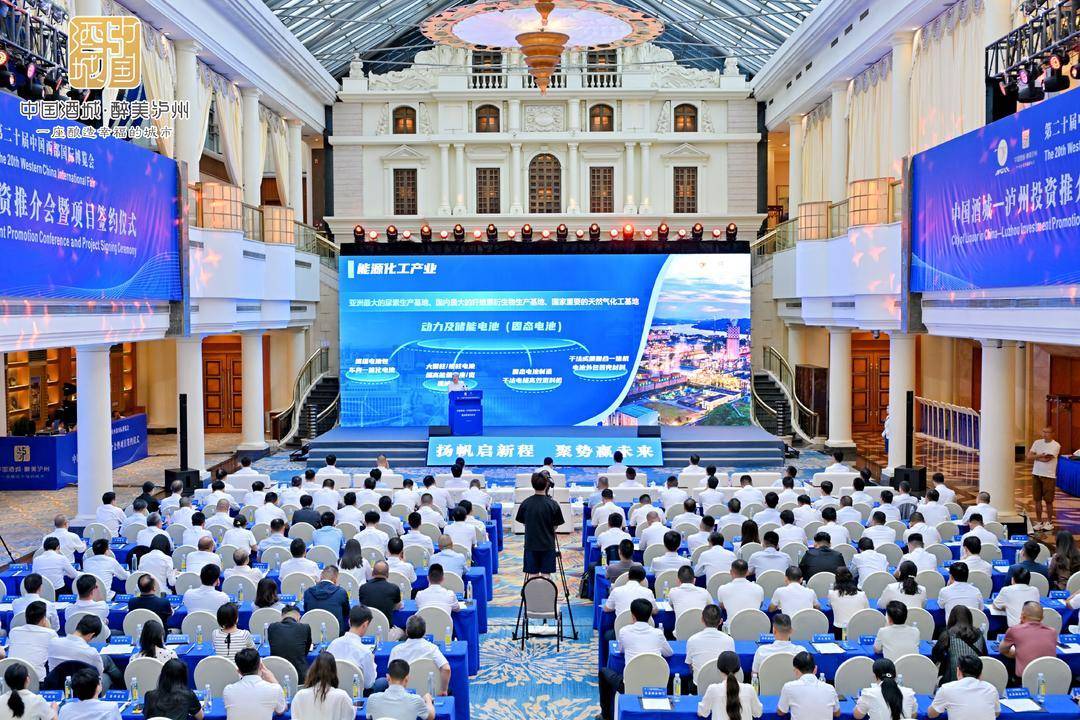
Core Insights - The 20th Western China International Expo was held in Chengdu, where Luzhou hosted an investment promotion meeting and project signing ceremony, attracting over 100 well-known enterprises and associations to discuss development opportunities and cooperation [1][3] Group 1: Investment Projects - Luzhou signed a batch of cooperation projects covering various industries, including liquor, new chemical materials, and equipment manufacturing, with a total investment amount of 206.48 billion yuan [3][5] - The investment projects include 13 liquor projects with a total investment of 35.28 billion yuan, 2 energy projects with 10 billion yuan, 6 new chemical material projects with 26.89 billion yuan, and 13 pharmaceutical health projects with 21.08 billion yuan [5] - A total of 94 investment opportunity listings were released, involving 7 districts and the Jiangyang Economic Development Zone, aiming to attract quality capital and resources through various investment methods [5][6] Group 2: Economic Development Strategy - Luzhou is accelerating the construction of industrial chains and clusters, utilizing a model that includes a dedicated city leader for each industry, a leading department, and a working team to enhance industrial development [6] - The city has introduced supportive policies for major industrial projects, prioritizing resource allocation based on the "one matter, one discussion" principle to ensure systematic support for all industrial development [6] - Luzhou has established a "1+1+N" industrial investment fund group with a total scale of 55 billion yuan, supported by 128 financial institutions and organizations in the city to safeguard enterprise development [6]

我国加快推进服务业扩大开放 金融、医疗等多领域明确155项试点任务
Yang Guang Wang· 2025-04-22 01:18
Group 1 - The core viewpoint of the news is the introduction of the "Work Plan for Accelerating the Comprehensive Pilot Work of Expanding the Opening-up of the Service Industry," which outlines 155 pilot tasks across various sectors including telecommunications, finance, and tourism [1][2] - Nine cities, including Dalian, Ningbo, and Shenzhen, have been included in the pilot program, which aims to enhance the development of the service industry in these regions [1] - The plan emphasizes the importance of aligning with international high-standard trade rules, such as those from the CPTPP and DEPA, to foster innovation and adaptability in the service sector [2] Group 2 - The pilot tasks are designed to be implemented uniformly across all 11 provinces and cities involved, without differentiating by region or task batch, to accelerate the pace of service industry development [1] - The initiative aims to leverage the strengths of the pilot provinces and cities to actively engage with international trade standards, facilitating the creation of innovative institutional outcomes [2] - The focus on diverse service sectors and the proactive construction of relevant rules and standards is expected to enhance the overall competitiveness of the service industry in China [2]
“集中精力”做自己 155项试点任务提速加力高水平开放
Yang Shi Wang· 2025-04-21 22:00
Core Viewpoint - The Chinese government is accelerating the expansion of service industry openness amid rising unilateralism and protectionism globally, with a focus on enhancing its own economic stability and providing certainty to the world [8]. Group 1: Service Industry Expansion - The State Council announced a comprehensive pilot program with 155 tasks aimed at expanding service industry openness [1]. - New pilot cities include Dalian, Ningbo, and Xiamen, expanding the initiative beyond the existing 11 pilot provinces and cities [10]. Group 2: Telecommunications and Healthcare - In telecommunications, the plan includes removing foreign ownership limits on app stores and internet access services [3]. - The healthcare sector will support foreign and Hong Kong, Macau, and Taiwan doctors in opening clinics and simplify approval processes for foreign medical professionals [5]. Group 3: Financial Sector Initiatives - The financial sector will explore international factoring and support multinational companies in conducting cross-border operations in RMB [5]. - The People's Bank of China is enhancing financial support for regional coordinated development, including a digital RMB pilot in Chongqing [6]. Group 4: Trade and Transportation - In trade and tourism, foreign investment in travel agencies for outbound tourism will be permitted [8]. - The transportation sector will explore container sharing and "one box to the end" initiatives [8]. Group 5: Regulatory and Policy Improvements - The pilot tasks will address issues like visa-free transit, permanent residency, and professional qualification recognition to facilitate foreign talent [8]. - The focus will also be on improving cross-border data flow, standardization, intellectual property, and commercial encryption [8].
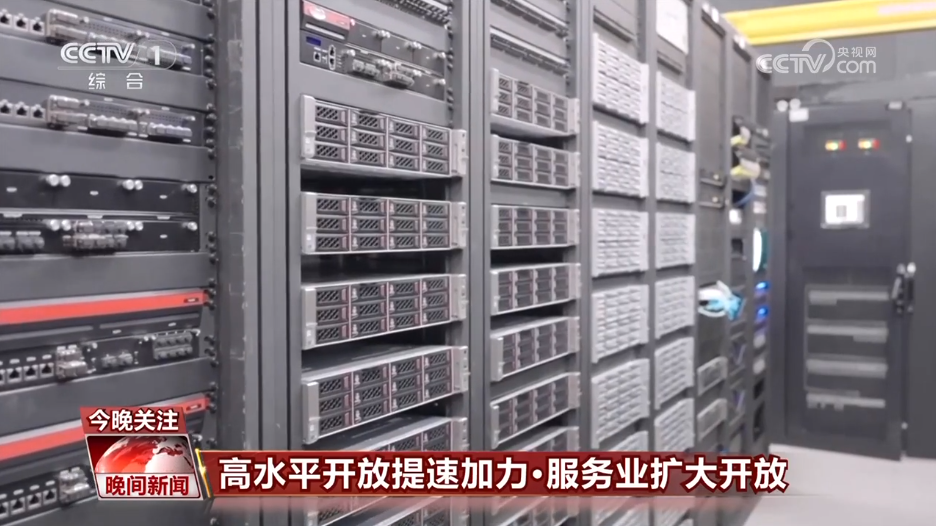
服务业开放提速加力,电信医疗等领域创新举措将落地
2 1 Shi Ji Jing Ji Bao Dao· 2025-04-21 12:24
Core Viewpoint - The Chinese government has approved a comprehensive pilot program to accelerate the opening of the service industry, consisting of 155 pilot tasks aimed at enhancing openness in key sectors and promoting innovation and development [1][2]. Group 1: Key Areas of Focus - The pilot program emphasizes aligning with high-standard international trade rules such as CPTPP and DEPA, showcasing China's commitment to expanding foreign openness and supporting economic globalization [2]. - In the telecommunications sector, the program includes removing foreign ownership limits on services like app stores and internet access, encouraging the development of new business models such as data labeling and overseas game operations [2][3]. - The healthcare sector will see support for foreign doctors to open clinics, short-term practice for overseas medical professionals, and the establishment of non-profit medical institutions funded by donations [2][4]. Group 2: Financial Sector Initiatives - The financial sector initiatives include exploring international factoring, supporting cross-border capital operations in RMB, and attracting foreign insurance companies and funds to provide financing and technical services for green projects [3]. - The program encourages credit rating agencies to rate green bonds and supports qualified leasing companies in issuing green bonds [3]. Group 3: Trade and Tourism Developments - In the trade and tourism sector, foreign investment in travel agencies for outbound tourism will be allowed, and pilot projects for tax-free display and custody of classic cars will be supported in Tianjin [3]. - The Boao Lecheng International Medical Tourism Pilot Zone in Hainan will be a testing ground for the import and use of special medical and health foods [3]. Group 4: Transportation and New Business Models - The transportation sector will support container shipping and the creation of "green channels" for cross-border bus services, as well as explore new models for exporting new energy vehicles and batteries [3]. - The program also aims to enhance the development of new service industry business models and improve the level of liberalization and facilitation [3]. Group 5: Progress and Achievements - Since the implementation of the pilot program, significant progress has been made in the healthcare sector, with over 1,500 foreign medical professionals currently practicing short-term in China [5]. - In telecommunications, the Ministry of Industry and Information Technology plans to remove foreign ownership limits on several value-added telecom services in key cities, which has garnered positive attention from both domestic and international stakeholders [5].
新增9个试点城市、发展游戏出海业务……服务业加快扩大开放!
Yang Shi Xin Wen Ke Hu Duan· 2025-04-21 08:26
Group 1 - The core viewpoint of the news is the introduction of a comprehensive pilot work plan to accelerate the expansion of the service industry, which includes the addition of new pilot cities and the establishment of specific tasks across various sectors [1][2][3]. Group 2 - Nine new cities have been added to the pilot program, including Dalian, Ningbo, Xiamen, Qingdao, Shenzhen, Hefei, Fuzhou, Xi'an, and Suzhou, expanding the total to 20 pilot cities [2]. - A total of 155 pilot tasks have been clearly defined, covering multiple sectors such as finance, telecommunications, and healthcare [3]. Group 3 - In the telecommunications sector, tasks include removing foreign ownership limits on app stores and internet access services, and developing a complete industry chain for game exports [4]. - In the healthcare sector, initiatives support foreign doctors opening clinics, establishing non-profit medical institutions through donations, and optimizing the import inspection model for rare disease drugs [4]. - In the financial sector, tasks include exploring international factoring business and supporting multinational companies in conducting cross-border fund operations in RMB [4]. - In the trade and tourism sector, foreign investment in travel agencies for outbound tourism is permitted, and specific pilot projects are supported in Tianjin and Hainan [4]. - In transportation, support is provided for container sharing and cooperation, creating "green channels" for cross-border bus transit, and exploring new models for exporting new energy vehicles and batteries [4]. - The plan also includes measures to facilitate the entry and practice of foreign talent, such as visa exemptions and recognition of professional qualifications, alongside strengthening legal protections for foreign-related legal services [4].
服务业扩大开放!金融、医疗等多领域明确155项试点任务
券商中国· 2025-04-21 07:17
Group 1 - The article discusses the introduction of the "Comprehensive Pilot Work Plan for Accelerating the Expansion of Service Industry Opening" by the State Council, which outlines 155 pilot tasks across various dimensions such as key service sector openings and industrial innovation development [1][2][3] - Key areas of focus include enhancing the opening of important industry sectors, improving element guarantees for foreign talent, and strengthening legal protections for foreign-related legal services [3][4] - The plan aims to promote the compatibility of rules and standards in critical business areas such as data cross-border flow, intellectual property, and carbon management, while also establishing a risk prevention and regulatory coordination system [3][4] Group 2 - In the telecommunications sector, the plan proposes removing foreign investment restrictions on application stores and internet access services, encouraging the development of data annotation industries, and supporting the overseas expansion of gaming businesses [4] - In the healthcare sector, it supports foreign doctors opening clinics, short-term practice for foreign medical professionals, and the establishment of foreign-funded nursing schools [4] - In the financial sector, the plan encourages the exploration of international factoring business, cross-border fund operations in RMB, and the issuance of green bonds by qualified leasing companies [4]

服务业扩大开放 金融、医疗等多领域明确155项试点任务
Yang Shi Xin Wen Ke Hu Duan· 2025-04-21 07:06
Group 1 - The State Council introduced the "Work Plan for Accelerating the Comprehensive Pilot Work of Expanding the Opening-up of the Service Industry," outlining 155 pilot tasks across various dimensions such as key service sector openings and industrial innovation development [1][3] - The plan emphasizes the importance of improving element guarantees, including visa exemptions, permanent residency, payment facilitation, and professional qualification recognition to ease the entry and practice of foreign talent [3][4] - It aims to enhance the compatibility of rules and standards in critical business areas such as cross-border data flow, standard formulation, intellectual property, and commercial encryption [3][4] Group 2 - In the telecommunications sector, the plan proposes to remove foreign ownership limits on application stores and internet access services, and encourages the development of data labeling industries and a data trading market [4] - In the healthcare sector, it supports foreign doctors opening clinics, short-term practice for foreign medical professionals, and the establishment of foreign-funded nursing colleges [4] - In the financial sector, it promotes the exploration of international factoring business and supports cross-border capital operations in RMB by multinational companies [4] - In the trade and tourism sector, it allows foreign investment in travel agencies for outbound tourism and supports pilot projects for traditional classic car bonded display and custody in Tianjin [4] - In the transportation sector, it supports cooperation in container shipping and explores new models for exporting new energy vehicles and power batteries [4]