
智能影像设备

Search documents
影石创新1月21日获融资买入4658.62万元,融资余额7.27亿元
Xin Lang Cai Jing· 2026-01-22 01:37
Group 1 - The core viewpoint of the news is that YingShi Innovation has experienced fluctuations in its stock performance and financing activities, with a notable increase in shareholder numbers and a slight decrease in net profit year-on-year [1][2]. Group 2 - On January 21, YingShi Innovation's stock rose by 3.01%, with a trading volume of 631 million yuan. The financing buy-in amount for the day was 46.59 million yuan, while the financing repayment was 68.27 million yuan, resulting in a net financing outflow of 21.68 million yuan. The total financing and securities balance reached 727 million yuan, accounting for 9.01% of the circulating market value [1]. - As of September 30, the number of shareholders for YingShi Innovation increased to 23,100, a rise of 36.16% compared to the previous period. The average circulating shares per person decreased by 26.56% to 1,318 shares [2]. - For the period from January to September 2025, YingShi Innovation reported a revenue of 6.611 billion yuan and a net profit attributable to shareholders of 792 million yuan, reflecting a year-on-year decrease of 5.95% [2]. - Among the top ten circulating shareholders as of September 30, 2025, several new institutional investors entered, including Bosera Science and Technology Innovation Mixed Fund, holding 262,600 shares, and others like Fortune Consumer Theme Mixed Fund and Fortune Value Creation Mixed Fund [2].
影石创新1月19日获融资买入5624.18万元,融资余额7.59亿元
Xin Lang Cai Jing· 2026-01-20 02:02
Core Viewpoint - The company, Ying Shi Innovation, experienced a decline in stock price by 1.95% on January 19, with a trading volume of 356 million yuan, indicating market volatility and investor sentiment towards the stock [1]. Financing Summary - On January 19, Ying Shi Innovation had a financing buy-in amount of 56.24 million yuan, with a net financing purchase of 17.27 million yuan after repayments of 38.97 million yuan [1]. - The total financing and margin trading balance for Ying Shi Innovation reached 759 million yuan, accounting for 9.55% of its market capitalization [1]. - There were no shares sold or repaid in the margin trading segment on the same day, indicating a lack of short-selling activity [1]. Company Profile - Ying Shi Innovation Technology Co., Ltd. is located in Bao'an District, Shenzhen, Guangdong Province, and was established on July 9, 2015, with its listing date set for June 11, 2025 [1]. - The company's main business involves the research, production, and sales of smart imaging devices, including panoramic cameras and action cameras [1]. - The revenue composition of the company is as follows: 86.06% from consumer-grade smart imaging devices, 12.63% from accessories and other products, 1.01% from other sources, and 0.30% from professional-grade smart imaging devices [1]. Shareholder Information - As of September 30, the number of shareholders for Ying Shi Innovation increased to 23,100, a rise of 36.16% compared to the previous period [2]. - The average number of circulating shares per shareholder decreased by 26.56% to 1,318 shares [2]. - The company reported a revenue of 6.611 billion yuan and a net profit attributable to shareholders of 792 million yuan for the period from January to September 2025, reflecting a year-on-year decrease of 5.95% in net profit [2]. Institutional Holdings - As of September 30, among the top ten circulating shareholders, several new institutional investors emerged, including Bosera Science and Technology Innovation Mixed Fund, holding 262,600 shares, and others like Fortune Consumer Theme Mixed Fund and Fortune Value Creation Mixed Fund [2]. - Notably, several funds exited the top ten circulating shareholders list, indicating shifts in institutional investment strategies [2].
影石创新1月7日获融资买入3856.75万元,融资余额6.88亿元
Xin Lang Cai Jing· 2026-01-08 01:46
Group 1 - The core viewpoint of the news is that YingShi Innovation experienced a decline in stock price and a net financing outflow on January 7, 2025, with a trading volume of 427 million yuan and a financing balance of 688 million yuan, which represents 8.59% of its market capitalization [1][2] Group 2 - As of September 30, 2025, YingShi Innovation had 23,100 shareholders, an increase of 36.16% compared to the previous period, while the average circulating shares per person decreased by 26.56% to 1,318 shares [2] - For the period from January to September 2025, YingShi Innovation reported a revenue of 6.611 billion yuan and a net profit attributable to shareholders of 792 million yuan, reflecting a year-on-year decrease of 5.95% [2] - Among the top ten circulating shareholders as of September 30, 2025, several new institutional investors entered, including Bosera Science and Technology Innovation Mixed Fund, holding 262,600 shares, and others like Fortune Consumer Theme Mixed A and Fortune Value Creation Mixed A [2]
影石创新12月30日获融资买入3794.63万元,融资余额7.69亿元
Xin Lang Cai Jing· 2025-12-31 01:41
Core Viewpoint - Yingstone Innovation's stock performance showed a slight increase of 0.12% on December 30, with a trading volume of 405 million yuan, indicating a mixed sentiment among investors [1] Group 1: Financing and Trading Data - On December 30, Yingstone Innovation had a financing buy amount of 37.9463 million yuan and a financing repayment of 49.6686 million yuan, resulting in a net financing buy of -11.7223 million yuan [1] - As of December 30, the total financing and margin trading balance for Yingstone Innovation was 769 million yuan, which represents 9.82% of its market capitalization [1] - The company had no short selling activity on December 30, with both short selling repayment and selling amount recorded as 0 [1] Group 2: Company Overview and Financial Performance - Yingstone Innovation Technology Co., Ltd. was established on July 9, 2015, and is located in Shenzhen, Guangdong Province, focusing on the research, production, and sales of smart imaging devices such as panoramic and action cameras [1] - For the period from January to September 2025, Yingstone Innovation reported a revenue of 6.611 billion yuan and a net profit attributable to shareholders of 792 million yuan, reflecting a year-on-year decrease of 5.95% [2] - The company's main business revenue composition includes 86.06% from consumer-grade smart imaging devices, 12.63% from accessories and other products, 1.01% from other sources, and 0.30% from professional-grade smart imaging devices [1]
投中榜·2025年度投资人榜单发布
投中网· 2025-12-30 07:58
Core Viewpoint - The article discusses the changes and evaluations in the investment landscape of China's venture capital and private equity sectors, highlighting the 2025 Investment Person Rankings and the criteria used for selection [4][14]. Evaluation Criteria - The evaluation for the 2025 Investment Person Rankings is based on quantitative indicators such as the number and amount of investment cases, exit cases, performance, and the valuation of managed projects over a three-year period from July 1, 2022, to June 30, 2025 [6][10]. - The evaluation criteria are divided into categories with specific weightings: - Investment Performance: 20% (number and amount of investment cases) - Exit Performance: 40% (number and amount of exit cases, ROI) - Managed Projects: 20% (latest valuation and scale of managed projects) - Industry Influence: 20% (reputation in the industry) [8][9]. Changes in Investment Landscape - The structure of the listed investors has changed, with a notable presence of mid-generation and new-generation investors, reflecting an evolution in talent within the venture capital industry [14]. - The article emphasizes the significant returns from investments in sectors like semiconductors and AI, with companies like Mo Xi Co., Ltd. and Yi Tang Co., Ltd. achieving high valuations and providing substantial returns to investors [14][15]. Notable Transactions - The article highlights a major transaction where TPG sold Yingde Gas at an estimated valuation of approximately $6.8 billion, marking it as the largest exit project in China's private equity market history [14]. Rankings Overview - The article provides a detailed list of the top investors, showcasing their affiliations and notable investment cases, indicating the competitive landscape and the performance of various investment firms [17][18].



影石大疆后浪奔涌,GoPro英雄末路
Xin Lang Cai Jing· 2025-12-23 23:14
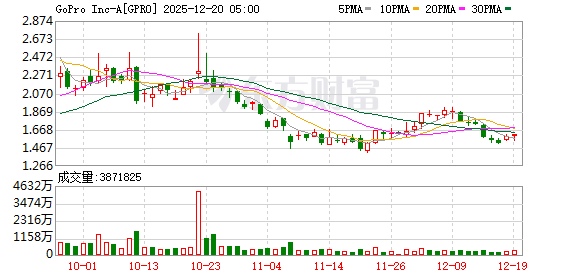
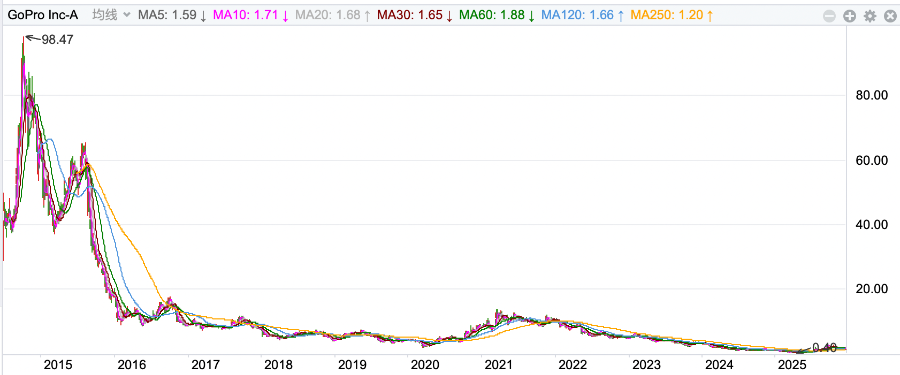
Core Insights - GoPro, once a dominant player in the action camera market, has seen its market value plummet by 98% from its peak, now standing at $256 million as of December 2025 [3][13] - The company’s market share has drastically decreased from over 75% to below 20%, while the handheld imaging device market continues to grow at a CAGR of 15.9% [3][11] - Competitors like Insta360 and DJI have emerged as strong players, capturing significant market share and redefining consumer expectations in the imaging sector [3][12] Company History and Evolution - GoPro was founded by Nick Woodman in 2004, inspired by a need to capture surfing experiences, leading to the creation of a new market for action cameras [1][6] - The company’s slogan "Be a Hero" became synonymous with its brand, appealing to extreme sports enthusiasts [2][6] - GoPro's revenue skyrocketed from $64 million in 2010 to $986 million in 2013, and it reached a market cap of $13 billion in 2014 [8] Market Dynamics and Competition - The rise of smartphones and the demand for user-friendly content creation tools shifted the market landscape, allowing competitors to capitalize on GoPro's stagnation [9][10] - Insta360 and DJI have introduced innovative products that cater to the evolving needs of consumers, such as 360-degree cameras and advanced stabilization technology [9][12] - GoPro's failure to innovate and adapt to changing consumer preferences has led to its decline, as it focused on minor updates rather than significant advancements [10][14] Financial Performance and Market Position - GoPro's market share in the action camera segment fell from 84% in 2022 to 18% in the first three quarters of 2025, while its share in the consumer-grade 360 camera market dropped from 21.5% in 2021 to 9.2% in 2023 [11][13] - The company has reported consecutive quarterly losses, with its stock price falling to $1.59 per share, reflecting a significant disconnect from its previous valuation [13][15] - Competitors like DJI and Insta360 have established themselves as market leaders, with DJI holding over 70% of the consumer drone market and Insta360 dominating the 360 camera space [12][15] Lessons and Future Outlook - The decline of GoPro serves as a cautionary tale about the importance of continuous innovation and market awareness [15][16] - Both DJI and Insta360 are investing heavily in research and development, with DJI allocating approximately 15% of its revenue to R&D, while Insta360 dedicates over 12% [15] - The competitive landscape in the imaging market is shifting, emphasizing the need for companies to remain agile and responsive to consumer demands [15][16]
GoPro的“英雄末路”
2 1 Shi Ji Jing Ji Bao Dao· 2025-12-22 06:11
Core Insights - GoPro, once a dominant player in the action camera market, has seen its market value plummet by 98% from its peak, now valued at only $254 million, with its global market share dropping from over 75% to less than 20% [7][16] - The handheld smart imaging device market continues to grow rapidly, with a compound annual growth rate (CAGR) of 15.9%, projected to reach $79.93 billion by 2030 [9] - Competitors like Insta360 and DJI have emerged as strong players, effectively pushing GoPro out of the main competitive landscape [9][18] Company Background - GoPro was founded by Nick Woodman in 2004, initially targeting extreme sports enthusiasts with a compact, durable, and waterproof camera [4][11] - The company experienced explosive growth, with revenues soaring from $64 million in 2010 to $986 million in 2013, and reaching a market cap of $13 billion in 2014 [12][13] Market Dynamics - The rise of smartphones and the popularity of short videos and vlogs shifted consumer demand from professional athletes to everyday users, who now seek features like stabilization and ease of editing [14] - Competitors like Insta360 and DJI have capitalized on these trends, introducing innovative products that meet the evolving needs of consumers [14][18] Strategic Missteps - GoPro's failure to innovate and adapt to market changes, including a disastrous entry into the consumer drone market with the Karma drone, led to significant financial losses and damage to its reputation [15][16] - The company's focus on minor updates to existing products rather than groundbreaking innovations allowed competitors to gain a foothold and surpass GoPro in market share [15][16] Current Status - As of Q3 2025, GoPro has reported consecutive quarterly losses, with its stock price significantly detached from its historical highs, trading at $1.59 per share [18][20] - The company has lost its competitive edge, with its market share in the action camera segment dropping from 84% in 2022 to 18% in 2025 [16][20] Lessons Learned - The decline of GoPro serves as a cautionary tale about the importance of continuous innovation and market awareness, highlighting that even market leaders can fall from grace if they become complacent [20][21]

大疆的“印钞机”,被手机厂商盯上了
虎嗅APP· 2025-12-21 03:05
Core Viewpoint - DJI stands out in the consumer electronics market by maintaining high profit margins while achieving significant market share in niche categories like drones and action cameras, unlike most competitors who are engaged in price wars and low margins [5][9]. Group 1: Market Position and Performance - DJI has consistently held over 70% market share in the consumer drone sector for the past decade, and it is projected to capture 66% of the action camera market by Q3 2025, a significant shift from GoPro's 84% in 2022 [5][9]. - The newly launched Osmo360 panoramic camera achieved a 49% market share in China and 43% globally within three months, significantly impacting the previous market leader [8]. - The Pocket series, particularly Pocket 3, is expected to sell over 5 million units in 2024, generating approximately 175 billion yuan in revenue, which is 3.5 times the total revenue of the previous market leader [19]. Group 2: Competitive Landscape - Major smartphone manufacturers like Vivo and OPPO are entering the handheld imaging market, with significant resources allocated to develop competing products, indicating a strategic shift in focus towards this segment [12][13]. - Xiaomi is also planning to launch a competitive product, aiming for a million units in sales, leveraging partnerships to enhance its market position [14]. Group 3: Unique Business Model - The success of Pocket 3 represents a departure from the typical low-margin, high-volume model prevalent in consumer electronics, achieving high pricing power and low competition [18]. - Pocket 3 has maintained a strong resale value, with second-hand prices remaining close to the original price, contrasting sharply with the typical depreciation seen in smartphones [19]. Group 4: Core Competencies and Barriers - DJI's competitive advantage lies in its advanced mechanical stabilization technology, which has been miniaturized for consumer use, making it difficult for competitors to replicate [24]. - The company has integrated its supply chain effectively, with most components being self-developed or customized, creating a barrier for new entrants [24]. Group 5: Strategic Adjustments - DJI has recently reduced the price of Pocket 3 to 2599 yuan, targeting younger consumers and Vloggers, while maintaining a profit margin that competitors find hard to match [27]. - The company is also expanding its distribution channels to reach a broader audience, indicating a shift towards making its products more accessible [27].

900亿巨头英雄末路,市值蒸发98%
2 1 Shi Ji Jing Ji Bao Dao· 2025-12-19 10:41
Core Insights - GoPro, once a leader in the action camera market, has seen its market value plummet by 98% from its peak, now valued at only $254 million [4][15] - The company has lost significant market share, dropping from over 75% to less than 20% in the action camera segment, while competitors like DJI and Insta360 are thriving [4][14] Company Overview - GoPro was founded by Nick Woodman in 2004, initially targeting extreme sports enthusiasts with a compact, durable camera that captured first-person perspectives [9][10] - The brand's slogan "Be a Hero" became synonymous with adventure and extreme sports, contributing to its early success [3][11] Market Dynamics - The global handheld imaging device market is growing rapidly, with a compound annual growth rate (CAGR) of 15.9%, projected to reach 79.93 billion yuan by 2030 [6] - Competitors DJI and Insta360 have emerged as strong players, capturing market share and innovating in ways that GoPro has struggled to match [6][15] Competitive Landscape - GoPro's market dominance was challenged by the rise of smartphones and the demand for more versatile imaging solutions, leading to a shift in consumer preferences [12][16] - DJI and Insta360 have successfully introduced innovative products that cater to the evolving needs of consumers, such as 360-degree cameras and advanced stabilization technology [12][14] Strategic Missteps - GoPro's failure to innovate and adapt to changing market demands has led to a decline in its competitive position, as it focused on less relevant areas like media and consumer drones [13][16] - The company's slow product iteration and reliance on its established Hero series have resulted in a loss of market relevance [13][14] Financial Performance - GoPro's revenue skyrocketed from $64 million in 2010 to $986 million in 2013, but has since declined significantly, with recent reports indicating ongoing losses [10][15] - As of December 19, GoPro's stock price was $1.59 per share, a stark contrast to its historical high of $93.85, reflecting its diminished market presence [15][18] Lessons Learned - The decline of GoPro serves as a cautionary tale about the importance of continuous innovation and market awareness in the tech industry [18] - The rise of DJI and Insta360 highlights the need for companies to remain vigilant and adaptable to avoid becoming obsolete [18]
科技消费崛起,大疆、影石争锋相对
2025-12-17 02:27
Summary of Key Points from Conference Call Records Industry Overview - The global consumer drone market is projected to reach approximately $4.27 billion in 2024, with an expected growth to $5.23 billion by 2030, reflecting a compound annual growth rate (CAGR) of about 3% [7][1] - The smart imaging device market, particularly the panoramic camera segment, is estimated to be around ¥6 billion, with a future CAGR of approximately 10% [11][1] Company Insights: DJI - DJI holds a dominant position in the global consumer drone market with a market share of 76%, covering over 170 countries. In the U.S., DJI's market share ranges from 70% to 90%, with an 80% share in agricultural drones [5][1] - DJI's competitive edge is attributed to its vertical integration of key technologies, including flight control systems, gimbal technology, and transmission systems, which create high technical barriers [1][9] - The company has continuously upgraded its transmission technology, evolving from public WiFi protocols to LightBridge and now to OcuSync 4.0, significantly enhancing transmission distance, anti-interference capabilities, and latency [1][10] - DJI's product lineup includes the Mini, Air, and Mavic series, targeting different market segments from entry-level to professional users [8][1] Competitive Landscape - DJI faces competition from Insta360 in the smart imaging market, with DJI capturing a 43% market share in panoramic cameras by Q3 2025, while Insta360's share has decreased to 49% [13][1] - In the action camera segment, DJI's Action 4 has significantly increased its market share to 66% by Q3 2025, challenging GoPro, which has historically led the market [13][1] - The sweeping robot market is highly concentrated, with leading brands like Roborock and Ecovacs. DJI's Romo series has underperformed due to high costs and lack of significant differentiation in obstacle avoidance technology [14][1] Emerging Trends - The rise of technology consumption in China is driven by technological innovation and the engineer dividend, contrasting with new consumption trends influenced by demographic changes and youth preferences [2][1] - The competition in the smart imaging market is expected to intensify, reminiscent of the 1980s when Japanese companies fiercely competed in handheld imaging devices [4][1] Additional Insights - DJI's entry into the sweeping robot market has been met with challenges, including high pricing and limited consumer acceptance of its design innovations [14][1] - The overall consumer drone market is expected to see increased penetration as technology matures and costs decrease, leading to sustained growth [7][1]