氢燃料电池

Search documents
对话淡马锡首席可持续发展官:在碳定价失衡与投资期限错配中,如何构建韧性投资组合
Xin Lang Cai Jing· 2025-11-04 05:50
Core Insights - The global sustainable investment landscape is facing dual challenges, including rising costs of green transition due to geopolitical tensions and declining enthusiasm for ESG investments in certain markets [1][3][4] Group 1: Investment Challenges and Strategies - The primary challenge for Temasek is the mispricing of climate risk and the mismatch in investment time horizons, which complicates the pursuit of financial returns while addressing climate change [3][4][14] - Temasek aims to halve net carbon emissions from its portfolio by 2030 and achieve net zero by 2050, which is particularly challenging given the high emissions from key sectors like aviation and energy [4][14] - The company employs a multi-faceted approach to tackle climate change, including engaging with portfolio companies, integrating ESG assessments into investment decisions, and applying an internal carbon price that is expected to rise from $65 to $100 per ton by 2030 [4][17][18] Group 2: Sustainable Investment Initiatives - Temasek is investing in carbon-efficient businesses and decarbonization solutions, such as renewable energy platforms and advanced technologies like long-duration storage and green ammonia [18][19] - The company has increased its investments in sustainable solutions in China, with the net portfolio value of such investments growing from 1% in 2016 to 11% (approximately S$46 billion) by March 2025 [20] - Temasek collaborates with ecosystem partners to drive systemic change and advance climate technologies, including supporting sustainable aviation fuel trials and participating in initiatives to enhance carbon market integrity [23][25] Group 3: Governance and Engagement - As a shareholder, Temasek does not manage day-to-day operations of portfolio companies but engages with their management to encourage policies that enhance long-term performance, particularly in ESG areas [21][22] - The company utilizes various platforms for knowledge sharing and collaboration among portfolio companies, focusing on those with significant transformation potential [22][24] - Temasek conducts ESG due diligence on all new investments and employs frameworks to manage material risks, ensuring alignment with sustainability goals [30][32]



美锦能源(000723.SZ):公司在氢燃料电池领域已形成较为完整的产业链布局
Ge Long Hui· 2025-11-03 07:49
Core Viewpoint - Meijin Energy has established a comprehensive industrial chain layout in the hydrogen fuel cell sector, covering key equipment such as gas diffusion layers, membrane electrodes, fuel cell stacks and systems, and vehicle manufacturing [1] Group 1: Industrial Chain and Capabilities - The company has formed a complete industrial chain in the hydrogen fuel cell field, which includes gas diffusion layers, membrane electrodes, fuel cell stacks and systems, and vehicle manufacturing [1] - Meijin Energy collaborates with multiple manufacturers in the fuel cell system area, allowing for flexible and customized solutions based on customer needs [1] Group 2: Market and Technology Focus - The company will continue to monitor the technological routes and market applications related to BMW's third-generation hydrogen fuel cell system [1]

零营收但估值超260亿美元?最严重的AI泡沫其实在能源股!
Hua Er Jie Jian Wen· 2025-10-15 11:59
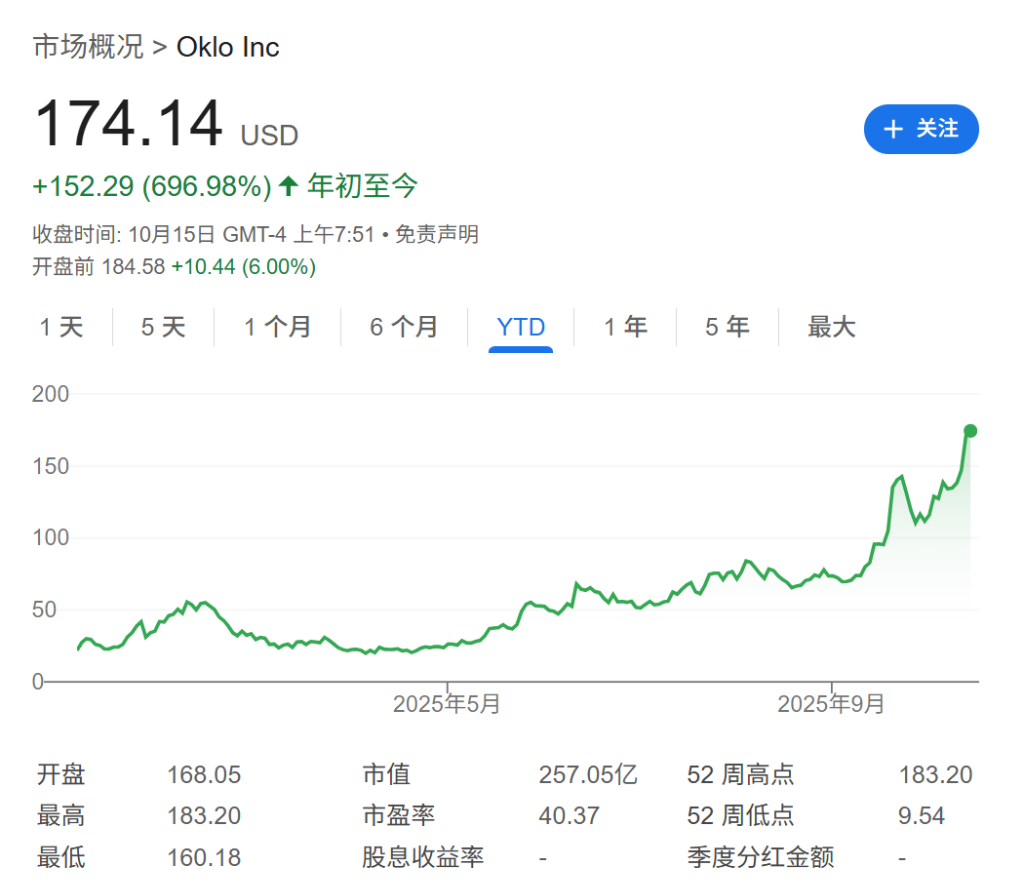
Core Viewpoint - The article highlights a speculative frenzy in the energy sector driven by artificial intelligence (AI), with several energy companies, despite having no revenue, seeing their valuations soar to unprecedented levels, totaling over $45 billion [1][6]. Group 1: Energy Companies and Valuations - Oklo, a nuclear startup supported by OpenAI's CEO Sam Altman, has seen its stock price increase approximately eightfold this year, reaching a market capitalization of $26 billion, making it the largest U.S. public company without revenue in the past 12 months [1]. - Another zero-revenue company, Fermi, had an initial valuation of around $19 billion upon its listing and currently maintains a market cap exceeding $17 billion, with only two other zero-revenue companies historically surpassing this valuation on their listing day [3]. - Other companies in the nuclear sector, such as Nano Nuclear Energy and Terra Innovatum, have also experienced significant market cap increases, with Nano's stock rising over 100% this year and a valuation exceeding $2 billion [7]. Group 2: Market Sentiment and Risks - The speculative wave reflects extreme optimism regarding future energy demands driven by AI, but these energy startups have little room for error, as they lack actual revenue to support their high valuations [6]. - Companies like NuScale Power and Plug Power, which have seen stock price increases of 155% and 90% respectively, still face challenges in achieving profitability before 2030 [8]. - The high valuations of established profitable companies may be driving investors towards these speculative startups, reminiscent of the electric vehicle startups that faced significant downturns after their initial hype [10].
市场低迷“手头紧” 亿华通向丰田转让合资公司股权
Jing Ji Guan Cha Wang· 2025-10-13 04:51
Core Viewpoint - The domestic hydrogen fuel cell leader, Yihuatong, is facing uncertainties in its strategic development due to tight operating capital, leading to project terminations, expanding losses, and equity transfers [2][3]. Financial Performance - In the first half of the year, Yihuatong reported a loss of 163 million yuan, an increase of 21.94 million yuan year-on-year, with a gross margin of -25%, down from 17% in the same period last year [3][4]. - The company's accounts receivable reached 1.478 billion yuan, and inventory was 161.3 million yuan, accounting for nearly 60% of total current assets [4]. Strategic Decisions - Yihuatong signed a share transfer agreement with Toyota, transferring its unfulfilled capital contribution of 950 million yen (approximately 44.81 million yuan) in the joint venture Huafeng Fuel Cell Co., reducing its stake from 50% to 35% [2][4]. - The decision to transfer shares was based on Huafeng's funding needs and Yihuatong's current operational situation and strategic development plans [2]. Industry Context - The hydrogen fuel cell industry is experiencing a decline in market demand, with a 46.8% year-on-year drop in sales of hydrogen fuel cell vehicles, totaling 1,373 units in the first half of 2025 [6]. - The industry is still in the early stages of research and commercialization, with significant funding needs and limited debt financing capabilities [3][6]. Joint Venture Dynamics - Huafeng Fuel Cell was established in June 2021 as a joint venture between Yihuatong and Toyota, each holding 50% of the shares, focusing on the production and sales of fuel cell systems [5]. - The joint venture is seen as a key pathway for Toyota's hydrogen fuel cell technology to enter the Chinese market, with a commercial model based on collaboration between Yihuatong and Toyota [5].


轻绿科技:预计2–3年内氢能单车将迎来实质性降本 | 势银调研
势银能链· 2025-10-09 03:32
Core Viewpoint - The article discusses the advancements and market potential of Sichuan Qinglv Technology Co., Ltd., a provider of small power hydrogen fuel cell systems, highlighting its innovative products and their implications for the hydrogen energy sector [3][4][6]. Group 1: Company Overview - Sichuan Qinglv Technology Co., Ltd. was established in 2022 and focuses on the research and industrial application of small power hydrogen fuel cell systems [4]. - The company has developed the "Qinglv H1v1" liquid-cooled hydrogen fuel cell system, which is among the first in China to achieve large-scale production in this niche [4][6]. Group 2: Product Features and Benefits - The hydrogen-powered vehicle developed by Qinglv Technology features a long lifespan and strong environmental adaptability, with a system design life exceeding 3,500 hours, allowing for nearly five years of operation without battery replacement [6]. - The vehicle can achieve a range of 100 kilometers with a hydrogen tank change taking only one minute, significantly reducing downtime and operational costs [6][8]. - The vehicle operates with zero carbon emissions, aligning with national carbon neutrality goals and benefiting from related policy subsidies in hydrogen energy demonstration cities [6][8]. Group 3: Market Challenges and Future Outlook - Despite the positive development momentum for hydrogen two-wheelers, challenges such as high core component costs and insufficient infrastructure coverage remain [7]. - The cost of green hydrogen production is expected to decrease significantly in the next 2-3 years, which may lead to a substantial reduction in the overall cost of hydrogen-powered vehicles [7]. - Qinglv Technology anticipates generating revenue of 100 million yuan by 2025, with 70% from two-wheeler business and 30% from low-altitude economy operations, which are currently focused on overseas markets [10]. Group 4: Hydrogen Drone Innovations - The hydrogen drone developed by Qinglv Technology utilizes a hydrogen bottle replacement method for refueling, which is simple and efficient, making it suitable for high-frequency operational scenarios [8][10]. - The drone features a power system that combines hydrogen fuel cells and lithium batteries, allowing for a hover time of over 6 hours and a maximum range of 200 kilometers, thus enhancing operational efficiency [10][11].

搭上AI快车!数据中心电力需求成新催化剂 Plug Power(PLUG)盘前再涨7%
智通财经网· 2025-09-23 13:25
Group 1 - Plug Power's stock price increased by 7% in pre-market trading, continuing a nine-day upward trend [1] - The stock closed up 21.7% at $2.65 on Monday, with a potential opening price of $2.84 if pre-market gains are maintained [1] - The company has a short interest ratio of 30.23% [1] Group 2 - Plug Power filed a supplemental prospectus for the potential resale of 185.43 million shares of common stock, which can be issued through warrant exercises [1] - The warrants were issued under an underwriting agreement signed on March 19, 2025, with an exercise price of $2.00 per share, expiring on March 20, 2028 [1] - If fully exercised, the company could raise $370.86 million, primarily for working capital and general corporate purposes [1] Group 3 - Over the past month, Plug Power's stock has risen nearly 59%, driven by increased market interest in data centers and artificial intelligence, which require substantial and reliable power supply [1] - Analyst Henrix Alex noted that recent insider buying and the extension/restoration of tax credit policies have contributed to the stock's price increase in recent months [1]

What's Happening With PLUG Stock?
Forbes· 2025-09-18 13:55
Core Viewpoint - Plug Power's stock has surged significantly due to renewed partnerships and potential growth in the hydrogen sector, but concerns about profitability and financial stability remain prevalent [2][7][12] Company Growth - Plug Power reported $174 million in Q2 revenue, a 21% increase from Q2 2024, driven by demand for its fuel cell and hydrogen infrastructure products [3] - Electrolyzer revenue tripled year-over-year to $45 million, indicating strong growth potential in this segment [3][7] - Despite recent quarterly growth, annual revenue declined by 1.7%, from $684 million to $673 million [3] Profitability Status - The company has incurred a net loss of $2.0 billion over the past four quarters, raising alarms about its cash burn rate [4][12] - Plug Power aims for gross margin neutrality by Q4 2025, but current financial metrics are concerning [4] Balance Sheet Strength - Plug Power has only $141 million in cash against total assets of $3.4 billion, indicating a minimal financial buffer [5] - The debt-to-equity ratio stands at 44.0%, significantly higher than the S&P 500's 20.9% [11] Market Resilience - The stock has shown vulnerability during market downturns, with a 95% drop in 2022 and significant declines during previous crises [6][11] - Currently trading around $2.00, the stock is far from its 2021 peak of $73 [6] Growth Drivers - The electrolyzer segment is a key growth driver, with anticipated expansion in hydrogen infrastructure and partnerships with companies like Uline and GH2 Global [7] - The extension of the agreement with Uline through 2030 is expected to enhance Plug's hydrogen network capacity [7] Valuation Assessment - Plug Power's price-to-sales ratio is 3.3, comparable to the S&P 500's 3.2, suggesting it is not overvalued despite recent stock performance [8] Investment Considerations - The investment scenario presents high risk and potential reward, with significant volatility observed in the past [10][12] - Investors are advised to consider their risk tolerance and the speculative nature of investing in Plug Power [12]
晋豫富豪“联姻”告吹,“氢能第一股”路在何方?
3 6 Ke· 2025-09-11 00:05
Core Viewpoint - Beijing Yihuatong Technology Co., Ltd., known as the "first hydrogen energy stock," has decided to terminate its major asset restructuring plan to acquire 100% equity of Danzhou Xuyang Hydrogen Energy Co., Ltd., marking a setback in its strategy to enhance the hydrogen energy industry chain [1][2]. Group 1: Company Overview - Yihuatong was founded by Zhang Guoqiang in 2012 and became the first domestic hydrogen energy stock listed on the Science and Technology Innovation Board in 2020, later achieving A+H listing in 2023 [3][4]. - The company has faced continuous financial losses since its listing, with cumulative losses exceeding 1 billion yuan from 2020 to the first half of 2025 [5][6]. Group 2: Financial Performance - In the first half of 2025, Yihuatong reported revenue of 71.93 million yuan, a year-on-year decline of 53.25%, and a net loss of 163 million yuan, an increase of over 40% compared to the previous year [5][6]. - The company's financial struggles are attributed to a significant drop in demand for hydrogen fuel cell vehicles, with production and sales down nearly 50% in the first half of 2025 [6]. Group 3: Market Challenges - The hydrogen fuel cell vehicle market is hindered by slow infrastructure development, high vehicle costs, and reliance on government subsidies, which have decreased significantly, exposing Yihuatong's operational vulnerabilities [6][7]. - The company has also experienced a significant reduction in its R&D team, from 346 members in 2024 to 128 in the first half of 2025, raising concerns about its technological capabilities [7]. Group 4: Industry Context - The hydrogen energy industry in China faces common challenges, including high production costs for hydrogen fuel cell vehicles and slow construction of hydrogen refueling stations, which limits market acceptance [8]. - Yihuatong's experience reflects the broader difficulties in the hydrogen energy sector, emphasizing the need for a sustainable business model and balance between R&D investment and commercial viability [8].
688339,终止重大资产重组
Zhong Guo Ji Jin Bao· 2025-09-05 16:17
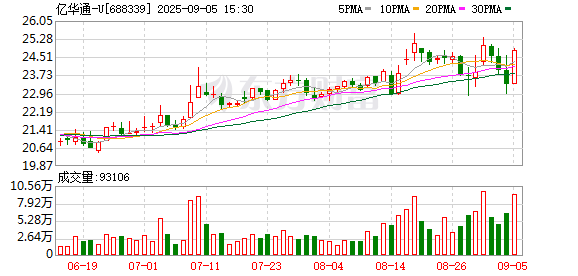
Core Viewpoint - Yihuatong announced the termination of the acquisition of 100% equity in Danzhou Xuyang Hydrogen Energy Co., Ltd. due to the inability to reach a final agreement with the transaction party, which was expected to enhance the company's hydrogen energy industry chain layout [2][7]. Group 1: Termination of Acquisition - The decision to terminate the acquisition was made after careful consideration and communication with the transaction party, and it is not expected to have a significant adverse impact on the company's operations and financial status [5]. - The acquisition was initially aimed at improving Yihuatong's position in the hydrogen energy industry, as Xuyang Hydrogen Energy is the largest hydrogen supplier in the Beijing-Tianjin-Hebei region [7]. Group 2: Departure of Key Personnel - Core technical personnel Yang Shaojun has left the company due to personal reasons, and he will no longer hold any position within the company [10]. - Following Yang's departure, the number of core technical personnel at Yihuatong has decreased to four, and the company claims that its R&D team structure remains intact and capable of supporting ongoing projects [10]. Group 3: R&D Personnel and Financial Performance - Yihuatong has seen a significant reduction in R&D personnel, from 346 in 2024 to 156, and further down to 128 in the first half of 2025, with the proportion of R&D staff in the total workforce dropping from 32.89% to 21.62% [12]. - The company has reported continuous losses, with net profits attributable to shareholders of -167 million yuan in 2022, -243 million yuan in 2023, and -456 million yuan in 2024 [12]. - In the first half of 2025, Yihuatong's revenue was 71.93 million yuan, a decrease of 53.25% year-on-year, and the net profit attributable to shareholders was -163 million yuan, indicating an increase in losses [15].
688339,终止重大资产重组
中国基金报· 2025-09-05 16:13
Core Viewpoint - Yihuatong has decided to terminate the major asset restructuring plan to acquire 100% equity of Danzhou Xuyang Hydrogen Energy Co., Ltd. due to the inability to reach a consensus on the final transaction plan with the counterparty [1][8]. Group 1: Termination of Restructuring - The termination of the transaction is not expected to have a significant adverse impact on the company's production operations and financial status [5]. - The restructuring was initially anticipated to enhance Yihuatong's layout in the hydrogen energy industry chain and improve business synergy [7][8]. Group 2: Departure of Key Personnel - Core technical personnel Yang Shaojun has left the company due to personal reasons, and he will no longer hold any position within Yihuatong [11]. - Following Yang's departure, the number of core technical personnel at Yihuatong is now four, and the company claims that its R&D team structure remains intact and capable of supporting ongoing projects [11]. Group 3: R&D Personnel and Financial Performance - Yihuatong has seen a significant decline in the number of R&D personnel, dropping from 346 in 2024 to 156, and further to 128 in the first half of 2025 [12][14]. - The total compensation for R&D personnel has also decreased, with the average salary rising from 25.17 thousand to 33.26 thousand, indicating a focus on cost management amid ongoing losses [13][14]. - The company reported a net profit attributable to shareholders of -1.67 billion, -2.43 billion, and -4.56 billion from 2022 to 2024, reflecting continuous financial struggles [14].