
粮食行业

Search documents
粮食年产量稳定在1.3万亿斤以上,高标准粮仓仓容逐年增加 国家粮食安全得到有效保障(权威发布·高质量完成“十四五”规划)
Ren Min Ri Bao· 2025-10-14 22:04
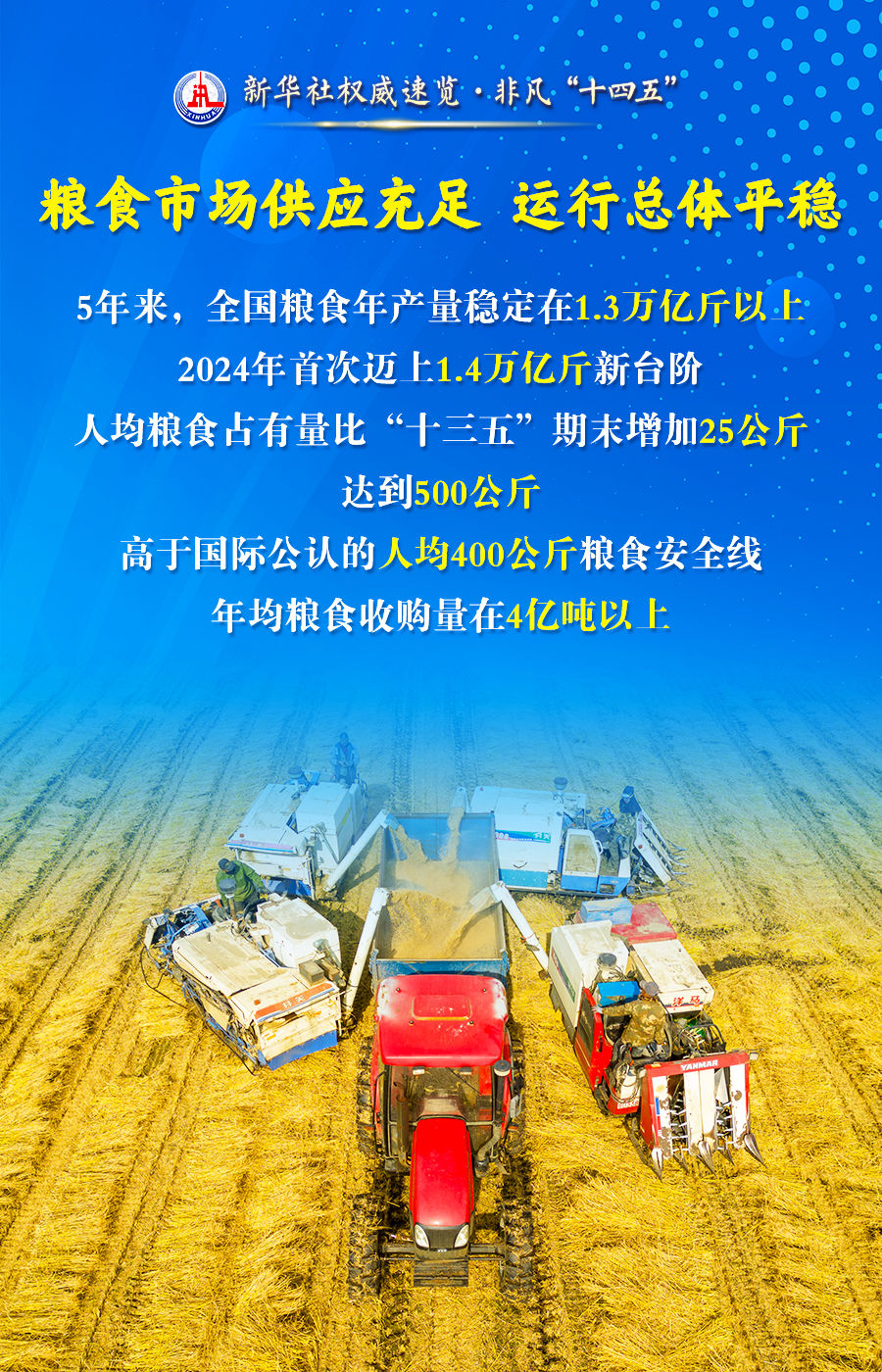
Core Viewpoint - The "14th Five-Year Plan" period has seen significant progress in China's grain circulation reform and development, ensuring national food security and supporting high-quality economic and social development [1][2]. Grain Production and Supply - During the "14th Five-Year Plan" period, China's annual grain production remained stable at over 1.3 trillion jin, with a projected increase to 1.4 trillion jin in 2024, resulting in a per capita grain availability of 500 kg, surpassing the international safety line of 400 kg [2]. - The average annual grain purchase volume exceeded 400 million tons, with measures taken to optimize services for farmers and enterprises [2]. Grain Storage and Management - The grain storage capacity has significantly improved, with the total capacity of standard grain warehouses exceeding 730 million tons, an increase of 58 million tons compared to the end of the "13th Five-Year Plan" [2]. - The implementation of advanced storage technologies has led to a shift towards high-quality development in grain storage management [4]. Emergency Response and Supply Chain - A comprehensive grain emergency response system has been established at national and local levels, with the number of emergency processing enterprises increasing by 26% to 6,872 [5]. - Daily processing capacity for emergency grain oil has risen by 48% to 1.78 million tons, ensuring sufficient supply for urban markets [5]. Quality Standards and Consumer Safety - Over 100 national standards and 50 industry standards related to grain quality have been revised since 2021, emphasizing green, high-quality, and nutritious food [6]. - The quality inspection system has been strengthened, ensuring the overall safety of stored grain and oil [6]. Industry Development and Investment - Since 2021, the Ministry of Finance and the National Grain and Reserves Administration have invested 46.2 billion yuan, attracting over 84 billion yuan in social investment for more than 8,400 projects aimed at enhancing the grain industry [7]. - The promotion of healthy consumption of grain and oil is being emphasized, with initiatives to increase public awareness of whole grains and healthy dietary practices [7].
新华社权威速览丨一组数据看牢牢端稳的“中国饭碗”
Xin Hua She· 2025-10-14 11:44
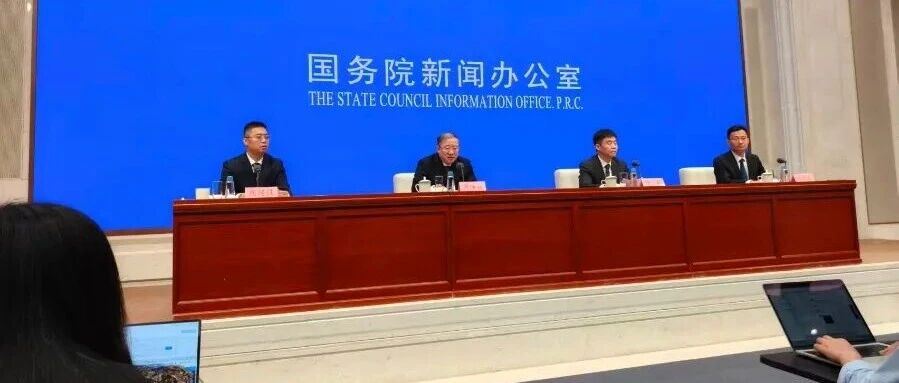
新华社权威速览 粮食市场供应充足、运行总体平稳 5年来,全国粮食年产量稳定在1.3万亿斤以上 2024年首次迈上1.4万亿斤新台阶 人均粮食占有量比"十三五"期末 增加25公斤,达到500公斤 做到了谷物基本自给、口粮绝对安全 年均粮食收购量在4亿吨以上 粮食流通保障能力大幅提升 · 全国粮食标准仓房完好 仓容超7.3亿吨 比"十三五"期末增加5800万吨 · 具备低温准低温储藏能力 仓容达到2.2亿吨 比"十三五"期末增加7000万吨 · 2024年全国粮食企业工业 总产值超过4万亿元 我国储粮技术总体处于世界较先进水平 组数据看年年端稳的 "中国饭碗" 国新办10月14日举行"高质量完成'十四五' 规划"系列主题新闻发布会。国家粮食和物资储备 局有关负责人介绍"十四五"时期粮食流通改革发 展成效。 26个部级粮食技术创新中心和重点实验室 以及百余个地方研发创新平台 启动实施绿色储粮技术集成应用示范 已建立30个技术应用示范点 将逐步增加到100个,覆盖7个储粮生态区 粮食行业高技能人才占技能劳动 者比例达到36.7% 我国粮食应急保障能力不断提升 ↑ 各级粮食应急加工企业由5448家增加到 6872家,增 ...


农户储粮损失率较10年前降5%
21世纪经济报道· 2025-10-14 06:45
记者丨李莎 秦玉云进一步分析称,粮食流通节约减损取得的成效主要体现在四个方面。 一是节粮减损制度更加完善。 《粮食节约行动方案》、《粮食节约和反食品浪费行动方案》的出台,对粮食全链条节 约减损作了顶层设计和统一部署。在操作层面,《关于粮食节约减损的指导意见》、《粮食产后节约减损行动方案》 等一批配套文件出台,工作举措不断细化实化,政策引领效应逐步释放。 二是粮食储存减损更加有效。 在农户储粮方面,全国主要产粮大县建成了一批粮食产后服务中心,主要提供粮食干 燥、清理、收储等服务。同时,结合不同区域的农情粮情和农民意愿,加强农户储粮技术服务和指导,大力推广科学 储粮装具。在粮库储粮方面,大力推进现有仓房的升级改造和功能提升,粮情检测、机械通风、环流熏蒸、谷物冷 却"四合一"储粮技术,目前在粮库已经广泛普及应用。粮仓的气密性、隔热性等关键性能指标进一步提升。同时,控 温、气调、有害生物综合防治等绿色储粮技术应用比例大幅提升。总体看,我国粮食储存管理正在由安全储粮、减损 降耗迈向绿色优储、保质保鲜的高质量发展阶段。 编辑丨李博 视频丨 陈泽锴 近年来,经过各地各有关方面的共同努力,粮食流通领域节约减损取得了显著成效。 ...
新华社权威速览·非凡“十四五”|保障国家粮食安全,他们这样干!
Xin Hua She· 2025-10-14 05:33
Group 1 - The core viewpoint emphasizes the importance of food security during the "14th Five-Year Plan" period, highlighting the effective implementation of the national food security strategy and its support for high-quality economic and social development [1][3]. - The management system for grain purchasing, sales, and reserves has made significant progress, with improved institutional guarantees and clearer responsibilities for grain reserve enterprises [3][7]. - The capacity for grain circulation has been significantly enhanced, with national grain standard storage capacity exceeding 730 million tons and low-temperature storage capacity reaching 220 million tons [5]. Group 2 - The transformation in grain management and storage methods has entered a new phase characterized by comprehensive legal governance and information-based supervision, with the implementation of the Food Security Guarantee Law [7]. - A robust emergency grain supply system has been established, comprising emergency storage, processing enterprises, and distribution centers, with the total industrial output value of national grain enterprises expected to exceed 4 trillion yuan in 2024 [5].
俄乌战争导致欧洲粮荒,欧洲将矛盾指向中国:为何不卖粮食?
Sou Hu Cai Jing· 2025-10-13 11:01
Core Insights - The Russia-Ukraine conflict has severely impacted global grain supply, with Ukraine being a major exporter, accounting for one-fourth of global grain exports. The conflict led to a significant drop in Ukraine's grain output, with a reduction of 27 million tons in the first year, causing global wheat prices to surge by over 20% [1][3] - The European agricultural sector has become increasingly reliant on imports, with over 70% of grain consumption coming from imports. The conflict has exacerbated food prices, leading to a food crisis in poorer countries, particularly in Africa and the Middle East, where millions are facing hunger [3][5] - India's sudden ban on wheat exports in May 2022, due to domestic crop failures, further strained the global wheat market, causing prices to jump by 10%. This ban highlighted the interconnectedness of global food supply chains and the challenges faced by Europe in securing alternative sources [5][7] - China, holding the largest global grain reserves, has faced criticism from Western media for not releasing its reserves to stabilize prices. However, China's grain import strategy has been consistent, with a 15% decrease in wheat imports in 2022 compared to previous years [7][10] - The Black Sea grain agreement, signed in 2023, allowed for the export of 27 million tons of grain, providing some relief to global prices. However, ongoing tensions and intermittent blockades continue to threaten food security, with prices remaining 15% higher than pre-war levels [13][15] Group 1 - The Russia-Ukraine conflict has led to a significant reduction in global grain supply, with Ukraine's grain output dropping by 27 million tons [1] - Global wheat prices surged by over 20% due to the conflict, impacting food security in Europe and beyond [1][3] - The European agricultural sector's reliance on imports has increased, with over 70% of grain consumption coming from imports [3] Group 2 - India's wheat export ban in May 2022 caused a 10% spike in wheat prices, highlighting the fragility of global food supply chains [5][7] - China holds the largest grain reserves globally, facing criticism for not releasing them to stabilize prices, despite a decrease in wheat imports in 2022 [7][10] - The Black Sea grain agreement provided temporary relief, but ongoing tensions have kept prices elevated, with a 15% increase compared to pre-war levels [13][15]
2025年8月中国粮食进出口数量分别为1409万吨和22万吨
Chan Ye Xin Xi Wang· 2025-10-06 02:15
Core Viewpoint - The report by Zhiyan Consulting highlights a decline in China's grain import and export activities in August 2025, indicating potential shifts in the market dynamics of the grain industry in China [1]. Import Data Summary - In August 2025, China's grain import volume was 14.09 million tons, representing a year-on-year decrease of 5.7% [1]. - The import value for the same period was $6.071 billion, which reflects a year-on-year decline of 10.6% [1]. Export Data Summary - In August 2025, China's grain export volume reached 220,000 tons, showing a year-on-year increase of 7.1% [1]. - The export value during this period was $10.2 million, which indicates a year-on-year decrease of 11.2% [1]. Industry Insights - Zhiyan Consulting is recognized as a leading industry consulting firm in China, specializing in in-depth industry research and providing comprehensive consulting services to support investment decisions [1].

“粮食安全看山东”之曲阜:打造区域粮食安全新格局
Zhong Guo Fa Zhan Wang· 2025-09-29 07:34
Core Viewpoint - The city of Qufu in Shandong Province is implementing measures to enhance food security, focusing on grain management, storage reforms, and market circulation to strengthen the regional food security foundation [1][2][3] Group 1: Food Security Management - Qufu has established a comprehensive reserve management system, ensuring the safety of grain reserves with a total storage capacity of 90,000 tons, including wheat, flour, and soybean oil [1] - The city has developed several management regulations to enhance the quality and safety of local reserves, including the "Qufu Local Reserve Grain Quality Safety Management Measures" [1] Group 2: Grain Purchase and Storage Policies - The city prioritizes summer grain purchases, organizing discussions to analyze market conditions and mobilizing various purchasing entities to ensure compliance with national grain purchase policies [2] - Qufu has successfully completed annual reserve grain rotation and implemented quality grain projects to support the development of the grain industry, enhancing brand influence through participation in national events [2] Group 3: Emergency Response and Market Regulation - Qufu is strengthening its emergency food supply system, ensuring that emergency processing, storage, and distribution enterprises operate effectively to maintain necessary stock levels [3] - The city is intensifying market supervision and enforcement of food safety laws, employing various inspection methods to combat illegal activities that harm farmers and disrupt the grain market [3]
“粮食安全看山东”之济宁:全方位夯实粮食安全根基
Zhong Guo Fa Zhan Wang· 2025-09-29 07:25
Core Viewpoint - The Jining Development and Reform Commission is focusing on ensuring food security and promoting high-quality development, leading to significant improvements in food safety and macro-control capabilities in the region [1]. Group 1: Food Security and Political Responsibility - The city emphasizes the importance of land protection and food security, establishing a robust mechanism for coordination and implementation [1]. - Since 2016, Jining has maintained an excellent rating in provincial food security assessments, with no deductions in the food security performance indicators [1]. Group 2: Macro-Control and Storage Capacity - Jining has 40 local grain storage facilities, ranking second in the province, with a significant increase in macro-control capabilities for the grain market [2]. - The city has optimized its grain storage layout and variety structure, achieving full coverage of grain types for storage [2]. Group 3: Market Stability and Regulation - The city has initiated special actions for grain market regulation, enhancing administrative enforcement and ensuring effective supervision [3]. - A total of 64 inspections have been conducted during the summer grain purchasing period, ensuring smooth operations [3]. Group 4: Emergency Supply Capacity - Jining has established a comprehensive emergency supply network with 275 grain emergency guarantee enterprises, covering urban and rural areas [4]. - The city has met the storage standards for disaster relief materials, continuously improving its emergency supply capabilities [4]. Group 5: Economic Growth in Grain Industry - The city has 89 registered grain and oil processing enterprises, with significant revenue generation from leading companies [4]. - Jining has successfully applied for provincial demonstration projects and funding for grain processing equipment updates [4]. Group 6: Modernization of Storage Facilities - Jining has developed a comprehensive grain storage system, with a reduction in storage loss rates to 0.4%, better than the provincial average [5]. - The city has implemented remote monitoring for all storage facilities, enhancing the safety and management of grain storage [5]. Group 7: Food Safety and Quality Monitoring - The city has established a monitoring system for food quality safety risks, ensuring compliance with quality inspection protocols [6]. - Regular inspections have confirmed the stability of grain quality in storage, with all stocks deemed suitable for storage [6]. Group 8: Future Development Plans - Jining aims to enhance its food and material reserve safety system, focusing on high-quality development and effective regulation [7]. - The city plans to strengthen safety training and awareness in the grain industry to ensure ongoing improvements in safety production [7].
第五届郑州·中国好粮油产品及机械设备技术交易大会开幕
Zheng Zhou Ri Bao· 2025-09-12 00:52
Group 1 - The fifth Zhengzhou China Good Grain and Oil Products and Machinery Equipment Technology Trade Conference opened on September 11, focusing on "Empowering the Grain Industry Chain with Technology and Leading High-Quality Development with Green Initiatives" [1] - The conference lasts for three days and attracts leading enterprises, research institutions, and international buyers from the grain industry, featuring over 300 exhibitors across six major exhibition areas [1][2] - The event includes various activities such as grain industry development forums, product promotion meetings, and international procurement matchmaking, aiming to create new opportunities for shared development in the grain industry [1] Group 2 - The conference is a significant initiative by Henan Province to implement the "High-Quality Grain Project," promoting six enhancement actions including green storage and quality traceability [2] - The goal is to achieve a coordinated development of the industry chain, value chain, and supply chain, producing more high-quality grain and oil products to meet consumer demand [2] - The event aims to enhance inter-provincial and regional grain and oil trade cooperation, showcasing the development level of the grain industry and the achievements of the high-quality grain project [2]
2025年7月中国粮食进出口数量分别为1406万吨和21万吨
Chan Ye Xin Xi Wang· 2025-09-03 01:30
Group 1 - The core viewpoint of the report indicates that China's grain import volume in July 2025 reached 14.06 million tons, representing a year-on-year increase of 1.1%, while the import value was $5.927 billion, showing a year-on-year decrease of 1% [1] - In July 2025, China's grain export volume was 210,000 tons, which is a year-on-year increase of 25.2%, and the export value was $10.7 million, reflecting a year-on-year increase of 15.3% [1] Group 2 - The data for the past year regarding China's grain import and export situations is compiled and presented in statistical charts, sourced from China Customs and organized by Zhiyan Consulting [2] - Zhiyan Consulting is recognized as a leading industry consulting firm in China, specializing in in-depth industry research reports, business plans, feasibility studies, and customized services, providing comprehensive industry solutions to empower investment decisions [2]
