
资源回收利用

Search documents
国家发展改革委表示 今年将牵头制定循环经济发展“十五五”规划
Zhong Guo Zheng Quan Bao· 2026-01-13 21:03
周海兵还表示,今年国家发展改革委将牵头制定循环经济发展"十五五"规划,明确重点领域循环经济发 展目标任务,部署传统再生资源、稀贵金属、"新三样"固体废物等回收利用重点举措。 明确重点领域循环经济发展目标任务 加强固体废物综合治理,是推进美丽中国建设、加快经济社会发展全面绿色转型的重要举措。 行动计划着力填补关键环节制度空白。周海兵介绍,比如,在夯实监管基础方面,针对固废污染底数不 清的问题,要求加强全生命周期信息化监管,完善大宗固废和再生资源指标统计调查制度。在拓宽消纳 渠道方面,针对大宗固废井下充填、矿坑回填、生态修复等规模化消纳利用渠道不畅的问题,提出建立 统一规范的管理制度,稳妥有序探索大宗固废规模化消纳利用渠道。在加强要素保障方面,针对循环利 用项目用地保障不足的问题,要求各地安排不少于1%的产业用地支持资源循环利用设施建设等。 国务院新闻办公室1月13日举行国务院政策例行吹风会,介绍《固体废物综合治理行动计划》有关情 况。国家发展改革委副主任周海兵在会上表示,行动计划是我国首个针对固体废物综合治理作出系统性 部署的专项文件,着力填补关键环节制度空白,提高针对性、创新性、有效性,推动解决困扰行业多年 ...
高质量发展蓝皮书:打通社区、县域回收节点“最后一公里”
Zhong Guo Jing Ji Wang· 2026-01-12 12:58
Core Viewpoint - The "High-Quality Development Blue Book: China Economic High-Quality Development Report (2025)" indicates that China's economic high-quality development index is projected to reach 40.52 in 2024, representing a 24.95% increase since 2015. The report emphasizes the importance of a modern recycling system as a foundational project for promoting resource recycling and the exchange of old consumer goods for new ones [1]. Group 1: Recycling Infrastructure - The report suggests improving the last mile of recycling networks by establishing smart recycling stations in urban areas, equipped with features like automatic identification, weighing, and point redemption for various categories of recyclables [1]. - In rural areas, it recommends building centralized sorting centers to address the scattered nature of recycling points, ensuring effective collection and processing of old items [1]. Group 2: Digital Upgrades - The recycling network should undergo a digital transformation, utilizing AI visual recognition systems to automate the assessment of recyclable items and their value, thereby minimizing human intervention [2]. - The integration of IoT tracking chips will provide each recycled item with a "digital ID," ensuring traceability throughout the recycling process [2]. Group 3: Legal and Regulatory Framework - There is a need to enhance the legal and regulatory framework for recycling, with companies being held accountable for the entire lifecycle of their products [3]. - The establishment of an Extended Producer Responsibility (EPR) system is recommended, which would set recycling rate targets for different product categories and monitor compliance through big data platforms [3]. Group 4: Consumer Engagement - To boost consumer participation in recycling programs, the report suggests incorporating recycling actions into carbon accounts, allowing residents to earn carbon credits that can be exchanged for public services or tax deductions [4]. - It also advocates for the standardization of second-hand goods trading and the establishment of certification mechanisms for refurbished products to enhance consumer trust and participation [4].
绿金周报0112|小米雷军:特斯拉确实强 但并非不可战胜 AI驱动全球核电需求增长
Xin Lang Cai Jing· 2026-01-12 02:30
Group 1: Solid-State Battery Innovation - Donut Lab introduced the world's first mass-producible solid-state battery, achieving an energy density of 400Wh/kg and a fast charging time of 10 minutes [1] - The Verge electric motorcycle, equipped with this battery, is set for user delivery this year, although the technology faces scrutiny over data verification and aggressive production expansion [1] Group 2: Industry Regulation and Collaboration - The Ministry of Industry and Information Technology (MIIT) held a meeting with multiple agencies to address issues in the power and energy storage battery industry, focusing on capacity control, price stabilization, and patent protection [1][2] - The meeting included 16 companies, primarily leaders in the power and energy storage battery sectors, indicating a collaborative effort to regulate industry competition [2] Group 3: Market Developments in Energy Storage - Shenzhen-based Yuanxin Energy submitted a listing application to the Hong Kong Stock Exchange and completed a 200 million RMB equity financing round, with a post-financing valuation of approximately 2 billion RMB [3] Group 4: Nuclear Power and AI Influence - AI is driving a significant increase in global nuclear power demand, with over 63% of surveyed investors considering AI-related consumption a structural change in electricity demand [4] Group 5: Advancements in Solar Technology - Research teams from Xiamen University and Xi'an Jiaotong University developed a new method to enhance the stability of perovskite solar cells, addressing critical defects that affect performance [5][6] Group 6: Future Energy Initiatives - Beijing Economic-Technological Development Area plans to establish a "Future Energy Town" focusing on new energy storage, clean energy, low-carbon transition, and fusion energy [7] Group 7: Electric Vehicle Market Adjustments - General Motors announced a $6 billion impairment charge to terminate certain electric vehicle investments, influenced by market demand fluctuations and policy changes [8] - Geely Holding Group projected a total sales volume of 4.116 million vehicles in 2025, with a 26% year-on-year increase, driven by a 58% growth in new energy vehicle sales [8] Group 8: Carbon Capture and Utilization Standards - China Huaneng Group released three national standards in the CCUS field, covering the entire process from carbon capture to geological storage, marking a significant advancement in carbon asset development [10] Group 9: Circular Economy Initiatives - Greeenme's project for recycling end-of-life vehicles received a carbon reduction certification, marking a significant achievement in carbon asset development [12] - The "Love Recycling" initiative reported a recycling volume of 945,000 tons in 2025, reflecting a 40% increase from the previous year [13]
华新环保:公司不同项目可提炼金属不同,涵盖有色金属、贵金属等
Mei Ri Jing Ji Xin Wen· 2026-01-07 01:13
Core Viewpoint - The company, Huaxin Environmental (301265.SZ), has indicated that it can extract various metal materials through different projects, including non-ferrous metals and precious metals [1] Group 1 - The company has a diverse capability in metal extraction, covering both non-ferrous and precious metals [1]
生态环境部:“十五五”时期将推动约200个城市开展“无废城市”建设
Zhong Zheng Wang· 2026-01-06 09:25
生态环境部科技与财务司司长王志斌1月6日在国新办新闻发布会上表示,生态环境部会同财政部大力支 持规范拆解处理废旧家电,2025年中央财政累计投入50亿元,处理了约1亿台废旧电器,累计产出超300 万吨再生资源,有效促进了资源循环利用和行业绿色低碳发展。 "今后,生态环境部还将进一步高标准推进'无废城市'建设,畅通废弃物回收再利用循环,助力绿色消 费发展。'十五五'时期,将推动200个左右城市开展'无废城市'建设,让群众能够切身感受建设成果,厚 植中国式现代化的绿色底色。"王志斌说。 ...
*ST清研:公司目前未持有矿产资产
Mei Ri Jing Ji Xin Wen· 2026-01-05 04:00
Core Viewpoint - The company, *ST Qingyan (301288.SZ)*, does not currently hold any mineral assets and focuses on hazardous waste disposal services and metal resource recovery [1] Group 1: Company Operations - The company's resource utilization business is primarily conducted through its subsidiary, Fujian Tonghai Nickel Industry Technology Co., Ltd., which collects and disposes of hazardous waste from enterprises [1] - The company employs mature pyrometallurgical processes to treat various industrial solid wastes containing metals such as nickel, chromium, copper, and iron, ensuring harmless disposal and recovery of metal resources [1] - The company produces alloy metals and other resource products for external sales [1]


格林美:目前,回收铜的库存量在公司总库存中占比有限
Mei Ri Jing Ji Xin Wen· 2026-01-04 10:33
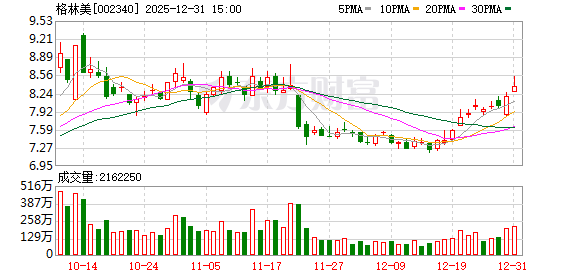
每经AI快讯,有投资者在投资者互动平台提问:请问贵公司铜库存量如何? (文章来源:每日经济新闻) 格林美(002340.SZ)1月4日在投资者互动平台表示,公司从动力锂电池与报废汽车、电子废弃物等业 务中回收的金属铜,主要作为金属原料直接对外销售。目前,该部分铜的库存量在公司总库存中占比有 限,不构成重大影响。 ...

饮料纸基复合包装资源化利用超四成
Jing Ji Ri Bao· 2026-01-02 10:00
Core Viewpoint - The beverage paper-based composite packaging industry is crucial for promoting resource recycling and achieving carbon neutrality goals, with significant progress made in the producer responsibility extension system trial by 2025 [1][2][3] Group 1: Industry Developments - The beverage paper-based composite packaging is one of the four product categories in the pilot program for the producer responsibility extension system, emphasizing green management as a key element for resource recycling [1] - By 2025, the industry aims to achieve a 40% resource utilization rate, with significant advancements in responsibility practices, including the establishment of management systems and data verification frameworks [1] - The industry has seen a positive ecosystem with increasing participation from companies in recycling and utilization efforts [1] Group 2: Collaborative Efforts and Innovations - The beverage paper-based composite packaging recycling committee has developed a self-regulatory model based on target-setting, aligning with the core requirements of the producer responsibility extension system [2] - The committee has implemented a set of standards for selecting recycling enterprises, with 11 companies recognized as exemplary in the third evaluation of recycling enterprises [2] - The industry is experiencing multiple opportunities due to policy support, technological breakthroughs, and market demand as the circular economy strategy deepens [2] Group 3: Market Dynamics and Challenges - The annual recycling volume of beverage paper-based composite packaging in China is approximately 200,000 tons, while the total recycled paper utilization is 75 million tons, indicating a significant gap in supply for downstream paper product manufacturers [3] - The high-value utilization of paper fibers from composite packaging presents an opportunity for the industry, as these fibers possess strong toughness and can meet specific application requirements [3] - The industry faces challenges in enhancing recycling motivation, which can be addressed by increasing the end value of recycled materials [3] Group 4: Recommendations and Future Directions - Recommendations include macro policy guidance and tax adjustments to enhance the front-end recycling system, promoting sustainable industry development [4] - Technical breakthroughs and standardization are essential, with suggestions to improve fiber yield and polymer single-material design to address recycling difficulties [4] - The industry's practices demonstrate the potential of the circular economy, with future growth driven by policy collaboration, technological innovation, market dynamics, and social participation [4]
废弃奶盒不能一烧了之!循环经济带来新商机
2 1 Shi Ji Jing Ji Bao Dao· 2025-12-31 07:09
Core Viewpoint - The high-value utilization of discarded beverage paper packaging, particularly milk cartons, is becoming increasingly important as the industry seeks to improve recycling rates and economic viability, driven by government policies and market demands [2][10]. Group 1: Market Dynamics - The market price for corrugated paper is around 3000 yuan per ton, while recycled high-quality paper products made from discarded milk cartons can reach 5000 yuan per ton, indicating a significant economic opportunity [1]. - Currently, approximately 20 million tons of beverage paper-based composite packaging are recycled annually in China, which is small compared to the national recycled paper utilization of 75 million tons, limiting cost advantages for downstream paper product manufacturers [4]. - The industry faces challenges such as small recycling volumes, insufficient back-end utilization value, and profitability issues for recycling enterprises [2][4]. Group 2: Technological and Operational Challenges - High-value utilization involves effectively separating discarded beverage paper packaging into high-purity pulp, plastic, and aluminum, which is essential for enhancing recycling efficiency [3]. - The quality of recycled materials is fundamental for high-value utilization, necessitating modern and intelligent sorting systems to ensure high-quality supply to brand partners [7][8]. - Current sorting capabilities are inadequate, and while fine sorting increases utilization value, it requires significant investment that may not align with practical recycling scenarios [9]. Group 3: Policy and Economic Considerations - The integration of policy guidance and market-driven approaches is crucial for the sustainable development of high-value utilization [6]. - The shift in thinking towards a business-centric model emphasizes the economic feasibility of circular economies, ensuring that recycling efforts are economically viable [5]. - The implementation of the "Solid Waste Ten Measures" is expected to improve solid waste management and facilitate the establishment of a unified regulatory system, enhancing data collection and analysis for better recycling practices [9].