电池包

Search documents
晨光电机(920011):微特电机国家级小巨人,募投拟扩建永磁无刷电机及系统等产能:晨光电机(920011.BJ)
Hua Yuan Zheng Quan· 2026-03-24 06:59
Group 1 - The investment rating for the company is to "pay attention" [2][3] - The company is a national-level "little giant" in micro-special motors, with a net profit attributable to the parent company of 67.77 million yuan for Q1-Q3 2025, representing a year-on-year increase of 30% [12][39] - The company specializes in the research, production, and sales of micro-special motors, primarily used in cleaning appliances such as vacuum cleaners, and has established stable business relationships with numerous manufacturers [12][36] Group 2 - The global micro-special motor market size reached 49.3 billion USD in 2024 and is expected to grow to 66.4 billion USD by 2029, with a compound annual growth rate (CAGR) of 5.76% [44][48] - The domestic micro-special motor market in China is projected to grow from 16.7 billion USD in 2020 to 34.3 billion USD by 2029, with a CAGR of 8.29% [51][53] - The company plans to invest 490 million yuan in expanding production capacity for permanent magnet brushless motors and systems, aiming for an annual production capacity of 12 million sets of these motors [10][11]
投资3000万元!年产1GWh电池包项目落地江苏
鑫椤锂电· 2026-03-13 07:25
Core Insights - The article discusses the approval of an environmental impact assessment for a new energy battery system industrialization project in Yancheng, Jiangsu Province, which aims to produce battery packs with an annual capacity of 1 GWh [2]. Group 1: Market Overview - The article outlines various market segments related to lithium batteries, including lithium carbonate, electrolytes, copper foil, lithium cobalt oxide, ternary materials, lithium iron phosphate, lithium manganese oxide, and more, with a focus on their projected performance by 2025 [1]. - The report emphasizes the importance of the lithium battery market and its components, indicating a growing demand and potential investment opportunities in these sectors [1]. Group 2: Project Details - The project is being developed by Yancheng Baigu Energy Technology Co., Ltd., a wholly-owned subsidiary of Zhongna Energy, with an investment of 30 million yuan [2]. - The project aims to leverage existing facilities to establish a production capacity of 1 GWh for battery packs, aligning with the strategic deployment of large-scale, low-cost sodium battery manufacturing and solid-state battery industrialization [2].

未知机构:锦浪科技交流核心要点20260303核心逻辑公司从逆变-20260304
未知机构· 2026-03-04 02:30
Key Points Summary of Jinlang Technology Conference Call Company Overview - Jinlang Technology is expanding from inverters to a comprehensive system approach, with significant growth in commercial and industrial storage shipments exceeding expectations [1] Core Insights - **Revenue and Profit Projections**: The company anticipates revenue exceeding 10 billion yuan and profits over 1.5 billion yuan in 2026, indicating a turning point in operations. A target valuation of 500 billion yuan is set based on a 30x earnings multiple for 2026 [1] Commercial and Industrial Storage (CIS) - **Shipments**: Current shipments of PCS (Power Conversion Systems) are between 1,000 to 2,000 units per month, with total shipments expected to exceed 10,000 units in 2025 and projected to reach 20,000 to 30,000 units in 2026, including 5,000 to 10,000 units for CIS systems [2] - **Product Development**: The focus has shifted to 125 kW models since Q3 2025, with a new all-in-one CIS system featuring a battery pack launched this year, primarily at 261 kWh [2] - **Pricing and Profitability**: PCS is priced at 0.5 yuan/W with a gross margin exceeding 50%, while the system is priced between 1 to 1.2 yuan/Wh with a gross margin of around 30% [2] - **Market Presence**: The company leads in market share, primarily in Asia, Africa, and Europe, leveraging its commercial photovoltaic layout [2] Household Storage - **Shipments**: In 2025, PCS shipments are expected to be between 250,000 to 300,000 units, with a target of 500,000 units in 2026, including 100,000 units as systems with battery packs [2] - **Pricing**: PCS is priced between 3,000 to 4,000 yuan per unit, while household storage systems are priced at 1 yuan/Wh. There has been no price increase passed on for battery cells yet, but it is under consideration [2] - **Market Distribution**: Approximately 50% of shipments are to Europe, with the remaining 50% to Asia and Africa. Certification for household storage systems in the Australian market is ongoing, expected to complete by June to July 2026 [2] - **Gross Margin**: The gross margin for household storage is over 30%, indicating stable profitability [2] Grid-Connected Inverters - **Shipments**: Expected shipments in 2025 are between 600,000 to 700,000 units, with revenue expected to remain stable in 2026, although the commercial segment's share is increasing [2] - **Pricing**: The price range is between 5,000 to 6,000 yuan, with a gross margin of around 30% [2] Large Storage - **Projects**: The product is a single cabinet of 5 MWh, with two projects currently in hand, one located in Africa, with shipments expected to begin in the second half of the year, and gradual ramp-up thereafter [2]

白酒老登的新能源春天
Sou Hu Cai Jing· 2026-02-23 05:46
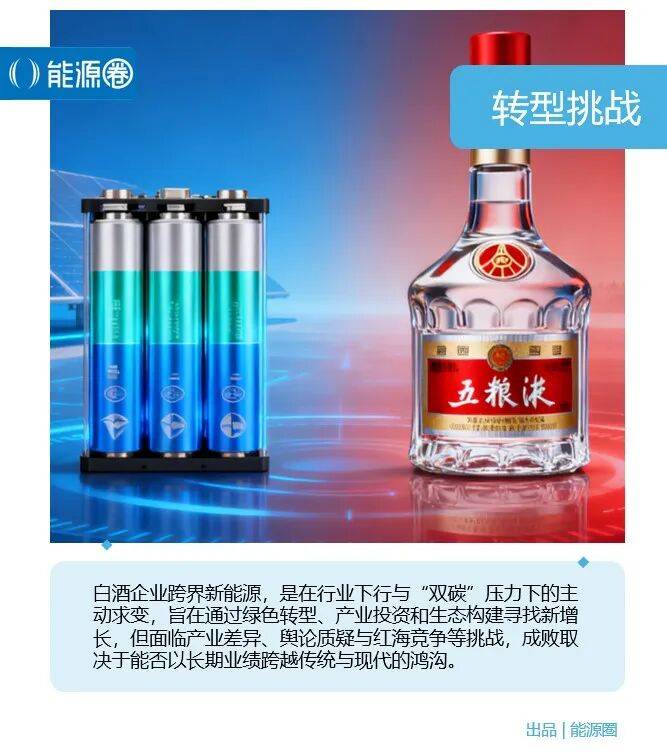
Core Viewpoint - The traditional perception of the liquor industry and the new energy sector as distant is changing, with major liquor companies increasingly venturing into new energy initiatives to seek growth opportunities amid declining liquor sales [4][10]. Group 1: Industry Trends - Major liquor companies like Moutai and Wuliangye are investing heavily in new energy, with Moutai establishing a 10 billion yuan new energy fund and Wuliangye focusing on solar, energy storage, and hydrogen energy [4][6]. - The liquor industry is facing significant challenges, with national liquor production expected to decline for the eighth consecutive year, showing an 11.5% drop in the first ten months of the year [6][10]. - Internal pressures from new regulations and external pressures from carbon reduction strategies are pushing liquor companies to explore new growth avenues [7][10]. Group 2: Strategic Initiatives - Wuliangye is actively participating in the regional industrial transformation of Yibin, which is transitioning from a liquor hub to a new energy hub, with over 110 new energy projects attracting investments exceeding 270 billion yuan [7][8]. - Companies are taking steps to address their energy consumption issues by building green factories and utilizing renewable energy sources, such as Wuliangye's commitment to using 100% green electricity by 2025 [8][9]. - Leading liquor companies are beginning to define industry standards by creating comprehensive "zero-carbon solutions" and influencing their supply chains to adopt sustainable practices [9]. Group 3: Challenges and Market Dynamics - The transition from liquor to new energy is fraught with challenges due to the fundamental differences between the two industries, with liquor relying on brand culture and consumer demand, while new energy is driven by technology and capital [10][11]. - There are concerns regarding the motivations behind liquor companies' investments in new energy, with skepticism about whether these moves are genuine or merely opportunistic [10][11]. - The new energy sector is becoming increasingly competitive, with profit margins tightening, making it difficult for liquor companies to replicate their traditional high-profit models in this new landscape [11][12].

43天化解23亿危机,欣旺达与吉利如何“共赢”和解?
Xin Lang Cai Jing· 2026-02-14 05:57
Core Viewpoint - The resolution of a battery quality dispute between XINWANDA and Geely's subsidiary, Weirui Electric, marks a new paradigm for handling supply chain disputes in the electric vehicle industry, with XINWANDA agreeing to pay 608 million yuan over five years [4][22]. Group 1: Dispute Background - The dispute involved a claim of 2.314 billion yuan regarding battery quality issues, which was equivalent to XINWANDA's total net profit for 2023-2024 [4][22]. - Weirui Electric accused XINWANDA of delivering defective battery cells used in the Zeekr 001 WE86 model from June 2021 to December 2023 [4][22]. - The partnership between XINWANDA and Geely began in 2021, initially resulting in mutual benefits, with over 71,000 units of the Zeekr 001 WE86 sold in 2022, over 60% of which used XINWANDA's battery cells [4][22]. Group 2: Resolution Details - The lawsuit was filed on December 25, 2025, and a settlement was reached in just 43 days, on February 6, 2026 [9][27]. - The settlement terms included XINWANDA paying 608 million yuan, with costs for battery replacements incurred before December 31, 2025, settled under this agreement, while future costs would be shared [9][27]. - The agreement reflects a shift from traditional adversarial approaches to a more collaborative model, recognizing the complexity of battery manufacturing and the need for shared responsibility among stakeholders [10][28]. Group 3: Industry Implications - The case highlights structural issues within the rapidly growing battery industry, where XINWANDA's output increased by 125% to 25.3 GWh in 2024, yet profit margins remained low at around 10% due to aggressive price competition [12][30]. - The industry is transitioning from a focus on rapid growth to prioritizing quality, as evidenced by increasing recalls due to battery issues [14][32]. - The resolution sets a precedent for a new model of shared responsibility in the battery supply chain, moving away from a binary blame approach to a more nuanced understanding of the various factors affecting battery performance and safety [15][33]. Group 4: Future Directions - Following the settlement, Zeekr announced a recall of certain vehicles to replace the problematic batteries, demonstrating a commitment to user safety [16][34]. - The agreement encourages a shift in the relationship between automakers and battery manufacturers towards deeper technical collaboration, potentially leading to shared investments in research and development [16][34]. - The evolving landscape of the electric vehicle industry suggests a competitive focus on quality and safety, moving beyond mere sales figures [16][34].

欣旺达:与威睿诉讼和解,港股上市推进顺利,动储业务高增长-20260209
Soochow Securities· 2026-02-09 06:24
Investment Rating - The investment rating for the company is "Buy" (maintained) [1] Core Insights - The company has reached a settlement with Weir Electric, which is expected to have a negative impact of 500-800 million yuan on the net profit attributable to the parent company for 2025. However, this settlement alleviates uncertainties regarding future operations, including the Hong Kong listing and overseas expansion [9] - The company's dynamic storage business is experiencing strong growth, with expectations of achieving profitability in 2026. The company anticipates a significant increase in shipments, projecting 80 GWh+ for the year, with a doubling of output in Q1 [9] - The earnings forecast for the company indicates a net profit attributable to the parent company of 1.41 billion yuan in 2025, 3.03 billion yuan in 2026, and 4.12 billion yuan in 2027, with corresponding P/E ratios of 32x, 15x, and 11x [9] Financial Projections - Total revenue is projected to reach 47.86 billion yuan in 2023, with a year-on-year growth of -8.24%, followed by 56.02 billion yuan in 2024 (17.05% growth), and continuing to grow to 102.77 billion yuan by 2027 [1] - The net profit attributable to the parent company is expected to be 1.08 billion yuan in 2023, increasing to 4.12 billion yuan by 2027, with a notable growth rate of 36.12% in 2027 [1] - The latest diluted EPS is forecasted to be 0.58 yuan in 2023, rising to 2.23 yuan in 2027 [1]
欣旺达(300207):与威睿诉讼和解,港股上市推进顺利,动储业务高增长
Soochow Securities· 2026-02-09 05:37
Investment Rating - The investment rating for the company is "Buy" (maintained) [1] Core Insights - The company has reached a settlement with Weir Electric, which is expected to have a negative impact of 500-800 million yuan on the net profit attributable to the parent company for 2025. However, this settlement alleviates uncertainties regarding future operations, including the Hong Kong listing and overseas expansion [9] - The company's dynamic storage business is experiencing strong growth, with expectations of achieving profitability in 2025. The forecasted shipment for January 2026 is 4 GWh, representing a year-on-year increase of 142%. The total annual shipment is projected to exceed 80 GWh, with dynamic storage accounting for over 50 GWh and energy storage for 30 GWh [9] - The company aims for a gross margin of 15% for dynamic storage in 2026, an increase of 2 percentage points, and a target of 10-12% for energy storage, also an increase of 2-3 percentage points. The proportion of overseas customers is expected to rise from 30% to 40-50% [9] - The profit forecast for the company is adjusted to 1.41 billion yuan for 2025, 3.03 billion yuan for 2026, and 4.12 billion yuan for 2027, with corresponding P/E ratios of 32x, 15x, and 11x. A target price of 41 yuan is set for 2026, maintaining the "Buy" rating [9] Financial Projections - Total revenue is projected to reach 47.862 billion yuan in 2023, increasing to 102.773 billion yuan by 2027, with a compound annual growth rate (CAGR) of 15.25% [1] - The net profit attributable to the parent company is expected to be 1.076 billion yuan in 2023, peaking at 4.118 billion yuan in 2027, with a notable increase of 114.65% in 2026 [1] - The latest diluted EPS is forecasted to be 0.58 yuan in 2023, increasing to 2.23 yuan by 2027 [1]
欣旺达暗中启动基石遴选,港股IPO即将“撞线”?
3 6 Ke· 2026-02-09 02:18
Core Viewpoint - XWDA is accelerating its H-share IPO process while addressing a significant lawsuit that could impact its market confidence and listing prospects [1][2][10]. Group 1: Legal and Financial Developments - XWDA's subsidiary reached a settlement with Weir Power, agreeing to pay 608 million yuan over five years to resolve a lawsuit claiming quality defects in battery cells [1][4]. - The lawsuit's claim of 2.314 billion yuan was nearly equivalent to XWDA's net profit for 2023 and 2024 combined, marking it as one of the largest claims in China's EV supply chain [1][2]. - The settlement is viewed as a necessary step to ensure compliance with the Hong Kong Stock Exchange's stringent requirements for business continuity and legal compliance [2][5]. Group 2: Strategic Moves and Market Positioning - XWDA is seeking cornerstone investors, indicating a mature stage in its IPO process, which is crucial for securing funding and market confidence [4][5]. - The company is positioned as a major customer for logistics firms, aligning its interests with the green transition in the logistics sector, particularly in electric heavy trucks [4][10]. - The urgency of the IPO is driven by the competitive landscape, where missing the current market window could significantly increase financing costs and barriers [12][14]. Group 3: Industry Context and Challenges - The global battery industry is facing a dual challenge of overcapacity and intense competition from major players like CATL and BYD, creating a survival dilemma for second-tier companies like XWDA [11][12]. - XWDA's ambitious expansion plans include over 220 GWh of production capacity across multiple locations, with a total investment exceeding 70 billion yuan, highlighting the scale of its capital needs [12][13]. - The company aims to utilize the IPO proceeds to support international growth strategies, including establishing production facilities in Hungary, Vietnam, and Morocco to meet increasing global demand [14][15].
独家丨欣旺达暗中启动基石遴选,港股IPO即将“撞线”?
Sou Hu Cai Jing· 2026-02-08 12:20
Core Viewpoint - Xiwanda is accelerating its H-share IPO process while resolving a significant lawsuit related to battery quality issues, which could impact its market confidence and IPO success [2][3][12]. Group 1: Legal Settlement - Xiwanda's subsidiary reached a settlement with Weir Power, agreeing to pay 608 million yuan over five years to resolve a lawsuit claiming battery defects, which sought damages of 2.314 billion yuan [2][3][11]. - The lawsuit was one of the largest in the domestic new energy vehicle supply chain, posing a significant risk to Xiwanda's IPO due to its potential impact on business continuity and legal compliance [3][11]. Group 2: IPO Strategy - The company is actively seeking cornerstone investors, indicating a mature stage in its IPO process, which is crucial for ensuring compliance and risk management before the listing [5][12]. - The urgency of the IPO is driven by the need to secure funding for expansion and to compete in a rapidly evolving market, especially against dominant players like CATL and BYD [13][15][17]. Group 3: Market Context - The upcoming years (2025-2026) are seen as a critical period for Chinese tech companies to enter the Hong Kong market, with favorable conditions for valuation and capital influx [13][17]. - Xiwanda's strategy includes expanding its production capacity and establishing a global sales network to meet international demand, particularly in Europe and other regions [16][17]. Group 4: Competitive Landscape - The competitive environment in the battery industry is characterized by a duopoly of CATL and BYD, creating pressure on second-tier players like Xiwanda to expand or risk being marginalized [14][15]. - Xiwanda's planned investments exceed 70 billion yuan for production capacity across multiple locations, highlighting the financial challenges of scaling operations in a competitive market [15][16].

23.14亿诉讼迅速和解 欣旺达动力将向威睿电动赔偿6.08亿
Jing Ji Guan Cha Wang· 2026-02-06 13:30
Group 1 - Xiwanda Power Technology Co., Ltd. and its parent company Xiwanda Electronics Co., Ltd. reached a settlement with Geely's Weirui Electric Vehicle Technology Co., Ltd. regarding a contractual dispute, requiring Xiwanda Power to pay 608 million yuan over five years [2] - The settlement includes a provision for cost-sharing in the event of future recalls, with ownership of processed battery packs remaining with Xiwanda Power [2] - Xiwanda expects the impact of this event on its net profit attributable to shareholders in 2025 to be between 500 million and 800 million yuan, considering warranty provisions and other factors [2] Group 2 - In late 2024, some Zeekr 001 WE86 vehicle owners reported issues with charging efficiency and battery capacity degradation, with market speculation pointing to Xiwanda as the supplier of the affected battery cells [3] - To address public concerns, Zeekr initiated a "Winter Care Activity" to replace battery packs for affected models at a cost of approximately 149,000 yuan per vehicle [3] - Weirui filed a lawsuit seeking 2.314 billion yuan in damages, which is 1.5 times Xiwanda's projected net profit for 2024, potentially impacting cash flow and the company's listing process [3] Group 3 - The incident has prompted the industry to reflect on quality control systems, with some leading automakers adopting blockchain technology to trace the entire lifecycle of battery cells [4] - Supply chain diversification has become a trend, with Zeekr accelerating the introduction of alternative suppliers like CATL to mitigate risks [4]