
Semiconductor Materials

Search documents
新材料50ETF(159761)盘中涨超2.1%,半导体材料需求增长受关注
Mei Ri Jing Ji Xin Wen· 2025-12-23 05:47
Group 1 - The demand for high bandwidth memory (HBM) driven by AI data centers and processors is fueling continuous growth in the global semiconductor materials market [1] - TECHCET predicts that the global semiconductor materials market will reach $70 billion by 2025, representing a year-on-year growth of 6%, and will exceed $87 billion by 2029 [1] - The market for key semiconductor materials is expected to reach 174.08 billion yuan by 2025, with a year-on-year growth of 21.1% [1] Group 2 - Advanced processes require higher purity, stability, and consistency of electronic chemicals, indicating a trend towards market concentration among leading suppliers with technological strength and scale advantages [1] - The New Materials 50 ETF (159761) tracks the New Materials Index (H30597), focusing on listed companies involved in advanced basic materials, key strategic materials, and cutting-edge new materials [1] - The New Materials Index is characterized by high growth and innovation, making it suitable for investors interested in the development trends of high-tech industries [1]
奥来德12月19日获融资买入3598.44万元,融资余额4.91亿元
Xin Lang Zheng Quan· 2025-12-22 01:25
Group 1 - The core viewpoint of the news is that Aolaide has shown significant trading activity with a notable increase in financing and a high level of margin trading, indicating strong investor interest [1] - On December 19, Aolaide's stock price increased by 2.48%, with a trading volume of 188 million yuan. The financing buy-in amount was 35.98 million yuan, while the financing repayment was 17.64 million yuan, resulting in a net financing buy of 18.34 million yuan [1] - As of December 19, the total margin trading balance for Aolaide was 491 million yuan, which accounts for 7.25% of its market capitalization, indicating a high level of financing compared to the past year [1] Group 2 - Aolaide's main business involves the research, manufacturing, sales, and after-sales technical services of organic light-emitting materials and evaporation source equipment, with organic light-emitting materials contributing 78.06% to its revenue [1] - As of September 30, the number of Aolaide's shareholders was 8,114, a decrease of 9.07% from the previous period, while the average circulating shares per person increased by 9.97% to 29,696 shares [2] - For the period from January to September 2025, Aolaide reported a revenue of 389 million yuan, a year-on-year decrease of 16.12%, and a net profit attributable to shareholders of 31.36 million yuan, down 69.03% year-on-year [2]

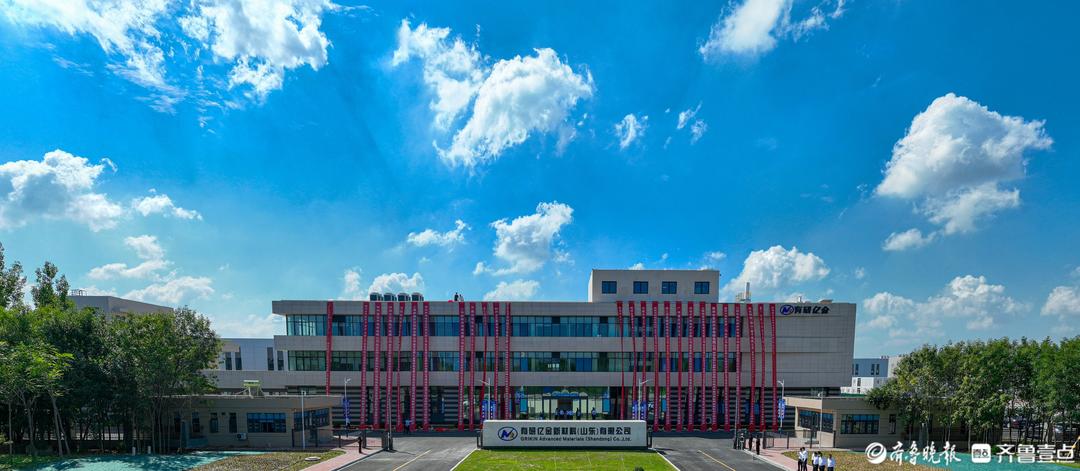
有研亿金:德州“芯”力量,深度融入全球高端制造产业链
Qi Lu Wan Bao· 2025-12-18 12:02
Core Insights - The article highlights the significance of Youyan Yijin New Materials Co., Ltd. in the semiconductor industry, particularly in the production of high-purity sputtering targets essential for chip manufacturing [1][3] - The company has achieved a technological breakthrough in manufacturing ultra-high-purity copper and copper alloy sputtering targets, positioning itself as a key player in the global semiconductor supply chain [3] Group 1: Company Overview - Youyan Yijin is located in Dezhou, specializing in the research, manufacturing, and sales of high-purity sputtering targets for integrated circuits [3] - The company has established a leading domestic industrial platform, achieving vertical integration from ultra-high-purity raw materials to sputtering targets [3] - The production project commenced in September 2023, with a designed capacity of 43,000 pieces per year [3] Group 2: Product Range and Applications - The product lineup includes ultra-high-purity copper and copper alloy targets, copper-phosphorus anodes, ultra-high-purity tantalum targets, cobalt targets, nickel-vanadium targets, and tungsten targets [3] - These products are widely used in various critical fields such as integrated circuit logic chips, memory chips, high-end filters, high-power devices, and advanced packaging [3] Group 3: Competitive Advantage - The company is one of the few globally to master the manufacturing technology of ultra-high-purity copper and copper alloy sputtering targets, with products already applied in advanced 12-inch wafer copper interconnect processes [3] - It is also the first in China and the second globally to achieve vertical integration in the manufacturing of ultra-high-purity cobalt targets, which are crucial for integrated circuit contact layer preparation [3] - The company has made rapid technological breakthroughs in 12-inch ultra-high-purity tantalum and tungsten targets, meeting the demands of high-end logic and memory chip applications [3] Group 4: Industry Impact - The high-end target products meet the requirements for advanced processes of 7nm and below, providing customized services and support for domestic and international chip manufacturers [3] - This significantly enhances the self-sufficiency of critical materials in China's integrated circuit sector and increases the company's influence and competitiveness in the global semiconductor industry [3]


X @Bloomberg
Bloomberg· 2025-12-17 03:05
Industry Focus - Semiconductor materials company Resonac anticipates solid growth due to Beijing's ambition to develop its own chip industry [1] Investment Strategy - Resonac is open to further investment in China in the coming years [1]
江苏泰州冲出一家半导体材料IPO,为华润微供货,无实际控制人
格隆汇APP· 2025-12-12 11:35
Core Viewpoint - Jiangsu Taizhou has launched an IPO in the semiconductor materials sector, supplying products to China Resources Microelectronics, and operates without a controlling shareholder [1] Group 1 - The company is positioned in the semiconductor materials industry, which is critical for the development of electronic components [1] - The IPO aims to raise capital to enhance production capacity and expand market reach [1] - The absence of a controlling shareholder may attract a broader range of investors, potentially increasing market interest [1]


中科院孵化,高分子“小巨人”,冲IPO!
Sou Hu Cai Jing· 2025-12-11 18:44
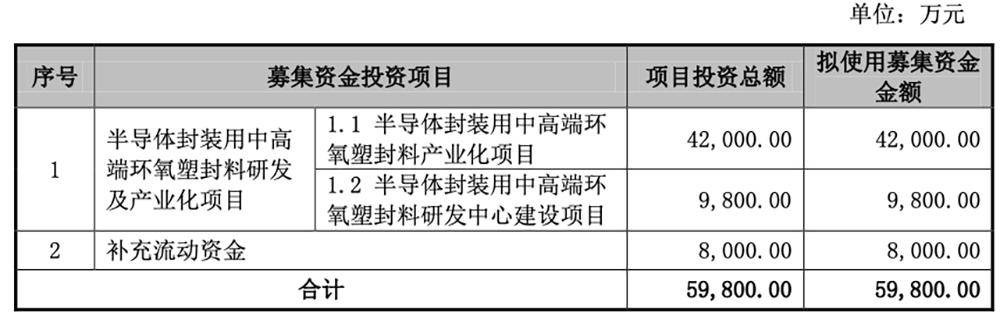
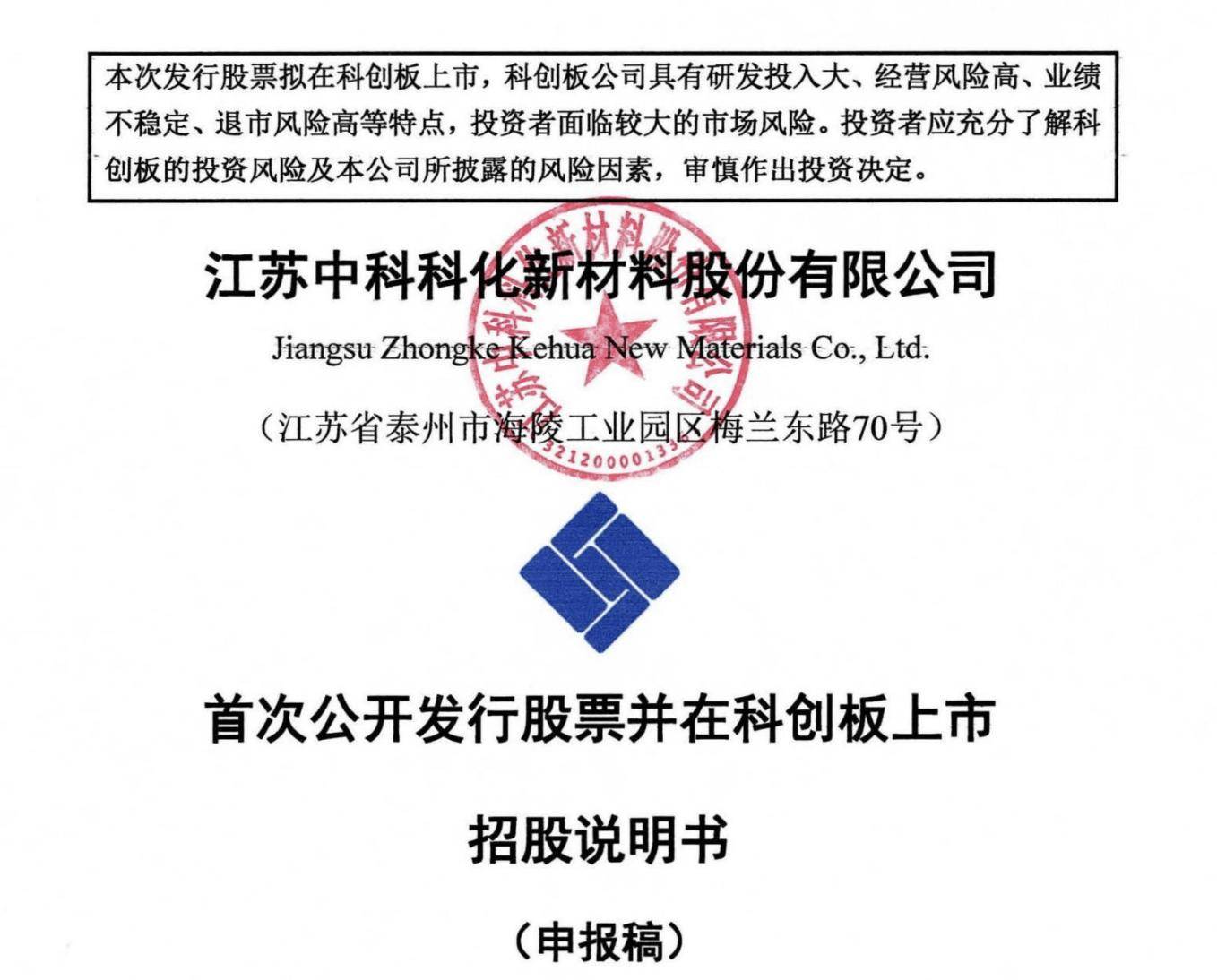
Core Viewpoint - Jiangsu Zhongke Kehua New Materials Co., Ltd. (referred to as "Zhongke Kehua") has received acceptance for its IPO on the Sci-Tech Innovation Board, aiming to raise 598 million yuan for the industrialization of high-end epoxy molding compounds for semiconductor packaging and the establishment of a research center [1][4]. Fundraising and Project Allocation - The IPO intends to raise 598 million yuan, with 420 million yuan allocated for the industrialization project of high-end epoxy molding compounds and 98 million yuan for the research center [1][3]. - The company plans to add a design capacity of 22,500 tons for epoxy molding compounds [1]. Company Background - Zhongke Kehua was established in October 2011 with a registered capital of 66 million yuan and is recognized as a national-level "little giant" enterprise specializing in specific and innovative technologies [1][4]. - The controlling shareholder is Beijing Kehua, founded in 1984, which is one of the earliest industrial bases for epoxy molding compounds in China [4]. Market Position and Competition - The domestic semiconductor packaging materials market is primarily dominated by foreign companies, with a localization rate of about 30%, and high-end products are mainly monopolized by Japanese manufacturers [7]. - Zhongke Kehua has become one of the few domestic companies capable of independent R&D and large-scale production of high-end epoxy molding compounds, currently holding the second-largest market share in China [9]. Financial Performance - From 2022 to the first half of 2025, Zhongke Kehua's revenue has shown a steady increase, with figures of 200 million yuan, 250 million yuan, 331 million yuan, and 159 million yuan respectively, alongside a rising net profit trend [11]. - The gross profit margin has improved from 22.68% in 2022 to 30.69% in the first half of 2025, indicating a positive growth trajectory primarily driven by high-end epoxy molding compound sales [11]. Product Development and Innovation - The company has developed a new granular epoxy molding compound for fan-out wafer-level packaging, which has been recognized for its advanced performance, filling a domestic gap [11]. - Zhongke Kehua's product lines include basic, mid-range, and high-end epoxy molding compounds, with the latter gradually passing validation from downstream packaging and testing companies [9][11]. Supply Chain and Raw Materials - The top five raw material suppliers for Zhongke Kehua include companies like Ruile New Materials and Shengquan Group, with over 60% of total procurement coming from these suppliers [8].
FUJIFILM Holdings (OTCPK:FUJI.F) Earnings Call Presentation
2025-12-10 00:30
: : : ESG推進 CP&RMG 富士幸太郎('23.5.15) FFグループ 取 扱 指 定 作 成 / 日 付 開 示 範 囲 Fujifilm Internal Use Only : : : CC-IR('24.4.9) 会議出席者限り 取 扱 指 定 作 成 / 日 付 開 示 範 囲 Fujifilm Internal Use Only 再配布禁止 Semiconductor Materials Business Briefing December 10, 2025 Business performance forecast and future predictions contained in this material are based on currently -available information and reflect potential risks and uncertainty factors. For this reason, actual business performance could be different from such predictions due ...
南大光电:公司Arf光刻胶现有产能50吨/年
Xin Lang Cai Jing· 2025-12-08 13:00
Core Viewpoint - The company has a current production capacity of 50 tons per year for ArF photoresist, which is not yet at full production capacity, and anticipates revenue from ArF photoresist to exceed 10 million yuan in 2024 [1] Group 1 - The company arranges production based on customer orders [1] - The company expects stable supply of products for previously secured orders in 2025 [1]

IPO研究|2024年中国环氧塑封料行业市场规模60.2亿元
Sou Hu Cai Jing· 2025-12-08 01:25
Group 1 - Jiangsu Zhongke Kehua New Materials Co., Ltd. (Zhongke Kehua) has received acceptance for its IPO on the Sci-Tech Innovation Board, with China Merchants Securities as the sponsor [3] - Established in October 2011, Zhongke Kehua focuses on the R&D, production, and sales of semiconductor packaging materials, primarily epoxy molding compounds [3] - The company has become one of the few domestic manufacturers capable of independent R&D and large-scale production of mid-to-high-end epoxy molding compounds, ranking fourth in 2022 and third in 2023 among domestic manufacturers, with a projected rise to second place in 2024 [3] Group 2 - The epoxy molding compound industry is a critical support sector within the semiconductor supply chain, with its development trends aligning with the overall semiconductor and semiconductor materials industries [4] - From 2015 to 2021, the market size of China's epoxy molding compounds grew from 4.37 billion to 7.52 billion yuan, with a compound annual growth rate of 9.5% [4] - The market experienced a decline in 2022 and 2023 due to reduced end demand in the semiconductor industry, but is expected to rebound in 2024, with a projected market size of approximately 6.02 billion yuan, reflecting a 2.0% year-on-year growth [4] Group 3 - Mid-to-high-end epoxy molding compounds account for 80%-90% of the domestic market share, with mid-range products constituting the largest segment at 50%-60% market share [5] - The overall domestic production rate of epoxy molding compounds remains low, with only a few domestic manufacturers capable of R&D and production of mid-to-high-end products [5] - Domestic manufacturers are rapidly overcoming technological barriers set by Japanese firms through innovation and resource integration [5]
八亿时空(688181.SH):与多家头部光刻胶厂家合作,开发多款高性能树脂
Ge Long Hui· 2025-12-04 07:55
Core Viewpoint - The company, 8 Billion Space (688181.SH), is focusing on the development and mass production of semiconductor photoresist resin, which is currently dominated by foreign companies due to high technical barriers [1] Group 1: Company Development - The company has established a specialized R&D team for photoresist resin, leveraging its systematic advantages and experience in chemical synthesis, material purification, and lean management [1] - The company is concentrating on the research and production of key raw materials for KrF photoresist, specifically PHS resin and its derivatives, based on its accumulated experience in liquid crystal materials [1] Group 2: Industry Collaboration - The company has developed the capability to research and produce a full range of high-end semiconductor photoresist (KrF) resins and is collaborating with several leading photoresist manufacturers to develop multiple high-performance resins [1] - These efforts contribute to the domestic substitution of photoresist materials in the industry [1]
