电动自行车

Search documents
三部门联合印发!优供给促消费稳出口,轻工业稳增长方案出台
Zheng Quan Shi Bao· 2025-09-20 01:04
Core Viewpoint - The "Light Industry Stabilization and Growth Work Plan (2025-2026)" aims to enhance the role of the light industry in stabilizing growth, promoting consumption, and improving livelihoods, amidst increasing international uncertainties and domestic demand challenges [1][2]. Group 1: Key Objectives - The plan outlines that by 2025-2026, the light industry will play a more significant role in stabilizing growth and promoting consumption, with key sectors showing stable growth and operational efficiency [1]. - It targets the rapid development of new growth points such as smart home products, elderly and infant goods, and sports leisure fashion products, with the goal of promoting 300 upgraded and innovative products [1][2]. Group 2: Tasks and Strategies - The plan emphasizes three main tasks for quality supply: accelerating product innovation, enhancing quality assurance, and strengthening brand cultivation, including actions to adapt supply and demand in consumer goods [2]. - In promoting consumption, the plan will continue to support "old-for-new" exchanges for appliances and expand into health, elderly care, and cultural tourism sectors, leveraging artificial intelligence in the light industry [2]. - For exports, the plan supports leading enterprises in sectors like home appliances and furniture to accelerate global brand building and encourages the development of cross-border e-commerce and overseas service stations [2]. Group 3: Implementation and Corporate Responsibility - The plan calls for market participants to actively engage in its implementation, focusing on technology leadership, quality pricing, brand building, and optimizing global layouts, while urging companies to phase out inefficient capacities [3].
优供给促消费稳出口 轻工业稳增长工作方案出台
Zheng Quan Shi Bao· 2025-09-20 00:43
Core Viewpoint - The light industry in China is a key sector for economic growth, consumer promotion, and livelihood improvement, with a strong international competitive edge. The "Light Industry Stabilization and Growth Work Plan (2025-2026)" aims to enhance the industry's role in these areas through various strategic tasks [1]. Group 1: Key Objectives of the Work Plan - The main goals of the Work Plan include highlighting the role of light industry in stabilizing growth and promoting consumption from 2025 to 2026, with a focus on maintaining stable scale and operational efficiency in key industries [1]. - New growth points such as smart home products, elderly and infant goods, and sports leisure fashion products are expected to develop rapidly, leading to increased consumer capacity [1]. - The plan aims to promote 300 upgraded and innovative products and cultivate 10 characteristic industrial regions with a scale exceeding 100 billion yuan [1]. Group 2: Tasks for Quality Supply - The Work Plan outlines three major tasks for quality supply: accelerating product innovation, enhancing quality assurance, and strengthening brand cultivation [2]. - Specific actions include conducting consumer goods supply-demand matching initiatives using artificial intelligence, revising standards for 10 product categories, and completing 300 industry standard revisions annually [2]. - The plan also emphasizes the development of AI applications in the light industry, particularly in home appliances and sports equipment [2]. Group 3: Consumer Promotion Strategies - In promoting consumption, the plan continues to support "old-for-new" initiatives for home appliances and electric bicycles, while also focusing on health, elderly care, and cultural tourism as new growth engines [2]. - The Work Plan aims to leverage AI to create innovative products and high-quality industrial data sets [2]. Group 4: Export Development Directions - The Work Plan provides new directions for the internationalization of light industry, supporting leading enterprises in global brand building and cross-border e-commerce [2]. - It encourages localities to develop comprehensive overseas service ports and stations to facilitate global business expansion [2]. Group 5: Implementation Pathways for Enterprises - The Work Plan emphasizes the need for market participants to collaborate in implementing the policies, focusing on technology leadership, quality pricing, brand building, and global layout optimization [3]. - It calls for enterprises to actively exit low-efficiency capacities and enhance high-end supply capabilities [3].
优供给促消费稳出口 轻工业稳增长方案出台
Zheng Quan Shi Bao· 2025-09-19 17:52
Core Viewpoint - The "Light Industry Stabilization and Growth Work Plan (2025-2026)" aims to enhance the role of light industry in stabilizing growth, promoting consumption, and improving livelihoods, amidst increasing international uncertainties and domestic demand challenges [1][2]. Group 1: Objectives and Goals - The main goals of the work plan include highlighting the role of light industry in economic growth and consumer enhancement from 2025 to 2026, with a focus on stable growth and operational efficiency [1]. - Key industries are expected to maintain stable growth, with new growth points such as smart home products, elderly and infant goods, and sports fashion products rapidly developing [1]. - The plan aims to promote 300 upgraded and innovative products and cultivate 10 characteristic industrial regions with a scale exceeding 100 billion yuan [1]. Group 2: Key Tasks - The work plan outlines three major tasks for quality supply: accelerating product innovation, strengthening quality assurance, and enhancing brand cultivation [2]. - Specific actions include conducting consumer goods supply-demand matching, revising standards for 10 product categories, and completing 300 industry standard revisions annually [2]. - In promoting consumption, the plan supports "old-for-new" exchanges for appliances and focuses on new growth engines in health, elderly care, and cultural tourism [2]. Group 3: Export Strategies - The work plan indicates new directions for the internationalization of light industry, supporting leading enterprises in global brand building and cross-border e-commerce [2]. - It encourages localities to create comprehensive service ports for overseas expansion and to guide enterprises in global investment strategies [2]. Group 4: Implementation and Corporate Responsibility - The successful implementation of the work plan relies on the active participation of market entities, emphasizing the need for companies to enhance technology leadership, optimize global layouts, and respond to policies [3]. - Companies are urged to phase out inefficient production capacities and improve high-end supply capabilities [3].
“新国标”电动车到货,强制改装会报废
Qi Lu Wan Bao· 2025-09-19 16:27
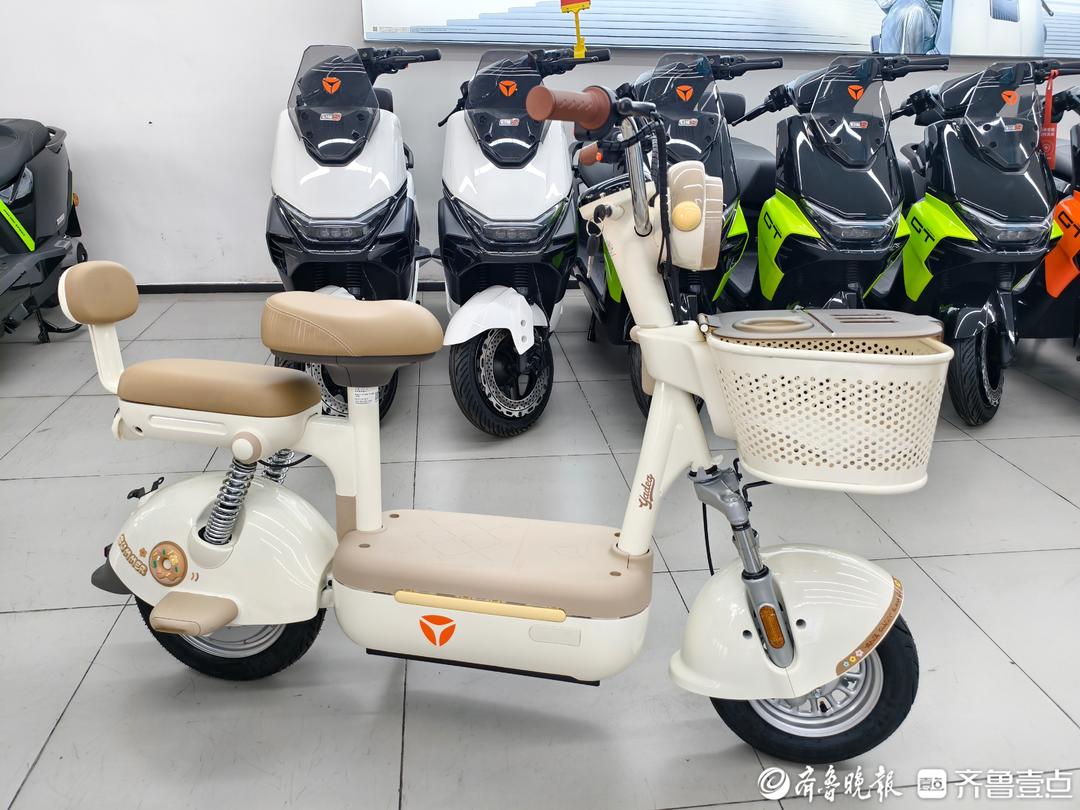
Core Points - The new mandatory national standard for electric bicycles, "Safety Technical Specifications for Electric Bicycles," implemented on September 1, aims to enhance safety and performance in the industry [3][4] - The market currently has limited availability of new standard-compliant electric bicycles, with only a few models reaching stores [6][7] - The new models feature reduced plastic usage, increased metal components, and mandatory installation of a non-removable anti-theft and tracking system [5][4] - The transition period allows for the sale of old standard vehicles until November 30, 2025, to prevent resource waste [6][8] Industry Insights - The introduction of the new standard has led to a temporary increase in sales of old models, as consumers seek faster options [7] - Delivery personnel express concerns over speed limitations imposed by the new regulations, highlighting the need for a balance between safety and operational requirements [8][9] - Experts suggest that technological advancements and regulatory adjustments are necessary to meet the unique demands of the delivery industry while ensuring public safety [9][10]

【新华解读】轻工业两年发展定调:目标突出“稳”字 防“内卷外化”
Xin Hua Cai Jing· 2025-09-19 13:52
Core Viewpoint - The "Light Industry Stabilization and Growth Work Plan (2025-2026)" aims to ensure steady growth in key sectors and stable operational efficiency for enterprises, focusing on new growth points such as smart home products, elderly and infant goods, and sports leisure fashion products [1][4][10]. Group 1: Industry Overview - Light industry is a traditional advantage and important livelihood industry in China's economy, contributing 15.4% to the total industrial value added in 2024, and plays a crucial role in stabilizing economic growth [3][10]. - The industry faces challenges such as unstable international economic conditions and weak domestic demand, making the stabilization task difficult [3][10]. Group 2: Main Objectives - The plan sets clear goals for the industry, including maintaining steady growth in key sectors and ensuring stable operational efficiency for enterprises [4][10]. - New growth points are identified, including smart home products, elderly and infant goods, and sports leisure fashion products [4][10]. Group 3: Key Initiatives - The plan emphasizes optimizing supply by accelerating product innovation, enhancing quality assurance, and strengthening brand cultivation [6][10]. - It aims to expand consumption by promoting traditional consumption and cultivating new consumption growth points [6]. - The promotion of new business models and the establishment of supply-demand matching platforms are also highlighted [7]. Group 4: International Competitiveness - The plan focuses on maintaining international competitiveness by optimizing trade structures and supporting leading enterprises in global brand building [11]. - It encourages trade and investment cooperation with regions such as Southeast Asia, Africa, and the Middle East [11]. - The development of new foreign trade models, including support for cross-border e-commerce, is also emphasized [11]. Group 5: Quality and Standards - The plan addresses the need for quality improvement and standard supply, proposing the completion of 300 industry standard revisions annually [12][13]. - It aims to establish standards for elderly products and smart home industries, and actively participate in international standard revisions [13]. - The plan also emphasizes the importance of maintaining a strong foundation for light industry by stabilizing enterprises [13].

首批“新国标”电动自行车已来济,一旦强制改装就报废
Qi Lu Wan Bao Wang· 2025-09-19 10:19
Core Viewpoint - The implementation of the new national standard for electric bicycles, effective from September 1, has led to limited availability of compliant models in the market, with existing models still being sold due to a transition period until November 30, 2023 [1][6]. Group 1: New National Standard Implementation - The new national standard for electric bicycles restricts the total plastic usage to no more than 5.5% of the vehicle's weight, promoting the use of aluminum-magnesium alloy for parts like fenders and baskets, enhancing safety and durability [2][4]. - The new models feature improved braking sensitivity and a mandatory installation of a non-removable Beidou positioning system for theft prevention and tracking [4][6]. - The theoretical range of the new models is between 50-60 kilometers, with a price increase of 600-800 yuan compared to older models, priced at 3199 yuan [6]. Group 2: Market Response and Sales Dynamics - Currently, the availability of new standard electric bicycles is limited, with many stores only having one or two models in stock, while older models continue to sell well due to their speed advantages [5][8]. - The transition period allows for the sale of older models until November 30, 2023, to prevent resource wastage, with a significant increase in inquiries for older models noted [6][8]. Group 3: Industry Challenges and Recommendations - The demand for speed among delivery personnel raises concerns about safety, as many prefer to use modified vehicles that exceed the new speed limits [9][11]. - Experts suggest that while the new standard aims to enhance safety, the unique needs of industries like delivery services should be considered, advocating for a balance between regulatory compliance and operational requirements [11][12].
电动自行车为什么要限速25公里?
Zhong Guo Xin Wen Wang· 2025-09-19 08:59
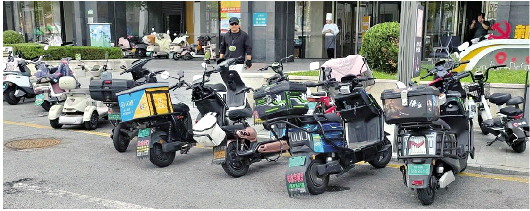
Core Viewpoint - The implementation of the new national standard for electric bicycles (GB 17761—2024) has led to significant changes in the market, including a surge in prices for old standard models and a shift in consumer preferences towards these models due to restrictions imposed by the new regulations [1][2][5]. Group 1: Market Changes - The new national standard has triggered a price increase for old standard electric bicycles, with some stores reporting price hikes of 100-300 yuan [2][4]. - Consumers are showing a preference for old standard models, as they are perceived to be more appealing and faster, with many opting to purchase these before the new regulations take full effect [5][6]. Group 2: New Standard Regulations - The new standard imposes a maximum speed limit of 25 km/h for electric bicycles, which has raised concerns among consumers who find this speed too slow for commuting [5][11]. - The new regulations also limit the use of plastic materials in bicycle construction and require the installation of a Beidou module for commercial use, which is expected to increase the cost of new models by approximately 500-600 yuan [7][12]. Group 3: Consumer Behavior - Many consumers are seeking to modify their electric bicycles to exceed the new speed limit, with some models capable of reaching speeds of 30-55 km/h after modification [9][11]. - The reluctance of sales staff to discuss speed modifications indicates a shift in the market dynamics as the new regulations come into play [9][12]. Group 4: Safety Considerations - The new speed limit is aimed at enhancing safety, as higher speeds can lead to longer braking distances and increased accident risks [11][12]. - The regulations also include measures to prevent illegal modifications, such as improved technical standards for components like batteries and speed limiters [12].
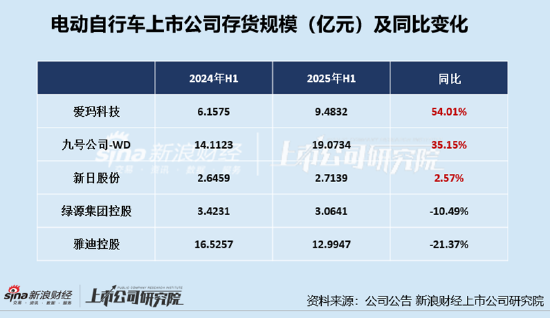
12月1日起停售旧国标电动自行车 爱玛科技存货规模同比+54%、存货占比提升、存货周转效率下降
Xin Lang Zheng Quan· 2025-09-19 08:56
出品:新浪财经上市公司研究院 作者:木 9月1日起,电动自行车新国标《电动自行车安全技术规范》(GB 17761—2024)正式实施。电动自行 车新国标GB17761-2024主要修改的内容包括: (1)最高设计车速不得超过25km/h,超过25km/h时停止动力输出; (2) 车身使用的塑料件,不能超过总重的5.5%,整车非金属材料的阻燃性要求提高; 其次,从存货占比角度看,2025年上半年,电动自行车行业存货占全部资产的比重相对较为适中,其中 九号公司存货占总资产的比重最高,2025年H1存货占总资产比重为9.72%。动态来看,仅爱玛科技一家 存货占比有所提升,由2024年H1的2.87%提升至2025年H1的3.75%。 (4) 明确禁止预留改装接口,并新增多项防篡改设计要求,杜绝非法改装行为; (5) 明确规定充电器不得设计为车载形式,有效规避车载充电引发的潜在安全隐患; | | 存货占总资产的比重及同比变动 | | | --- | --- | --- | | | 2024年H1 | 2025年H1 | | 九号公司-WD | 10.88% | 9.72% | | 爱玛科技 ◎ | 2.87% | 3 ...

电动自行车新国标落地 消费者买旧不买新?
Zhong Guo Xin Wen Wang· 2025-09-17 14:35
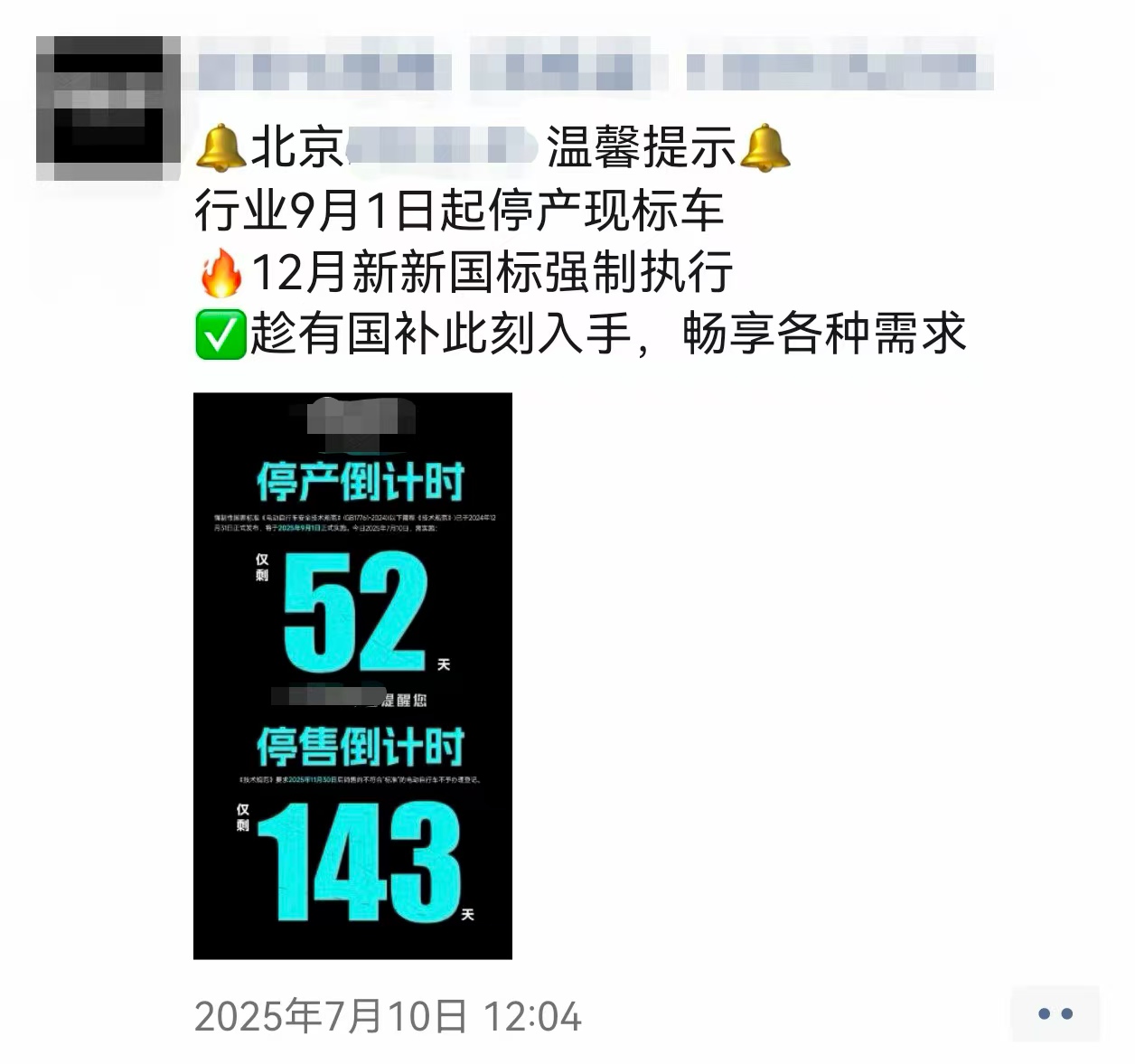
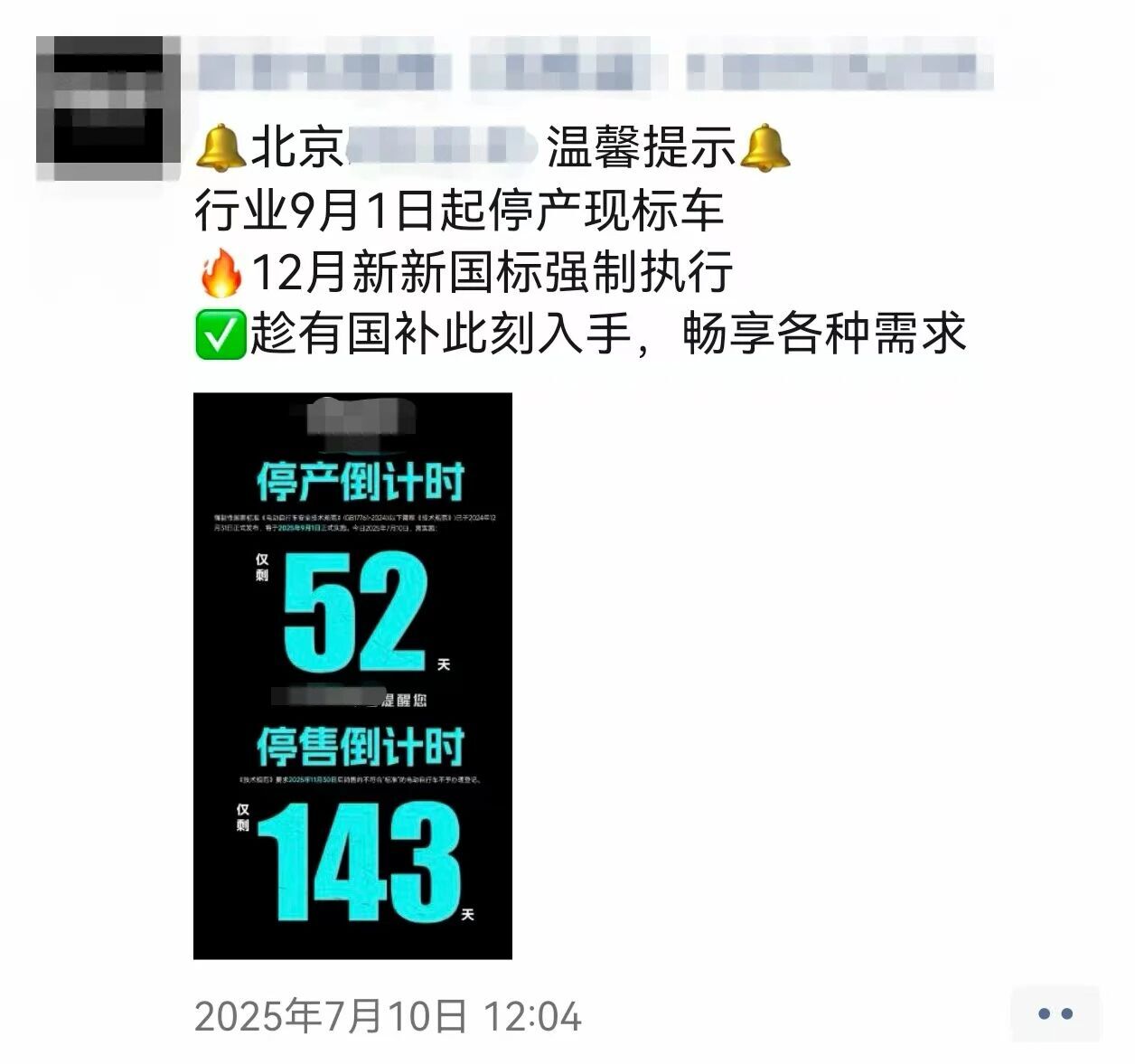
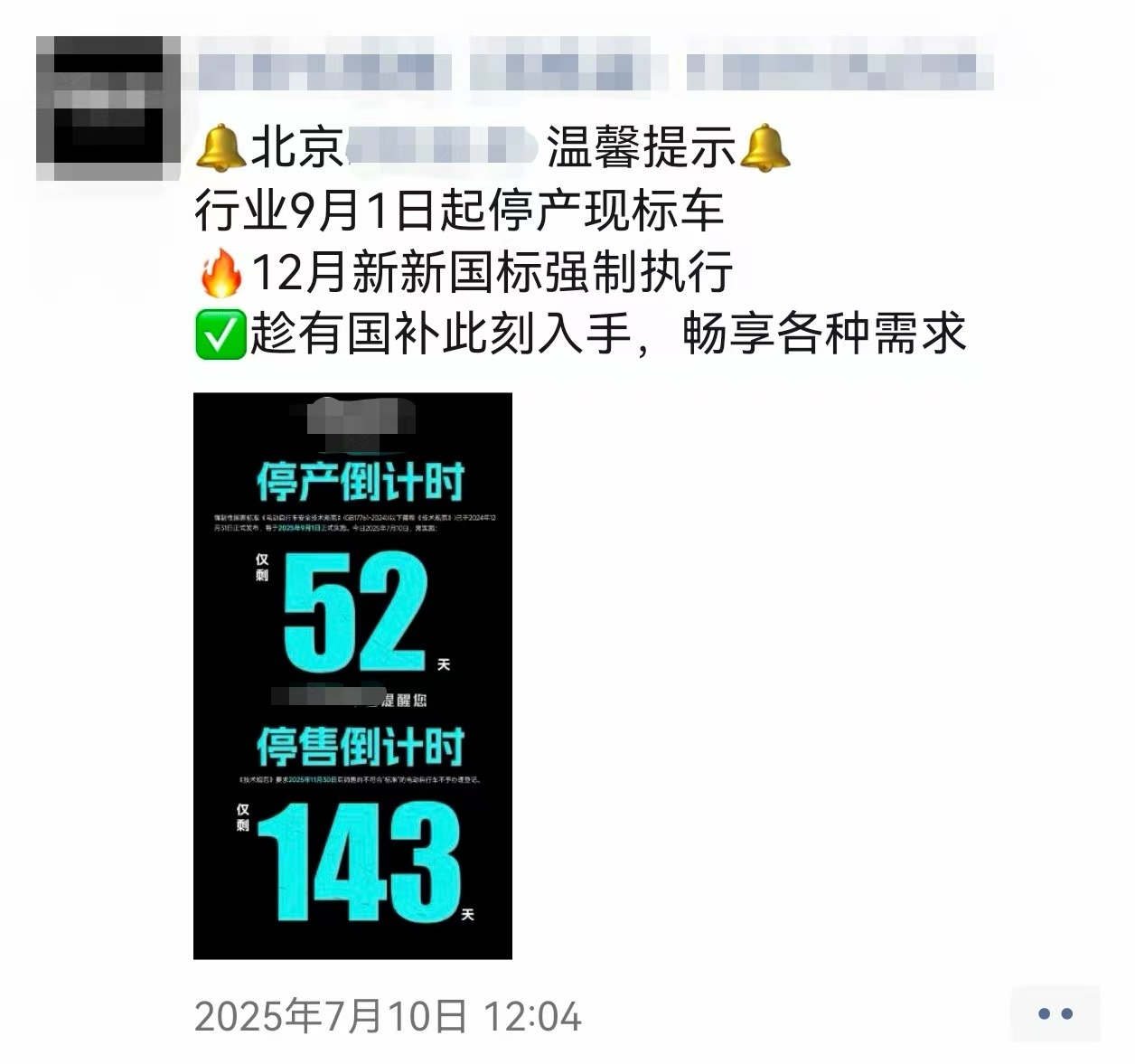
"旧车不会降价,只会涨,大家更希望买旧国标车。"一位电动车门店销售人员告诉记者,目前新国标车型尚未到货,店里销售的还都是旧国标电动车,已有 部分门店涨价100-200元,市中心门店最高可能会涨300多元。 八月中旬,李倩(化名)来到电动自行车门店办理上牌,遭遇了"人山人海":"那天是周一,店里的人却特别多,上牌的系统都挤瘫痪了,大家都赶着在新国标 落地前买车。" 9月1日起,由工业和信息化部等五部门联合修订的强制性国家标准《电动自行车安全技术规范》(GB 17761—2024)正式实施。9月1日至11月30日为过渡期。 "最严"新国标落地,电动自行车市场出现了哪些变化? 旧国标电动自行车出现涨价潮 中国新闻网《民生调查局》记者在走访中发现,早在七月,就已有商家制作旧国标电动自行车停产倒计时的海报,推销旧国标车。而随着新国标落地,旧国 标电动车价格也应声而涨。 电动自行车商家制作的旧国标电动自行车停产倒计时海报。 根据新国标,在2025年8月31日及之前,企业既可以按照旧标准生产,也可以按照新标准生产;2025年9月1日以后,所有新生产的电动自行车都必须符合新 标准要求。同时,为保证符合旧标准电动自行车的充分消 ...
【民生调查局】电动自行车新国标落地 消费者买旧不买新?
Zhong Guo Xin Wen Wang· 2025-09-17 12:20
编者按:这里是民生调查局,见人所未见,调查民生之变。关注你想关注的、你没关注的,调查你想看的、未看到的。 中新网北京9月17日电(左雨晴) 八月中旬,李倩(化名)来到电动自行车门店办理上牌,遭遇了"人山人海":"那天是周一,店里的人却特别多,上牌的系统都 挤瘫痪了,大家都赶着在新国标落地前买车。" 9月1日起,由工业和信息化部等五部门联合修订的强制性国家标准《电动自行车安全技术规范》(GB 17761—2024)正式实施。9月1日至11月30日为过渡期。 "最严"新国标落地,电动自行车市场出现了哪些变化? 电动自行车商家制作的旧国标电动自行车停产倒计时海报。 "旧车不会降价,只会涨,大家更希望买旧国标车。"一位电动车门店销售人员告诉记者,目前新国标车型尚未到货,店里销售的还都是旧国标电动车,已有 部分门店涨价100-200元,市中心门店最高可能会涨300多元。 为何电动自行车会出现"买旧不买新"现象?销售人员表示,主要是由于新国标既限速又限塑。 出于对降低火灾事故隐患和交通事故风险的考虑,新国标对电动自行车在强化防火阻燃、提升电动机性能、强化防篡改等方面都作出了明确规定。 旧国标电动自行车出现涨价潮 中国新闻 ...