
家装厨卫

Search documents
广货行天下!广东以旧换新各项核心指标走在全国前列
Nan Fang Nong Cun Bao· 2026-02-06 07:02
Core Viewpoint - The "old-for-new" policy in Guangdong has significantly boosted consumption and industrial upgrades, positioning the province as a leader in various key indicators nationwide [11][28]. Group 1: Policy Implementation and Impact - The "old-for-new" policy serves as a crucial link in the "manufacturing-circulation-consumption" chain, promoting both consumption and industrial upgrades [5][6]. - In 2025, Guangdong achieved a sales volume of 2,642 billion yuan, accounting for 10% of the national total, with 61 million people benefiting from the policy, representing 16.9% of the national figure [11][12]. - The policy has stimulated demand for consumer goods, thereby promoting production and aiding the construction of a modern industrial system [14]. Group 2: Market Trends and Consumer Behavior - There is a growing demand for green, high-end, and smart products, driven by the "old-for-new" policy, which has led to significant upgrades in the industrial sector [15][16]. - In the automotive sector, 55% of vehicles replaced were new energy vehicles, while 92% of replaced home appliances were of first-class energy and water efficiency [16][17]. - Sales of high-end consumer products have surged, with water purifiers exceeding 1 billion yuan in sales, and various smart home devices showing rapid growth [18][19][20]. Group 3: Domestic Brand Performance - Domestic brands dominate the "old-for-new" activities, with 17 out of the top 20 brands in home appliances and 3C digital products being domestic, capturing 92% and 80% of sales respectively [22][23]. - Guangdong's local enterprises have excelled in their respective sectors, with 7 home appliance companies, 10 3C digital companies, and 5 automotive companies ranking among the top 20 in sales [25][26]. - The province's mature industrial chain, technological advantages, and precise policy support have enhanced the competitiveness of local brands [27]. Group 4: Future Directions - The "old-for-new" policy is set to continue in 2026, with a focus on leveraging consumption to drive industrial development and modernize the industrial system [28][30].


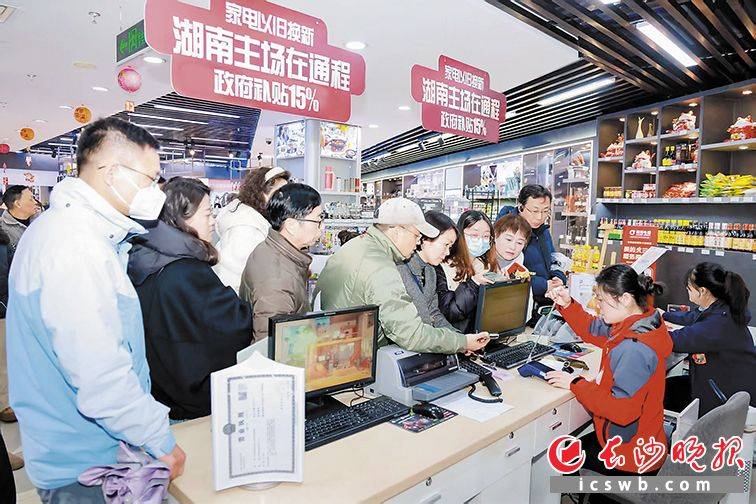
逾702万人次参与 带动消费超423亿元
Sou Hu Cai Jing· 2026-01-13 22:20
Core Insights - The "old-for-new" policy in Changsha has significantly boosted the home appliance market, attracting over 7.02 million participants and generating sales exceeding 42.3 billion yuan in 2025, making it a key driver for economic growth and consumer spending [2][3] Group 1: Policy Implementation - In 2025, Changsha expanded the "old-for-new" policy to include digital products like smartphones and tablets, achieving comprehensive coverage across four core categories: home appliances, automobiles, home renovation, and digital products [3] - The subsidy structure is differentiated, with energy-efficient appliances receiving up to 20% of the final sales price as a subsidy, capped at 2,000 yuan, while digital products receive a 15% subsidy, with a maximum of 500 yuan per item [3] - The policy has been optimized for efficiency, with changes in subsidy distribution and a simplified application process to enhance consumer experience [3] Group 2: Market Performance - The "old-for-new" initiative led to significant sales in various sectors, with home appliances generating approximately 10.598 billion yuan, and digital products and home renovation markets contributing over 5.4 billion yuan and 3.7 billion yuan, respectively [4] - The automotive sector saw over 139,000 participants claiming subsidies, resulting in vehicle purchases exceeding 22.2 billion yuan, with 55% of these being new energy vehicles [3][4] Group 3: Future Outlook - The home appliance market in Changsha continues to thrive into 2026, with a reported sales increase of over 30% in early January compared to the previous year, driven by the new policy [5] - Changsha plans to further optimize policy services and enhance the recycling system for waste materials, aiming to unlock additional consumer potential and support high-quality economic development [5]
一图读懂:2025年上海市消费品以旧换新取得积极成效
Xin Hua Cai Jing· 2026-01-05 13:53
Core Viewpoint - Since 2025, Shanghai has effectively implemented the "old for new" consumption policy, resulting in significant sales and consumer engagement in various sectors [3][4]. Group 1: Sales Performance - The sales revenue from "old for new" products in Shanghai exceeded 121.23 billion yuan, benefiting over 21.95 million people [4]. - The retail sales of social consumer goods in Shanghai increased by 5% year-on-year from January to November, surpassing the national average by 1 percentage point and accelerating by 8.1% compared to the same period last year [6]. Group 2: Product Categories - The "old for new" program included over 320,000 vehicles, more than 4.5 million digital products, and over 4.9 million home appliances [5]. - The program also facilitated the replacement of over 1.19 million kitchen and bathroom items and more than 330,000 electric bicycles [5]. Group 3: Environmental Impact - The "old for new" initiative contributed to a 2.7 percentage point increase in the total retail sales, promoting green transformation and upgrading of industries [6]. - The proportion of new energy vehicles in the "old for new" car replacement program reached 64%, exceeding the national average, and led to a 21.6% year-on-year increase in new energy vehicle retail sales from January to November [6]. Group 4: Recycling and Consumer Engagement - From January to November 2025, the sales of second-hand cars grew by 36%, and the recycling volume of scrapped vehicles increased by over 80% [7]. - The offline participation in home appliance and furniture exchanges reached 4.65 million people, with 2,105 offline merchants and nearly 7,500 stores, generating sales of 21.2 billion yuan [7].

2025年以旧换新相关商品 销售额超2.6万亿元
Xin Lang Cai Jing· 2026-01-02 23:43
Core Insights - The sales of products related to the "trade-in for new" policy are expected to exceed 2.6 trillion yuan by 2025, benefiting over 360 million people [1][2] Group 1: Sales Projections - By 2025, the trade-in for new policy is projected to result in the following sales: over 11.5 million cars, 129 million home appliances, 9.1 million digital products, 120 million home renovation items, and 1.25 million electric bicycles [1] - The retail sales of consumer goods from January to November increased by 4.0% year-on-year, with the trade-in policy contributing over 1 percentage point to this growth [1] Group 2: Industry Upgrades - In the automotive sector, nearly 60% of trade-ins involve new energy vehicles, leading to a retail market share for new energy passenger cars exceeding 50% for nine consecutive months, reaching 59.4% in November [1] - In the home appliance sector, over 90% of traded-in products are first-class energy efficiency (water efficiency) products [1] - Sales of communication equipment have shown continuous growth for 11 months [1] Group 3: Economic and Environmental Impact - By 2025, the volume of scrapped cars is expected to increase by 24.5%, resulting in the recycling of approximately 9.6 million tons of steel and 1.3 million tons of non-ferrous metals, thereby reducing carbon emissions by about 24.5 million tons [1] - Since the full implementation of the policy in September 2024, over 480 million direct subsidies have been issued to consumers, facilitating the entry of numerous green, low-carbon, and smart products into daily life [2] - For every two new household cars sold, one will benefit from the trade-in subsidy, and the number of old electric bicycles being replaced has exceeded nine times that of 2024 [2]
去年以旧换新商品销售额超2.6万亿元
Xin Lang Cai Jing· 2026-01-02 22:39
Group 1 - The core viewpoint of the articles highlights the significant impact of the "trade-in for new" policy on consumer spending and economic growth, projecting a sales volume exceeding 2.6 trillion yuan by 2025, benefiting over 360 million people [1][2] Group 2 - In the automotive sector, over 11.5 million vehicles are expected to be traded in, with nearly 60% being new energy vehicles, contributing to a retail market share of over 50% for new energy passenger cars for nine consecutive months [1] - The home appliance sector anticipates over 129 million units to be traded in, with over 90% of new products being first-class energy efficiency [1] - The retail sales of consumer goods increased by 4.0% year-on-year in the first eleven months of the previous year, with the trade-in policy contributing over 1 percentage point to this growth [1] Group 3 - The policy is expected to promote a green economic transformation, with a projected 24.5% increase in scrapped vehicle recovery by 2025, leading to the recycling of approximately 9.6 million tons of steel and 1.3 million tons of non-ferrous metals, while reducing carbon emissions by about 24.5 million tons [1] - Since the full implementation of the policy in September 2024, over 480 million direct subsidies have been issued to consumers, facilitating the entry of numerous green, low-carbon, and smart products into daily life [2] Group 4 - The trade-in policy has stimulated offline retail, with consumers increasingly opting for in-store experiences, leading to a 30% increase in consumer spending in areas with concentrated home appliance trade-in stores [2]
二〇二五年消费品以旧换新成效显著
Ren Min Ri Bao· 2026-01-01 23:18
Group 1 - The core viewpoint of the articles highlights the significant impact of the "old-for-new" policy in 2025, resulting in over 2.6 trillion yuan in sales and benefiting more than 360 million people [1] - The automotive sector saw over 11.5 million vehicles replaced, while home appliances and digital products also experienced substantial upgrades, with over 129 million and 91 million units sold respectively [1] - The policy has contributed to a 4.0% year-on-year growth in retail sales of consumer goods, with the "old-for-new" initiative driving an increase of over 1 percentage point in total retail sales [1] Group 2 - The automotive "old-for-new" program has led to nearly 60% of replaced vehicles being new energy vehicles, with the market share of new energy passenger cars exceeding 50% for nine consecutive months [1] - In the home appliance sector, over 90% of replaced products are of first-level energy efficiency, indicating a significant shift towards more energy-efficient products [1] - The program has also facilitated a green economic transition, with a 24.5% increase in scrapped vehicle recycling, resulting in approximately 9.6 million tons of recycled steel and 1.3 million tons of non-ferrous metals, thereby reducing carbon emissions by about 24.5 million tons [1] Group 3 - Since the full implementation of the policy in September 2024, over 480 million direct subsidies have been issued to consumers, promoting the adoption of green, low-carbon, and smart products [2] - In 2025, for every two new household vehicles sold, one has benefited from the "old-for-new" subsidy, indicating strong consumer uptake [2] - The replacement of old electric bicycles has exceeded nine times the amount in 2024, with 90% of new electric bicycles meeting current national safety standards [2]
以旧换新相关商品销售额超2.6万亿元
Xin Lang Cai Jing· 2026-01-01 21:51
Core Insights - The sales volume of products related to the trade-in program is expected to exceed 2.6 trillion yuan by 2025, benefiting over 360 million people [1] Group 1: Trade-in Program Impact - By 2025, over 11.5 million vehicles will be traded in, along with more than 129 million home appliances, 91 million digital products, 12 million home renovation items, and 1.25 million electric bicycles [1] - The trade-in program is projected to contribute over 1 percentage point to the growth of total retail sales of consumer goods, which increased by 4.0% year-on-year from January to November [1] Group 2: Industry Upgrades - Nearly 60% of traded-in vehicles will be new energy vehicles, with the retail market share of new energy passenger cars exceeding 50% for nine consecutive months, reaching 59.4% in November [1] - Over 90% of home appliances traded in will be first-class energy efficiency products, indicating a significant upgrade in product quality [1] - Sales of communication equipment have maintained growth for 11 consecutive months [1] Group 3: Economic and Environmental Benefits - The volume of scrapped vehicles is expected to increase by 24.5% year-on-year by 2025, leading to the recycling of approximately 9.6 million tons of steel and 1.3 million tons of non-ferrous metals [1] - The program is anticipated to reduce carbon emissions by approximately 24.5 million tons, promoting a green economic transition [1]
2025年以旧换新惠及超3.6亿人次
Xin Lang Cai Jing· 2026-01-01 09:29
Core Insights - The implementation of the old-for-new consumption policy has significantly benefited over 360 million people since 2025 [1] - The total sales revenue from old-for-new related products exceeded 2.6 trillion yuan in 2025 [1] Group 1: Policy Implementation - The Ministry of Commerce, along with various regions and departments, has effectively advanced the old-for-new consumption policy in alignment with national directives [1] - The policy has shown remarkable results in promoting consumer spending and upgrading products [1] Group 2: Product Categories - In 2025, over 11.5 million vehicles were replaced under the old-for-new program [1] - More than 129 million home appliances were exchanged for new ones [1] - Approximately 91 million mobile phones and digital products were purchased as part of the program [1] - The home renovation and kitchen appliances sector saw over 120 million items renewed [1] - The program also facilitated the replacement of over 12.5 million electric bicycles [1]
一图读懂|2025年消费品以旧换新成绩单
Xin Lang Cai Jing· 2026-01-01 09:29
Group 1 - The core viewpoint of the article highlights the significant impact of trade-in policies on consumer spending and the overall retail market, with a focus on the growth in various sectors such as automobiles, home appliances, and digital products [6][12]. - In 2025, the sales volume of trade-in related products is projected to exceed 91 million mobile devices, 11.5 million vehicles, 129 million home appliances, and 12.5 million electric bicycles [4]. - The trade-in policies are expected to support a 4% year-on-year growth in social retail sales from January to November, accelerating by 0.5% compared to the previous year [6]. Group 2 - The trade-in initiatives are driving the upgrade of industries, with nearly 60% of traded-in vehicles being new energy vehicles, contributing to a retail market share of over 50% for new energy passenger cars for nine consecutive months [6]. - The recycling of scrapped vehicles is projected to increase by 24.5% by 2025, with significant reductions in carbon emissions estimated at around 24.5 million tons [11]. - The trade-in policies have led to a cumulative issuance of over 480 million subsidies since the full implementation of the policy in September 2024 [12]. Group 3 - The trade-in policies are fostering a vibrant offline retail environment, encouraging consumers to experience shopping in-store and enjoy subsidies, which in turn stimulates cross-scenario consumption in leisure and dining [13]. - The sales of communication equipment have maintained growth for 11 consecutive months, indicating a positive trend in consumer electronics [9].

2025年消费品以旧换新成效显著
Shang Wu Bu Wang Zhan· 2026-01-01 08:35
Core Insights - The implementation of the old-for-new consumption policy since 2025 has significantly boosted sales and consumer engagement, with over 2.6 trillion yuan in sales benefiting more than 360 million people [1][2] Group 1: Economic Impact - The policy has supported continuous expansion in consumption, with a 4.0% year-on-year growth in social retail sales from January to November, accelerating by 0.5 percentage points compared to the previous year, and contributing over 1 percentage point to total retail sales [1] - The retail sales of home appliances have surpassed 1 trillion yuan, achieving a historical high [1] Group 2: Industry Upgrades - In the automotive sector, nearly 60% of old vehicles replaced were new energy vehicles, leading to a retail market share of over 50% for new energy passenger cars for nine consecutive months, reaching 59.4% in November [1] - Over 90% of home appliances replaced were first-class energy efficiency products, indicating a significant upgrade in product quality [1] - Sales of communication equipment have maintained growth for 11 consecutive months [1] Group 3: Environmental Benefits - The recycling of scrapped vehicles increased by 24.5% in 2025, resulting in the recycling of approximately 9.6 million tons of steel and 1.3 million tons of non-ferrous metals, while reducing carbon emissions by about 24.5 million tons [1] Group 4: Quality of Life Improvement - Since the full implementation of the policy in September 2024, over 480 million direct subsidies have been issued to consumers, facilitating the entry of numerous green, low-carbon, and smart products into daily life [2] - For every two new household cars sold, one has benefited from the old-for-new subsidy, and the replacement of old electric bicycles has exceeded nine times that of 2024 [2] Group 5: Boosting Offline Retail - The policy has led to increased consumer preference for in-store shopping experiences, which in turn has stimulated cross-scenario consumption in leisure, entertainment, and dining [2] - In areas with concentrated home appliance replacement stores, consumer spending within a 1-kilometer radius has increased by over 30% [2]