酒店业

Search documents
深扒酒店积分黑产:暴利暗流下的“猫鼠游戏”
3 6 Ke· 2025-12-15 04:03
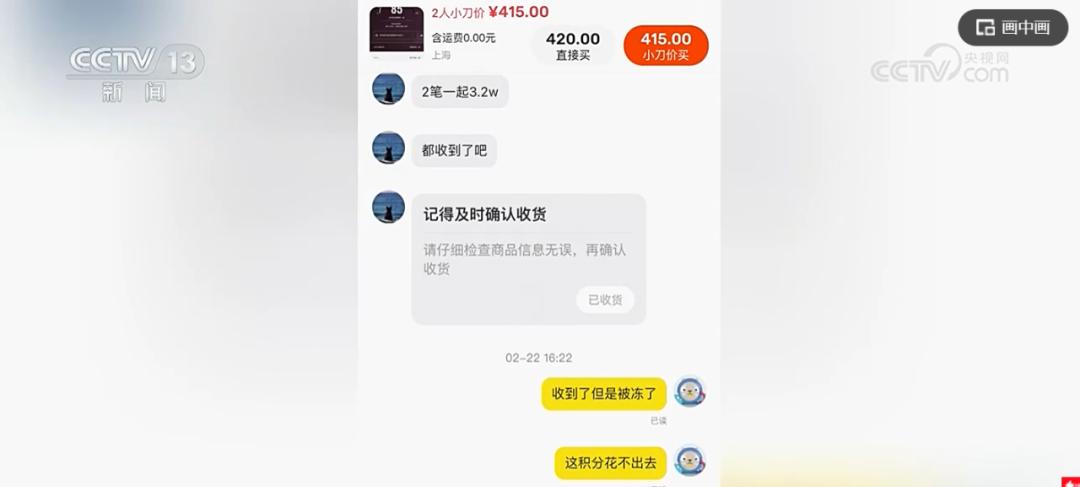
Core Viewpoint - The hotel loyalty points black market is challenging industry standards, with many individuals sharing accounts for point accumulation, leading to a gray market for hotel points and memberships [1][7][18]. Group 1: Gray Market Dynamics - Numerous individuals are purchasing hotel points from platforms like Xiaohongshu, often resulting in financial losses due to the inability to provide identity information for large point transfers [2][15]. - A gray industry chain has emerged, with participants including professional "room brushing" groups, point resellers, and even hotel employees [11][12]. - The secondary market for hotel points and memberships has become a business, with transactions being openly priced on platforms like Xianyu [10][19]. Group 2: Hotel Membership Policies - Major hotel chains like Marriott and Hilton have specific policies for point transfers, allowing limited transfers under certain conditions, which are now exploited in the gray market [8][9]. - Marriott allows members to transfer up to 100,000 points to other members, while Hilton has similar policies with a maximum of 500,000 points received per year [8]. - The original intent of these loyalty programs, which was to enhance customer loyalty, is being undermined by the commercialization of point transfers [7][19]. Group 3: Consumer Behavior and Risks - Consumers are increasingly tempted by low-priced points and are taking risks by engaging in transactions on secondary markets, leading to account freezes and potential financial losses [13][15]. - The allure of significant savings, such as using points for stays that would otherwise cost thousands of dollars, drives the demand for point purchases [20]. - The ongoing transactions create a cat-and-mouse game between consumers and hotel chains, with increased scrutiny and account audits leading to account suspensions for those engaging in suspicious activities [24][29]. Group 4: Impact on Hotel Industry - The rise of "water members" (members who acquire points through non-standard means) is causing hotel chains to tighten their membership benefits, which may inadvertently affect genuine members [30][36]. - As hotel groups face pressure to maintain profitability, they are raising the point redemption thresholds and reducing benefits, which could alienate loyal customers [30][39]. - The homogenization of membership benefits across hotel chains is leading to a lack of differentiation, making it harder to retain high-value members [47][48]. Group 5: Conclusion on Market Dynamics - The gray market for hotel points represents a complex interplay of consumer behavior, corporate policy, and market dynamics, where both consumers and hotel chains face significant risks [49][50]. - Ultimately, the exploitation of loyalty programs for profit is creating a challenging environment for both consumers seeking value and hotel chains aiming to protect their revenue streams [51][52].


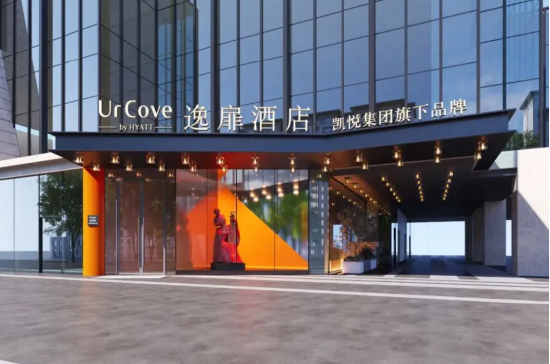
“收钱祸害客人!”罗永浩炮轰凯悦逸扉酒店,CEO孙武的“消费者导向”被员工打脸?
新浪财经· 2025-12-13 07:39
Core Viewpoint - The incident involving Luo Yonghao criticizing Hyatt's "Eiffel Hotel" highlights significant management and service issues within the hotel, particularly regarding customer experience and operational transparency [2][4][11]. Group 1: Incident Overview - Luo Yonghao's criticism was sparked by a blogger's complaint about staying at the Hyatt's Eiffel Hotel in Shanghai, where they paid over 1300 yuan per night but faced issues like noise and air conditioning problems that disrupted their sleep [2][7]. - The hotel staff acknowledged that senior management is involved in addressing the situation, but specific updates were not provided [2][9]. - Consumer feedback in the hotel's comment section revealed ongoing issues with noise, hygiene, and service quality, indicating a pattern of dissatisfaction among guests [2][10]. Group 2: Management and Service Issues - The CEO of Hyatt's China division previously emphasized a "consumer-oriented" approach, which now appears contradicted by the current service failures reported by guests [3][11]. - The hotel has been criticized for knowingly selling rooms with unresolved issues, which some guests view as deceptive practices [7][9]. - Feedback from various consumers included complaints about misleading room descriptions, poor management, and inadequate responses to reported problems, suggesting systemic issues within the hotel's operations [10][13]. Group 3: Brand and Operational Challenges - The Eiffel Hotel, a joint venture between Hyatt and Shoulu Rujia, was positioned as a mid-to-high-end business hotel, but consumer experiences indicate it has not met these standards [13]. - Previous management issues, such as a failure to synchronize booking data with Hyatt's membership system, have led to operational inefficiencies and reputational damage for the brand [13][14]. - The hotel's unique management culture, which encourages a relaxed and informal service style, has resulted in significant service gaps and customer dissatisfaction [15].


“收钱祸害客人!” 罗永浩炮轰凯悦逸扉酒店,CEO孙武的“消费者导向”被员工打脸?
Xin Lang Cai Jing· 2025-12-13 07:26
Core Viewpoint - The controversy surrounding Hyatt's "Eiffel Hotel" in Shanghai highlights significant management and service issues, as evidenced by customer complaints about noise, cleanliness, and inadequate responses from hotel management [2][4][5][6][7][8]. Group 1: Incident Overview - A blogger reported issues during their stay at the Hyatt Eiffel Hotel, paying over 1300 yuan per night, including problems with noise, air conditioning, and plumbing [4][16]. - The hotel has been accused of knowingly renting out rooms with these issues without informing customers, which raises ethical concerns about consumer deception [4][16]. - The hotel management has acknowledged the situation, stating that higher management is involved, but has not provided specific updates on the resolution [5][18]. Group 2: Consumer Feedback - Numerous consumers have echoed similar complaints regarding noise and cleanliness, with some giving very low ratings due to unresolved issues [6][20]. - Specific complaints include excessive noise from the kitchen, misleading room descriptions, and overall poor management practices [20][21]. - The hotel has faced criticism for not addressing these issues adequately, leading to allegations of fraud due to misleading advertising [20][21]. Group 3: Management and Corporate Culture - Hyatt's "Eiffel Hotel" was positioned as a high-end business travel brand, but customer feedback suggests it has failed to meet these standards [7][21]. - The CEO of Hyatt's China division previously emphasized a "consumer-oriented" approach, which appears to be contradicted by the current service failures [7][15][22]. - The hotel's management culture encourages a relaxed atmosphere among staff, which may contribute to the observed service deficiencies [9][23].
金陵饭店:董事长毕金标因工作变动原因辞职
Xin Lang Cai Jing· 2025-12-12 08:20
Core Viewpoint - The chairman of Jinling Hotel, Bi Jinbiao, has submitted his resignation due to work changes, and the company is in the process of electing a new chairman [1] Group 1: Resignation Details - Bi Jinbiao has resigned from his positions as a director and chairman of the eighth board of directors [1] - After resigning, Bi Jinbiao will not hold any position within the company [1] Group 2: Interim Leadership - To ensure the normal operation of the board and smooth decision-making, Zhang Shengxin, the company's director and general manager, has been appointed as the acting chairman [1] - The acting period for Zhang Shengxin will last from the approval of this board meeting until a new chairman is elected [1]

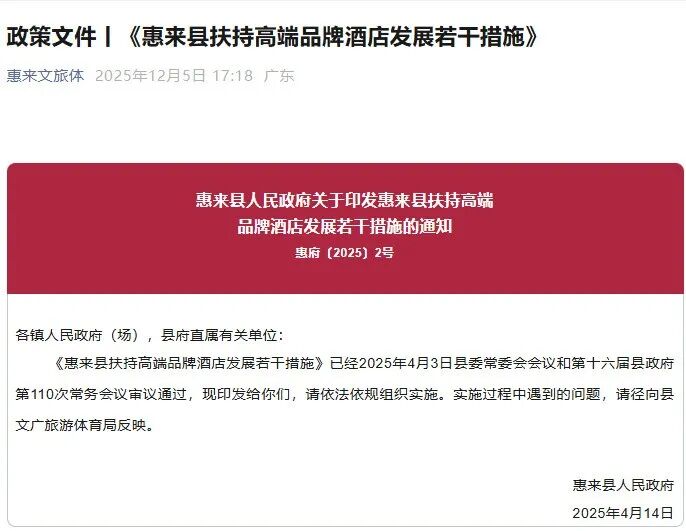
大清都亡一百年了,为啥各地还在补贴建五星级酒店?
3 6 Ke· 2025-12-12 00:49
Group 1 - The core viewpoint of the article highlights the ongoing trend of local governments, such as Huizhou County in Guangdong, offering substantial subsidies to attract high-end hotel projects despite a saturated domestic hotel market [1][3][7] - Huizhou County's policy includes a maximum subsidy of 20 million yuan for projects with an investment of over 500 million yuan, with additional rewards for introducing international luxury brands [1][5] - The article discusses the discrepancy between the push for high-star hotels and the actual market demand, suggesting that the traditional five-star hotel model may not align with current consumer needs [2][14][21] Group 2 - Various cities across China, including Kunming, Luzhou, and Fuzhou, have implemented similar subsidy policies for high-end hotels, indicating a widespread commitment to supporting the hotel industry [11][12][13] - The article points out that the number of five-star hotels in China has decreased from 845 in 2019 to 736 by the third quarter of 2024, reflecting a declining trend in the traditional hotel model [18][20] - It emphasizes the need for a more nuanced approach to hotel industry support, advocating for policies that reward diverse types of accommodations and not just high-star hotels [26][32][36]
低碳酒店成酒店业ESG发展主流趋势,节能、减排是改造重点
Nan Fang Du Shi Bao· 2025-12-11 08:31
Core Insights - The article emphasizes the importance of ESG (Environmental, Social, and Governance) principles in promoting sustainable and high-quality development in companies, particularly in the hospitality industry [1][3]. Group 1: ESG Initiatives and Trends - The "Sustainable Innovation Laboratory" by Southern Metropolis Daily is collecting exemplary ESG practices from companies to publish the "2025 ESG Sustainable Innovation Trend Insight Report" [2]. - The hospitality industry is encouraged to adopt clean energy and eco-friendly materials, with a focus on reducing solid waste and promoting green consumption [3]. - Data from Ctrip indicates that low-carbon hotels are preferred by travelers aged 20-40, with 70% willing to pay a premium for low-carbon travel [3][9]. Group 2: Circular Economy and Waste Reduction - The hospitality sector is moving towards reducing single-use plastic items, with regulations mandating the elimination of such items in hotels by 2025 [4]. - Hotel groups are implementing measures like not providing single-use items, using recyclable packaging, and encouraging consumers to use eco-friendly products [4][9]. - Examples include Huazhu Group's introduction of biodegradable toiletries and sustainable materials for hotel amenities [5][7]. Group 3: Incentives for Sustainable Practices - Hotels are creating incentive systems to encourage guests to participate in sustainable practices, such as reducing towel and linen changes [10][12]. - Huazhu's "Green Stay" program has seen participation from over 9,000 hotels, avoiding the washing of 7.885 million towels and reducing carbon emissions by 676 tons [12]. - Jinjiang Hotels is also promoting a "Reduction Stay" initiative, rewarding guests for minimizing the use of disposable items [12][13]. Group 4: Energy Efficiency and Carbon Reduction - The hospitality industry is focusing on energy efficiency, with 70% of carbon emissions coming from energy and electricity consumption [14]. - Hotels are adopting smart technologies to optimize energy use, such as automated systems that reduce power consumption when rooms are unoccupied [15][16]. - Ctrip has introduced a "Low Carbon Hotel Standard" to support hotels in their transition to lower carbon emissions, with 3,300 hotels certified by the end of 2024 [16].





第13家半岛酒店,落在中国哪座城市?
3 6 Ke· 2025-12-11 02:22
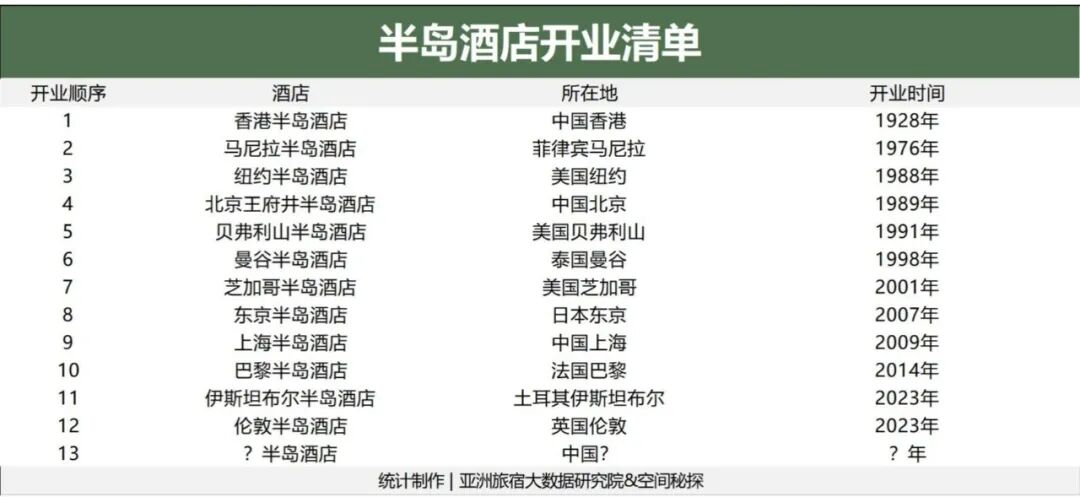
Core Insights - The Peninsula Hotels is planning to open its fourth location in China, which has sparked discussions about site selection, brand logic, and the future of luxury hotels [1][2][3] Group 1: Company Overview - The Peninsula Hotels, established in 1928, is known for its unique design that integrates local history and culture into its hotels [2][5] - The company operates under a philosophy of heavy asset ownership, focusing on investing in prime locations to create iconic landmarks [5][8] - The brand has only opened 12 hotels globally in nearly a century, emphasizing a slow and deliberate expansion strategy [9][10] Group 2: Site Selection Controversy - The potential new location for the Peninsula Hotel in China has generated debate, with Guangzhou and Chengdu being the most discussed cities [2][3][4] - Supporters of Guangzhou cite past interest in acquiring land for a hotel, while opponents point to complex property rights and unsuitability of the location [2][3] - Chengdu is considered due to its significant consumer market, but concerns exist regarding its ability to support the luxury pricing of a Peninsula hotel [3][4] Group 3: Recent Developments - The Peninsula Hotels recently opened two new locations in Istanbul and London in 2023, with the London hotel being the most expensive in the city, costing around £1 billion to build [14][16] - The Istanbul Peninsula Hotel is noted for its stunning design and cultural integration, showcasing the brand's commitment to luxury and heritage [14][13] Group 4: Service Philosophy - The Peninsula Hotels is recognized for its exceptional service, which includes personalized touches and attention to detail, aiming to create a sense of belonging for guests [23][24] - The brand emphasizes a "Simple and Smart" service concept, focusing on guest comfort and convenience without being intrusive [23][24] - Employee stability and satisfaction are prioritized, with long-term staff contributing to the hotel's unique service culture [21][22]
河源江东新区小妹土炮纯米酒店(个体工商户)成立 注册资本2万人民币
Sou Hu Cai Jing· 2025-12-10 09:04
天眼查App显示,近日,河源江东新区小妹土炮纯米酒店(个体工商户)成立,注册资本2万人民币, 经营范围为一般项目:互联网销售(除销售需要许可的商品);食用农产品批发;食用农产品零售;食 品销售(仅销售预包装食品);食品互联网销售(仅销售预包装食品)。(除依法须经批准的项目外, 凭营业执照依法自主开展经营活动)许可项目:酒类经营;食品互联网销售;食品销售。(依法须经批 准的项目,经相关部门批准后方可开展经营活动,具体经营项目以相关部门批准文件或许可证件为准) (仅通过网络开展经营活动)。 ...
雅高旗下瑞士酒店新增六处全新选址
Cai Jing Wang· 2025-12-09 04:03
雅高旗下瑞士酒店品牌近期于大中华区达成六处战略签约,分别落址中国关键城市:上海、重庆、西 安、长沙、海宁及威海。此次多城市签约涵盖国家级旅游度假区、都市核心区、高新技术开发区等多元 业态。 (雅高资讯) 雅高大中华区首席执行官朱福明(Kent Zhu)表示:"今年是中瑞建交75周年,瑞士酒店作为承载瑞士文化 与可持续理念的品牌,致力于将瑞士纯正待客之道持续引入中国市场,成为连接中瑞文化与价值的桥 梁。凭借瑞士百年酒店业底蕴和独特的瑞士文化基因——注重高品质、可持续性与精准效率,瑞士酒店 不断满足中国消费者对'慢奢'旅居的本质追求。通过此次瑞士酒店多个项目的签约,我们期待将这一独 具特色的品牌体验带到更多关键市场,为更多追求质感体验的旅行者打造值得细细品味的旅居场景。" ...
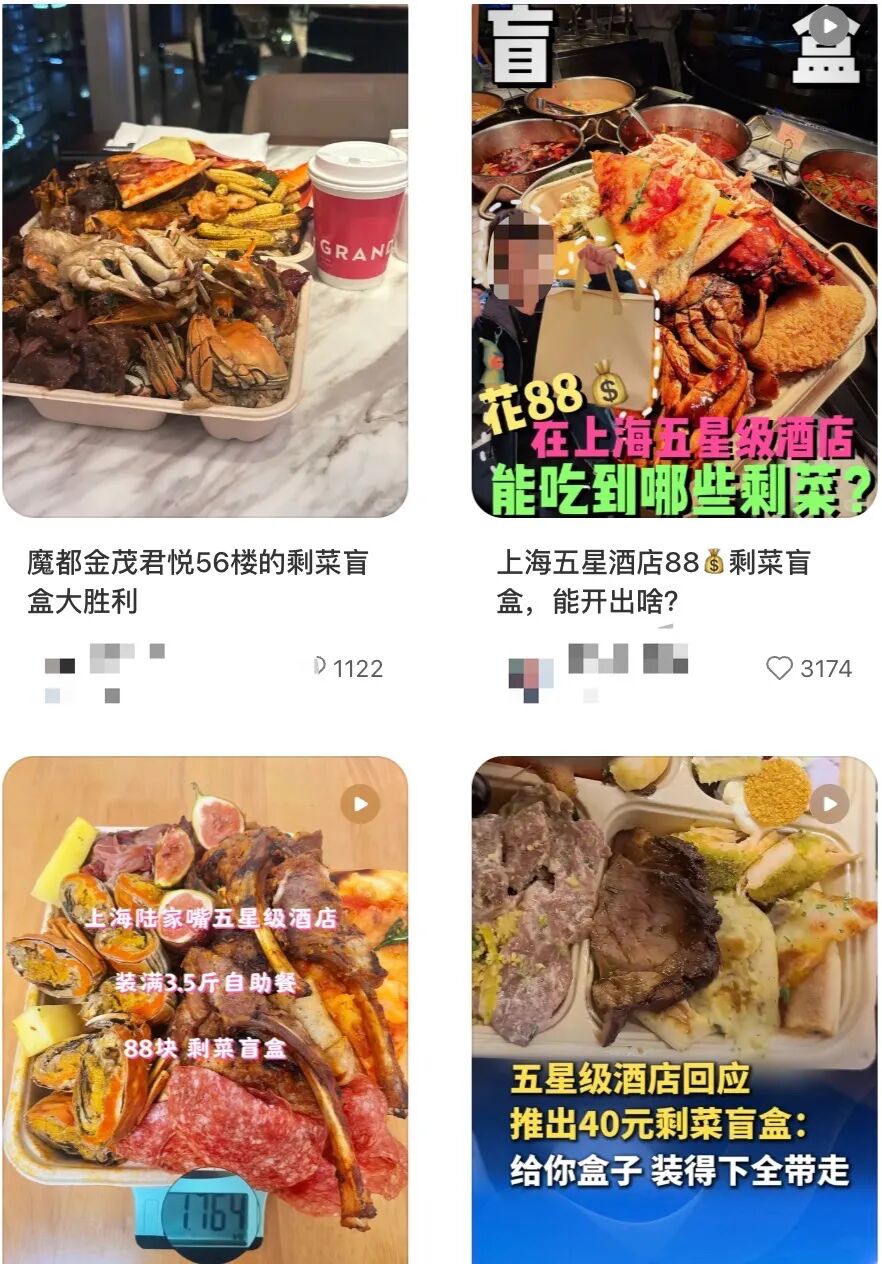
中产最体面的省钱方式:去五星酒店“捡剩菜”
3 6 Ke· 2025-12-09 02:25
作为打工人,最近我的消费升级了。 困扰我多年的"上班吃啥"这个世纪难题,开始有了一个全新的解法: 吃五星酒店的剩菜盲盒。 过了酒店规定的用餐时间,只要花上几十块钱,就可以买到一堆五星酒店的纯肉食材。 它足够便宜。 五星级酒店,集体推出「剩菜盲盒」? 对于五星酒店剩菜盲盒,一开始我是抵触的。 无论"盲盒"这俩字多么现代,它的底色仍是剩菜剩饭。 直到我看到了有人花了88块钱,在上海金茂君悦买了3斤优质蛋白: 先是用炭烤牛排、柠檬鲷鱼、酱汁鳝筒,填满客厅和主卧。 无需买菜、烹饪和洗锅,就可以无痛拥有豪华的早午晚餐。甚至一顿剩菜盲盒的甜点烘焙,就可以承包我三天的下午茶。 我知道,"剩菜"这两个字看起来虽然埋汰,但架不住: 然后用酱蟹腿、烤乳牛、烤肋排搭房顶。 最后再用咖喱牛腩、芝士奶酪溜溜缝。 〓 图源:小红书用户@沪上女工 视频上四室一厅的餐盒装满了,我的眼泪也从嘴角轻轻地滑落了。 他拿的,都(三声)是我爱吃的啊! 而想要在同样的酒店吃上这样一顿豪华自助餐,工作日的团购价都要267块。 只是少了些顶楼风光,就能以1/3的价格拿下汁水饱满的牛排和海鲜。 再配点蔬菜和米饭,够我回家吃3顿。 88块的价格看似不低,但细算 ...