
Smartphones

Search documents
请来陈奕迅,红米杀入四千价格档,卢伟冰:不排斥和小米竞争
Nan Fang Du Shi Bao· 2025-10-23 15:37
Core Insights - The release of the REDMI K90 series marks a significant milestone for the company, with a focus on high-quality audio and advanced camera features, aiming to compete in the high-end smartphone market [4][6][8] Group 1: Product Features - The K90 Pro Max features a unique 2.1 sound system with dual super linear speakers and an independent bass unit, developed in collaboration with Bose, positioning it as a leader in audio quality among smartphones [4] - The K90 Pro Max is equipped with the Xiaomi 17's light-hunting 950 main camera, which has a 43% increase in light sensitivity, and is the only product in the 4000 yuan price range to offer a 5x periscope telephoto lens [6] - The K90 Pro Max is priced starting at 3999 yuan, while the K90 starts at 2599 yuan, marking REDMI's entry into the high-end smartphone segment [4][8] Group 2: Market Positioning - The company aims to redefine the K series by not limiting product definitions by price, not differentiating technology based on brand, and even allowing for direct competition with Xiaomi [8] - The company has seen a 30% increase in total sales for the Xiaomi 17 series compared to the previous generation, with the Pro version accounting for over 80% of sales [9] - In the second quarter, the company's smartphone business generated revenue of 45.5 billion yuan, with a shipment volume of 42.4 million units, and a notable increase in market share in the high-end smartphone segment [9]


Redmi K90标准版发布:搭载超级像素屏幕,起售价2599元
Feng Huang Wang· 2025-10-23 14:05
Core Viewpoint - Redmi has officially launched the K90 smartphone standard version, featuring significant upgrades in performance, battery life, and various functionalities, with a starting price of 2599 yuan [1] Group 1: Product Specifications - The Redmi K90 features a 6.59-inch screen, balancing single-handed use and large-screen entertainment [1] - The device is designed using an integrated cold sculpture process and is available in four colors: black, white, light purple, and water blue [1] Group 2: Performance and Battery - The K90 is powered by the Snapdragon 8 Gen 2 processor and includes a three-stage ice-sealed cooling pump system [1] - It has a built-in 7100mAh battery, supporting 100W wired fast charging and 22.5W reverse charging [1] - Official testing indicates that the K90 outperforms some larger models in power consumption control and gaming frame rate performance [1] Group 3: Display and Audio - The K90 is equipped with an RGB lossless arrangement super pixel screen, enhancing text and line display quality [1] - The imaging system introduces a 2.5X telephoto lens for the first time in the K standard version [1] - The audio system features symmetrical dual speakers, tuned in collaboration with Bose [1]
机圈之光!用iQOO 15打游戏究竟有多爽?
Hu Xiu· 2025-10-23 04:02
Core Insights - The iQOO 15 smartphone is highlighted for its gaming performance, emphasizing features such as long-lasting smoothness, low heat generation, excellent battery life, and attractive color options including camouflage and "legendary" styles [1] Group 1 - The iQOO 15 offers a persistent and smooth gaming experience, making it appealing for gamers [1] - The device is designed to generate low heat during usage, enhancing user comfort [1] - The battery life of the iQOO 15 is described as top-notch, allowing for extended gaming sessions without frequent recharging [1] - The smartphone comes in vibrant color options, catering to diverse consumer preferences [1]
“金九银十”激战正酣:手机大厂子品牌加入战局 市场增长后劲何寻
Hua Xia Shi Bao· 2025-10-23 00:12
Core Insights - The smartphone market is experiencing intensified competition, particularly among sub-brands, with iQOO launching its new iQOO 15 while other brands like Redmi and OnePlus are set to release new models soon [1][2] - iQOO is focusing on its gaming attributes, utilizing self-developed chips and gaming engines to differentiate itself, despite raising the starting price of iQOO 15 compared to its predecessor [1][6] - The overall smartphone industry is facing challenges due to rising core component costs, which are squeezing profit margins and making traditional price wars unsustainable [1][6] Sub-brands Entering the Fray - Major brands such as vivo, OPPO, Honor, and Xiaomi have recently launched flagship models, and their sub-brands are now joining the competitive landscape [1][2] iQOO's Competitive Strategy - iQOO emphasizes its gaming capabilities, equipping the iQOO 15 with a self-developed gaming chip and advanced gaming engine, while also partnering with popular mobile games [3] - The mobile gaming market is growing, with a projected 4.8% increase in global market size to 635.57 billion yuan in 2024, and China's share of the global market is expanding to 37.5% [3] AI Integration in Smartphones - AI features are becoming increasingly important to consumers, with over 80% of users considering AI experience as "very important" or "important" in their next phone purchase [4] - iQOO is integrating AI into practical functions rather than emphasizing it as a standalone feature, focusing on enhancing user experience [4] Market Dynamics and Challenges - iQOO's price increase for the iQOO 15 to 4,199 yuan from 3,999 yuan for the iQOO 13 reflects broader industry trends where component price hikes limit pricing strategies [6] - The Chinese smartphone market is projected to see a 3% year-on-year decline in shipments by Q3 2025, indicating ongoing market adjustments [6] Future Growth Potential - Emerging markets are expected to drive future growth, with nearly 70% of the projected 54 million units of new shipments from 2025 to 2029 coming from these regions [7] - Chinese brands have significantly increased their global market share from 11% in 2013 to 52% by mid-2025, indicating successful international expansion [8]
Britain increases oversight of Apple and Google in mobile
Reuters· 2025-10-22 13:07
Britain on Wednesday moved to loosen the grip of Apple and Google in smartphones by designating them as having "strategic market status", giving it the powers to demand the tech giants make specific c... ...



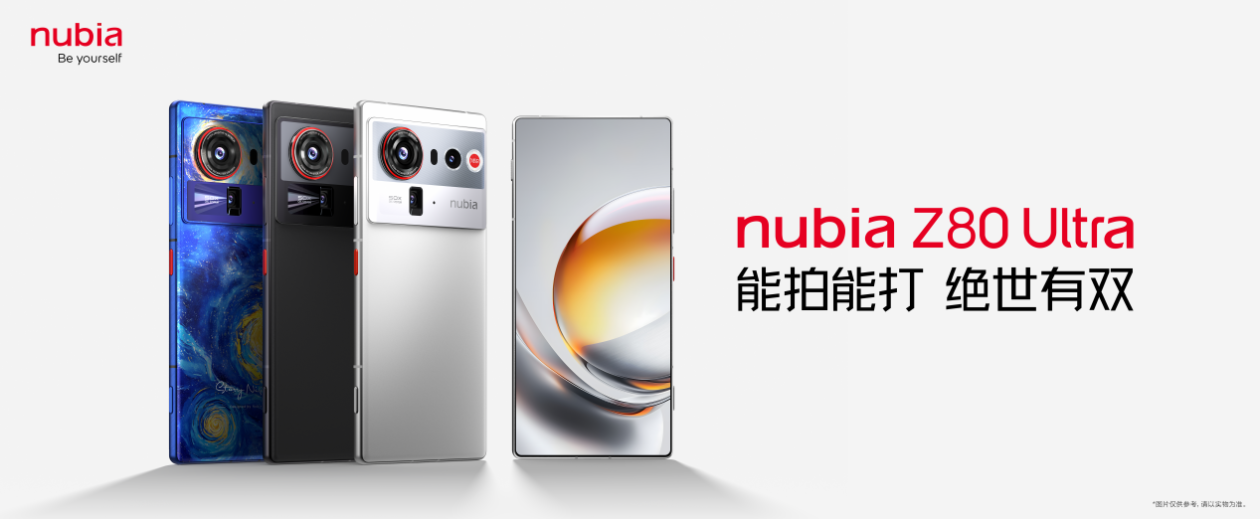
努比亚Z80 Ultra正式发布 兼顾专业影像与高性能游戏体验
Huan Qiu Wang· 2025-10-22 10:04
Core Viewpoint - Nubia has officially launched the Z80 Ultra, a flagship smartphone that enhances imaging, gaming, and system performance, aiming to provide a versatile option for users [1] Imaging Capabilities - The Z80 Ultra features a triple-camera system with a custom dual focal length of "35mm + 18mm," complemented by a 64MP periscope telephoto lens, catering to various shooting scenarios [4] - The 35mm focal length is designed for humanistic photography with a 50MP sensor, while the 18mm wide-angle lens enhances spatial perspective [4] - The device includes physical buttons and AI technology to improve shooting convenience and output quality [5] Gaming Performance - The smartphone is powered by the fifth-generation Snapdragon 8 processor, with a maximum CPU frequency of 4.6GHz, and features high-speed LPDDR5X memory and UFS 4.1 storage [10] - It incorporates the Red Magic game engine for optimized gaming performance, supporting up to 2K resolution and 144Hz refresh rate, with a 33% reduction in latency [10] - The device is equipped with advanced cooling technology to prevent performance degradation during extended gaming sessions [10] System and User Experience - The Z80 Ultra runs on the upgraded Nebula AIOS 2, enhancing interaction, functionality, and smoothness, with features like AI call assistant and customizable operations [13][16] - The system supports over 300 one-sentence execution commands for efficient functionality [16] Design and Variants - The smartphone is available in multiple versions, including standard and limited editions, with various color options and storage configurations [17] - Pricing starts at 4,999 yuan for the 12GB + 512GB version, with higher configurations available [17] - The device will be sold through major platforms, with promotional offers available through partnerships [17]
鸿蒙操作系统6发布,支持与苹果设备互传
Bei Ke Cai Jing· 2025-10-22 10:01
Group 1 - Huawei's Executive Director and Head of Terminal BG, Yu Chengdong, announced that the number of HarmonyOS 5 terminal devices has exceeded 23 million [1] - HarmonyOS 6 was released on the same day, featuring over 80 Harmony applications that have been launched, with upgrades in smart experience and security protection [1] - HarmonyOS 6 supports data transfer with Apple devices without the need for data flow, allowing for quick near-field data transmission [1] Group 2 - According to IDC, Huawei ranks third among the top five smartphone manufacturers in China, with a shipment volume of 10.4 million units and a market share of 15.2% projected for Q3 2025 [1]
CNBC's The China Connection newsletter: Losing the Chinese shopper could soon have global consequences
CNBC· 2025-10-22 07:12
Core Insights - The article discusses the ongoing interest of U.S. brands in the Chinese consumer market, particularly through cross-border e-commerce initiatives, despite existing trade tensions [2][3]. Group 1: U.S. Brands and Chinese Market - A joint event hosted by Tmall Global and WPIC Marketing + Technologies in Los Angeles attracted 50 representatives from U.S. consumer brands, highlighting their desire to tap into the Chinese market [2]. - Jacob Cooke, co-founder and CEO of WPIC, emphasized that cross-border e-commerce is the most effective way to enter the Chinese market, noting resilient demand for high-quality U.S. products [3]. Group 2: Alibaba's AI Integration - Alibaba introduced new AI tools during its Singles Day launch in Shanghai, which can enhance product targeting by 25% and allow for more complex shopper profiles [4]. - The company has reportedly recouped its AI investments in the online shopping sector, indicating successful integration of AI into its business model [5]. Group 3: Retail Trends in China - China's retail sales grew by only 3% in September year-over-year, indicating a slowdown compared to pre-pandemic levels [7]. - LVMH's flagship store "The Louis" in Shanghai has attracted significant foot traffic, with about 2,500 daily visitors, suggesting a successful strategy to engage consumers in a challenging market [8]. Group 4: Market Dynamics - LVMH reported an improvement in domestic consumer spending in China, with growth in the mid-to-high single digits, reinforcing Asia as its largest market by revenue [9]. - The competitive landscape indicates that brands are reluctant to exit the Chinese market, as losing market share there could have global repercussions [10].


它专为游戏而生?红魔11 Pro +首发开箱
Hu Xiu· 2025-10-22 03:05
Core Insights - Qualcomm has released its fifth-generation Snapdragon 8 flagship chip, prompting various competitors to launch their annual flagship smartphones, including Red Magic, which focuses on gaming and esports [1] Group 1 - Red Magic's smartphone positioning is primarily in the gaming and esports sector [1] - The article introduces the Red Magic 11 Pro + and hints at performance upgrades alongside other enhancements [1]
跨代领先,不止性能,iQOO 15标准版都强成这样了?
Hu Xiu· 2025-10-22 02:00
Core Insights - The article highlights the launch of the iQOO 15 smartphone, which is the first flagship device to feature the Snapdragon 8 Gen 2 processor, showcasing significant performance advancements [1] - iQOO 15 is equipped with top-tier specifications including LPDDR5X Ultra Pro and UFS 4.1, indicating a strong focus on high-performance components [1] - The device excels not only in performance but also in display, battery life, and imaging capabilities, positioning it as a leading product in its category [1] Performance - The iQOO 15 features the Snapdragon 8 Gen 2 chipset, marking a generational leap in performance [1] - The integration of LPDDR5X Ultra Pro and UFS 4.1 enhances the overall speed and efficiency of the device [1] Comparison with Peers - In a horizontal comparison with similar products, the iQOO 15 stands out in various aspects such as screen quality, battery endurance, and camera performance [1]