白色家电

Search documents
白色家电业CFO薪酬揭秘:美的集团钟铮年薪946万居首,为格力电器廖建雄3倍
Sou Hu Cai Jing· 2025-08-05 12:27
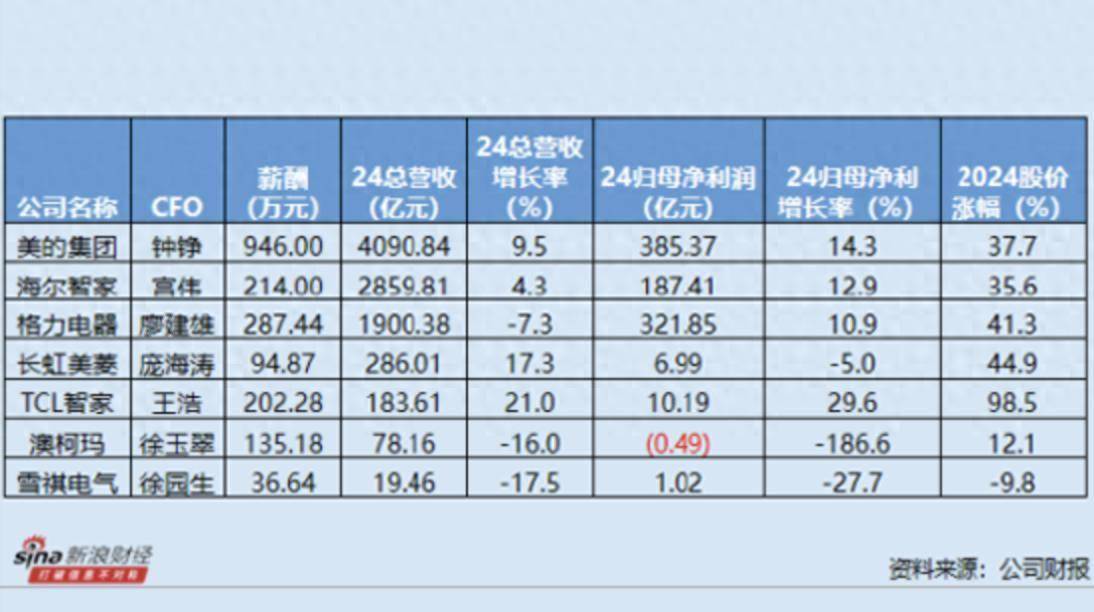
| 公司名称 | CFO | 薪酬 (hπ) | 24总营收 (亿元) | 24总营收 增长率 (%) | 24归母净利润 (亿元) | 24归母净利 增长率 (%) | 2024股价 涨幅 (%) | | --- | --- | --- | --- | --- | --- | --- | --- | | 美的集团 | 钟博 | 946.00 | 4090.84 | ਰੇ ਟੇ | 385.37 | 14.3 | 37.7 | | 海尔智家 | 营生 | 214.00 | 2859.81 | 4.3 | 187.41 | 12.9 | 35.6 | | 格力电器 | 廖建佐 | 287.44 | 1900.38 | -7.3 | 321.85 | 10.9 | 41.3 | | 长赶美医 | 房地餐 | 94.87 | 286.01 | 17.3 | ୧ ਰੇਰੇ | -5.0 | 44.9 | | TCL智家 | 王浩 | 202.28 | 183.61 | 21.0 | 10.19 | 29.6 | 98.5 | | 演柯玛 | 徐振盛 | 135.18 | 78.16 | -16.0 | (0.49) ...



【5日资金路线图】银行板块净流入66亿元居首 龙虎榜机构抢筹多股
Zheng Quan Shi Bao· 2025-08-05 11:23
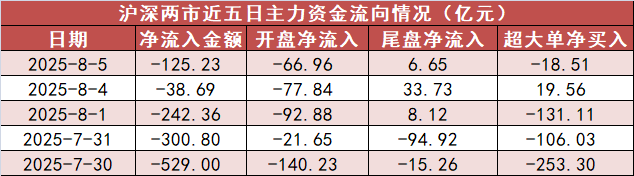
8月5日,A股市场整体上涨。 截至收盘,上证指数收报3617.6点,上涨0.96%,深证成指收报11106.96点,上涨0.59%,创业板指收报2343.38点,上涨0.39%,北证50指数上涨0.25%。A 股市场合计成交16160.56亿元,较上一交易日增加976.95亿元。 1.A股市场全天主力资金净流出125.23亿元 | | | 今日资金净流入前五大行业 | | | --- | --- | --- | --- | | 行业 | 涨跌幅 | 净流入资金 (亿元) | 资金流入较多个股 | | 银行 | 1. 75% | 65. 57 | 农业银行 | | 通信 | 2. 19% | 35. 06 | 东信和平 | | 汽车 | 1.74% | 28. 48 | 众泰汽车 | | 非银金融 | 1.15% | 13.04 | 东方财富 | | 家用电器 | 1. 43% | 10. 21 | 格力电器 | | | | 今日资金净流出前五大行业 | | | --- | --- | --- | --- | | 行业 | 涨跌幅 | 净流入资金 (亿元) | 资金流出较多个股 | | 医药生物 | -0. 2 ...
星帅尔:“一种热保护器与热保护器ST参数测试装置”取得专利证书
Mei Ri Jing Ji Xin Wen· 2025-08-05 08:56
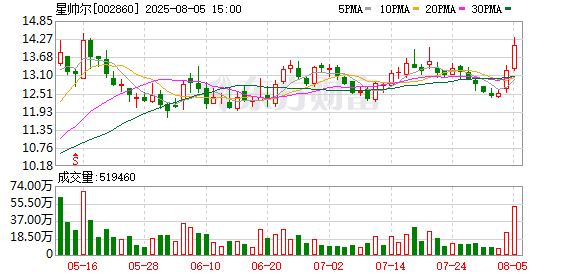
2024年1至12月份,星帅尔的营业收入构成为:光伏行业占比46.91%,白色家电行业占比40.84%,电机 行业占比10.43%,其他行业占比1.82%。 (文章来源:每日经济新闻) 星帅尔(SZ 002860,收盘价:14.07元)8月5日晚间发布公告称,杭州星帅尔电器股份有限公司近日取 得由国家知识产权局颁发的《实用新型专利证书》。专利名称为"一种热保护器与热保护器ST参数测试 装置"。 ...

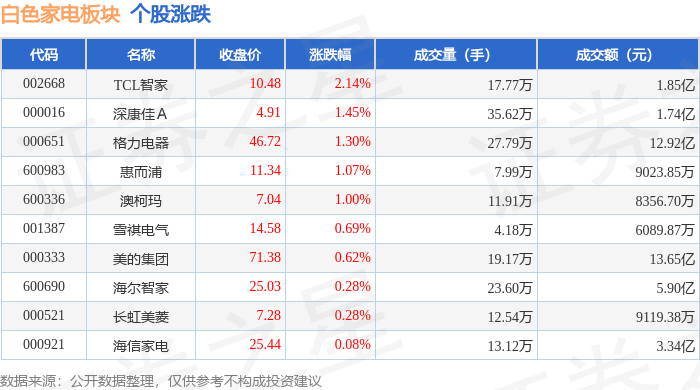
白色家电板块8月5日涨0.76%,TCL智家领涨,主力资金净流入1亿元
Zheng Xing Xing Ye Ri Bao· 2025-08-05 08:37
Market Performance - The white goods sector increased by 0.76% on August 5, with TCL leading the gains [1] - The Shanghai Composite Index closed at 3617.6, up 0.96%, while the Shenzhen Component Index closed at 11106.96, up 0.59% [1] Stock Performance - TCL Smart Home (002668) closed at 10.48, up 2.14% with a trading volume of 177,700 shares and a turnover of 185 million [1] - Gree Electric Appliances (000651) closed at 46.72, up 1.30% with a trading volume of 277,900 shares and a turnover of 1.292 billion [1] - Midea Group (000333) closed at 71.38, up 0.62% with a trading volume of 191,700 shares and a turnover of 1.365 billion [1] Capital Flow - The white goods sector saw a net inflow of 100 million from institutional investors, while retail investors experienced a net outflow of 75.72 million [1] - Major stocks like Haier Smart Home (600690) and Gree Electric Appliances (000651) had significant net outflows from retail investors [2]


格力坚守品质!董明珠:家电行业内卷源于放弃技术突破、靠偷工减料低价忽悠消费者【附白色家电行业发展趋势分析】
Qian Zhan Wang· 2025-08-05 08:25
(图片来源:摄图网) 8月5日,格力电器"董明珠健康家包头店"正式开业。格力电器董事长董明珠亲临现场,并进行了线上直播。 在直播过程中,董明珠再次表达了对家电行业低价竞争现象的看法,她指出,家电行业"很卷",因为大家不 再追求技术上的突破,而是简单地偷工减料,用价格来忽悠消费者。她强调,格力电器将坚守品质,相信只 要坚守品质,消费者就会看到。 董明珠提到,市场上有些空调一个月就坏了,维修成本很高。她认为,企业应该首先注重技术和质量,而不 是盲目追求低价。她曾多次在公开场合发表类似观点,指出低价竞争是无能的表现,因为这种竞争模式往往 是以牺牲产品质量为代价的。在2025年4月22日的格力电器临时股东大会上,董明珠也曾点名批评空调低价 现象,她质疑某些品牌以极低的价格销售空调,甚至调侃"某空调卖到1000块了,是纸糊的吗?"。她表 示,"遇到这种情况,我们还是要坚守良心,不能随波逐流。我觉得先有技术,有质量,再谈价格。" 这种"长期主义"最终转化为品牌价值的爆发式增长:2021年,格力以1207.78亿元品牌价值蝉联家电行业榜 首;2025年,其品牌价值飙升至2021.40亿元,同比激增138.87亿元,稳居行业 ...
日立考虑出售日本国内白色家电业务
日经中文网· 2025-08-05 08:00
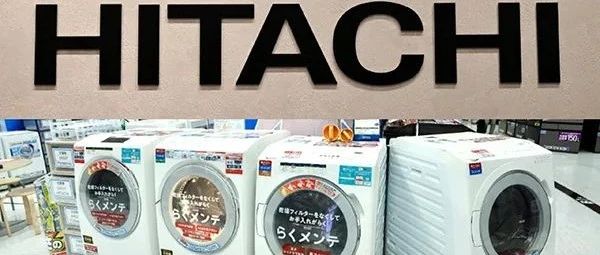
Core Viewpoint - Hitachi is considering selling its domestic white goods business, including refrigerators and washing machines, as it shifts focus towards more stable and profitable sectors like power and railways, leveraging digital technologies through its Lumada platform [2][4][5]. Group 1: Business Strategy - Hitachi's white goods business has been underperforming compared to its core growth areas, prompting the company to explore potential sales to various interested parties, including Samsung Electronics [2][4]. - The expected sale price for the white goods business could range from 100 billion yen to several hundred billion yen [2][4]. - The company aims to transition towards a business model that emphasizes long-term profitability through digital solutions and maintenance services, rather than one-time sales [5][8]. Group 2: Market Context - The Japanese white goods market is projected to grow by 2.4% in the fiscal year 2024, reaching 2.5838 trillion yen, driven by pandemic-related home demand and high-value products [6]. - Historically, Japanese manufacturers excelled in the white goods sector, but since the 2010s, they have faced intense competition from Asian companies like Haier and Midea, which have gained significant market shares globally [7]. - Hitachi's previous acquisitions, such as ABB's power distribution business and GlobalLogic, reflect its strategy to strengthen its position in social infrastructure and digital sectors [7][8]. Group 3: Future Outlook - While Hitachi is moving forward with the sale of its domestic white goods business, maintaining the business remains a potential option to enhance brand recognition among consumers [6][8]. - The company's president has indicated that the restructuring process is ongoing, with further reforms aimed at growth expected in the future [8].
白色家电业CFO群体观察:最年轻CFO雪祺电气徐园生41岁硕士学历平均薪酬比本科高超50%
Xin Lang Cai Jing· 2025-08-05 07:41
就薪酬水平而言,2024年白色家电上市公司CFO整体薪酬水平较上年显著提升,行业平均年薪达到273.77万元,同比增长9.70%,共有2位CFO高于平均值;年薪中位数为202.28万元,同比上 从薪酬结构来看,女性CFO虽然仅占28.6%,但其平均薪酬达到540.59万元,显著高于男性CFO的167.05万元,这一差距主要受美的集团钟铮946万元高薪的拉动影响。在学历方面,具有硕士 年度薪酬变动数据显示,在7位CFO中有6位实现薪酬增长,其中格力电器廖健雄的薪酬增幅超过百万元。仅有雪祺电气徐园生的薪酬出现小幅下降,减少2.97万元至36.64万元。 美的集团CFO钟铮以946万元薪酬稳坐第一,约为第二名格力电器廖健雄2024年薪3倍。此外,她还通过员工持股计划持有公司股份,具体持股比例未披露。财报显示,钟铮现年43岁,于2002年 薪酬最低的CFO为雪祺电气徐园生,当期从公司获得的税前报酬总额仅为36.64万元,较2023年下降2.97%。徐园生现年41岁,自2022年起担任公司财务总监现任雪祺电气董事、副总经理和财 责任编辑:公司观察 就年龄结构而言,2024年白色家电上市公司CFO平均年龄为49岁,40- ...
白色家电业董秘群体观察:32岁雪祺电气刘杰成最年轻董秘长虹美菱李霞任职超16年
Xin Lang Cai Jing· 2025-08-05 07:38
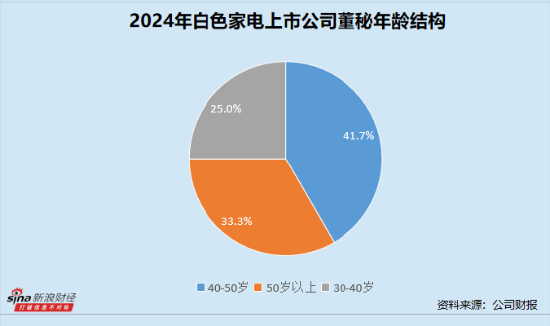
Group 1 - The total salary of A-share listed company secretaries in 2024 reached 4.086 billion yuan, with an average annual salary of 708,000 yuan [1] - Over 21% of secretaries earned more than 1 million yuan annually [1] - In the white goods sector, 10 companies disclosed their secretary information, with an average salary of 843,100 yuan [3] Group 2 - The average age of secretaries in the white goods sector is 45.42 years, with 41.7% aged between 40-50 years [2] - The majority of secretaries (41.7%) have a tenure of 1-3 years, while 25% have less than 1 year [2] - Among the 10 secretaries, 50% hold a bachelor's degree and 50% hold a master's degree [2] Group 3 - Approximately 41.7% of secretaries received less than 10 meeting requests annually, with some, like Whirlpool's Sun Yaping, not receiving any [3] - The average salary for white goods secretaries decreased by 19.11% compared to 2023, with a median salary drop of 12.80% [3] - The highest-paid secretary is Midea Group's Jiang Peng, earning 3.36 million yuan, while the lowest is Xueqi Electric's Xu Yuansheng, earning 366,400 yuan [3]

白色家电业CFO群体观察:美的集团钟铮年薪946万元稳坐第一海尔智家宫伟任职达15年
Xin Lang Cai Jing· 2025-08-05 07:33
Core Insights - The 2024 A-share CFO data report indicates that the total salary scale for CFOs in A-share listed companies reached 4.27 billion yuan, with significant increases in compensation across various sectors [1][2] Group 1: CFO Salary and Compensation - The average annual salary for CFOs in the white goods sector is 2.74 million yuan, reflecting a year-on-year increase of 9.7% [2] - Midea Group's CFO, Zhong Zheng, leads with a salary of 9.46 million yuan, approximately three times that of the second-highest earner, Gree Electric's CFO, Liao Jianxiong [3] - The median salary for CFOs in the white goods sector is 2.02 million yuan, with six out of seven CFOs experiencing salary increases [2] Group 2: CFO Demographics - The average age of CFOs in the white goods sector is 49 years, with 42.9% aged between 40-50 and 57.1% over 50 [1] - Male CFOs constitute 71.4% of the group, while female CFOs make up 28.6%, with the latter earning an average salary of 5.41 million yuan, significantly higher than the male average of 1.67 million yuan [2] - The oldest male CFO is Gong Wei from Haier Smart Home, aged 52, while the oldest female CFO is Xu Yucui from Aucma, aged 54 [1][2] Group 3: Tenure and Education - CFO tenure in the white goods sector is evenly distributed, with 28.6% having over 10 years, 28.6% between 5-10 years, and 14.3% between 3-5 years [2] - Approximately 57.1% of CFOs hold a bachelor's degree, while 42.9% have a master's degree [2]

白色家电业董秘群体观察:32岁雪祺电气刘杰成最年轻董秘 长虹美菱李霞任职超16年
Xin Lang Zheng Quan· 2025-08-05 07:21
Core Insights - The report highlights that in 2024, the total salary of A-share listed company secretaries reached 4.086 billion yuan, with an average annual salary of 754,300 yuan [1] - Among the white goods sector, the average annual salary for company secretaries is 843,100 yuan, with 8.33% earning over 1 million yuan [9] - The age distribution of secretaries in the white goods sector shows that 41.7% are aged 40-50, while 33.3% are over 50 [1][3] Salary and Employment Data - The average salary for white goods company secretaries decreased by 19.11% compared to 2023, with the median salary dropping by 12.80% [9] - The highest-paid secretary is from Midea Group, earning 3.36 million yuan, while the lowest is from Xueqi Electric, earning 366,400 yuan [9][10] - The tenure distribution indicates that 41.7% of secretaries have served for 1-3 years, while 25% have been in their roles for less than a year [3] Educational Background - In the white goods sector, 50% of company secretaries hold a bachelor's degree, while the other 50% have a master's degree [5] - Secretaries with a master's degree earn an average salary of 1.1631 million yuan, which is 38.36% higher than their counterparts with a bachelor's degree [9] Engagement and Interaction - Approximately 41.7% of secretaries in the white goods sector receive fewer than 10 investor meetings annually, with some, like Whirlpool's secretary, not conducting any meetings [7] - The highest engagement is seen with Longhong Meiling's secretary, who conducted 242 meetings in a year, averaging one per day [7]