Securities

Search documents
入股券商!A股期货公司拟斥资5.89亿元,购买11.94%股权
券商中国· 2026-01-20 23:36
Core Viewpoint - The article discusses the significant investment by Ruida Futures in acquiring a stake in Shingang Securities, marking a trend of integration between futures and securities businesses in the current financial landscape [1][6]. Group 1: Investment Details - Ruida Futures plans to invest 5.89 billion yuan to acquire a total of 11.94% equity in Shingang Securities, which includes 8.11% of pledged shares [1][2]. - The transaction consists of two parts: purchasing 8.1112% equity from Arta Global Markets Limited (3.5 billion shares) and 3.8239% equity from JT Capital Management Limited (1.65 billion shares) [3]. - The acquisition is subject to regulatory approval from the China Securities Regulatory Commission, and the pledged shares may affect the transaction timeline [3]. Group 2: Shingang Securities Overview - Shingang Securities, established in March 2016, is the first joint venture securities firm under the CEPA agreement, located in the Shanghai Free Trade Zone [4]. - The company has a registered capital of 4.315 billion yuan, with a shareholding structure that includes 29.32% from Hong Kong investors [4]. - Shingang Securities has expanded its operations with 17 branches and 7 securities offices, employing over 1,300 staff [4]. Group 3: Financial Performance - Shingang Securities has shown strong performance, with projected record highs in revenue and net profit for 2024, and a net asset return rate consistently in the top 20 of the industry for three consecutive years [5]. - For the first three quarters of 2025, Shingang Securities reported revenues of 1.514 billion yuan and net profits of 342 million yuan, with total assets of 15.289 billion yuan [5]. - The firm has positioned itself among the top 13 foreign securities firms in terms of asset scale, revenue, and profitability, enhancing its competitive strength [5]. Group 4: Strategic Implications - The investment by Ruida Futures is seen as a strategic move towards diversification and comprehensive development, aiming to integrate resources between futures and securities businesses [6]. - The collaboration is expected to enhance service offerings in risk management and wealth management, catering to diverse client needs [6]. - The ongoing reforms in the capital market are likely to expand the collaborative potential between futures and securities sectors, allowing futures companies to mitigate risks through equity investments [6].



华安基金管理有限公司 关于旗下部分基金增加华鑫证券有限责任公司为一级交易商的公告
Zhong Guo Zheng Quan Bao - Zhong Zheng Wang· 2026-01-20 23:33
登录新浪财经APP 搜索【信披】查看更多考评等级 根据华安基金管理有限公司(以下简称"本公司")与华鑫证券有限责任公司(以下简称"华鑫证券")签 署《华安基金管理有限公司交易型开放式指数证券投资基金申购赎回代理协议》,自2026年1月21日 起,将新增华鑫证券为本公司旗下部分基金申购赎回代办证券公司(以下简称"一级交易商")。投资者 可通过华鑫证券各营业网点办理以下基金的申购、赎回等业务。 ■ 投资者可通过以下渠道咨询详情: (1)华鑫证券有限责任公司 注册地址:深圳市福田区香蜜湖街道东海社区深南大道7888号东海国际中心一期A栋2301A 网址:www.hxrzrq.com (2)华安基金管理有限公司 客户服务电话:40088-50099 公司网址:www.huaan.com.cn 风险提示:本公司承诺以诚实信用、勤勉尽责的原则管理和运用基金资产,但不保证基金一定盈利,也不 保证最低收益。投资者应当认真阅读《基金合同》、《招募说明书》、基金产品资料概要等信息披露文 件。敬请投资者注意投资风险。 特此公告 华安基金管理有限公司 二〇二六年一月二十一日 华安基金管理有限公司 关于旗下部分基金增加国金证券股份有限 ...

东北证券股份有限公司 2025年度业绩预告
Zheng Quan Ri Bao· 2026-01-20 23:30
Group 1 - The company expects a positive performance forecast for the period from January 1, 2025, to December 31, 2025, indicating an upward trend in earnings [1] - The company achieved a net profit of 1.477 billion yuan, representing a year-on-year increase of 69.06%, primarily due to increased investment business income and wealth management revenue [2] - As of December 31, 2025, the company's total assets reached 113.429 billion yuan, a growth of 27.41% compared to the beginning of the year, while the equity attributable to shareholders increased by 5.40% to 20.151 billion yuan [2] Group 2 - The company has communicated with its annual audit accounting firm regarding the performance forecast, and there are no disagreements between the two parties [1][2] - The performance forecast data is based on preliminary estimates and may differ from the final figures disclosed in the company's 2025 annual report [4]

50万亿存款大迁徙 谁将承接“泼天富贵”
Nan Fang Du Shi Bao· 2026-01-20 23:11
Core Insights - A significant amount of fixed deposits, estimated at 50 trillion yuan, is set to mature this year, prompting discussions on where these funds will be allocated in a low-interest-rate environment [3][8][10] Group 1: Deposit Maturity Trends - Multiple brokerages estimate that the total amount of fixed deposits maturing this year will reach tens of trillions of yuan, with projections varying among institutions [8][9] - Guotai Junan Securities estimates that 38% of the total deposits at the six major state-owned banks will mature within the next year, with a significant portion concentrated at the end of 2025 and early 2026 [8] - CITIC Securities predicts that the scale of fixed deposits maturing in 2026 could reach 45 trillion yuan, with over 35 trillion yuan being from three-year products initiated in 2023 [9] Group 2: Investment Preferences - As depositors face declining interest rates, there is a noticeable shift towards alternative investment options, including funds and insurance products [10][11] - The demand for insurance products, particularly dividend insurance, is expected to increase due to their stable return characteristics, which are becoming scarce in the current market [10] - The report suggests that the funds released from maturing deposits will likely flow into investment areas, with a preference for stable and low-risk products in the short term [10][11] Group 3: Individual Investor Behavior - Individual investors exhibit varied responses to maturing deposits, with some opting to reinvest in fixed deposits for security, while others are exploring more aggressive investment strategies [4][5][6] - Investors like Mr. Wang are transitioning from fixed deposits to funds and securities, driven by the desire for higher returns, despite experiencing anxiety over market fluctuations [4][6] - Conversely, conservative investors like Mr. Yu prefer to maintain their funds in fixed deposits, valuing simplicity and security over potential higher returns [5][6]


【光大研究每日速递】20260121
光大证券研究· 2026-01-20 23:06
Group 1 - The depreciation of the Japanese yen is attributed to the limited sustainability of the narrowing US-Japan interest rate differential, imbalances in the international balance of payments, and uncertainties in the recovery of the Japanese economy [5] - The rise in the Japanese stock market is influenced by a new round of fiscal expansion, inflation driving corporate profit recovery, and the global AI expansion cycle [5] - The divergence between the yen's depreciation and the stock market's rise reflects differentiated pricing of structural contradictions in the Japanese economy by different asset classes [5] Group 2 - Economic data for the first quarter of 2026 is expected to show a rebound due to the early implementation of various investment stabilization policies, strong performance of export and infrastructure leading indicators, and the advance issuance of funds for "old-for-new" programs [5] - As of the end of December 2025, the total bond custody amount at China Central Depository & Clearing Co., Ltd. and Shanghai Clearing House reached 178.55 trillion yuan, with a net increase of 0.30 trillion yuan month-on-month [5] - The bond market saw an increase in holdings across most institutions, except for credit cooperatives which reduced their bond holdings [5]

2025年9家农商行被处分
Di Yi Cai Jing· 2026-01-20 22:28
Core Insights - The Chinese interbank bond market is experiencing intensified regulatory scrutiny, with a significant increase in self-discipline penalties imposed by the Trading Dealers Association [2][6] - In 2024, the association issued self-discipline penalties to 88 entities, involving 47 institutions and 41 individuals, compared to 143 penalties in the previous year [2] - New types of violations are being addressed, including low-price underwriting and non-market-based bond issuance, indicating a shift in regulatory focus [3][4] Group 1: Regulatory Actions - The association has taken action against 44 institutions for structured issuance violations, accounting for 41% of all penalties, with severe penalties for some issuers and private equity firms [6] - Nine rural commercial banks were penalized for trading violations, highlighting the focus on smaller banks' activities in the bond market [6][7] - The association has strengthened its oversight on information disclosure and fundraising compliance, conducting special inspections on platform enterprises misusing funds [7][8] Group 2: Specific Violations - The association's first-time actions include penalizing low-price underwriting practices and violations by rating agencies regarding independence and consistency [3][4] - A notable case involved Guangfa Bank's issuance of secondary capital bonds, where six main underwriters were investigated for potential price manipulation [4][5] - Rating agencies like Lianhe Credit and Zhongzheng Pengyuan faced penalties for violating rating consistency principles and improper interactions with potential rated entities [5] Group 3: Market Regulation Improvements - The Trading Dealers Association is continuously improving self-regulatory rules, focusing on issues like distorted pricing and non-market-based issuance [8] - New guidelines have been issued to enhance the management of fundraising and information disclosure, aiming to clarify responsibilities and improve market transparency [8] - Future efforts will concentrate on addressing prominent issues in the interbank bond market to maintain a stable market environment [8]

中山证券涉诉,卷入4.9亿元纠纷
Zhong Guo Ji Jin Bao· 2026-01-20 22:28
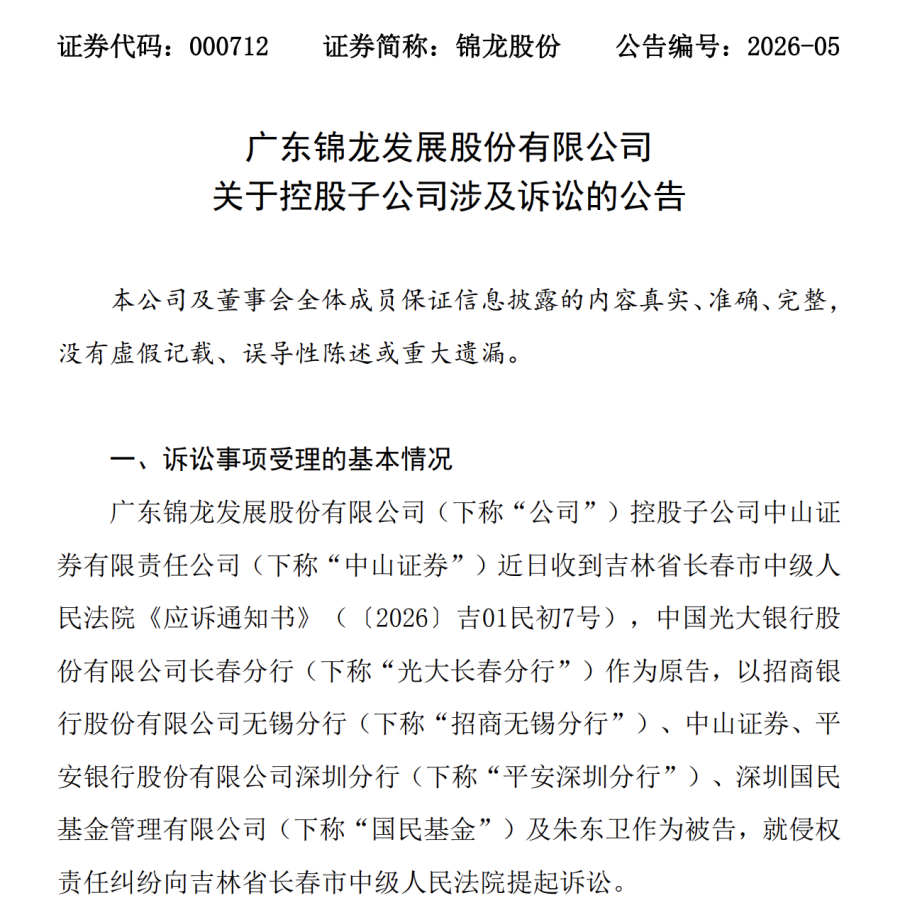
Group 1 - Zhongshan Securities is facing a lawsuit initiated by Everbright Bank's Changchun branch, seeking joint compensation of 350 million yuan in principal and 139.4 million yuan in fund occupation fees, totaling 489 million yuan [1][5] - This is not the first lawsuit for Zhongshan Securities; in October 2025, the company was ordered to bear joint compensation responsibility for a debt of 27 million yuan within a 30% range [1] - Despite the overall high growth in the securities industry, Zhongshan Securities reported a significant decline in performance, with a 29.17% year-on-year drop in operating revenue and an 88.06% decrease in net profit for 2025 [1][6] Group 2 - The lawsuit stems from a 2014 agreement where Zhongshan Securities was entrusted by the Wuxi branch of China Merchants Bank to manage a directed asset management plan, which involved a 350 million yuan loan to be repaid by the borrower, but the loan was not recovered upon maturity [4] - The plaintiff claims that employees of the bank and the actual controller of Liuhe Rice Industry fraudulently signed false investment agreements, leading to the loss of the 350 million yuan [5] - Zhongshan Securities' financial performance has fluctuated significantly in recent years, with revenues of 646 million yuan, 352 million yuan, and 426 million yuan from 2021 to 2023, and a net profit of 1.7 billion yuan in 2024, before falling back into decline in 2025 [6] Group 3 - To alleviate debt pressure, the controlling shareholder, Jinlong Co., has been planning to transfer its stakes in Dongguan Securities and Zhongshan Securities since 2023 [7] - In June 2024, Jinlong Co. initiated a plan to sell 67.78% of its stake in Zhongshan Securities, but the plan was terminated in May 2025 due to concerns about becoming a shell company [7] - Jinlong Co. successfully sold 20% of its stake in Dongguan Securities for 2.272 billion yuan, which significantly alleviated its financial pressure and improved operational stability [7]
贵阳银行股份有限公司关于股东股份质押展期的公告
Shang Hai Zheng Quan Bao· 2026-01-20 19:33
Core Viewpoint - Guizhou Bank announced the extension of share pledges by its major shareholder, Guizhou State-owned Assets Investment Management Company, which holds a significant portion of the bank's shares [1][2]. Group 1: Shareholding and Pledge Details - Guizhou State-owned Assets holds 468,599,066 shares of Guizhou Bank, accounting for 12.8166% of the total share capital [1]. - Together with its concerted actions, Guizhou State-owned Assets and its affiliates hold a total of 565,644,166 shares, representing 15.4708% of the total share capital [1]. - After the pledge extension, Guizhou State-owned Assets has pledged a total of 233,203,600 shares, which is 49.7661% of its holdings [1]. - The total pledged shares by Guizhou State-owned Assets and its affiliates amount to 279,543,600 shares, making up 49.4204% of their combined holdings [1]. Group 2: Pledge Extension Specifics - The shares involved in this pledge extension do not serve as collateral for major asset restructuring performance compensation or other guarantees [2]. - The original pledge dates for the shares were January 9, 2026, and January 16, 2026, for two separate batches of 46,828,000 shares each [2].
2025年9家农商行被处分
第一财经· 2026-01-20 15:18
Core Viewpoint - The article discusses the ongoing strict regulation in China's bond market, highlighting an increase in self-discipline measures and a shift in the types of violations being addressed by the China Interbank Market Dealers Association [3][9]. Group 1: Regulatory Actions - In the past year, the association imposed self-discipline penalties on 143 instances involving 108 institutions, compared to 88 instances involving 47 institutions in 2024, indicating a significant increase in regulatory scrutiny [3]. - The association has intensified its focus on new types of violations, particularly in structured issuance and trading irregularities, while also addressing low-price underwriting practices [9][11]. Group 2: Notable Violations - The association reported several "firsts" in its enforcement actions, including the first penalties for low-price underwriting of financial bonds and violations by rating agencies regarding independence and consistency principles [5][6]. - A notable case involved Guangfa Bank's issuance of secondary capital bonds, where six main underwriters were investigated for suspicious pricing practices, leading to increased scrutiny of the bank's actions [6][7]. Group 3: Specific Cases and Trends - The association took action against 44 institutions for violations related to structured issuance, which accounted for 41% of all penalties, with some involved institutions facing severe penalties for significant fee rebates [9]. - Trading violations were also a focus, with 32 institutions penalized, including nine rural commercial banks, for various infractions such as price manipulation and account lending [9][10]. Group 4: Future Directions - The association plans to continue enhancing self-discipline rules and regulations, focusing on issues like pricing distortions and non-market-based issuance, while also improving information disclosure and fund management practices [11].

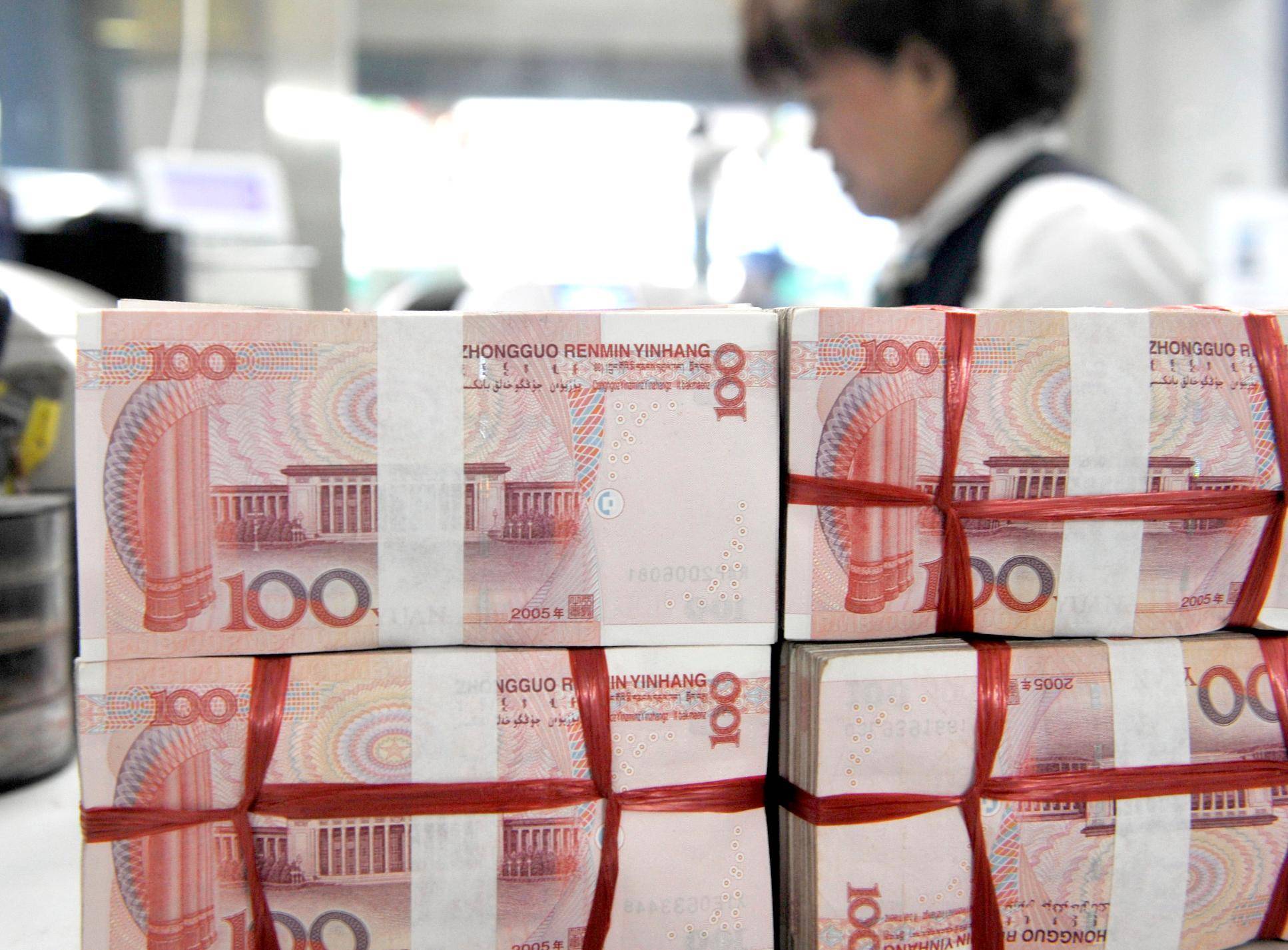
50万亿存款到期是“笼中虎”?
Sou Hu Cai Jing· 2026-01-20 14:09
Core Viewpoint - The upcoming maturity of over 50 trillion yuan in residential time deposits in 2026 is raising concerns and speculation about potential shifts in wealth allocation and its impact on the stock market [3][4]. Group 1: Scale of Maturing Deposits - The total scale of maturing time deposits in 2026 is estimated to be around 50 trillion yuan, with various estimates suggesting figures between 59 trillion and 75 trillion yuan [5][6]. - The high volume of maturing deposits is attributed to a significant increase in precautionary savings during 2022-2023, driven by weak performance in the stock and real estate markets [4][5]. - The current low interest rate environment, with one-year deposit rates falling below 1%, is prompting residents to consider reallocating their deposits [5][6]. Group 2: Wealth Reallocation and Market Impact - The concept of "deposit migration" has gained traction, with analysts suggesting that the large volume of maturing deposits could lead to significant liquidity impacts across asset markets [6][9]. - However, historical context indicates that large-scale withdrawals have not occurred in the past, as residents tend to prioritize safety and stability in their savings [8][9]. - Most residents are expected to keep their deposits within the banking system, with a retention rate historically around 90% [9]. Group 3: Potential Directions for Reallocated Funds - The primary destinations for reallocated funds are expected to be consumption, housing purchases, and loan repayments, with consumption accounting for approximately 68% of disposable income [9][10]. - Other potential allocations include low-risk financial products such as bank wealth management, insurance, and mutual funds, with a small percentage directed towards the stock market [9][10]. - Analysts suggest that while direct investment in the stock market may be limited, indirect investments through mutual funds and other financial instruments could increase [15][16]. Group 4: Future Asset Allocation Strategies - The low interest rate environment is likely to drive a shift from long-term deposits to more flexible financial products, reflecting a need for liquidity and better returns [11][15]. - Residents are encouraged to adopt a diversified asset allocation strategy, balancing between stable core assets and growth-oriented satellite assets [15][16]. - The transition towards a more diversified investment approach is seen as a gradual process, with a focus on risk management and long-term perspectives [15][16].