数智化发展

Search documents
工商银行行长刘珺:将先进技术融入运营流程,必须以系统验证为前置条件
Bei Jing Shang Bao· 2026-03-27 12:01
Core Viewpoint - The core viewpoint of the article emphasizes the commitment of the Industrial and Commercial Bank of China (ICBC) to enhance its digital and intelligent development capabilities while ensuring customer privacy and information security through rigorous technology validation [1] Group 1: Digital Transformation - ICBC is focused on continuously enhancing its digital and intelligent development momentum [1] - The bank has established a series of centralized systems and is committed to ongoing iterative upgrades to support diverse business needs comprehensively [1] Group 2: Technology Validation - The bank utilizes relatively new technologies, which must undergo market validation and internal verification before being integrated into its systems [1] - Protecting customer privacy and information security is highlighted as the bank's most important responsibility [1] Group 3: Operational Integration - Advanced technologies are being integrated into operational processes, with system validation being a prerequisite for implementation [1]

“十五五”规划纲要深度解读:新质生产力引领,开启现代化建设新篇章
GUOTAI HAITONG SECURITIES· 2026-03-16 02:45
Group 1: Strategic Goals - The "14th Five-Year Plan" laid a solid foundation for the "15th Five-Year Plan," achieving significant economic and social development milestones[9] - The "15th Five-Year Plan" aims to achieve substantial progress in high-quality development, with a focus on increasing the resident consumption rate and total factor productivity[30] - The plan emphasizes the importance of technological self-reliance and innovation, with a target to significantly enhance the level of technological independence[30] Group 2: Key Development Tasks - The plan outlines twelve core tasks, including the construction of a modern industrial system and the promotion of digital and intelligent development[4] - It highlights the need for a strong domestic market, focusing on enhancing consumer capacity and improving investment in both human and physical resources[4] - The plan aims to accelerate the green transition, with specific mechanisms and tasks to promote energy efficiency and carbon reduction[4] Group 3: Economic and Social Indicators - The "15th Five-Year Plan" sets ambitious targets, including a GDP growth rate that remains reasonable and a significant increase in the proportion of non-fossil energy in total energy consumption[39] - It aims for a substantial increase in the number of high-value invention patents per capita, targeting 22 patents per 10,000 people[41] - The plan includes a goal for the urbanization rate of the permanent population to reach 71%[41]
从细节看重点:对“十五五”规划纲要的简要梳理-20260315
GF SECURITIES· 2026-03-15 06:58
Economic Development Goals - The "15th Five-Year Plan" sets 20 main economic and social development goals, including GDP growth, labor productivity, and urbanization rates[6] - The GDP growth target continues to emphasize maintaining a reasonable range, with a new long-term goal of doubling per capita GDP by 2035 compared to 2020 levels[5] - The plan aims to increase the proportion of non-fossil energy in total energy consumption to 25%[5] Technological and Industrial Development - The focus on modern industrial systems has shifted, with an emphasis on advanced manufacturing as the backbone, and new requirements for aerospace, transportation, and network power[7] - The plan highlights the importance of innovation in key areas such as artificial intelligence, quantum technology, and biotechnology, with a commitment to achieving breakthroughs in core technologies[9] - The modernization of infrastructure is prioritized, with a focus on sustainable energy and digital infrastructure development[9] Social Welfare and Population Development - The plan introduces a target to increase the proportion of nursing beds in elderly care institutions from 68% to 73%[5] - It aims to raise the childcare enrollment rate for children under three by 6 percentage points, reflecting a shift from supply to demand in childcare policy[5] - Policies to support childbirth and reduce costs associated with raising children are emphasized, including tax deductions and expanded insurance coverage[20] Domestic Market and Investment - The plan emphasizes boosting consumption and effective investment, with specific measures to enhance employment and improve consumer confidence[11] - It aims to increase the proportion of government investment in social welfare projects, particularly in healthcare and elderly care[11] - The establishment of a unified national market is a key focus, with improvements in property rights protection and market access[11] Environmental and Green Development - The plan prioritizes achieving carbon peak and neutrality, implementing dual control over carbon emissions and intensity[20] - Specific targets include saving 1.5 million tons of standard coal through energy efficiency improvements in key industries[20] - The plan outlines measures for clean energy transition, including the promotion of biomass and green hydrogen projects[20]
“不能光看国内生产总值增长”——2026全国两会跟踪第三期
一瑜中的· 2026-03-08 08:55
Core Viewpoint - The article emphasizes the importance of high-quality development and the need to focus on new productive forces rather than just GDP growth, highlighting the necessity of strengthening the real economy and self-sufficiency in food production [1][2]. Summary by Sections Economic Growth and Development - The General Secretary stated that economic growth should not solely focus on GDP but rather on enhancing hard power and pursuing new productive forces through continuous transformation and upgrading [1]. - The "14th Five-Year Plan" prioritizes the construction of a modern industrial system and the consolidation of the real economy as the foremost strategic task [1][2]. Strategic Tasks and Planning - The "14th Five-Year Plan" outlines major strategic tasks, including the promotion of high-quality development, digital technology, and artificial intelligence, with specific sections dedicated to these themes [2][3]. - The plan includes 20 key indicators for economic and social development during the "14th Five-Year" period, emphasizing the need for a comprehensive approach to development [3]. Carbon Neutrality and Environmental Goals - The "14th Five-Year Plan" is identified as a critical period for accelerating the green transformation of the economy and achieving carbon peak goals [2][3]. - The plan aims to establish a comprehensive evaluation and assessment mechanism for carbon neutrality, ensuring accountability for carbon emission targets [3]. Infrastructure Investment - The "14th Five-Year Plan" includes a dedicated chapter on building a modern infrastructure system, covering transportation, water conservancy, and energy infrastructure [3].


国家发改委权威解读“十五五”规划纲要草案
证券时报· 2026-03-07 08:45
Core Viewpoint - The "14th Five-Year Plan" outlines a comprehensive framework for China's economic and social development, emphasizing high-quality growth, digital transformation, and green development while ensuring social welfare and stability [2][3][4]. Summary by Sections General Overview - The "14th Five-Year Plan" consists of 18 chapters, 62 sections, and 171 articles, divided into three main parts: general principles, major strategic tasks, and implementation guarantees [2]. Major Strategic Tasks - The plan addresses 16 key areas including industrial development, technological innovation, digital transformation, domestic market expansion, and rural revitalization, with a focus on high-quality development and structural optimization [2][3]. Economic Growth Targets - GDP growth is set to be maintained within a reasonable range, with qualitative descriptions that imply quantitative requirements, aligning with the central government's goals for sustainable economic growth [4]. Green Development - The plan emphasizes a dual control system for carbon emissions, aiming for a comprehensive green transition in economic and social development, while maintaining energy efficiency as a primary method for carbon reduction [5][8]. Domestic Demand Expansion - Strategies for expanding domestic demand include combining existing and new policies, enhancing consumer spending, and increasing government investment in social welfare [6]. Zero Carbon Initiatives - The plan aims to establish around 100 national-level zero-carbon parks and emphasizes the development of green technologies and industries, alongside significant energy efficiency improvements [7][8]. New and Future Industries - The plan outlines a strategy for nurturing emerging and future industries through a structured approach, focusing on innovation, demand-driven growth, and effective regulatory frameworks [9]. Energy Consumption Goals - By 2030, non-fossil energy consumption is projected to reach 25% of total energy consumption, supported by major infrastructure projects and a diversified energy strategy [10]. Social Welfare and Education - The plan includes measures to enhance social security, improve pension systems, and explore extending compulsory education, aiming to increase the average education years of the labor force [11][12][13].

卫龙前CEO入职大窑汽水;钱大妈赴港IPO
Sou Hu Cai Jing· 2026-01-19 01:17
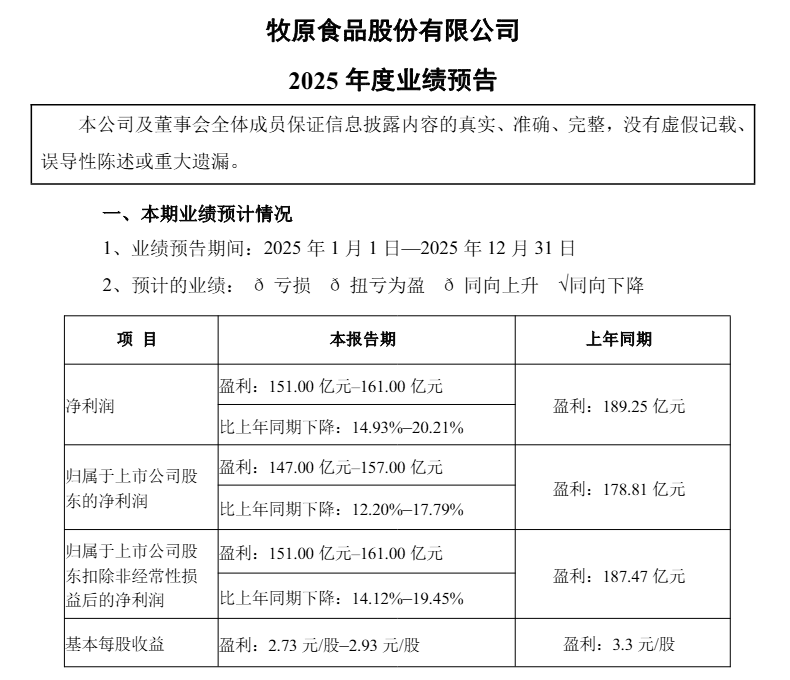
Group 1: Company Developments - Former CEO of Weilong, Sun Yinoong, has joined Dayao as CEO, bringing extensive experience from Coca-Cola and Xiamen Yili Food Group [1] - Qian Dama International Holdings has officially launched its IPO process in Hong Kong, aiming to raise funds for expanding its store network and enhancing supply chain capabilities [2] - Muyuan Foods has projected a net profit of 14.7 billion to 15.7 billion yuan for 2025, reflecting a decline of 12.20% to 17.79% compared to the previous year due to fluctuations in the pig market [2][3] - Jinlongyu announced the transfer of its 50% stake in a joint venture with Mars China for a total of $60 million, which is expected to impact its 2026 earnings significantly [4] - New Hope plans to raise approximately 3.338 billion yuan through a private placement to enhance digital transformation and repay debts [4] Group 2: Industry Trends - Yonghui Supermarket has forecasted a net loss for 2025, indicating challenges in its operational performance [5] - Ito En is advancing local tea procurement in China to mitigate rising costs and meet the growing global demand for matcha [5] - Yunnan coffee has expanded its market reach to 34 countries, with significant growth in planting area and production, leading to a 358% increase in exports in 2024 [8] - The World Health Organization has called for increased taxation on sugary and alcoholic beverages to address public health issues related to obesity and related diseases [10]

卫龙前CEO加入大窑,57岁老将能否再造一个IPO神话?
Sou Hu Cai Jing· 2026-01-17 05:32
Company Developments - Former CEO of Wei Long, Sun Yinan, has joined Dayao as CEO, bringing extensive experience from Coca-Cola and other food companies [2][3] - Qian Dama International Holdings has initiated its IPO process in Hong Kong, aiming to raise funds for expanding its store network and enhancing supply chain capabilities, with a projected GMV of 14.8 billion yuan in 2024 [2][3] - Muyuan Foods has forecasted a net profit of 14.7 billion to 15.7 billion yuan for 2025, representing a decline of 12.20% to 17.79% compared to the previous year [2][3][5] - Jinlongyu has announced the transfer of its stake in a joint venture with Mars China, with a total transaction value of $60 million, which is expected to impact its 2026 earnings significantly [6][5] Industry Trends - The fresh food retail sector is seeing significant growth, with Qian Dama leading the community fresh food chain market in China for five consecutive years [2][3] - The coffee industry in Yunnan has expanded its global reach, exporting to 34 countries and regions, with a notable increase in production and agricultural output [11] - The World Health Organization has called for increased taxation on sugary and alcoholic beverages to address public health issues, highlighting the economic burden of these products [12]



支撑网上零售额超14万亿元 一组数据看我国邮政快递业运行情况
Yang Shi Xin Wen· 2026-01-07 04:05
Group 1 - The core viewpoint of the article highlights the proactive adaptation of the postal and express delivery industry to new consumption models such as live commerce and social e-commerce, aiming to support online retail sales of physical goods exceeding 14 trillion yuan in 2025 [1] - The volume of parcel business in international and Hong Kong, Macao, and Taiwan regions is expected to reach 4.2 billion pieces in 2025, with an average annual growth rate of over 18% [1] - The industry is advancing digital and intelligent development, with over 450 drones in operation and nearly 4 million items transported by drones annually [1] Group 2 - The postal and express delivery sector is accelerating its green transformation by promoting original direct delivery of e-commerce parcels, smart packaging technology, and green certification for packaging [1] - A total of 25 cities are conducting comprehensive electrification trials for postal and express delivery vehicles, while 13 cities are exploring the use of rail transport for mail and parcels [1] - The industry is expected to maintain a steady upward trend in 2026, with an estimated delivery volume of 230 billion pieces, a year-on-year growth of around 6%, and express delivery volume reaching 214 billion pieces, with an approximate growth of 8% [1]
常山四省边际物流枢纽能级再提升
Xin Lang Cai Jing· 2026-01-04 17:59
Group 1 - The core strategy of Zhejiang Ronghui Logistics is to focus on four major areas: operations, network, service, and management, with a total investment of 2.77 billion yuan planned for 2026 [1] - The company aims to enhance its logistics services by constructing distribution service halls, optimizing remote area connectivity, and reducing transportation costs through integrated transport modes [1][2] - The local government has introduced policies to support the logistics industry, including a maximum 20% reward for fixed asset investments and the establishment of a logistics special fund to alleviate financing difficulties [2] Group 2 - The logistics industry in Changshan has seen the emergence of three leading companies: Ronghui Logistics, Zhongka Yunli, and Yimi Dida, attracting over 130 supporting logistics enterprises and extending the industrial chain [2] - Ronghui Logistics focuses on the large parcel market, covering 31 provinces with 15,000 franchise outlets and an average daily cargo volume of 26,000 tons [2] - The county is developing a three-tier smart logistics system to enhance internal circulation, improving delivery efficiency and reducing the time for residents to collect packages by 2 hours [2] Group 3 - Changshan aims to strengthen policy support and promote digital development to enhance the logistics hub's capabilities, positioning "Fast Delivery Town" as a key driver for high-quality economic growth [3]
第五届国际新材料产业大会签约项目162个
Zhong Guo Xin Wen Wang· 2025-11-21 13:08
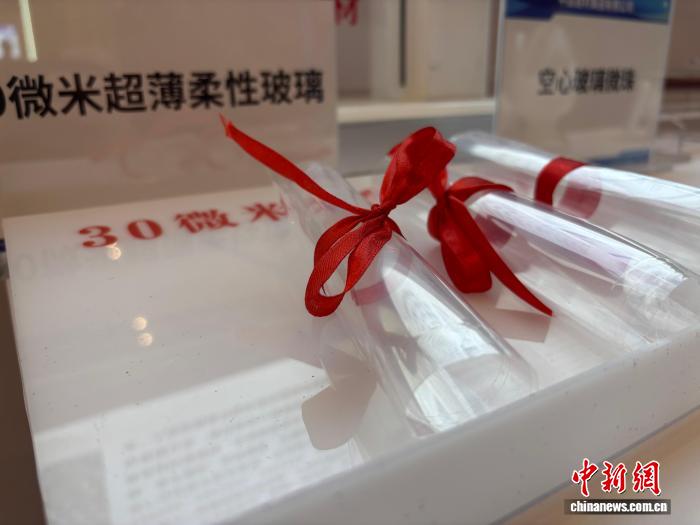
Core Insights - The fifth International New Materials Industry Conference opened in Bengbu, Anhui Province, with a total of 162 projects signed, amounting to a total investment of 70.197 billion RMB [1][3] - The theme of the conference is "New Technology, New Materials, New Future," attracting around 400 guests, including academicians, experts, and representatives from Fortune 500 companies [1][3] - The Vice President of the International Glass Association emphasized that new materials are a strategic industry leading the future and driving global economic recovery and growth, highlighting China's increasing importance in the global new materials landscape [1] Industry Growth - Over the past five years, Anhui's new materials industry has seen an average annual growth rate of over 10%, with projected revenue for the entire industry chain exceeding 900 billion RMB in 2024, and expected to reach 1 trillion RMB this year [3] - The province has developed three trillion-level industrial clusters in advanced metal materials, advanced chemical materials, and silicon-based new materials, along with several hundred billion-level industrial chains in new display materials and new energy materials [3] Future Development - The conference highlighted that the new materials industry in China is entering a golden development period, driven by the acceleration of new-type industrialization during the 14th Five-Year Plan [3] - Key directions for the future include accelerating the development of new productive forces, building future industries, promoting green and low-carbon transformation, and achieving intelligent development [3] - The International New Materials Industry Conference has become an important platform for Anhui to connect global innovation resources, showcase an open innovation image, and promote high-quality development in the new materials industry [3]