Apparel

Search documents
Nike vs. Starbucks: Which Turnaround Effort Is More Likely to Succeed?
Yahoo Finance· 2026-01-15 12:35
Core Insights - Nike and Starbucks are both iconic brands that have faced challenges due to rising inflation and have recently changed their CEOs to implement turnaround strategies [1][7] - Both companies finished the previous year with negative stock performance, with Nike down 16% and Starbucks down 8% [2] Company Performance - Starbucks appointed Brian Niccol as CEO in September 2024, focusing on simplifying the menu, reducing wait times, and enhancing customer experience, which has positively impacted investor confidence [3] - Nike appointed Elliott Hill as CEO in October 2024, choosing an internal candidate with extensive company knowledge, focusing on improving wholesale relationships and brand investment [4] - Both companies have shown initial signs of progress in growth rates over recent quarters under their new leadership [5] Margin Pressure - Gross profit margin is a critical metric for assessing the impact of rising costs and pricing strategies on both companies [6] - Nike has experienced a smaller decline in its margin, losing about four percentage points from its recent high, compared to Starbucks, which has lost nearly eight percentage points [8]


One Apparel Legend Posted 8 Straight Beats While Its Rival Lost 74% in Five Years
247Wallst· 2026-01-15 10:58
Core Insights - Levi Strauss and VF Corporation have recently reported their quarterly results, highlighting contrasting performance trends between the two apparel companies [1] Company Performance - Levi Strauss is showing positive momentum in its financial performance, while VF Corporation is experiencing challenges [1]


*ST摩登:拟使用不超过5亿自有资金委托理财
2 1 Shi Ji Jing Ji Bao Dao· 2026-01-15 10:20
Core Viewpoint - The company *ST Modern has announced a plan to use temporarily idle self-owned funds for entrusted wealth management, with a maximum investment amount of up to 500 million yuan [1] Group 1: Investment Plan - The board of directors has approved the proposal to invest in high-security and high-liquidity financial products, including government bonds and fixed-income bank wealth management products [1] - The funding source for this investment will be the company's or its subsidiaries' self-owned funds [1] - This matter is subject to approval at the shareholders' meeting, with an authorization period of 12 months from the date of approval at the first temporary shareholders' meeting in 2026, allowing for rolling use [1]

有钱人不再买贵,反而疯抢300元羽绒服,这是一个强烈信号!
Sou Hu Cai Jing· 2026-01-15 01:16
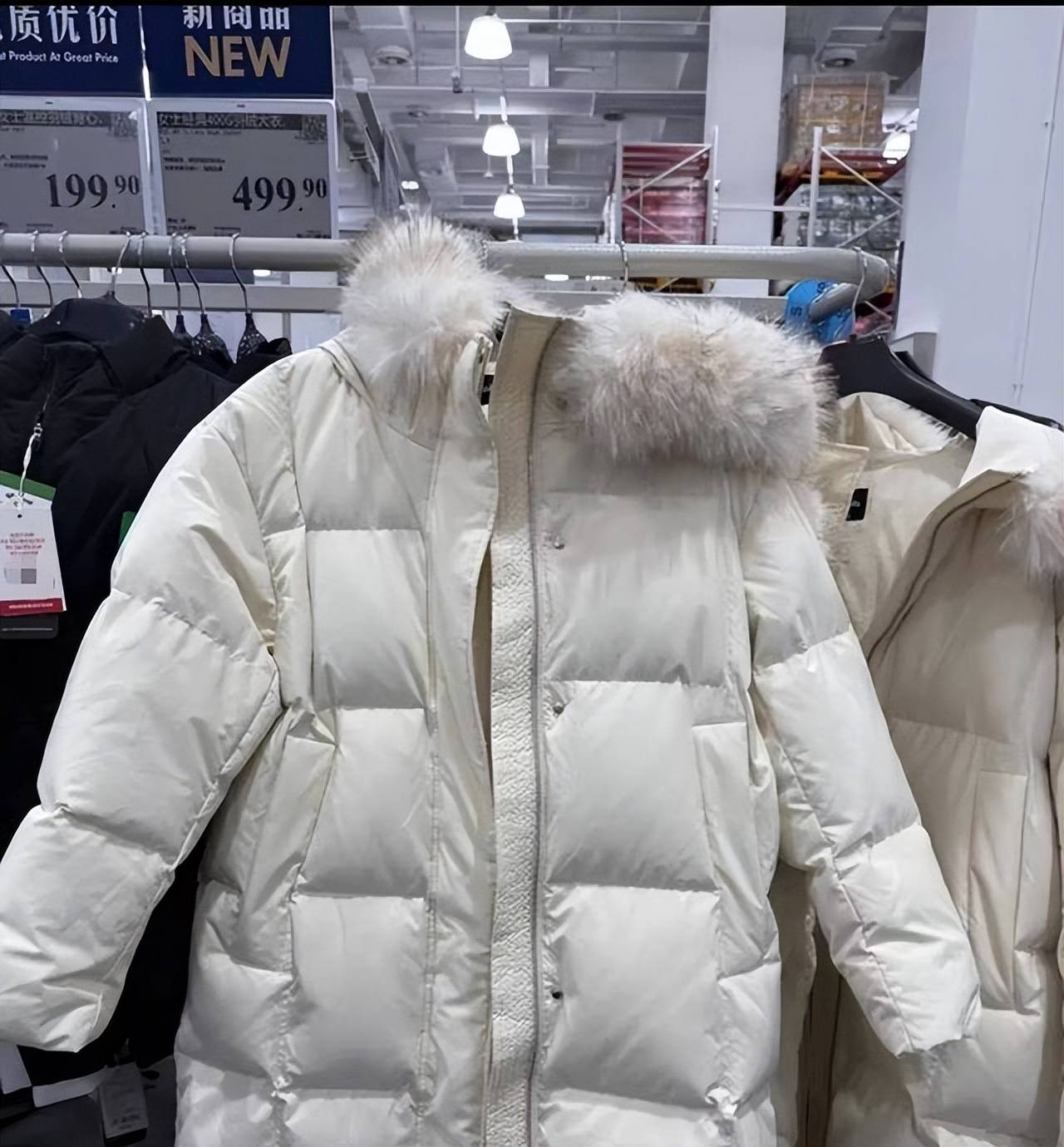
Core Viewpoint - The current consumer mindset has shifted from valuing luxury brands to prioritizing cost-effectiveness and value for money, indicating a significant change in purchasing behavior and attitudes towards pricing [1][3][11] Group 1: Changing Consumer Behavior - Consumers are now more focused on "value for money" rather than simply associating high prices with high quality, leading to a decline in the perceived value of expensive brands [5][11] - The surge in popularity of affordable brands, such as the down jackets from Pang Donglai, reflects a growing demand for transparency in pricing and quality [9][14] - The traditional belief that expensive down jackets equate to superior quality is being challenged as consumers recognize that cheaper alternatives can provide similar warmth and comfort [7][11] Group 2: Market Dynamics - The market is witnessing a decline in the effectiveness of luxury branding, as consumers are less willing to pay a premium for brand names without justifiable quality [5][14] - The success of brands that offer transparent pricing and quality assurance is indicative of a broader trend towards practicality and self-satisfaction in consumer choices [9][14] - The shift in consumer preferences suggests that brands relying on marketing and storytelling to justify high prices may face challenges, while those focusing on supply chain efficiency and product quality may thrive [14]
Tapestry Downgraded by Jefferies as Valuation Caps Upside
Financial Modeling Prep· 2026-01-14 21:06
Core Viewpoint - Tapestry (NYSE: TPR) has been downgraded from Buy to Hold by Jefferies, with a revised price target of $138, down from $142, reflecting a more balanced risk-reward profile after a recent stock price increase [1] Group 1: Financial Estimates and Valuation - Jefferies raised its second-quarter estimates above consensus due to accelerating alternative data through December, but reduced longer-term projections due to risks associated with average unit retail-driven slowdown [1] - Tapestry is currently trading in the low-20s on a price-to-earnings basis, significantly above its historical average of approximately 12x and peer multiples near 16x, indicating a premium valuation compared to the retail ETF benchmark [2] Group 2: Risks and Strengths - Risks identified include challenging average unit retail comparisons, potential slowing fashion cycles, and increased discounting in the U.S. market, particularly among younger consumers [3] - The company's nearly 90% direct-to-consumer mix and customer-focused innovation strategy are considered long-term strengths, although the valuation should trade at a discount due to Tapestry's more fashion-oriented portfolio [3] Group 3: Potential Catalysts - A strong December 2025 quarter and potential tariff repeal could serve as near-term catalysts for Tapestry, although the upside appears largely reflected in the current valuation [2] - The estimated earnings boost from tariff repeal is approximately $0.40 per share, but this impact is seen as less incremental for Tapestry compared to some peers due to its strong margins and mitigation strategies [4]


Margin Headwinds Strengthen: Will Tariff Mitigation Be Enough for NKE?
ZACKS· 2026-01-14 15:01
Core Insights - NIKE, Inc. is experiencing significant margin pressure due to higher tariffs, unfavorable channel mix, and soft demand in key markets, compounded by increased promotional activity and a competitive global athleticwear market [1][10] Financial Performance - In Q2 fiscal 2026, NIKE's gross profit decreased by 6.3% year-over-year to $5.05 billion, with gross margin contracting by 300 basis points to 40.6% due to elevated product costs and inventory obsolescence in Greater China [2][10] - The gross margin is expected to decline further by 180 basis points in the fiscal third quarter [2] Strategic Responses - NIKE has implemented a multi-pronged tariff mitigation strategy, including diversifying manufacturing away from China, selectively raising prices, and renegotiating terms with suppliers [3][4] - The company is also focusing on internal cost controls across sourcing, logistics, and operating expenses to enhance efficiency [3] Competitive Landscape - Competitors such as lululemon athletica and Steven Madden are also facing tariff-related pressures, leading to uncertainties in their cost structures and margin outlooks [5][6] - lululemon's strategy includes diversifying sourcing to limit reliance on any single country, while Steven Madden is focused on protecting margins through disciplined pricing and reshaping its geographic revenue mix [7][8] Valuation and Estimates - NIKE shares have declined by 7.9% over the past six months, compared to a 6% decline in the industry [9] - The forward price-to-earnings ratio for NIKE is 31.47X, higher than the industry average of 28.50X [11] - The Zacks Consensus Estimate for NIKE's fiscal 2026 earnings indicates a year-over-year decline of 27.8%, with a projected growth of 53.9% for fiscal 2027 [12]
Nike Stock: Reasonably Priced or Still Too Expensive?
Yahoo Finance· 2026-01-14 13:43
Core Viewpoint - Nike's stock price has declined over 50% in the past five years, despite its strong brand recognition and sponsorship deals with elite athletes [1] Group 1: Financial Performance - Nike's current dividend yield is 2.5%, which is attractive given its poor stock performance [2] - In Q2 of fiscal 2026, revenue increased by 1% year over year, but net income fell by over 30% [4] - Wholesale revenue, Nike's largest segment, grew by 8% year over year, while Nike Direct revenue decreased by 8% [5] Group 2: Regional Sales Performance - North American revenue increased by 9%, but sales in other regions, including Europe, China, and Asia Pacific & Latin America, declined by 1%, 16%, and 4% respectively [6] - International sales, which account for over half of Nike's revenue, are under pressure from tariffs, trade wars, and rising competition [6] Group 3: Market Position and Growth Potential - Nike has been losing market share for years, with only the apparel segment showing meaningful growth, which has decelerated [7] - Executives believe North American sales growth indicates a comeback, but the potential for further growth in this saturated market may be limited [8]
24/7 Market News - Kraig Labs Set to Deliver Spider Silk Fiber Samples to Three Industry Partners
Globenewswire· 2026-01-14 13:05
Core Viewpoint - Kraig Biocraft Laboratories is set to deliver its first commercial spider silk fiber samples, marking a significant milestone in the commercialization of this innovative material and the beginning of competition in the spider silk market [1][5][7]. Group 1: Commercialization and Market Readiness - The upcoming deliveries represent the culmination of nearly two decades of research and development, transitioning from laboratory breakthroughs to full-scale production in Asia [2]. - These shipments are significant as they indicate that recombinant spider silk is ready for market-scale testing, paving the way for commercial revenue for the company [5]. - The ability to deliver large sample volumes is crucial for fiber and fabric evaluation, allowing for real-world performance validation before mass adoption [6]. Group 2: Competitive Advantage and Industry Impact - Kraig Labs is positioned to capture early-mover advantage in the eco-luxury apparel sector, where sustainability mandates are becoming increasingly important for brands [3]. - The company's technology combines genetic engineering with traditional sericulture, producing high-performance, biodegradable spider silk that can outperform conventional fibers [11]. - The deliveries will not only serve the fashion and performance textiles sectors but also open opportunities in luxury fashion, outdoor gear, and defense applications [10]. Group 3: Environmental Considerations - Spider silk's plastic-free profile addresses the microplastic crisis in the sustainable fashion market, which is valued at $6.5 billion, with textiles contributing to 35% of ocean pollution [4]. - The production system based on genetically engineered silkworms offers a scalable and cost-effective alternative to fermentation-based methods, enhancing sustainability in textile production [8].
从300元无真绒,到300元被抢空:羽绒服市场的一个冬季变化
Sou Hu Cai Jing· 2026-01-14 12:01
Group 1 - The market consensus has shifted, with consumers now believing that it is nearly impossible to buy a genuine down jacket for under 300 yuan, leading to a psychological barrier around this price point [1][3] - Many consumers have raised their budgets to 500-600 yuan or even 1,000 yuan, while some have chosen to delay purchases for better deals, indicating a compromise due to perceived risks [3][4] - The actual market experience has shown that down jackets priced around 300 yuan have sold out quickly, contradicting the previous belief that such low prices equate to low quality [3][12] Group 2 - The rising prices of down materials have made it logical to label low-priced down jackets as high-risk, with white duck down prices stabilizing between 420-550 yuan per kilogram and white goose down between 840-1,200 yuan [5][4] - Despite higher prices, many consumers have found that jackets over 1,000 yuan often have low fill weights (around 100 grams) and rely on marketing terms like "extreme cold" and "high loft" to justify their prices, leading to disappointment [7][4] - The complexity of down jacket specifications has confused consumers, making it difficult to make informed purchasing decisions, especially with incidents of mislabeling materials [7][4] Group 3 - Warehouse membership stores have gained popularity, with down jackets priced around 300-500 yuan selling out quickly, indicating a shift in consumer trust towards these products [9][12] - The successful sales of down jackets in supermarkets are attributed to their clear specifications, such as 400 grams of fill weight and 80%-90% down content, which align with consumer expectations [11][9] - Supermarkets utilize a short supply chain and low inventory pressure, allowing them to offer down jackets at lower prices while managing risks associated with rising raw material costs [11][12]

The hottest fashion item for women on Wall Street? Really expensive pants.
Business Insider· 2026-01-14 10:45
Core Insights - The current trend in women's business attire in finance is focused on high-quality, comfortable pants rather than traditional accessories or shoes [1][2] Company Highlights - **Aritzia**: The Effortless Pant priced at $148 has significantly contributed to Aritzia's growth, with a share price increase of 119% over the past year [4] - **Lululemon**: Known for initiating the expensive pants trend, Lululemon's Daydrift High-Rise Trouser, also priced at $148, has become a popular choice among women [7] - **Abercrombie & Fitch**: The Sloane Tailored Pant priced at $63 reflects the brand's strategic shift towards more sophisticated attire, despite signs of slowing growth [9] - **Arc'teryx**: The Veilance Khara Pant priced at $350 indicates the brand's expansion into women's pants, gaining traction in the market [11] - **Club Monaco**: The High-Rise Fluid Crepe Trouser priced at $248 is noted for its appeal to an upscale demographic, aligning with the brand's old-money aesthetic [14]