供热

Search documents
公用事业领域反垄断指南出炉 细化垄断行为认定规则
Xin Hua She· 2026-02-11 11:01
Core Viewpoint - The State Council's Anti-Monopoly and Anti-Unfair Competition Committee has issued guidelines aimed at preventing and curbing monopolistic behaviors in the public utility sector, ensuring fair market competition and protecting consumer and public interests [1][2]. Group 1: Guidelines Overview - The guidelines consist of seven chapters and 50 articles, systematically summarizing enforcement experiences and accurately grasping the characteristics of the public utility sector and market competition rules [1]. - The guidelines provide clearer and more explicit directives for anti-monopoly enforcement and compliance for operators in the public utility sector [1]. Group 2: Specific Provisions - The guidelines specifically address monopolistic behaviors in the public utility sector, including market definition, recognition of market dominance, and identification of monopolistic agreements and abuse of market dominance [2]. - The guidelines further detail the forms of monopolistic agreements and abusive behaviors, particularly in industries like bottled liquefied gas, as well as in water, electricity, gas, and heating sectors [2]. Group 3: Compliance and Industry Support - The guidelines encourage public utility operators to strengthen compliance measures and promote the active role of associations in compliance guidance [2]. - There is an emphasis on maintaining open channels for social supervision to ensure ongoing compliance and accountability within the industry [2].
事关水电气热等领域,公用事业领域反垄断指南出台
中国能源报· 2026-02-11 10:52
Core Viewpoint - The article discusses the release of the "Antitrust Guidelines for Public Utilities" by the State Council Antitrust Committee, aimed at preventing monopolistic behaviors in public utility sectors such as water, electricity, gas, heating, sewage treatment, waste management, and public transportation [1][3]. Group 1: General Principles - The purpose of the guidelines is to prevent and stop monopolistic behaviors in public utilities, guide operators in antitrust compliance, strengthen regulation of natural monopoly sectors, and protect fair market competition and consumer interests [3]. - The guidelines emphasize maintaining fair competition, scientifically regulating the sector, enhancing public welfare, and supporting high-quality development [4][5]. Group 2: Antitrust Compliance - Public utility operators are encouraged to strengthen antitrust compliance management and identify potential legal risks [5]. - Industry associations in the public utility sector should enhance antitrust compliance management and self-discipline to avoid violations of antitrust laws [5]. Group 3: Reporting and New Monopolistic Behaviors - Any individual or organization can report suspected monopolistic behaviors in the public utility sector to antitrust enforcement agencies, which must keep the whistleblower's identity confidential [6]. - Public utility operators are prohibited from using data, algorithms, technological, capital advantages, or platform rules to engage in monopolistic behaviors [6]. Group 4: Market Definition - The guidelines provide a framework for defining relevant markets in the public utility sector, considering factors such as product characteristics, usage costs, and consumer dependency [8][9]. - The geographic market is defined based on the physical network or infrastructure coverage of the public utility operator [7]. Group 5: Monopolistic Agreements - The guidelines outline the criteria for identifying monopolistic agreements, including horizontal and vertical agreements that restrict competition [9][10]. - Public utility operators must not engage in practices that could be deemed as price-fixing, market division, or limiting production [10][11]. Group 6: Abuse of Market Dominance - The guidelines specify the framework for identifying abuse of market dominance, including unfair pricing and refusal to deal [12][13]. - Factors such as market share, dependency of consumers, and barriers to market entry are considered in determining market dominance [14][15]. Group 7: Operator Concentration - Public utility operators can legally concentrate through fair competition and voluntary cooperation, but must report to antitrust authorities if they meet certain thresholds [19][20]. - The guidelines emphasize the need for scrutiny of concentrations that may harm competition, especially in natural monopoly sectors [25][26]. Group 8: Fair Competition Review - Administrative bodies must conduct fair competition reviews for policies affecting public utility operators to ensure equal access to resources and fair market participation [28][29]. - The guidelines prohibit the abuse of administrative power to limit competition in the public utility sector [30][31]. Group 9: Legal Responsibilities - Violations of antitrust laws by public utility operators, industry associations, and administrative bodies will be subject to legal consequences as outlined in the guidelines [39][40]. - The guidelines encourage cooperation with investigations and provide for leniency in penalties for those who actively assist in compliance [45][46].

事关水气电热等领域 《关于公用事业领域的反垄断指南》出台
Yang Shi Xin Wen Ke Hu Duan· 2026-02-11 10:05
记者从市场监管总局了解到,为深入贯彻落实党的二十大和二十届历次全会关于强化反垄断的决策部 署,健全自然垄断环节监管体制机制,完善公平竞争制度规则,预防和制止公用事业领域垄断行为,维 护市场公平竞争,保护消费者利益和社会公共利益,国务院反垄断反不正当竞争委员会出台《关于公用 事业领域的反垄断指南》(以下简称《指南》)。 供水、供电、供气、供热等公用事业领域具有自然垄断环节,近年来垄断行为较为多发,公用事业经营 者容易将其垄断优势向上下游竞争性环节延伸或排除、限制上下游竞争性环节市场竞争。由于公用事业 的公共性、地域性、政策性等特点,其垄断行为的类型、表现和损害均呈现一定特殊性。 《指南》聚焦公用事业领域垄断问题,系统总结执法经验,准确把握公用事业领域特点和市场竞争规 律,全面细化公用事业领域垄断行为认定规则,为公用事业领域反垄断执法和经营者合规提供更为明 确、清晰的指引,不仅有利于增强反垄断执法的科学性、针对性和有效性,而且有助于健全公用事业领 域反垄断监管长效机制,促进公用事业持续规范健康发展。 (文章来源:央视新闻客户端) ...
中国华能:迎战寒潮“速冻” 保供有新招
Zhong Guo Neng Yuan Wang· 2026-02-11 09:30
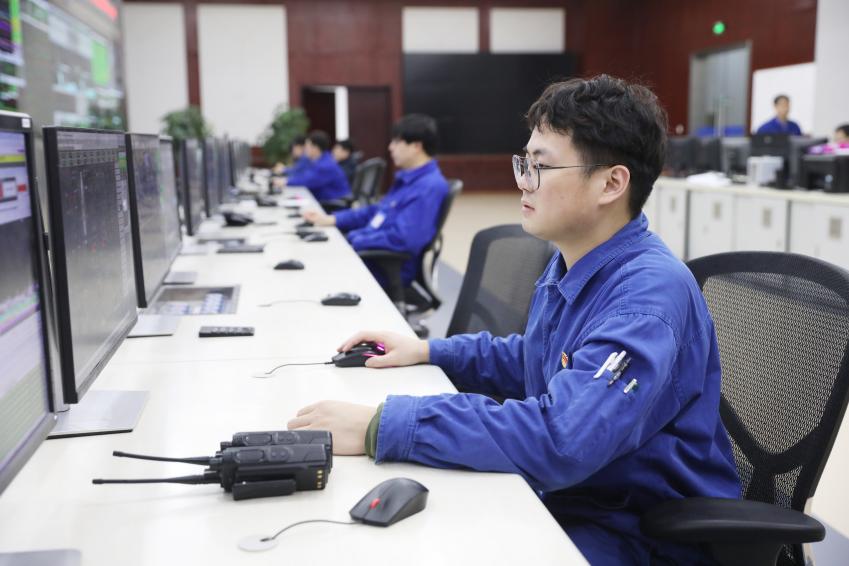
Core Viewpoint - The company is actively responding to severe cold weather conditions by implementing multiple measures to ensure power generation, heating supply, and the well-being of residents, thereby reinforcing energy supply security [1]. Group 1: Emergency Response and Operations - The company has entered a "wartime" state in response to recent severe weather, enhancing frontline staffing and increasing inspection frequency in critical areas to ensure operational stability [2]. - A large heat storage tank, set to be operational by January 2026, has already supplied 15,000 GJ of heat, improving the heating system's regulation and emergency response capabilities [4]. - From November 15, 2025, to February 5, 2026, the company generated 22.9 billion kWh of electricity and supplied over 9.86 million GJ of heat, maintaining stable operations across all units [4]. Group 2: Technological Innovations - The company has developed an AI customer service system that integrates natural language processing and multi-turn dialogue understanding, significantly improving customer service efficiency and response times [5]. - Since its launch, the AI system has handled nearly 20,000 calls with an average response time of under 8 seconds, expanding service coverage threefold compared to previous methods [5]. Group 3: Renewable Energy Contributions - The company has focused on clean energy sectors, achieving a solar equipment utilization rate of 99.98% and a wind energy utilization rate of 98.36% by the end of January 2026, contributing to energy security during winter [9]. Group 4: Heating Supply Innovations - The company has implemented innovative heating solutions in Yantai, including turbine low vacuum heating modifications, which have doubled heating capacity and added 2 million square meters of heating capability [10]. - The company has designed and implemented low bypass heating technology, enhancing the flexibility of thermal power units while ensuring stable heating supply [10]. - The company’s heating area has reached 446 million square meters, with annual heating volume exceeding 100 million GJ, serving over one million direct heating users [12].

河北特检院邢台分院精准助企除患筑牢供热民生安全防线
Xin Lang Cai Jing· 2026-02-10 04:37
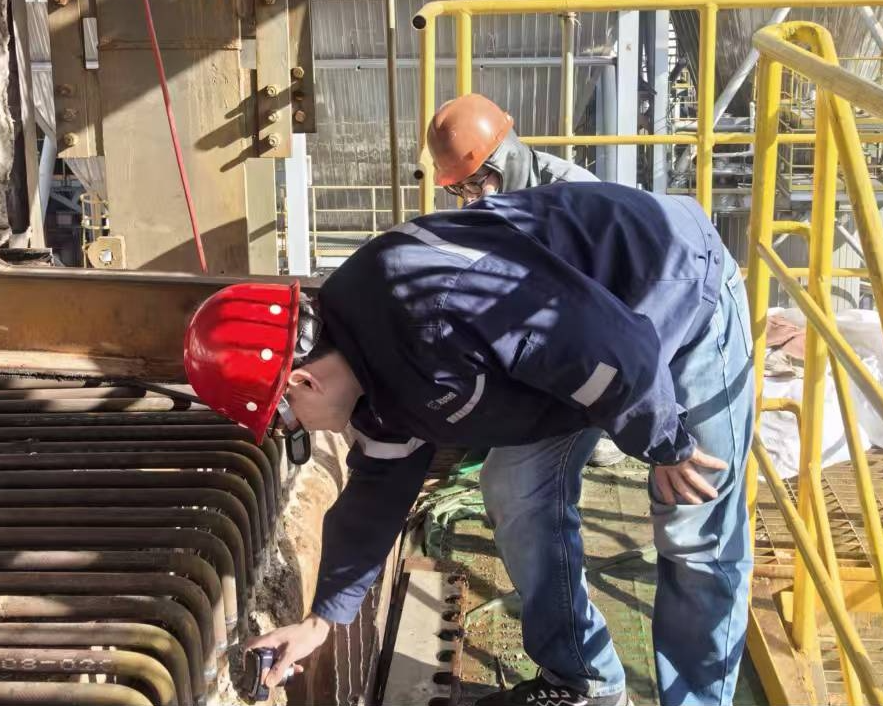
Group 1 - The article highlights the proactive service provided by the Hebei Special Inspection Institute's Xingtai branch to meet the heating needs of local enterprises, specifically focusing on the Cabot Xuyang Chemical Co., which is responsible for heating 1 million square meters in Xingtai's Xindu District [1][3] - During the inspection, key safety aspects of the boiler were thoroughly checked, including the welding quality of pressure components, calibration accuracy of safety accessories, and sealing performance of the furnace body [3] - The inspection revealed several issues such as poor appearance of the weld seams on the furnace tubes, discrepancies in the pressure gauge range, and localized damage to the furnace wall insulation layer [3] Group 2 - In response to the identified hazards, the Xingtai branch provided technical support to the enterprise, issuing targeted rectification suggestions on-site and guiding the company in developing feasible rectification plans [3] - A dedicated person was assigned to track the progress of the rectification, ensuring that all identified hazards were addressed thoroughly and completely eliminated [3] - This special inspection and support by the Xingtai branch effectively eliminated safety hazards for the heating enterprise, demonstrating a commitment to serving businesses and ensuring residents have a warm winter [3]
内蒙古鄂托克前旗市场监管局“三个聚焦”开展供暖领域特种设备专项检查
Xin Lang Cai Jing· 2026-02-09 06:55
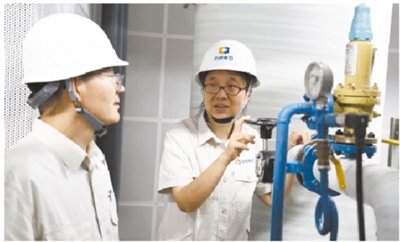
Group 1 - The Inner Mongolia Etuoke Qianqi Market Supervision Administration conducted a special safety inspection on heating special equipment at the Zheng Teng Thermal Power Development Co., Ltd. to ensure the safety and warmth of the community during the upcoming Spring Festival [1] - The inspection focused on key special equipment such as boilers and pressure vessels, checking for issues like corrosion, deformation, and cracks, as well as verifying the reliability of safety accessories like pressure gauges and safety valves [1][2] - A total of 2 operational boilers, 3 associated pressure vessels, and 9 safety accessories were inspected to ensure their safe and stable operation [1] Group 2 - The inspection also evaluated the management practices of the heating company, including the establishment of safety management systems for special equipment, compliance with maintenance protocols, and the effectiveness of emergency response plans [2] - It was verified that the operators of special equipment held valid certifications and were knowledgeable about operational skills and safety protocols, with a requirement for the company to have safety supervisors and a robust safety management mechanism in place [2] - The completeness of safety documentation for special equipment, including design files, manufacturing data, and inspection reports, was also assessed to ensure safe operation [2] Group 3 - Risk prevention measures were reviewed, including the status of hazard identification and rectification, and the regular organization of emergency drills to test the company's response capabilities [3] - The company was urged to conduct a comprehensive risk assessment of special equipment and implement corresponding risk control measures, particularly for high-risk areas [3] - Immediate corrective actions were recommended for identified hazards, with a commitment to ongoing inspections and enhanced safety responsibilities for heating supply companies to ensure stable operation during winter [3]
新民宏达热力认错退款 供热办约谈企业
Xin Lang Cai Jing· 2026-02-05 23:24
Group 1 - The heating company, Xinmin Hongda Heating, incorrectly fined a resident, Ms. Liu, 1000 yuan for alleged unauthorized heating usage, which was later acknowledged as a mistake by the company [2] - Following media coverage, the company decided to refund the 1000 yuan penalty to Ms. Liu, recognizing the error in their actions [2] - The Xinmin City Heating Office has conducted a meeting with Xinmin Hongda Heating to correct their improper practices, emphasizing that the heating company does not have the authority to impose fines [3] Group 2 - Ms. Liu's complaints to the local heating office and the 12345 complaint hotline did not yield effective results, highlighting a gap in the responsiveness of these services [3] - The local heating office has mandated that Xinmin Hongda Heating issue a serious reprimand to the responsible personnel for their actions [3] - Ms. Liu expressed dissatisfaction with the handling of her complaint, indicating that if the local heating office and the 12345 hotline had acted more effectively, she would not have needed to seek legal assistance or media intervention [3]

开展供暖安全生产专项检查 筑牢冬季供热安全防线
Xin Lang Cai Jing· 2026-02-04 17:28
责任落实方面,重点检查供热企业主要负责人、其他负责人及安全生产管理人员履职情况,查看安全生 产管理机构设置及人员配备是否合规,确保安全责任层层传导、落地见效。针对人员管理,细致检查从 业人员、被派遣劳动者及实习学生的安全生产教育培训开展情况,逐一核对培训记录,督促企业强化全 员安全意识与操作技能。 隐患治理环节,严格查验事故隐患排查治理制度建立、记录留存、定期通报及向从业人员告知情况,要 求企业对发现的隐患实行"闭环管理",做到即查即改、限期清零。 采取"执法+服务"模式,对排查发现的问题现场反馈并指导整改,对能立即整改的责令当场整改。同 时,向负责人宣讲安全生产相关法律法规,引导企业主动健全安全管理制度,强化日常巡检值守,提升 应急处置能力。 建立常态化监管机制,以精准执法、严格监管筑牢冬季供热安全防线,全力保障区域供热系统平稳运 行,让市民群众温暖过冬、安心过冬。(成光) (来源:劳动午报) 转自:劳动午报 为切实保障冬季供热安全稳定,压实供热企业安全生产主体责任,守护市民群众温暖过冬与生命财产安 全,门头沟区市场监管局围绕14项核心检查内容精准发力,开展安全生产专项执法检查。 ...
以科技赋能智慧供热,助力行业绿色转型
Xin Lang Cai Jing· 2026-02-04 17:28
Core Viewpoint - The article highlights the significant contributions of Shi Ying, the chief engineer of Beijing Thermal Engineering Design Co., in advancing smart heating technology and promoting green transformation in the heating industry [3][4][5]. Group 1: Technological Innovation - Beijing's heating industry has undergone four technological leaps, with Shi Ying playing a crucial role in the heat metering transformation task [4]. - A notable achievement is the utility model patent for a heating system that connects municipal heating networks with independent boiler rooms, aimed at achieving multi-source collaborative operation [4]. - The project has established optimal interconnection schemes and a trading guide for multi-source heating systems in Beijing, supporting the integration of renewable and traditional energy sources [4]. Group 2: Smart Heating Quality Improvement - As a core member of Beijing's smart heating task force, Shi Ying emphasizes the importance of technological innovation in enhancing heating system efficiency and resident comfort [5]. - An example of smart heating application is the transformation of a community boiler room, which reduced temperature deviation from approximately 4°C to around 1°C, significantly improving system balance [5]. - The implementation of AI in the project led to a 16% reduction in gas consumption, a 90% reduction in water usage, and a decrease of 1,821 tons in annual CO2 emissions [5]. Group 3: Project Management and Collaboration - Team collaboration is essential in Shi Ying's daily work, exemplified by a project where the team worked late to prepare a comprehensive smart heating plan for Jingneng Group [6]. - Shi Ying played a pivotal role in drafting the core sections of the report, showcasing the importance of teamwork in achieving project goals [6]. Group 4: Green Heating Initiatives - Since the implementation of smart heating pilot projects in 2022, Jingneng Group has completed over 70% of the tasks in Beijing, establishing itself as a leader in smart heating transformation [7]. - The design company has developed tailored technical routes for smart heating based on varying foundational conditions and energy consumption levels [7]. - Future research in the heating industry will focus on safety, intelligence, greenness, and low carbon, with a goal to build a robust, smart, environmentally friendly heating network [7][8].

供热企业看过来!房产税、城镇土地使用税免征政策延续实施
蓝色柳林财税室· 2026-02-04 01:48
欢迎扫描下方二维码关注: 为确保供热企业及时、准确享受税收优惠政策,支持民生事业发展,根据《财政部 税务总局关于延续实施供热企业税收 优惠政策的公告》(2023年第56号)规定,现将供热企业税收优惠政策相关内容解读如下: 一、税收优惠政策 对向居民供热收取采暖费的供热企业,为居民供热所使用的厂房及土地免征房产税、城镇土地使用税;对供热企业其他 厂房及土地,应当按照规定征收房产税、城镇土地使用税。 二、不同类型供热企业计算方式 1. 专业供热企业 按其向居民供热取得的采暖费收入占全部采暖费收入的比例,计算免征的房产税、城镇土地使用税。 2. 兼营供热企业 视其供热所使用的厂房及土地与其他生产经营活动所使用的厂房及土地是否可以区分,按照不同方法计算免征的房产 税、城镇土地使用税: -- 可以区分的 :对其供热所使用厂房及土地,暖费收入的比例,计算免征的房产税、城镇土地使用税。 -- 难以区分的 :对其全部厂房及土地,按向居民供热取得的采暖费收入占其营业收入的比例,计算免征的房产税、城 镇土地使用税。 3. 自供热单位 按向居民供热建筑面积占总供热建筑面积的比例,计算免征供热所使用的厂房及土地的房产税、城镇土地使用 ...