
农机装备

Search documents
韩俊部长发文!强化科技装备支撑,加快推进种业振兴
Nan Fang Nong Cun Bao· 2025-12-10 08:02
Core Viewpoint - The article emphasizes the need to accelerate the revitalization of the seed industry in China, focusing on achieving technological self-reliance and controlling seed sources to ensure food security and agricultural modernization [2][3][4]. Group 1: Agricultural Modernization Goals - The construction of a strong agricultural nation is a strategic deployment by the Party Central Committee, aimed at enhancing agricultural production capacity and quality during the "14th Five-Year Plan" period [9][10][12]. - By 2024, China's grain production is expected to exceed 1.4 trillion jin (approximately 700 million tons), with per capita grain availability reaching 500 kg [19][20]. - The article highlights significant achievements in agricultural modernization, including the establishment of over 1 billion mu (approximately 66.7 million hectares) of high-standard farmland and a crop variety coverage rate exceeding 96% [21][22]. Group 2: Challenges and Needs - Despite progress, challenges remain, such as low production efficiency, short industrial chains, and insufficient international competitiveness in agricultural products [29][30][31]. - The article stresses the urgency of enhancing agricultural quality and efficiency to ensure food security for a population of over 1.4 billion [34][35]. Group 3: Key Measures for Improvement - The article outlines several key measures to enhance agricultural production capacity, including: - Strengthening the supply guarantee for important agricultural products and ensuring grain self-sufficiency [61][62]. - Developing a diversified food supply system that integrates agriculture, forestry, animal husbandry, and fishery [76][77]. - Implementing strict farmland protection measures to maintain the quantity and quality of arable land [84][85]. Group 4: Technological Support and Innovation - The article emphasizes the importance of technological support in improving agricultural production capacity and quality, advocating for high-level agricultural technology self-reliance [97][98]. - It calls for the establishment of a collaborative innovation system involving various stakeholders, including research institutions and leading agricultural enterprises [100][101]. Group 5: Quality and Efficiency Enhancement - The article advocates for the construction of a modern agricultural industry system that focuses on quality improvement, green development, and brand strengthening [111][112]. - It highlights the need to increase the supply of green and high-quality agricultural products to meet the rising consumer demand for better food quality [112][113].


传统产业焕新 新兴产业起势 未来产业谋篇一曲“三重奏”澎湃新中原|从资本市场看地方高质量发展·河南篇
Zheng Quan Shi Bao· 2025-12-02 00:41
Group 1: Core Insights - The article highlights the transformation of "Henan Manufacturing" towards high-end, intelligent, and green production, showcasing significant advancements in technology and product offerings [1] - The number of A-share listed companies in Henan has increased from 87 at the end of 2020 to 112, with a total market capitalization of approximately 1.8 trillion yuan, indicating rapid growth in the capital market during the "14th Five-Year Plan" period [1] - A large-scale media investigation revealed how capital markets empower local high-quality development in Henan, emphasizing the region's strategic importance in China's modernization [1] Group 2: Traditional Industry Transformation - Traditional industries in Henan, particularly in Luoyang, are undergoing significant transformation through digitalization and innovation, with companies like Luoyang Bearing Group investing over 2 billion yuan in smart factory upgrades [2][3] - The proportion of high-end products in Luoyang Bearing Group has risen to nearly 70%, with a 40% market share in domestic wind turbine main bearings, reflecting successful adaptation to modern demands [2] - The integration of traditional heavy equipment manufacturing with intelligent technology is exemplified by CITIC Heavy Industries, which has transitioned from traditional manufacturing to a comprehensive industrial giant [3] Group 3: Emerging Industries - Emerging industries in Henan are rapidly developing, with strategic policies focusing on seven key emerging industries and 28 priority industrial chains, leading to a significant increase in the contribution of these sectors to the economy [7][8] - Companies like Hanwei Technology and Shijia Photon are leading the charge in sensor and semiconductor industries, respectively, establishing a robust industrial ecosystem and breaking foreign monopolies [8][9] - The strategic focus on new industries has resulted in a 2.4 percentage point increase in the share of strategic emerging industries in Henan's industrial output, reaching 24.8% [10] Group 4: Future Industry Planning - The "Action Plan" released in August outlines ambitious goals for the development of strategic emerging industries, targeting an annual growth of over 11% and a significant increase in the share of these industries in the overall industrial output by 2027 [11] - Companies like Yutong Bus are playing a pivotal role in the development of the new energy vehicle supply chain, fostering collaboration with over 290 local suppliers to create a self-sustaining ecosystem [12] - The focus on innovation and technology in future industries is supported by government policies aimed at enhancing capital market engagement and facilitating mergers and acquisitions [14][15]


四中全会精神解读·市场最前沿丨驶向丘陵山区!国产农机焕新启程
Xin Hua Wang· 2025-12-01 13:38
Core Viewpoint - The article discusses the advancements and challenges in the development of agricultural machinery suitable for hilly and mountainous regions in China, highlighting the need for specialized equipment to improve agricultural productivity in these areas [1][3]. Group 1: Agricultural Machinery Development - Agricultural machinery is essential for production, with over one-third of China's arable land located in hilly areas where mechanization rates are below the national average [1][3]. - The "14th Five-Year Plan" emphasizes the development and application of high-end intelligent agricultural machinery suitable for hilly regions [2][4]. - The introduction of various agricultural machines, such as hillside tractors and seeders, has transformed the availability of equipment in these regions from "no machines available" to "good machines available" [3][4]. Group 2: Technological Integration - The integration of AI, IoT, and big data into the production of agricultural machinery is enhancing product quality and production efficiency [3][4]. - A new intelligent workshop at Hunan Agricultural Machinery Group has implemented advanced technologies like 5G and AI for automated production, doubling efficiency compared to traditional factories [4]. Group 3: Policy and Future Outlook - The "Accelerated Construction of an Agricultural Power Plan (2024-2035)" outlines the need for research and application of both large high-end intelligent machinery and small machinery suitable for hilly areas, aiming for significant improvements by 2027 [4]. - The article indicates that with the convergence of policy, technology, and industry efforts, domestic agricultural machinery is set to play a more significant role in hilly regions [4].
驶向丘陵山区!国产农机焕新启程
Xin Hua She· 2025-11-30 13:51
Core Insights - The article highlights the challenges and advancements in agricultural machinery suitable for hilly and mountainous regions in China, emphasizing the need for specialized equipment to enhance agricultural productivity in these areas [1][2][3]. Group 1: Industry Challenges - Hilly and mountainous regions in China face unique agricultural challenges, including fragmented land and heavy soil, necessitating smaller, more compact machinery with higher reliability and multifunctionality [2]. - The mechanization rate in hilly areas is below the national average, indicating a significant gap in agricultural equipment availability [1]. Group 2: Technological Advancements - The Chinese agricultural machinery industry is making strides in high-quality development, with the introduction of various models of tractors and planting machines specifically designed for slopes of 15 degrees or less [2]. - The integration of advanced technologies such as AI, IoT, and big data into the production of agricultural machinery is enhancing product quality and production efficiency [2][3]. Group 3: Policy and Future Directions - The "14th Five-Year Plan" and the recent "Planning for Accelerating the Construction of an Agricultural Power (2024-2035)" emphasize the importance of developing high-end intelligent machinery and small-scale equipment for hilly regions [3]. - By 2027, the goal is to achieve significant progress in addressing the shortcomings of agricultural machinery, supported by policy, technology, and industry collaboration [3].
全国政协委员建言献策——为农业农村现代化贡献智慧力量(议政)
Ren Min Ri Bao· 2025-11-26 22:18
Core Viewpoint - The modernization of agriculture and rural areas is crucial for achieving China's overall modernization, with a focus on addressing the "three rural issues" as a priority for the Communist Party [1][2]. Group 1: Agricultural Development Strategies - The 2025 Central Document No. 1 emphasizes the need for localized development of new agricultural productivity and the implementation of seed industry revitalization actions [2]. - There is a call for a unified national seed industry data sharing platform to enhance collaboration among research, enterprises, and policies [2]. - Recommendations include establishing a comprehensive mechanism for the utilization of agricultural waste and improving the coordination of various agricultural policies [3]. Group 2: Technological Innovation in Agriculture - The importance of accelerating agricultural technological innovation is highlighted, with a focus on integrating artificial intelligence into agricultural practices [4]. - Suggestions include building a comprehensive innovation system for agricultural AI and enhancing the talent pool for agricultural innovation [4]. - There is a need for increased investment in agricultural technology, with specific metrics proposed for improvement [5]. Group 3: Rural Revitalization and Employment - The transformation of labor mobility patterns in rural areas is noted, with a significant number of migrant workers seeking employment closer to home [6]. - Recommendations include creating a support system for high-quality employment in rural areas, focusing on industry support and capacity building [6]. - The development of rural industries and innovative business models is essential for increasing farmers' income and ensuring food supply [6]. Group 4: Brand Development and Environmental Quality - The establishment of regional agricultural product brands is encouraged to enhance market recognition and support industry upgrades [7]. - There is a focus on improving rural ecological quality and living environments as a reflection of rural revitalization efforts [7].
达州市达川区:成就“老家达县”新梦想 谱写“宜美达川”新辉煌
Si Chuan Ri Bao· 2025-11-26 21:59
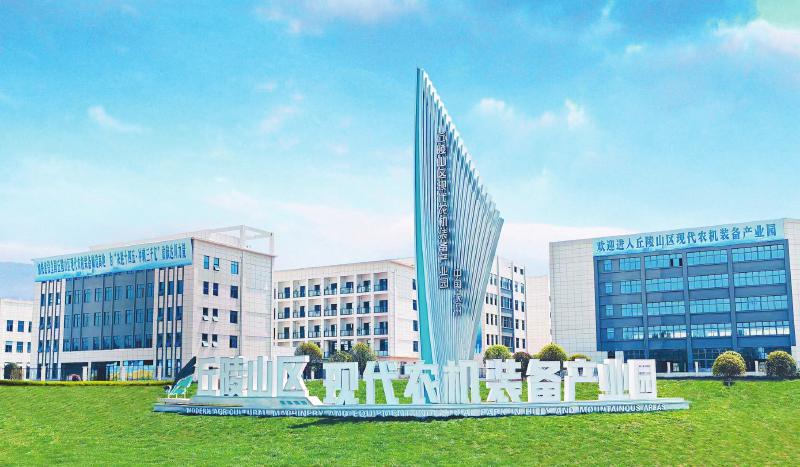
Economic Development - Dazhou's Dacong District has achieved significant economic growth, with GDP and local public budget revenue surpassing 30 billion and 2 billion respectively, and being recognized as one of the top 100 districts in Western China for four consecutive years from 2022 to 2025 [2][3] - The district has successfully attracted 117 enterprises, with a total investment of 17.6 billion, and signed 417 projects since 2021, including 406 projects worth over 100 million [3] Industrial Growth - The industrial sector in Dacong District has shown remarkable performance, with the added value of industrial enterprises exceeding the city's average growth rate by 4.9 percentage points in the third quarter [3] - The district has established a "dual-park" model to boost manufacturing, with the modern agricultural machinery industry park generating over 200 million in sales [4] Infrastructure and Urban Development - Dacong District has completed significant infrastructure projects, including 12 sewage treatment facilities and 120 kilometers of pipelines, effectively addressing urban flooding and sewage discharge issues [6] - The district's rapid transit project, Dashi Expressway, is nearing completion, promising to enhance connectivity for nearly one million residents [6] Business Environment - Dacong District has implemented 25 measures to optimize the business environment, including tax reductions totaling 1.96 billion and financial support of 8.53 billion for enterprises [7] - The district has hosted nine "government-business" matchmaking events, enhancing collaboration between government and enterprises [7] Social Welfare and Governance - Dacong District has focused on improving living standards, with initiatives like the "Happiness and Good Governance" model, which has led to increased public satisfaction in safety and community services [8][9] - The district has successfully transitioned to a three-tier general hospital and has maintained high educational performance, leading the city in high school and middle school graduation rates [8]
湖南加快农机装备产业智能化数字化转型
Zhong Guo Chan Ye Jing Ji Xin Xi Wang· 2025-11-20 22:31
Core Insights - The Hunan Provincial Department of Industry and Information Technology and three other departments have issued the "Three-Year Action Plan for High-Quality Development of Agricultural Machinery Equipment Industry in Hunan Province (2025-2027)" aiming for significant growth in the agricultural machinery sector by 2027 [1] Group 1: Overall Goals - By 2027, the revenue of large-scale agricultural machinery enterprises in Hunan is expected to exceed 20 billion yuan, with an average annual growth rate of over 10%, and smart agricultural machinery will account for more than 60% of this revenue [1] - The plan aims to establish a technology innovation system for smart agricultural machinery that integrates enterprises, market orientation, and deep collaboration among production, education, research, and application [1] Group 2: Technological Integration - The action plan emphasizes the acceleration of digital transformation through the integration of AI, industrial internet, big data, and cloud computing into the agricultural machinery industry [1] - Support will be provided for leading enterprises to build smart factories and digital workshops, enhancing lean production and agile manufacturing capabilities [1] Group 3: Product Development - There will be a focus on the research and iteration of smart agricultural machinery products, particularly those with environmental perception, intelligent decision-making, precise control, and unmanned operation capabilities [1] - Encouragement for core agricultural machinery enterprises to establish intelligent operation and maintenance management platforms for remote fault diagnosis and predictive maintenance services [1] Group 4: Emerging Industries - Hunan will strategically develop emerging sectors such as agricultural robots, low-altitude economy, and smart agricultural sensors, with a focus on key technologies like environmental perception and autonomous navigation for agricultural robots [3] - Support for the large-scale application of drones in various agricultural tasks, including sowing, fertilization, and monitoring, along with the establishment of a low-altitude flight service guarantee system [3] - Promotion of collaboration between sensor companies and agricultural machinery enterprises to develop specialized smart sensors suitable for complex agricultural environments [3]
城市24小时 | 经济第四大省,下一个五年目标定了
Mei Ri Jing Ji Xin Wen· 2025-11-18 16:02
Group 1: Zhejiang Province's Development Goals - The core goal of Zhejiang's 14th Five-Year Plan is to achieve high-quality development and significant progress in building a common prosperity demonstration zone, aiming to present a vivid picture of basic socialist modernization by 2030 [1][2] - By 2030, Zhejiang aims for its per capita GDP to approach that of developed economies, requiring an economic growth rate of around 5% over the next five years [2] - The province plans to achieve "one breakthrough" in innovation and establish "four basic constructions," including a strong education system, a robust technology sector, a talent-rich environment, and a modern industrial system unique to Zhejiang [1][2] Group 2: Focus on Technological Innovation - Technological innovation is identified as a new driver of economic growth, with high-tech industries' added value in Zhejiang increasing by 7.19 percentage points compared to 2020 during the 14th Five-Year Plan [2] - The province's R&D investment intensity is projected to rise from 2.77% in 2020 to approximately 3.5% by 2024, with total R&D investment exceeding 1 trillion yuan [2][3] - Artificial intelligence is highlighted as a core variable for future technological and industrial innovation, with plans to establish Zhejiang as a global hub for AI innovation [2][3] Group 3: Specific Targets for AI Development - Zhejiang has set three specific targets for AI development: achieving global leadership in core AI technologies and applications, nurturing competitive AI enterprises, and reaching a revenue of 1.2 trillion yuan in the core AI industry by 2030 [3]
湖南省出台农机装备产业三年行动计划 打造全国智能农机产业链发展高地
Ge Long Hui· 2025-11-18 05:05
Core Viewpoint - The Hunan Provincial Government has launched a three-year action plan (2025-2027) to promote the high-quality development of the agricultural machinery industry, aiming to establish a significant national influence in the smart agricultural machinery sector by 2027 [1] Group 1: Action Plan Objectives - The plan focuses on key areas such as agricultural machinery suitable for hilly areas, large high-end intelligent agricultural machinery, and critical core components [1] - By 2027, the revenue of large-scale agricultural machinery enterprises in Hunan is expected to exceed 20 billion yuan, with an average annual growth rate of over 10% [1] - The proportion of intelligent agricultural machinery is projected to exceed 60% by 2027 [1] Group 2: Mechanization Goals - The comprehensive mechanization rate for crops is targeted to reach over 65% [1] - Specific mechanization rates for rice and rapeseed planting and harvesting are set at 90% and 75%, respectively [1] - The mechanization rates for facility planting, livestock, and aquaculture are all expected to exceed 50% [1]
工信部:推动建设整机装备、核心系统及关键零部件产品试验验证线等创新基础设施
Xin Lang Cai Jing· 2025-11-11 07:04
Core Viewpoint - The Ministry of Industry and Information Technology (MIIT) has issued a notice to accelerate the systematic layout and high-level construction of manufacturing pilot platforms, emphasizing public service nature and functionality [1] Group 1: Policy Framework - The notice outlines a strategy based on "strengthening a batch, activating a batch, and supplementing a batch" to promote the development of pilot platforms [1] - The "Manufacturing Pilot Platform Construction Guidelines (2025 Edition)" and "Key Directions for Manufacturing Pilot Platform Construction (2025 Edition)" are referenced as foundational documents for this initiative [1] Group 2: Infrastructure Development - The initiative aims to build innovative infrastructure such as testing and verification lines for complete equipment, core systems, and key components [1] - It focuses on enhancing service capabilities in testing evaluation, adaptation verification, and extreme environment validation [1] Group 3: Industry Focus Areas - The plan supports major technological innovations and pilot validations in various fields, including power equipment, agricultural machinery, aviation equipment, robotics, instrumentation, industrial mother machines, intelligent connected new energy vehicles, rail transit equipment, marine engineering equipment, medical equipment, safety emergency and environmental protection equipment, water-saving equipment, and core basic components [1]