
装配式建筑

Search documents
“校园引才大使”搭建青年人才返乡桥梁
Zhong Guo Qing Nian Bao· 2025-12-10 22:36
Core Viewpoint - The "Campus Talent Ambassador" initiative in Chongqing's Zhongxian County aims to attract young talent by leveraging local university students to promote job opportunities and policies in their hometown [1][2]. Group 1: Initiative Overview - The "Campus Talent Ambassador" program was launched in 2023 to connect local university students with job opportunities in Zhongxian County, enhancing the county's talent recruitment efforts [1]. - The program is part of a broader strategy to develop a youth-oriented county and includes a management guideline to provide institutional support for the initiative [1][2]. Group 2: Talent Recruitment Challenges - Previous talent recruitment efforts faced challenges such as difficulty in reaching local university graduates and low retention rates of graduates in Zhongxian [2]. - The initiative aims to bridge the communication gap between the county and potential returning graduates, addressing issues of information asymmetry regarding job opportunities [2]. Group 3: Role and Responsibilities of Ambassadors - "Campus Talent Ambassadors" will promote Zhongxian's talent policies, assist in job recruitment, and facilitate school-enterprise cooperation [2][3]. - The ambassadors are selected based on their organizational and communication skills and can serve for a maximum of four years, with opportunities for renewal based on performance [2]. Group 4: Activities and Funding - Ambassadors can apply for activity funding up to 1,000 yuan to support their initiatives in promoting Zhongxian [3]. - They will organize events to enhance awareness of Zhongxian's policies and facilitate internships and practical experiences for students, thereby fostering a better understanding of the county [3].
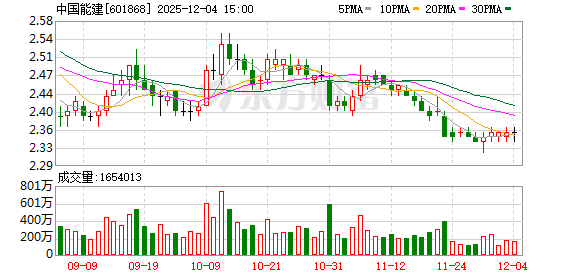
总投资约70亿元!中能建千万吨级煤矸石综合利用项目陶粒中试线建成投运
Xin Hua Cai Jing· 2025-12-04 08:58
Group 1 - The Shanxi Datong 10 million-ton coal gangue comprehensive utilization demonstration project has successfully completed its trial operation, marking a significant advancement in the high-value transformation of coal gangue into green resources [2] - The core equipment, a coal gangue ceramic particle belt roasting machine with waste heat utilization, enables the complete utilization of coal gangue, contributing to the construction of "waste-free cities" and promoting the transformation and upgrading of traditional industries [2] - The first batch of high-strength ceramic particles produced has been recognized in the market for its lightweight, high strength, and thermal insulation properties, being referred to as "breathable building materials" [2] Group 2 - The project, as the first integrated project for the comprehensive disposal of coal gangue and the development of new components in China, has a total investment of approximately 7 billion yuan, with a planned annual disposal capacity of 10 million tons of coal gangue [3] - The first phase of the project involves an investment of 1.16 billion yuan, aiming to achieve an annual disposal target of 2 million tons of coal gangue, covering a complete industrial chain from ceramic particle trials to kaolin processing and waste heat power generation [3]

雅安市荥经县:构建“一环五区”空间布局,实现绿水青山“流金淌银”
Si Chuan Ri Bao· 2025-11-26 21:57
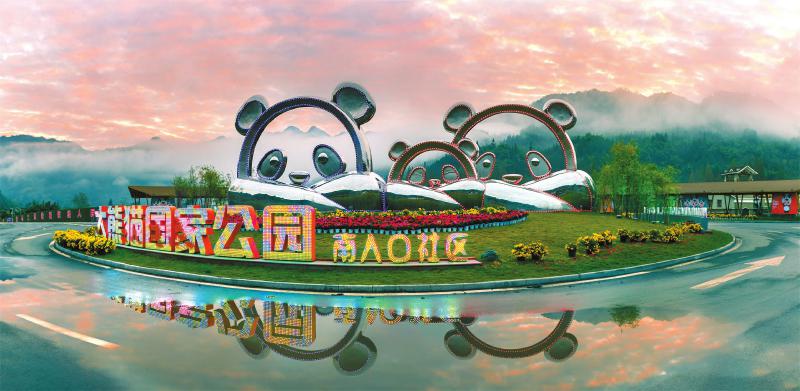
Core Viewpoint - The development of Xingjing County over the past five years has transformed its ecological landscape and industrial structure, aiming for sustainable growth and ecological value conversion, with a projected GDP exceeding 9.7 billion yuan in 2024 [2]. Group 1: Ecological Development - Xingjing County is focusing on the construction of the Giant Panda National Park, with a planned 12,000 acres for a science popularization base that includes a panda exhibition hall and ecological experience routes [3]. - The county has a forest coverage rate of 80.3% and is home to the largest wild population of the rare species, the Davidia involucrata, showcasing its rich ecological resources [3]. - The county has been recognized as a model for ecological innovation and rural revitalization, having established a national-level germplasm resource bank and a provincial-level tourism demonstration area [3]. Group 2: Industrial Transformation - The county is developing a complete cold-water fish industry chain, enhancing its agricultural output with a focus on sustainable practices [5]. - In 2024, the comprehensive forestry output value is expected to exceed 1.39 billion yuan, with per capita income for forestry farmers surpassing 2,000 yuan, demonstrating the economic benefits of ecological conservation [6]. - The integration of ecological and industrial development is evident as traditional industries are being replaced by new, sustainable practices, including the promotion of high-end caviar production and the development of forest-based industries [6]. Group 3: Tourism and Cultural Development - The county is leveraging its panda-related branding to enhance tourism, with significant increases in visitor numbers to local accommodations and cultural products [7]. - The establishment of the "Panda Forest International Exploration School" and other educational initiatives reflects the county's commitment to environmental education and tourism [6][7]. - Collaborative efforts in the Chengdu-Chongqing economic circle are fostering new opportunities in the tea industry, enhancing the region's cultural and economic landscape [7]. Group 4: Social Development and Livelihood - The county has made significant investments in education and housing, with new schools and over 2,000 housing units allocated to residents, improving the quality of life [8]. - A 15-minute elderly care service circle is being developed, with over 60,000 meals served to seniors, highlighting the county's focus on social welfare [8]. - Continuous improvements in the business environment and initiatives to attract new farmers and investors are contributing to the county's economic vitality [8]. Group 5: Future Outlook - Xingjing County is poised for further development with a clear strategic vision and major projects in place, indicating a promising future [9].
中铁装配股价涨6.03%,博时基金旗下1只基金位居十大流通股东,持有91.85万股浮盈赚取94.61万元
Xin Lang Cai Jing· 2025-11-24 06:48
Group 1 - The core viewpoint of the news is the significant increase in the stock price of China Railway Prefabricated Construction Co., Ltd., which rose by 6.03% to 18.12 CNY per share, with a trading volume of 383 million CNY and a turnover rate of 11.34%, resulting in a total market capitalization of 4.456 billion CNY [1] - China Railway Prefabricated Construction Co., Ltd. was established on August 31, 2006, and listed on March 19, 2015. The company specializes in the research, production, sales, and assembly of prefabricated construction products, including new wall materials, building structure materials, interior and exterior decoration materials, landscape materials, and integrated housing [1] - The main business revenue composition of the company is 98.84% from prefabricated construction products and services, while other supplementary sources account for 1.16% [1] Group 2 - Among the top ten circulating shareholders of China Railway Prefabricated Construction, Bosera Fund's Bosera Innovation Economy Mixed A (010994) entered the list in the third quarter, holding 918,500 shares, which is 0.47% of the circulating shares. The estimated floating profit today is approximately 946,100 CNY [2] - Bosera Innovation Economy Mixed A (010994) was established on January 12, 2021, with a latest scale of 401 million CNY. Year-to-date returns are 30.44%, ranking 1917 out of 8209 in its category; the one-year return is 26.44%, ranking 2011 out of 8129; and since inception, the return is 21.99% [2] Group 3 - The fund manager of Bosera Innovation Economy Mixed A (010994) is Tian Junwei, who has a cumulative tenure of 10 years and 176 days. The total asset scale of the fund is 866 million CNY, with the best fund return during his tenure being 164.2% and the worst being -35.11% [3]

说说我这五年
Ren Min Ri Bao Hai Wai Ban· 2025-11-12 23:10
Group 1 - The article highlights the importance of community engagement in supporting disabled children and their families, showcasing initiatives that connect local businesses with families in need [1][2] - A "sell to help" initiative was launched, creating a mutual support platform between local merchants and parents of disabled children, with over 40 merchants and 80 parents participating [2] - The community has adopted a proactive approach to governance, utilizing technology for efficient reporting and tracking of community needs, transforming residents from bystanders to active participants [2] Group 2 - The construction industry is experiencing a shift towards industrialization, with a focus on prefabricated building components, as evidenced by successful sales in Hong Kong [4][5] - The company has developed lightweight concrete that reduces weight by over 40%, enhancing construction efficiency and thermal performance [4] - There is a strategic plan to expand into Southeast Asia and further innovate in modular and green construction technologies during the upcoming "15th Five-Year Plan" [5] Group 3 - The "Shixi Bench Dragon Dance" is being integrated into school curricula to preserve cultural heritage, with efforts to engage students and the community in its practice [6][7] - The dance has gained recognition, with plans for broader exposure, including performances at significant events like the CCTV Spring Festival Gala [7] Group 4 - The establishment of senior care centers in rural areas is enhancing the quality of life for elderly residents, providing various recreational activities and social engagement opportunities [10][11] - The centers are designed to accommodate large groups, offering tailored services and meals at affordable prices, fostering a sense of community among seniors [10] Group 5 - The ice and snow economy is thriving, driven by increased participation in winter sports and tourism, particularly following the Beijing Winter Olympics [12][13] - Long-term plans include expanding winter tourism offerings and integrating cultural resources to enhance the overall experience for visitors [13] Group 6 - The weather radar industry is advancing with the development of more precise and sensitive radar technology, crucial for meteorological applications [14][15] - The company aims to establish a comprehensive low-altitude weather observation network, supporting the growing low-altitude economy and enhancing safety for aerial operations [15]

海南高质量建设国家生态文明试验区
Hai Nan Ri Bao· 2025-11-12 01:37
Core Viewpoint - The article emphasizes the commitment of Hainan to ecological civilization and sustainable development, highlighting the province's efforts to balance economic growth with environmental protection, aiming to become a model for ecological civilization in China [4][11][20]. Group 1: Ecological Achievements - Hainan has maintained an air quality good days ratio of 98.9%, exceeding the national target of 98% for five consecutive years [6] - The province has achieved significant improvements in water quality, with surface water quality good rate reaching 96.9%, the best level in nearly a decade [12] - The restoration of coral reefs and coastal wetlands has been notable, with 27.8 hectares of coral reefs and 240 acres of coastal wetlands restored [7] Group 2: Policy and Initiatives - The "No Waste Island" initiative aims to promote a circular economy and reduce waste, with a timeline set for implementation by 2030 [11] - Hainan has introduced a comprehensive "plastic ban" system, achieving an 80% replacement rate with biodegradable products [11] - The province is focusing on renewable energy, with over 85% of its power generation capacity coming from clean energy sources [11] Group 3: Economic Integration with Ecology - The development of the Hainan Tropical Rainforest National Park has led to increased tourism and local economic benefits, with community members participating in ecological protection [14] - Hainan is leveraging its ecological advantages to attract investment in green industries, with a focus on clean energy and sustainable construction practices [16] - The province is implementing a GEP (Gross Ecosystem Product) evaluation system to assess and enhance the ecological value of its resources [17]
广州明年起新房100%采用装配式建筑,盖楼进入“拼乐高”时代
第一财经· 2025-11-11 13:12
Core Viewpoint - The article discusses the increasing adoption of prefabricated construction methods in China, driven by government policies aimed at improving efficiency, sustainability, and quality in the construction industry [3][5][12]. Policy Promotion - Major cities like Guangzhou have mandated that 100% of residential land sold from 2026 will utilize prefabricated construction, with similar initiatives for commercial and industrial land [3][5]. - The Ministry of Housing and Urban-Rural Development aims for prefabricated buildings to account for 30% of new urban construction by 2025 and 40% by 2030 [5][12]. - Cities are setting specific targets for the implementation of prefabricated construction across various sectors, with Guangzhou targeting an industrial output of 500 billion yuan by 2030 [5][6]. Market Growth - The prefabricated construction market in China has surpassed 1.2 trillion yuan in 2023, with expectations for further growth driven by policy support [8]. - The market is expected to see increased penetration rates as more cities adopt prefabricated construction standards [8]. Industry Chain Dynamics - The prefabricated construction industry involves a complex supply chain, including raw material suppliers (e.g., cement, steel), modular construction companies, and real estate developers [9]. - Major companies like Vanke and Poly are actively engaging in prefabricated construction projects, with significant areas under construction [10]. Efficiency and Environmental Impact - Prefabricated construction can reduce construction time by 30% to 50% and lower energy consumption by 20%, water usage by 63%, and construction waste by 91% [14]. - The construction sector is a significant contributor to carbon emissions, accounting for 50.9% of national emissions, highlighting the potential for prefabricated methods to aid in achieving carbon reduction goals [13][12]. Safety and Quality Concerns - Concerns about safety and quality remain prevalent among the public, but industry experts assert that prefabricated buildings can meet or exceed the safety standards of traditional construction [15]. - Prefabricated components undergo rigorous quality control, ensuring structural integrity and performance [15]. Challenges and Future Outlook - The prefabricated construction sector faces challenges such as low penetration rates and the need for improved collaboration across the supply chain [16]. - Technical difficulties include the complexity of design, safety during transportation and assembly, and the need for precise construction management [16].

广州明年起新房100%采用装配式建筑,盖楼进入“拼乐高”时代
Di Yi Cai Jing· 2025-11-11 09:47
Core Viewpoint - The penetration rate of prefabricated buildings in China is still low, indicating significant room for optimization and growth in the industry [1][12]. Industry Development - Prefabricated construction, which involves manufacturing building components in factories and assembling them on-site, is gaining traction due to policy support [2][3]. - As of 2020, the area of newly started prefabricated buildings in China reached approximately 630 million square meters, a year-on-year increase of 50%, accounting for 20.5% of new construction area [3]. - The Ministry of Housing and Urban-Rural Development aims for prefabricated buildings to constitute 30% of new urban construction by 2025 and 40% by 2030 [3]. Regional Initiatives - Cities like Guangzhou have set ambitious targets, mandating that 100% of residential land sold from 2026 will implement prefabricated construction, with a goal of 80% of new buildings being prefabricated by 2030 [3]. - In Hunan, the newly started prefabricated building area reached 16.25 million square meters in the first three quarters of the year, representing 64.6% of new construction [4]. Market Size and Growth - The market size of the prefabricated construction industry in China has surpassed 1.2 trillion yuan in 2023, with expectations for further growth driven by policy initiatives [5]. - The industry is projected to expand significantly by 2025 as penetration rates continue to rise [5]. Supply Chain and Key Players - The prefabricated construction supply chain includes upstream suppliers of raw materials like cement and steel, midstream modular construction companies, and downstream real estate firms [6]. - Major companies involved in prefabricated construction include China State Construction Technology Group and Shanghai Modern Architectural Design Group, with real estate developers like Vanke and Poly actively engaging in this sector [6][7]. Efficiency and Environmental Impact - Prefabricated buildings can reduce construction time by 30% to 50% and lower energy consumption by 20%, water usage by 63%, and construction waste by 91% [10]. - The construction industry accounts for 45.5% of total energy consumption and 50.9% of carbon emissions in China, highlighting the potential for significant energy savings and emissions reductions through prefabricated construction [9]. Safety and Quality Concerns - Concerns regarding safety and quality remain prevalent among the public, but prefabricated buildings can meet or exceed the safety standards of traditional construction methods [11][12]. - The standardized production of prefabricated components ensures better quality control and structural integrity compared to on-site construction [12]. Challenges and Future Outlook - The prefabricated construction industry faces challenges such as low collaboration efficiency across the supply chain and the need for improved design, production, and construction management [12]. - As technology advances and standardization increases, the long-term costs of prefabricated construction are expected to decrease, making it a more viable option for developers [7][12].
远大住工:已向法院提交破产重整申请
Zhi Tong Cai Jing· 2025-10-30 08:41
Core Viewpoint - The company, Yuanda China Holdings Limited, is facing severe debt and operational crises due to macroeconomic factors, real estate regulations, and the pandemic, leading to a bankruptcy restructuring application [1] Group 1: Company Situation - The company has been significantly impacted by macroeconomic conditions, real estate regulations, and the pandemic, resulting in an inability to repay due debts and a lack of repayment capability [1] - Despite implementing various self-rescue measures, the effectiveness has been limited, and risks have become increasingly apparent and exacerbated [1] - The company possesses deep technical reserves, a strong industry position, and significant brand influence in the prefabricated construction sector, indicating potential restructuring value [1] Group 2: Bankruptcy Restructuring Process - The bankruptcy restructuring process aims to save the company by adjusting its assets and liabilities and reorganizing management activities to overcome financial difficulties [2] - If the court approves the restructuring application, the company will actively plan related matters, seek restructuring investors, and collaborate with the court, creditors, and shareholders to explore debt resolution solutions [2] - The current bankruptcy application is not expected to significantly impact the company's financial status or operations, with the final effects dependent on the progress of the application and subsequent audit results [2]
远大住工(02163.HK):已向法院提交破产重整申请
Xin Lang Cai Jing· 2025-10-30 08:41
Core Viewpoint - The company, Yuanda China Holdings Limited, is facing severe debt and operational crises due to macroeconomic factors, real estate regulations, and the impact of the pandemic, leading to a bankruptcy restructuring application [1] Group 1: Financial Situation - The company has been unable to repay its due debts and lacks the ability to meet its financial obligations, qualifying for restructuring under the relevant bankruptcy laws in China [1] - Despite implementing various self-rescue measures, the effectiveness has been limited, and risks have become increasingly apparent and exacerbated [1] Group 2: Industry Position and Restructuring Potential - The company possesses significant technical reserves, a strong industry position, and considerable brand influence within the prefabricated construction sector, indicating potential restructuring value [1] - As a listed company on the Hong Kong Stock Exchange, it has certain platform resource advantages that may facilitate the introduction of quality strategic investors during the restructuring process [1] - The restructuring aims to mitigate debt risks and enhance the company's core competitiveness, ultimately creating value for shareholders, employees, and society [1]