
装配式建筑

Search documents
海螺水泥跌2.03%,成交额3.66亿元,主力资金净流出1147.13万元
Xin Lang Cai Jing· 2026-03-18 03:17
Core Viewpoint - Conch Cement's stock price has shown fluctuations, with a recent decline of 2.03%, while the company has experienced a year-to-date increase of 12.35% in stock value [1][5]. Financial Performance - For the period from January to September 2025, Conch Cement reported operating revenue of 61.298 billion yuan, a year-on-year decrease of 10.06%, while net profit attributable to shareholders increased by 21.28% to 6.305 billion yuan [2][6]. Shareholder Information - As of September 30, 2025, the number of shareholders for Conch Cement reached 251,400, an increase of 12.17% compared to the previous period [2][6]. - The company has distributed a total of 83.985 billion yuan in dividends since its A-share listing, with 17.922 billion yuan distributed over the last three years [3][7]. Stock Trading Activity - On March 18, Conch Cement's stock traded at 24.56 yuan per share, with a total transaction volume of 366 million yuan and a turnover rate of 0.37% [1][4]. - The net outflow of main funds was 11.4713 million yuan, with significant buying and selling activity observed in large orders [1][4]. Business Overview - Conch Cement, established on September 1, 1997, and listed on February 7, 2002, is primarily engaged in the production and sales of cement, clinker, and aggregates [5][6]. - The revenue composition of the company includes 57.81% from 45-grade cement, 15.63% from other sales, and smaller percentages from various construction materials [6]. Industry Classification - Conch Cement is classified under the building materials sector, specifically in cement manufacturing, and is associated with concepts such as prefabricated buildings, blue-chip stocks, and state-owned enterprise reforms [2][6].
A股两大概念王,同日被立案调查
21世纪经济报道· 2026-03-17 08:09
Group 1 - The core issue involves regulatory actions against Xiangyou Technology and ST Keli Da for suspected violations of information disclosure, with both companies receiving a notice of investigation from the China Securities Regulatory Commission (CSRC) [1] - Xiangyou Technology announced a significant expected loss for 2025, projecting a net profit loss of between 370 million to 550 million yuan, attributed to overdue customer payments and the need to make substantial impairment provisions [3] - ST Keli Da has a history of regulatory issues, including a warning from the Jiangsu Securities Regulatory Bureau for a significant revision of its 2023 annual report, which changed its profit status from profit to loss [5] Group 2 - Xiangyou Technology has been associated with various market concepts, including partnerships with Alibaba and Huawei, and has been favored by speculative investors due to its multiple hot tags in the market [8] - ST Keli Da has capitalized on policy trends, particularly in the prefabricated construction and BIPV sectors, attracting significant investment interest during favorable policy announcements [8] - Despite the speculative appeal of both companies, their underlying financial performance has raised concerns, highlighting the risks associated with investing in companies heavily reliant on market trends and concepts [8]



万科A跌0.43%,成交额3.53亿元,后市是否有机会?
Xin Lang Cai Jing· 2026-03-12 07:19
Core Viewpoint - Vanke A's recent performance shows a slight decline in stock price, with a focus on its rental housing and property management business, which continues to expand and adapt to market demands [1][11]. Group 1: Financial Performance - For the period ending September 30, 2025, Vanke A reported a revenue of 161.39 billion yuan, a year-on-year decrease of 26.61%, and a net profit attributable to shareholders of -28.02 billion yuan, down 56.14% year-on-year [9][18]. - The company has distributed a total of 103.03 billion yuan in dividends since its listing, with 8.06 billion yuan distributed over the last three years [19]. Group 2: Business Operations - The rental housing business, including non-consolidated projects, achieved a revenue of 3.70 billion yuan, reflecting a 7% year-on-year growth, with the expansion of 40,600 new rental units and 11,100 newly opened units during the reporting period [2][11]. - Vanke's property service segment operates in 100 cities, managing 3,051 projects, and focuses on high-quality residential property services [3][12]. Group 3: Strategic Initiatives - The company is actively responding to national policies on affordable housing, with 125,700 units included in the affordable rental housing category [2][11]. - Vanke's subsidiary, Wanwu Cloud, has launched the "Wanwu Cloud City" brand, aiming to enhance urban service efficiency through digital and mechanized operations [3][12]. Group 4: Market Position - Vanke has been recognized in the Fortune Global 500 list, ranking 356th in 2016 and 307th in 2017, indicating its strong position in the urban construction and living services sector [3][13]. - The company is focused on the most dynamic economic regions in China, including the three major economic circles and key cities in the central and western regions [3][13].

北新建材跌2.02%,成交额3.22亿元,主力资金净流出2993.03万元
Xin Lang Cai Jing· 2026-02-12 05:35
Core Viewpoint - North New Building Materials experienced a stock price decline of 2.02% on February 12, with a current price of 28.20 CNY per share and a total market capitalization of 48.003 billion CNY [1] Group 1: Stock Performance - Year-to-date, North New Building Materials' stock price has increased by 12.94%, but it has decreased by 3.69% over the last five trading days [1] - The stock has shown a 10.24% increase over the last 20 days and a 16.29% increase over the last 60 days [1] Group 2: Financial Performance - For the period from January to September 2025, North New Building Materials reported a revenue of 19.905 billion CNY, a year-on-year decrease of 2.25% [2] - The net profit attributable to shareholders for the same period was 2.586 billion CNY, reflecting a year-on-year decrease of 17.77% [2] Group 3: Shareholder Information - As of February 10, the number of shareholders for North New Building Materials was 57,000, a decrease of 3.39% from the previous period [2] - The average number of circulating shares per shareholder increased by 3.51% to 29,640 shares [2] Group 4: Dividend and Institutional Holdings - Since its A-share listing, North New Building Materials has distributed a total of 9.562 billion CNY in dividends, with 3.979 billion CNY distributed over the last three years [3] - As of September 30, 2025, the second-largest circulating shareholder is Hong Kong Central Clearing Limited, holding 160 million shares, a decrease of 17.069 million shares from the previous period [3]

龙元建设2025年预亏超10亿,股价波动大,控股股东股份被冻结
Jing Ji Guan Cha Wang· 2026-02-12 02:43
Core Viewpoint - Longyuan Construction (600491) expects a net loss of 10 billion to 15 billion yuan for 2025, primarily due to pressure on construction operations and asset impairment [1][2] Financial Performance - The company forecasts a net profit loss attributable to shareholders of 10 billion to 15 billion yuan for 2025, with a non-recurring net profit loss of 14 billion to 19 billion yuan, driven by declining revenue, insufficient new orders, and asset impairment [2] - The official financial data will be confirmed in the 2025 annual report, expected to be released in 2026, which will clarify the financial status after three consecutive years of losses [2] Operational Status - In Q4 2025, the company secured 17 new projects totaling 4.1 billion yuan, all under single construction contracts, with no PPP projects involved [3] - Future disclosures regarding new projects in 2026, particularly in housing construction and infrastructure, will be closely monitored, especially the order conversion efficiency [3] Stock and Capital Performance - Recent market data indicates significant volatility in Longyuan Construction's stock price and capital flow, with a net outflow of 291.91 thousand yuan on February 4, 2026, while the stock has risen by 24.62% year-to-date [4] - Short-term fluctuations are heavily influenced by market sentiment and sector rotation, with future attention needed on overall A-share sentiment and policy expectations in the construction and decoration sector [4] Industry Policy and Environment - The construction industry is shifting towards green and intelligent development, with new urbanization and green building initiatives potentially offering long-term opportunities [5] - Longyuan Construction's involvement in prefabricated buildings and water conservancy projects may benefit from accelerated industry policy implementation, but this needs to be assessed alongside actual orders and cash flow [5] Company Structure and Governance - The shares held by controlling shareholder Lai Chaohui have been judicially marked and frozen, affecting 100% of his holdings, which may impact the company's equity stability [6] - Future developments regarding governance risks and potential involvement of state-owned shareholders, such as Hangzhou Transportation Investment, will be important to monitor [6]

红宝丽大跌6.20%,成交额4.82亿元,主力资金净流入408.98万元
Xin Lang Cai Jing· 2026-02-06 01:56
Group 1 - The core viewpoint of the news is that Hongbaoli's stock has experienced significant fluctuations, with a year-to-date increase of 60.19% but a recent decline of 5.17% over the last five trading days [1] - As of February 6, Hongbaoli's stock price was reported at 12.11 yuan per share, with a total market capitalization of 8.904 billion yuan [1] - The company has seen a net inflow of main funds amounting to 4.0898 million yuan, with significant buying and selling activities recorded on February 5 [1] Group 2 - Hongbaoli Group Co., Ltd. is located in Nanjing, Jiangsu Province, and was established on June 23, 1994, with its listing date on September 13, 2007 [2] - The company's main business involves the research, production, and sales of epoxy propylene derivatives, which account for 90.52% of its revenue, while material trading and other businesses contribute 9.40% [2] - As of September 30, the number of shareholders decreased by 13.53% to 133,700, with an average of 5,442 circulating shares per person, an increase of 15.65% [2] Group 3 - Hongbaoli has distributed a total of 564 million yuan in dividends since its A-share listing, with 132 million yuan distributed over the past three years [3]

怀揣“零件拼房”梦想,这家企业的“掌舵人”一年行车12万公里
Yang Zi Wan Bao Wang· 2026-02-02 07:10
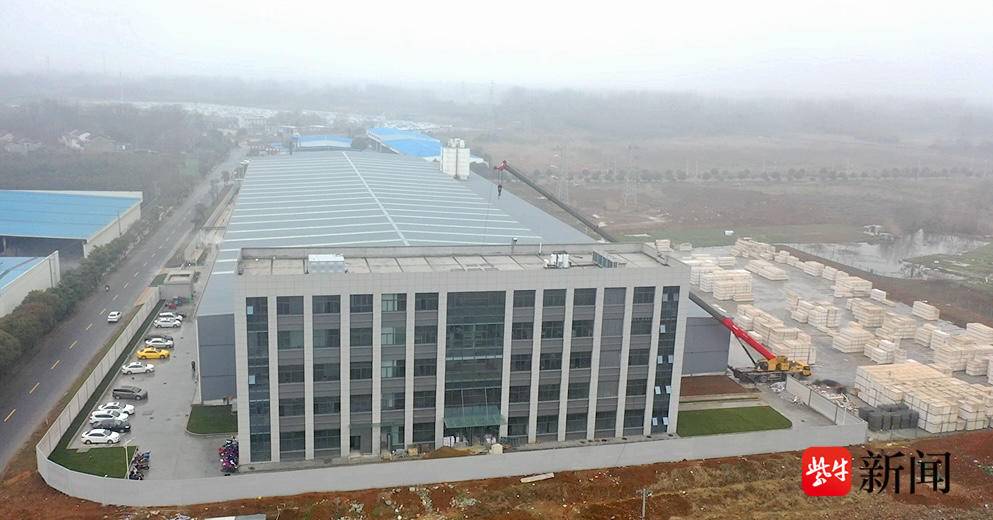
Core Viewpoint - The company Jiangsu Tebote Building Energy-saving Technology Co., Ltd. is experiencing significant growth in the production of ALC (Autoclaved Lightweight Concrete) panels, which are increasingly used in the construction industry for their energy efficiency and environmental benefits [2][3][6]. Group 1: Company Operations - The company has an annual production capacity of 400,000 cubic meters of ALC panels, which are designed to meet the standards set by the Ministry of Housing and Urban-Rural Development for quality housing [2][3]. - The CEO, Zhou Chengkun, is actively involved in client relations and production planning, often traveling extensively to meet customer needs and oversee construction sites in East China [3][8]. - The company has secured a full order book for 2026 and anticipates sales exceeding 200 million yuan in 2025 [8]. Group 2: Industry Trends - ALC panels are widely used in various construction applications, including walls, floors, and roofs, due to their innovative assembly method that simplifies the construction process [6][10]. - The company is collaborating with Southeast University and Xi'an Jiaotong University for research and development, aiming to enhance its production capabilities and innovation [6][10]. - The company is set to expand its operations with a second phase project, which will cover approximately 60 acres and involve an investment of 250 million yuan, increasing production capacity to 1 million cubic meters [8].
海南绿色低碳建筑高质量发展 占比逐年提高
Zhong Guo Xin Wen Wang· 2026-01-26 09:12
Group 1 - The core viewpoint of the articles highlights the progressive development of green and prefabricated buildings in Hainan Province, driven by a series of local policies aimed at enhancing quality and sustainability in construction [1][2] Group 2 - In 2022, Hainan introduced the "Hainan Province Green Building Development Regulations," which serve as a local framework to promote high-quality development in green and prefabricated buildings [1] - The province has issued several key policy documents, including the "Hainan Province Prefabricated Building Industry Development Plan (2022-2030)" and the "Hainan Province Green Building Development Special Planning Technical Guidelines" [1] - The proportion of new green and prefabricated buildings in Hainan is increasing annually, with a target for 2024 that 90% of new civil building area will be green buildings and over 75% of new buildings will adopt prefabricated construction methods [1] Group 3 - The Boao Near-Zero Carbon Demonstration Zone, a collaborative project, is set to be operational by March 2024 and has received the first "Zero Carbon Area Operation Certification" from the German Energy Agency in China [2] - The scale of the prefabricated building industry in Hainan is expanding, with the Lin Gao Golden Port Industrial Park projected to reach a production value of ten billion [2] - The number of prefabricated building production enterprises has grown from 1 in 2015 to over 40 currently, including 1 national-level and over 10 provincial-level demonstration bases [2]
2026年全球集装箱活动房市场规模约29.6亿美元 拆卸厢式占据主导地位[图]
Sou Hu Cai Jing· 2026-01-26 05:14
Core Insights - The report titled "2026-2032 China Container Activity House Market Survey and Future Outlook" provides essential reference for decision-makers and investors in the container activity house industry [1] - The report is based on comprehensive data collection and analysis, including interviews with industry experts and executives, ensuring accuracy and relevance [4] Group 1: Industry Overview - Container activity houses, also known as container homes, are modular structures made from shipping containers, widely used for temporary housing and office spaces due to their durability and cost-effectiveness [5][6] - The global market for container activity houses is projected to reach $2.43 billion in 2024, with an expected growth to $4.29 billion by 2031, reflecting a compound annual growth rate (CAGR) of 8.6% from 2025 to 2031 [7][8] Group 2: Market Dynamics - The report outlines the operational environment of the container activity house industry, including political, economic, social, and technological factors that influence market conditions [18] - The demand for container activity houses is rapidly increasing in commercial spaces, tourism accommodations, and creative offices, driven by the growth of the cultural tourism industry and consumer upgrades [7][12] Group 3: Competitive Landscape - The report analyzes the competitive landscape of the container activity house industry, including market concentration and barriers to entry, highlighting the competitive strategies of key players [22] - Major companies in the industry are evaluated based on their operational status, competitive strengths, and key products or services [22] Group 4: Future Projections - The report forecasts the investment scale and growth rate of the container activity house industry from 2026 to 2032, identifying driving and restraining factors for industry development [23] - It emphasizes the importance of government policies promoting prefabricated buildings and green construction standards, which enhance the competitive advantage of container activity houses [12]
广东:2026年将着力稳定房地产市场
Jing Ji Guan Cha Wang· 2026-01-26 02:50
Group 1 - The Guangdong provincial government aims to stabilize the real estate market by 2026 through targeted policies such as controlling supply, reducing inventory, and improving housing quality [1] - The government will promote the revitalization of idle commercial office spaces and enhance the construction and funding of affordable housing [1] - There will be a systematic approach to developing quality housing, communities, and urban areas, focusing on improving property service quality [1] Group 2 - The government encourages the adoption of smart construction, prefabricated buildings, and modular construction to strengthen the construction industry [1]