
造船

Search documents
商务部:强烈不满,坚决反对
第一财经· 2025-10-14 09:41
2025.10. 14 本文字数:2194,阅读时长大约4分钟 作者 | 第一财经 冯迪凡 美东时间10月14日,美国依据所谓301调查结果,正式对中国海事、物流和造船领域实施港口费等 限制措施。 14日,商务部新闻发言人对此表示,美方措施是典型单边主义、保护主义行为,严重违反世贸组织 规则,违背《中美海运协定》平等互惠原则,赋予相关国家航运和造船企业不公平竞争优势,构成对 中国航运、造船等产业的歧视性做法,严重损害中国相关产业利益。中方对此强烈不满,坚决反对, 已于10月10日宣布将对涉及美国旗、美国造、美国公司拥有、参股或经营等美国元素的船舶收取特 别港务费。 商务部新闻发言人表示,中方在相关问题上的立场是明确的、一贯的,打,奉陪到底;谈,大门敞 开。中方敦促美方纠正错误做法,与中方相向而行,通过平等对话协商方式解决双方关切的问题。 对韩华海洋株式会社5家美国相关子公司实施反制 美东时间4月17日,美国贸易代表办公室宣布对中国海事、物流和造船领域301调查的最终措施。其 中针对中国相关船舶征收港口费的措施于10月14日正式实施。 商务部新闻发言人表示,美方措施不仅影响全球供应链稳定、大幅提高国际贸易成本, ...


美对华造船等行业301调查限制措施落地,商务部最新回应!
Zhong Guo Ji Jin Bao· 2025-10-14 09:33
(原标题:美对华造船等行业301调查限制措施落地,商务部最新回应!) 来源:商务部新闻办公室 有记者问: 美东时间10月14日,美国依据所谓301调查结果,正式对中国海事、物流和造船领域实施港口费等限制 措施,请问中方对此有何回应? 答: 中方在相关问题上的立场是明确的、一贯的,打,奉陪到底;谈,大门敞开。中方敦促美方纠正错误做 法,与中方相向而行,通过平等对话协商方式解决双方关切的问题。 美方措施是典型单边主义、保护主义行为,严重违反世贸组织规则,违背《中美海运协定》平等互惠原 则,赋予相关国家航运和造船企业不公平竞争优势,构成对中国航运、造船等产业的歧视性做法,严重 损害中国相关产业利益。中方对此强烈不满,坚决反对,已于10月10日宣布将对涉及美国旗、美国造、 美国公司拥有、参股或经营等美国元素的船舶收取特别港务费。 美方措施不仅影响全球供应链稳定、大幅提高国际贸易成本,也会推高美国内通胀,损害美港口竞争力 和就业,影响美自身供应链安全和韧性。美方产业界对此也有很多反对声音,充分显示出美方做法损人 不利己,无益于自身造船业发展。 为进一步维护中国相关产业利益,中方有关部门根据《中华人民共和国国家安全法》《 ...
今年5月以来商务部已四次表态:打,奉陪到底;谈,大门敞开
Ge Long Hui· 2025-10-14 09:33
第三次和第四次都是10月14日。近期,美威胁对华加征100%关税等限制措施,中方表示:关于关税 战、贸易战,中方立场是一贯的。打,奉陪到底;谈,大门敞开。中美拥有广泛的共同利益和广阔的合 作空间,双方合则两利,斗则俱伤。 商务部新闻发言人就美对华造船等行业301调查限制措施落地答记者问时提到:中方在相关问题上的立 场是明确的、一贯的,打,奉陪到底;谈,大门敞开。中方敦促美方纠正错误做法,与中方相向而行, 通过平等对话协商方式解决双方关切的问题。 (责任编辑:宋政 HN002) 格隆汇10月14日|据玉渊谭天,10月14日,商务部连发多条消息,不少网友都关注到了其中一句表述: 打,奉陪到底;谈,大门敞开。网友们提到,此前,中方多是"谈"在"打"前边的表述。谭主对今年商务 部发言人的回应进行梳理后发现,围绕"打与谈"这一原则立场的顺序,今年5月以来,商务部已四次表 态——打,奉陪到底;谈,大门敞开。 第一次是5月2日。在中方宣布对原产于美国的所有进口商品的加征关税税率由34%提高至84%后,美方 通过相关方面多次主动向中方传递信息,希望与中方谈起来。对此,中方表示:中方立场始终如一, 打,奉陪到底;谈,大门敞开。 ...
美国依据所谓301调查结果,正式对中国造船等行业实施限制措施,商务部:美方做法损人不利己
Sou Hu Cai Jing· 2025-10-14 09:23
答:美方措施是典型单边主义、保护主义行为,严重违反世贸组织规则,违背《中美海运协定》平等互惠原则,赋予相关国家航运和造船企业不公平竞争 优势,构成对中国航运、造船等产业的歧视性做法,严重损害中国相关产业利益。中方对此强烈不满,坚决反对,已于10月10日宣布将对涉及美国旗、美 国造、美国公司拥有、参股或经营等美国元素的船舶收取特别港务费。 10月14日,商务部就美对华造船等行业301调查限制措施落地答问。 有记者问:美东时间10月14日,美国依据所谓301调查结果,正式对中国海事、物流和造船领域实施港口费等限制措施,请问中方对此有何回应? 美方措施不仅影响全球供应链稳定、大幅提高国际贸易成本,也会推高美国内通胀,损害美港口竞争力和就业,影响美自身供应链安全和韧性。美方产业 界对此也有很多反对声音,充分显示出美方做法损人不利己,无益于自身造船业发展。 为进一步维护中国相关产业利益,中方有关部门根据《中华人民共和国国家安全法》《中华人民共和国反外国制裁法》《中华人民共和国国际海运条例》 等有关规定,将部分协助、支持美方相关调查活动的企业列入反制清单,对美国及部分国家和企业危害我国航运、造船等相关产业安全发展利益的行 ...
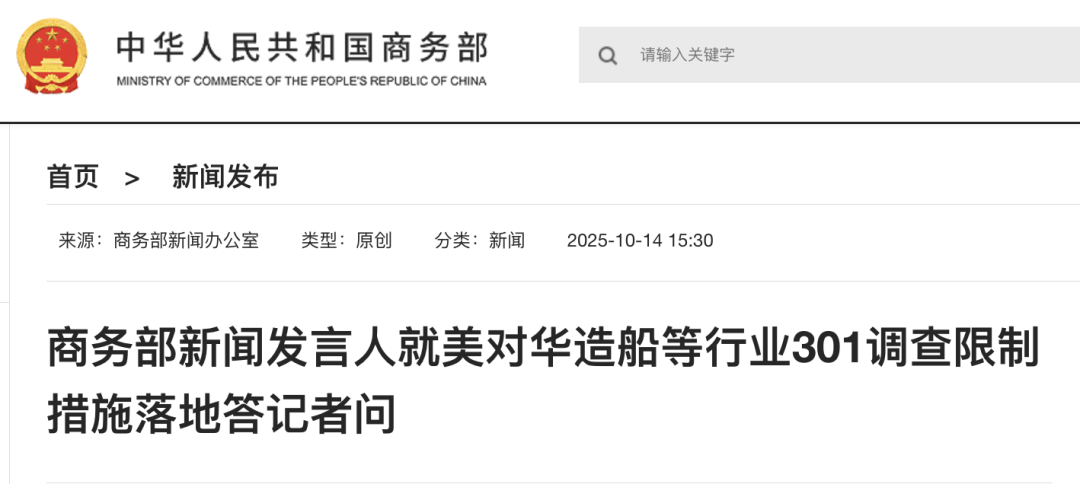
商务部回应!
券商中国· 2025-10-14 09:11
Core Viewpoint - The article discusses China's strong opposition to the U.S. unilateral measures against its maritime, logistics, and shipbuilding industries, which are seen as protectionist and discriminatory actions that violate WTO rules and harm China's industrial interests [2][3]. Group 1: U.S. Measures and China's Response - The U.S. has implemented port fees and restrictions on China's maritime and shipbuilding sectors based on the findings of a Section 301 investigation, which China views as a violation of the China-U.S. Maritime Agreement and WTO rules [2]. - China has expressed strong dissatisfaction and opposition to these measures, stating they unfairly advantage U.S. shipping and shipbuilding companies and harm China's related industries [2]. - In retaliation, China announced on October 10 that it would impose special port fees on vessels with U.S. elements, including those flagged, built, or owned by U.S. companies [2]. Group 2: Impact on Global Trade and U.S. Economy - The U.S. measures are expected to disrupt global supply chains, significantly increase international trade costs, and contribute to rising inflation in the U.S., ultimately harming the competitiveness of U.S. ports and employment [2]. - There are voices within the U.S. industry opposing these measures, indicating that such actions are detrimental to both U.S. interests and the development of its shipbuilding sector [2]. Group 3: China's Legal and Regulatory Actions - In order to protect its industrial interests, China has placed certain companies that assisted the U.S. investigation on a countermeasure list and will investigate actions that threaten the safety and development of its maritime and shipbuilding industries [3]. - China emphasizes a commitment to conducting investigations and enforcement in an open, fair, and just manner, ensuring the rights of all stakeholders are protected [3]. - China maintains a clear stance on these issues, indicating readiness for both confrontation and dialogue, urging the U.S. to correct its actions and engage in equal dialogue to resolve mutual concerns [3].
美对华造船等行业301调查限制措施落地,商务部最新回应!
中国基金报· 2025-10-14 08:53
美方措施不仅影响全球供应链稳定、大幅提高国际贸易成本,也会推高美国内通 胀,损害美港口竞争力和就业,影响美自身供应链安全和韧性。美方产业界对此也有 很多反对声音,充分显示出美方做法损人不利己,无益于自身造船业发展。 为进一步维护中国相关产业利益,中方有关部门根据《中华人民共和国国家安全 法》《中华人民共和国反外国制裁法》《中华人民共和国国际海运条例》等有关规 定,将部分协助、支持美方相关调查活动的企业列入反制清单,对美国及部分国家和 企业危害我国航运、造船等相关产业安全发展利益的行为发起调查。在调查实施过程 中,中方将秉承公开、公平、公正原则开展执法和调查,充分保障各利害关系方权 利。 美东时间10月14日,美国依据所谓301调查结果,正式对中国海事、物流和造船 领域实施港口费等限制措施,请问中方对此有何回应? 答: 美方措施是典型单边主义、保护主义行为,严重违反世贸组织规则,违背《中美 海运协定》平等互惠原则,赋予相关国家航运和造船企业不公平竞争优势,构成对中 国航运、造船等产业的歧视性做法,严重损害中国相关产业利益。中方对此强烈不 满,坚决反对,已于10月10日宣布将对涉及美国旗、美国造、美国公司拥有、参 ...

商务部回应美对华造船等行业301调查限制措施落地
Xin Hua Wang· 2025-10-14 08:43
新华社北京10月14日电 商务部新闻发言人14日就美对华造船等行业301调查限制措施落地答记者问。 发言人说,为进一步维护中国相关产业利益,中方有关部门根据《中华人民共和国国家安全法》《中华 人民共和国反外国制裁法》《中华人民共和国国际海运条例》等有关规定,将部分协助、支持美方相关 调查活动的企业列入反制清单,对美国及部分国家和企业危害我国航运、造船等相关产业安全发展利益 的行为发起调查。在调查实施过程中,中方将秉承公开、公平、公正原则开展执法和调查,充分保障各 利害关系方权利。 发言人强调,中方在相关问题上的立场是明确的、一贯的,打,奉陪到底;谈,大门敞开。中方敦促美 方纠正错误做法,与中方相向而行,通过平等对话协商方式解决双方关切的问题。 【纠错】 【责任编辑:谷玥】 发言人表示,美方措施是典型单边主义、保护主义行为,严重违反世贸组织规则,违背《中美海运协 定》平等互惠原则,赋予相关国家航运和造船企业不公平竞争优势,构成对中国航运、造船等产业的歧 视性做法,严重损害中国相关产业利益。中方对此强烈不满,坚决反对,已于10月10日宣布将对涉及美 国旗、美国造、美国公司拥有、参股或经营等美国元素的船舶收取特别港 ...
美对华造船等行业301调查限制措施落地,商务部回应!
证券时报· 2025-10-14 08:25
Group 1 - The U.S. has implemented unilateral and protectionist measures against China's maritime, logistics, and shipbuilding sectors, violating WTO rules and the principle of mutual benefit in the China-U.S. shipping agreement [1] - China has expressed strong dissatisfaction and opposition to these measures, announcing special port fees for vessels with U.S. elements [1] - The U.S. actions are expected to disrupt global supply chains, significantly increase international trade costs, and negatively impact U.S. inflation and port competitiveness [1] Group 2 - In response to the U.S. actions, China has placed certain companies that assisted the U.S. investigation on a countermeasure list and will investigate behaviors that threaten China's maritime and shipbuilding industries [2] - China emphasizes a clear and consistent stance on these issues, indicating readiness for both confrontation and dialogue [2]
商务部新闻发言人就美对华造船等行业301调查限制措施落地答记者问:美方措施是典型单边主义、保护主义行为
Ge Long Hui· 2025-10-14 08:07
格隆汇10月14日|美方措施是典型单边主义、保护主义行为,严重违反世贸组织规则,违背《中美海运 协定》平等互惠原则,赋予相关国家航运和造船企业不公平竞争优势,构成对中国航运、造船等产业的 歧视性做法,严重损害中国相关产业利益。中方对此强烈不满,坚决反对,已于10月10日宣布将对涉及 美国旗、美国造、美国公司拥有、参股或经营等美国元素的船舶收取特别港务费。 【免责声明】本文仅代表作者本人观点,与和讯网无关。和讯网站对文中陈述、观点判断保持中立,不对所包含内容 的准确性、可靠性或完整性提供任何明示或暗示的保证。请读者仅作参考,并请自行承担全部责任。邮箱: news_center@staff.hexun.com (责任编辑:宋政 HN002) ...
商务部:美对华造船等行业限制措施损人不利己
Yang Shi Xin Wen· 2025-10-14 08:02
Core Viewpoint - The U.S. has implemented unilateral and protectionist measures against China's maritime, logistics, and shipbuilding industries, which are seen as discriminatory and harmful to China's industrial interests [1][2]. Group 1: U.S. Measures and China's Response - The U.S. has officially imposed port fees and other restrictions on China's maritime and shipbuilding sectors based on the results of a Section 301 investigation [1]. - China strongly opposes these measures, viewing them as a violation of WTO rules and the U.S.-China Maritime Agreement, which undermines fair competition [1]. - In retaliation, China announced on October 10 that it would impose special port fees on vessels with U.S. elements, including those flagged, built, or owned by U.S. companies [1]. Group 2: Impact on Global Trade and U.S. Industry - The U.S. measures are expected to disrupt global supply chains, significantly increase international trade costs, and contribute to rising inflation in the U.S. [1]. - There are concerns that these actions will harm the competitiveness and employment levels at U.S. ports, as well as affect the resilience of the U.S. supply chain [1]. - There is notable opposition from the U.S. industry regarding these measures, indicating that they may be counterproductive to the development of the U.S. shipbuilding sector [1]. Group 3: China's Further Actions - In order to protect its industrial interests, China has placed certain companies that assisted the U.S. investigation on a countermeasure list and will investigate actions that threaten the safety and development of its maritime and shipbuilding industries [2]. - China emphasizes a commitment to conducting investigations in an open, fair, and just manner, ensuring the rights of all stakeholders are protected [2]. - China maintains a clear stance on the issue, indicating readiness to engage in dialogue while also preparing to respond firmly to U.S. actions [2].