
Mining

Search documents
Rio Tinto Group (RIO) and WA Government Announce Partnership to Expand Dampier Seawater Desalination Plant
Yahoo Finance· 2026-03-09 08:25
Core Viewpoint - Rio Tinto Group (NYSE: RIO) is currently considered one of the best undervalued stocks for investment opportunities [1]. Group 1: Joint Venture and Desalination Plant - On March 4, Rio Tinto Group and the Western Australian Government announced a 50:50 joint venture to complete both Stage 1 and Stage 2 of the Dampier Seawater Desalination Plant, which will deliver 8GL of desalinated water annually to the West Pilbara Water Supply Scheme [2]. - Construction of Stage 1 is underway, expected to provide 4GL of annual desalination capacity later this year, while Stage 2 will add another 4GL, with the first water anticipated in 2027 [3]. - The joint venture builds on a 2025 Memorandum of Understanding aimed at enhancing water security in the Pilbara region [4]. Group 2: Operational Segments - Rio Tinto Group engages in the exploration, mining, and processing of mineral resources, with operations divided into segments including Copper, Iron Ore, Aluminium, and Minerals [4].

2026年全球并购报告:重塑如何引发并购大反弹
Bain· 2026-03-09 01:55
Market Overview - In 2025, global M&A deal value surged by 40% to an estimated $4.9 trillion, marking the second-highest year on record[13] - The volume of deals increased by 7%, with megadeals over $5 billion accounting for more than 73% of the incremental deal value[14] - Despite the rebound, M&A's share of capital allocation reached a low of 7%, indicating companies are prioritizing other investments like capex and R&D[41] Industry Trends - Technology M&A saw a remarkable 77% increase, driven by acquisitions related to AI, including Alphabet's $32 billion purchase of Wiz[22] - Advanced manufacturing and services also contributed significantly, highlighted by Union Pacific and Norfolk Southern's $88 billion merger[23] - The shift towards scope deals was notable, with 60% of deals valued over $1 billion categorized as scope, reflecting a focus on revenue growth[54] Geographical Insights - The U.S. accounted for nearly half of total strategic deal value, while Greater China led in deal count, with over 80% of its deal value coming from the domestic market[29] - Japan's M&A market doubled in value, becoming the third-largest globally, while Europe, the Middle East, and Africa experienced strong growth in deal value[29] Future Outlook - 80% of M&A executives anticipate sustaining or increasing deal activity in 2026, driven by improving macro conditions and a backlog of private equity assets ready for exit[68] - Companies are expected to focus on reinvention strategies to adapt to technology disruption, post-globalization, and shifting profit pools, making M&A a critical tool for transformation[75]
Beyond gold: Why copper, uranium and rare earths are the new investor rush
The Economic Times· 2026-03-09 01:00
Commodity Market Overview - Silver has risen approximately 155% over the past year, while gold has increased about 80%. Other metals such as platinum, palladium, and copper have also shown significant gains, with platinum up around 120%, palladium 75%, and copper gaining roughly 30% [1] - The broad gains in commodities have led to discussions about a potential new "supercycle," driven by structural forces such as China's rapid urbanization, which has increased demand for various commodities [1][25] Investment Trends - In 2025, precious and industrial metals experienced a rally due to monetary uncertainty and geopolitical tensions, with the Indian rupee depreciating nearly 5% against the dollar, enhancing returns on dollar-denominated metal assets for globally diversified investors [2][25] - Indian investors are increasingly turning to global exchange-traded funds (ETFs) to access a wider range of commodities, including industrial metals and energy, as domestic options remain limited [25][26] ETF Performance - Popular ETFs include SPDR Gold Shares (GLD), which has about $178.9 billion in assets and delivered a one-year return of around 83.5%, and VanEck Gold Miners ETF (GDX), managing about $33.6 billion with a one-year return of approximately 192% [10][11] - The Global X Copper Miners ETF (COPX) has about $8 billion in assets and delivered roughly 156% returns over the past year, while the Global X Uranium ETF (URA) is up about 129.5% amid rising interest in nuclear power [12][26] Investor Behavior - There is a growing preference among Indian investors for ETFs over individual mining stocks, with over 90% of metal investments on platforms like Vested routed through ETFs [17][26] - Interest in metal-focused investments has been steadily increasing, with investments in metal ETFs on Vested Finance's platform growing by 106.11% in 2025, although metals still account for a relatively small share of overall portfolios [15][26] Structural Changes in Investment - The shift in investment behavior is structural rather than behavioral, with metals now intersecting three key forces: monetary uncertainty, electrification and AI infrastructure demand, and geopolitical supply concentration in rare earths and uranium [14][26] - Ultra-high net worth individuals (UHNIs) in India typically invest in gold and silver funds, while also seeking diversified metal ETFs through offshore platforms to enhance their global exposure [25][26]


The Morning Catch-Up: ASX set to fall as oil shock rattles global markets
Yahoo Finance· 2026-03-08 22:46
Market Overview - The ASX 200 futures are indicating a significant decline of 210 points or 2.38% as of Monday morning, following a turbulent end to the previous week on Wall Street and a surge in oil prices raising inflation concerns [1] - The S&P/ASX 200 index fell by 1% on Friday and 3% for the week, amid escalating tensions involving the US, Israel, and Iran, leading investors to consider the impact of safe-haven assets versus the inflationary effects of rising oil prices [2] Global Market Performance - Wall Street closed lower with all major indices near their lows; the S&P 500 dropped 1.33%, the Dow fell 0.94%, and the Nasdaq decreased by 1.59%, while the Russell 2000 declined by 2.33% for the week [3] - The Dow, S&P, and Nasdaq recorded weekly losses of 3.01%, 2.02%, and 1.24% respectively [3] Oil Price Impact - WTI crude oil prices surged over 12% on Friday, reaching US$90.90 per barrel, the highest since September 2023, due to concerns over potential curtailments in Gulf output and shipping disruptions in the Strait of Hormuz [4] - Higher oil prices are expected to increase transport, logistics, and household costs, complicating the interest rate outlook as growth indicators begin to soften [5] Labor Market Concerns - The US non-farm payrolls unexpectedly decreased by 92,000 in February, with unemployment rising to 4.4%, raising concerns about a potential stagflation scenario as energy prices continue to climb [6] ASX Sector Performance - The ASX 200 index closed 89.3 points lower at 8,851.0, with the materials sector declining by 4.1%, while financials, real estate, and industrials also experienced losses [7] - The energy sector remained relatively stable, and the technology sector saw a rebound, increasing by 4.6% [7] - The market sentiment reflects a willingness to invest in growth stocks while showing reluctance towards major mining companies due to concerns regarding China, commodity demand, and overall risk sentiment [8]
The Copper Shortage Is Coming—These 3 Miners Are Ready
Yahoo Finance· 2026-03-08 15:07
Industry Overview - The current age of many copper mines indicates a potential supply shortfall, as the oldest and largest mines are producing less copper per ton of rock moved [4] - The demand for copper is increasing due to rising electrification needs, creating a structural supply shortage [7] Investment Opportunities - Small-cap copper miners with existing operations or near-term projects are positioned to benefit from rising copper prices [7] - Taseko Mines Ltd. is highlighted as a key player, with its Gibraltar project in British Columbia expected to produce between 110 to 115 million pounds of copper in 2026, up from approximately 99 million pounds in 2025 [6] - Taseko has also commenced copper production at its Florence in-situ copper project in Arizona, marking the first new copper production from a greenfield facility in the U.S. since 2008 [6] Market Dynamics - The difficulty and expense of building and permitting new mines under any administration provide a competitive advantage to companies with existing operations [5] - Small-cap stocks, which have been out of favor, are expected to gain traction as investors seek growth in a lower interest rate environment [5]

Celsius, Carnival Corp., MongoDB Are Among Top 10 Large Cap Losers Last Week (March 2-March 6): Are the Others in Your Portfolio? - AES (NYSE:AES), First Majestic Silver (NYSE:AG), Carnival (NYSE:CCL)
Benzinga· 2026-03-08 15:00
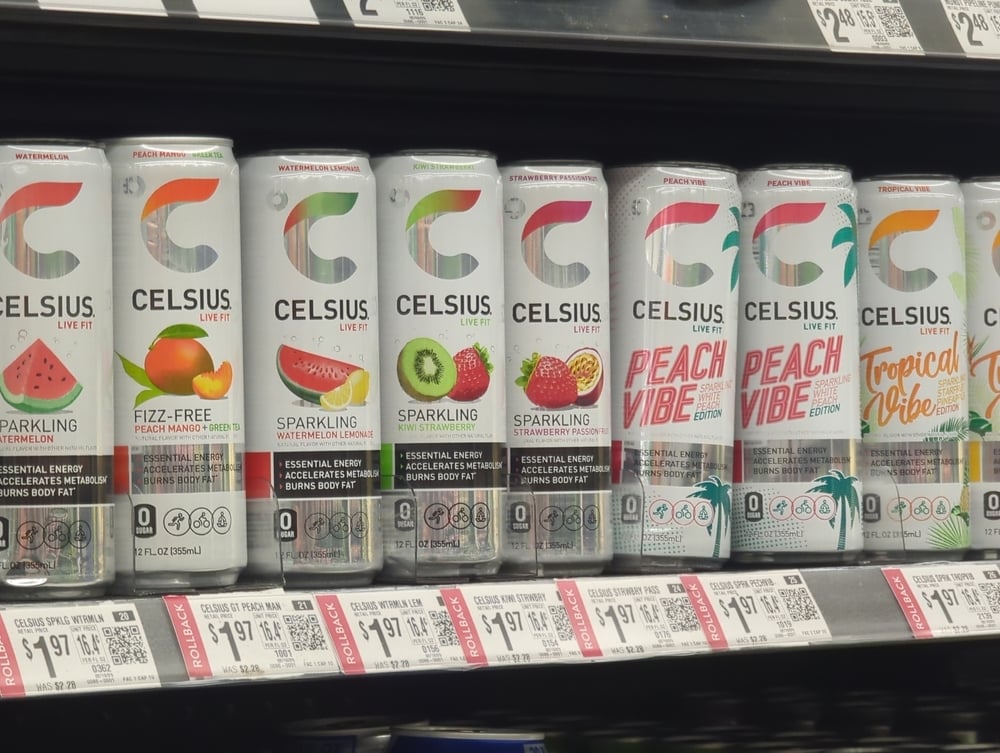
Group 1: Stock Performance - Lumentum Holdings Inc. (NASDAQ:LITE) experienced a significant decline of 24.65% this week, despite being set to join the S&P 500 on March 23, 2026 [1] - Celsius Holdings, Inc. (NASDAQ:CELH) saw a drop of 17.86% this week [1] - First Majestic Silver Corp. (NYSE:AG) decreased by 17.69% this week, influenced by a stronger dollar and rising yields amid geopolitical tensions [2] - Carnival Corporation (NYSE:CCL) fell by 10.45% this week due to increased geopolitical and fuel risks following U.S. and Israel strikes on Iran [2] - Hecla Mining Company (NYSE:HL) dropped 16.71% this week [2] - The AES Corporation (NYSE:AES) fell 1.26% this week after announcing a private buyout at $15.00 per share, which is lower than recent trading prices [3] - Corning Incorporated (NYSE:GLW) experienced a decline of 21.91% this week [3] - Rocket Companies, Inc. (NYSE:RKT) decreased by 11.9% this week as rising U.S. Treasury yields raised concerns about mortgage costs and housing demand [3]

Breaking the glass grid: women in the energy workforce
Yahoo Finance· 2026-03-08 10:30
Core Insights - The representation of women in energy leadership roles is still below the economy-wide average of 25% despite some progress in recent years [1][8] - The International Energy Agency (IEA) reports that women's share of senior leadership positions in the energy sector has increased from 13% in 2015 to 18% in 2024, which is faster than the overall economy [3][8] - Certain sectors within the energy industry, such as renewables and nuclear, have seen better representation of women, with renewables at approximately 30% and nuclear at 29% [2][3] Group 1: Sector Performance - Renewables have shown steady gains, with women now holding around 30% of senior leadership roles [2] - Nuclear energy has progressed at a compound annual growth rate of over 4% from 2015 to 2024, reaching 29% representation [2] - The grid sector has improved modestly, reaching just under 18% [2] Group 2: Underrepresentation in Specific Areas - Mining remains highly male-dominated, with women representing only 15% of the global mining workforce [4] - In oil and gas, women's representation in senior leadership positions is below 1% [9] - The coal sector has seen a decline in women's leadership roles, dropping to just over 10% from 2015 to 2024, a decrease of around 20% [10] Group 3: Challenges and Barriers - Systemic barriers persist for women in energy careers, including negative perceptions and workplace cultures [13] - The IEA's survey indicates that insufficient flexible work arrangements and childcare policies are significant challenges for women in the energy workforce [13] - Women often face difficulties in career advancement due to societal perceptions and personal circumstances, such as childcare responsibilities [15][16] Group 4: Initiatives and Recommendations - Various initiatives are being implemented to close the gender gap in the energy sector, including scholarships and gender targets for hiring [18] - Recruitment practices, such as gender-neutral job descriptions and diverse hiring panels, are crucial for attracting female candidates [19] - Retention strategies, including leadership development programs and inclusive policies, are essential for maintaining female talent in the industry [20] Group 5: Importance of Diversity - Increasing women's participation is vital for the future of the energy sector, especially as the industry faces labor shortages [22] - Diverse teams are linked to stronger financial performance and better risk management, which are critical in a rapidly changing sector [23] - Women bring valuable emotional intelligence and awareness of impact, enhancing team motivation and creativity [23] Group 6: Advice for Women in Energy - Women are encouraged to apply for roles even if they do not meet every qualification, as confidence and preparation are key [24] - Speaking up and being assertive can significantly influence career progression, regardless of one's current position [25][26]
BHP Australia boss in running to lead Woodside, Bloomberg reports
Reuters· 2026-03-08 06:44
Group 1 - BHP's Australia President Geraldine Slattery is a contender for the CEO position at Woodside Energy following the departure of Meg O'Neill [1] - Woodside is expected to announce a permanent CEO appointment in the first quarter of 2026 [1] - Acting CEO Liz Westcott and two other internal candidates are also in the running for the CEO role [1]

GRNJ: Compelling SMID Vehicle With Decent AUM Growth, Worth Shortlisting
Seeking Alpha· 2026-03-08 04:59
Core Insights - The Fundstrat Granny Shots US Small- & Mid-Cap ETF (GRNJ) is highlighted as a novel actively managed investment vehicle that may be of interest to investors seeking exposure to small and mid-cap equities [1] Group 1: Investment Strategy - The investment approach focuses on identifying underpriced equities with strong upside potential while also recognizing overappreciated companies with inflated valuations [1] - The research emphasizes the importance of analyzing Free Cash Flow and Return on Capital to gain deeper insights into investment opportunities [1] Group 2: Sector Focus - The analysis pays particular attention to the energy sector, including oil & gas supermajors, mid-cap, and small-cap exploration & production companies, as well as oilfield services firms [1] - Additionally, the research covers a variety of other industries, such as mining, chemicals, and luxury goods [1] Group 3: Market Perception - The analyst acknowledges that while some growth stocks may deserve their premium valuations, it is crucial for investors to investigate whether the market's current opinions are justified [1]


全球信贷交易:地缘政治表象之下Global Credit Trader_ Beneath the geopolitical surface
2026-03-07 04:20
Summary of Key Points from the Conference Call Industry and Company Overview - The conference call primarily discusses the **credit markets**, focusing on **high-yield (HY) energy**, **investment-grade (IG) energy**, and the **Metals & Mining sector**. It also touches on the implications of geopolitical events, particularly the situation in **Iran**, and the impact of **AI disruption** on the market. Core Insights and Arguments Geopolitical Impact on Energy Prices - The ongoing conflict in **Iran** has raised supply-shock risks for energy prices, prompting a shift from underweight to neutral on **USD HY Energy** due to elevated oil prices. The forecast for **Brent crude** is lifted to mid-$80/bbl in March, with potential spikes towards $100/bbl if disruptions persist [5][12][24]. Credit Market Dynamics - In the **EUR credit market**, the risk of prolonged elevated natural gas prices is highlighted, leading to a tactical overweight on **USD HY** versus **EUR HY**. The sensitivity framework indicates that if disruptions in energy supply continue, **EUR spreads** will likely lag behind **USD spreads** [5][12][24]. Metals & Mining Sector Analysis - The **Metals & Mining sector** is currently viewed as neutral due to tight starting valuations being offset by strong commodity prices. The sector's performance is more closely correlated with **copper** prices than **gold**, with copper, iron ore, and steel accounting for over 70% of EBITDA exposure among top issuers [17][22]. Software Loan Market Concerns - The **software loan market** has seen a significant selloff, with prices down two points. The potential for localized credit impairment is acknowledged, but a broad default cycle is not anticipated. Historical parallels are drawn to the **2015-16 HY Energy crisis**, suggesting that while localized issues may arise, the overall market remains stable [12][24]. BDCs and Private Credit Risks - Recent headlines regarding **Business Development Companies (BDCs)** indicate concerns over NAV writedowns and outflows. However, the systemic risk from private credit issues is considered low, with no significant downgrade risks for bonds issued by BDCs noted [24][30]. Market Microstructure and Liquidity - Despite increased volatility, market microstructure indicators remain stable, except for IG dealer inventories, which have turned negative. The rise of portfolio trading and a shift towards agency trading models are noted as factors affecting liquidity measures [39][41]. Additional Important Insights - The **default rates** for HY and leveraged loans are projected to remain stable, with a slight increase expected in 2026. The **USD HY default rate** is forecasted at 3.0%, while the **EUR HY default rate** is expected to rise to 4.7% [49][50]. - The **insurance sector** has seen spreads widen due to fears surrounding private credit, but fundamentals do not support a significant repricing of the sector. The allocation to alternatives among life insurers is relatively low, suggesting that the recent selloff is more driven by headlines than by underlying fundamentals [30][32]. This summary encapsulates the key points discussed in the conference call, providing insights into the current state of the credit markets, the impact of geopolitical events, and sector-specific analyses.