
医疗信息化

Search documents
2025年CDSS品牌推荐:数据驱动精准辅助,循证决策提升诊疗质量
Tou Bao Yan Jiu Yuan· 2026-01-22 12:24
Investment Rating - The report does not explicitly state an investment rating for the CDSS industry Core Insights - The Clinical Decision Support System (CDSS) is evolving from basic rule-based systems to intelligent, scenario-based solutions that integrate artificial intelligence and clinical knowledge, enhancing diagnostic accuracy and treatment standardization [5] - The market for CDSS in China is projected to grow from 540 million yuan in 2020 to 900 million yuan in 2024, with a compound annual growth rate (CAGR) of 13.4%, and is expected to reach 2.01 billion yuan by 2029, with a CAGR of 18.5% [8] - The penetration rate of CDSS in China is around 20%, significantly lower than the 74% in the United States, indicating substantial growth potential in the Chinese market [9] Market Background - CDSS is defined as an information tool that integrates medical knowledge and patient data to provide intelligent assistance to healthcare professionals, aimed at improving the quality and safety of clinical decisions [6] - The evolution of CDSS has gone through three main stages: rule-based systems, integration with hospital information systems, and the current phase that incorporates artificial intelligence and multi-source data [7] Market Status - The CDSS market in China is expected to see significant growth, particularly in specialized CDSS, which is projected to grow from 20 million yuan in 2020 to 190 million yuan in 2024, with a CAGR of 80.3% [8] - The demand for CDSS is primarily focused on enhancing medical quality and efficiency, with a high consensus across different economic regions on the need to optimize business processes and improve healthcare quality [10] Market Competition - The competitive landscape of the CDSS market in China is characterized by leading traditional IT vendors, emerging tech companies focusing on AI and big data, and cross-industry giants entering the market [15] - Key competitive dimensions include system performance and data advantages, technological innovation, and market positioning [12][13][14] Recommended Brands - The report highlights ten recommended brands in the CDSS market, including: 1. Weining Health 2. Chuangye Huikang 3. Neusoft Group 4. Yidu Tech 5. Senyi Intelligent 6. Huimei Technology 7. iFlytek 8. Baidu Lingyi Zhihui 9. Alibaba Health 10. Ping An Smart Healthcare [16][18][20][22][24][26] Development Trends - The CDSS industry is moving towards data and knowledge-driven upgrades, with a focus on utilizing machine learning to analyze clinical data and build dynamic medical knowledge graphs [28] - There is a trend towards diversified scenarios and solutions, with CDSS being tailored for specific diseases and integrated into new healthcare models [29] - Deployment and operational models are shifting towards cloud-based solutions, reducing costs and enabling rapid updates of algorithms and knowledge bases [30]
亚华电子:预计2025年归母净利润亏损1200万元-1700万元
Xin Lang Cai Jing· 2026-01-22 08:39
亚华电子1月22日公告,预计2025年实现营业收入2.5亿元-2.7亿元,上年同期营业收入2.18亿元;归母 净利润亏损1200万元-1700万元,上年同期亏损2648.61万元。 ...
医疗信息化板块1月21日跌0.18%,科大国创领跌,主力资金净流出5.29亿元
Sou Hu Cai Jing· 2026-01-21 09:01
证券之星消息,1月21日医疗信息化板块较上一交易日下跌0.18%,科大国创领跌。当日上证指数报收 于4116.94,上涨0.08%。深证成指报收于14255.12,上涨0.7%。医疗信息化板块个股涨跌见下表: 从资金流向上来看,当日医疗信息化板块主力资金净流出5.29亿元,游资资金净流入1.83亿元,散户资 金净流入3.46亿元。医疗信息化板块个股资金流向见下表: 以上内容为证券之星据公开信息整理,由AI算法生成(网信算备310104345710301240019号),不构成 投资建议。 ...


卫宁健康 AI医疗布局与股东数据披露
Sou Hu Cai Jing· 2026-01-20 02:49
Group 1 - The company has not engaged in drug development and has no plans to establish an AI drug laboratory as of January 16, 2026 [1] - As of January 14, 2026, the company reported that its WiNGPT-related products have secured some customer contracts, but these are still in the early stages, with the total contract amount being a small percentage of the company's overall contracts [1] - The company disclosed that as of January 9, 2026, it had 117,924 shareholders, highlighting its core advantages in the medical information technology sector [1] Group 2 - According to a report by IDC published in July 2025, the company held a 12.6% market share in China's core hospital system market in 2024, maintaining the top position for five consecutive years [1] - The company has clarified that it has no current plans regarding the brain-computer interface sector as of January 7, 2026 [2] - The company's "Waning Pay" system has integrated with Alipay for medical payment services, charging hospitals service fees or commissions based on different circumstances [1]

3750 万、医院 IT 大单(附:招标文件)
Xin Lang Cai Jing· 2026-01-19 01:21
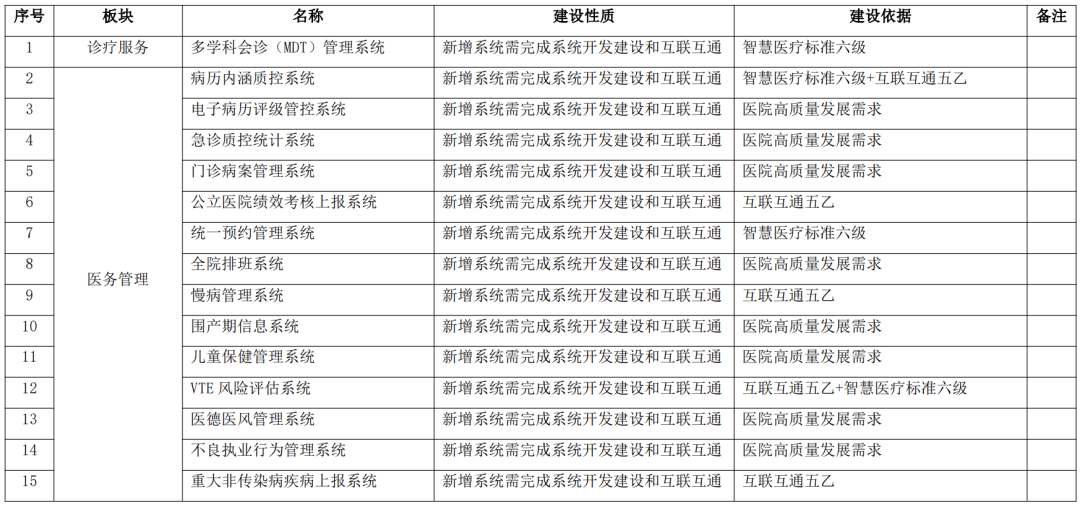
Core Insights - The project involves the construction of an information system and hardware environment for the Qianxinan Bouyei and Miao Autonomous Prefecture People's Hospital, aimed at meeting resource demands for the next five years and ensuring data integration with national, provincial, and municipal systems [1] Group 1: Project Scope - The project includes application system development covering various medical and administrative functions such as diagnosis, medical management, mobile services, nursing, pharmacy information management, medical technology, insurance services, and smart hospital services [1] - Supporting software will include domestic databases, middleware, and high-availability cluster software, along with evaluation support services, data governance services, interface services, and integration services [1] - Hardware components will consist of servers, hyper-converged systems, storage solutions, disaster recovery systems, data center switches, AI computing servers, and network security devices [1] Group 2: Integration Services - Hardware integration will provide standardized system integration services to ensure a secure, reliable, and high-performance hardware platform supporting business needs, including HIS, EMR, PACS, and LIS [3] - Software integration will involve the implementation, installation, debugging, and interface integration of various subsystems to create a cohesive operational platform [3] Group 3: System Development and Security - Advanced software systems will be developed, including electronic medical record systems, hospital information platforms, and smart management systems [4][15] - A comprehensive network security framework will be established, incorporating firewalls, intrusion detection, and data encryption [5][16] - Data backup and recovery mechanisms will be implemented to ensure data security and reliability [6][17] Group 4: Professional Staffing and System Development List - The project will require the allocation of specialized IT personnel and management staff to ensure effective system operation and management [18] - A detailed system development list includes various new systems such as multidisciplinary consultation management, electronic medical record quality control, and performance assessment systems, all requiring development and interoperability [18][19]
1534 万、医院 IT 大单
Xin Lang Cai Jing· 2026-01-19 01:21
Group 1 - The core project is the "Information Technology Capability Enhancement Project" for Hainan Provincial Women's and Children's Medical Center, aimed at improving the infrastructure of the information room at the Changbei Road campus [3][8] - The total budget allocated for this project is 15.3409 million yuan [3][8] - The main objective is to ensure the normal operation of medical services by upgrading the network hardware and other facilities in the information room [3][9] Group 2 - The expected procurement time for the project is set for May 2026 [4][9] - The project is part of a broader initiative to enhance the information technology capabilities of tertiary hospitals in Hainan Province [3][8]

开源鸿蒙打造智慧医疗“中国方案”
Zheng Quan Ri Bao· 2026-01-18 16:42
Core Insights - The article discusses the transformation of China's healthcare system through the implementation of the open-source HarmonyOS, which is enhancing the efficiency and interconnectivity of hospital operations [1][2][3]. Group 1: Technological Advancements - The Chongqing Liangjiang New Area People's Hospital has implemented a smart system based on HarmonyOS, allowing real-time monitoring of patient status and significantly improving response times to incidents [1][3]. - The system integrates various devices, creating a seamless data flow across the hospital, which enhances patient autonomy and reduces the workload on nursing staff [2][3]. - The deployment of over 3,000 terminal devices has reduced incident response times from minutes to seconds and increased the satisfaction rate of personalized patient needs by approximately 80% [3]. Group 2: Systemic Challenges and Solutions - Traditional healthcare models face inefficiencies due to fragmented information flow and reliance on manual processes, leading to increased costs and wasted resources [2]. - The adoption of HarmonyOS is seen as a strategic choice that allows for customized development tailored to specific medical needs, overcoming limitations of traditional closed systems [3][5]. Group 3: Broader Implications for Healthcare - The transformation is not limited to new facilities; existing hospitals are also undergoing upgrades using HarmonyOS, which is facilitating a comprehensive reconfiguration of healthcare services [4][5]. - The integration of AI and HarmonyOS is expected to create a new ecosystem in healthcare, enhancing data security and system autonomy, which is crucial for the future of the industry [5][6]. Group 4: Industry Engagement - Several listed companies are actively investing in HarmonyOS-based healthcare solutions, indicating a growing interest in the intersection of AI and healthcare [6][7]. - Companies like Xiamen Dinake and Jiangsu Runkai Hong Digital Technology are developing innovative solutions that leverage HarmonyOS for integrated healthcare services, showcasing the potential for industry-wide transformation [6][7].



卫宁健康(300253)公司点评:蚂蚁集团与公司深度合作并持股 WINEX系列AI产品加速落地
Xin Lang Cai Jing· 2026-01-17 00:36
Group 1 - Ant Group's AI health application "AQ" has surpassed 30 million monthly active users, with daily health inquiries exceeding 10 million [1] - The app has evolved into "Ant Afu" and ranks among the top five AI applications in China [1] - The collaboration between Ant Group and the company began in June 2018, with Ant Group holding approximately 4.23% of the company's shares as of September 30, 2025 [2] Group 2 - The company's WiNEX series AI products have been deployed in nearly 150 medical institutions, enhancing various operational aspects such as document generation and clinical decision-making [3] - The Chinese medical software system market is projected to reach 11.5 billion yuan by 2029, with stable growth rates for hospital application software and regional health information systems [4] - The company is focusing on domestic innovation and replacement in medical information technology, ensuring compatibility with various domestic hardware and software systems [4] Group 3 - The company is a leading player in medical information technology, with a positive outlook on its internet + healthcare innovation business [5] - Revenue forecasts for 2025-2027 are set at 2.062 billion, 2.480 billion, and 3.008 billion yuan, with net profits expected to turn positive by 2027 [5] - The current stock price corresponds to a price-to-sales ratio of 13.00, 10.81, and 8.91 for the years 2025, 2026, and 2027 respectively, maintaining a "buy" rating [5]
麦迪科技:公司开发的优麦AI语音助手交互系统支持DeepSeek、豆包和千问等多种大模型接入
Zheng Quan Ri Bao Zhi Sheng· 2026-01-16 15:17
Core Viewpoint - The company is accelerating the integration of AI technology with its core product system in clinical information systems, enhancing its smart medical products with AI capabilities [1] Group 1: AI Integration in Clinical Systems - The company is advancing the application of AI large models in clinical information systems [1] - AI upgrades are being implemented in three major systems: anesthesia, critical care, and emergency rescue [1] - Achievements include clinical decision support upgrades, risk warning, electronic medical record generation, and regional medical collaboration [1] Group 2: Development in Health Robotics - The company has developed the Youmai AI voice assistant interaction system, which supports multiple large model integrations such as DeepSeek, Doubao, and Qianwen [1] - The system is capable of health Q&A, emotional companionship, and health consultations [1]

多地启动个人医保云试点申报工作 数据掘金时代 谁会为“医保版”个人健康档案买单?
Di Yi Cai Jing· 2026-01-16 00:46
Group 1 - The core idea of the article is the introduction of the "Personal Medical Insurance Cloud" as a significant shift in the management of medical insurance data, allowing for the continuous organization and reuse of personal health data beyond just payment processing [2][7][19] - The National Medical Insurance Administration has announced a pilot program for the Personal Medical Insurance Cloud from February to December 2026, aiming to create a smart medical insurance management model that covers the entire population and lifecycle [2][3] - The platform will build dynamic multi-dimensional profiles for insured individuals based on medical insurance data, forming personal health records that can provide risk alerts and medical references [2][11] Group 2 - The Personal Medical Insurance Cloud is not a new system but rather a "personal perspective" built on the existing national medical insurance information platform, consolidating previously fragmented data into a single data space for each individual [5][10] - This initiative aims to address the issue of data fragmentation by integrating medical records, medication usage, and payment details into a comprehensive digital health file for each insured person [5][11] - The system is designed to eventually incorporate data from wearable devices and home health monitoring equipment, expanding the scope of data available for analysis [6][10] Group 3 - The introduction of the Personal Medical Insurance Cloud represents a redefinition of the role of medical insurance data, allowing it to flow and be reorganized for health management and risk assessment rather than just for payment verification [7][19] - The pilot program is seen as an opportunity for companies in the healthcare technology and artificial intelligence sectors to connect with medical insurance data within a compliant framework, potentially transforming them into core value extractors from this data [14][15] - The collaboration model for the Personal Medical Insurance Cloud involves the government providing foundational data and platforms, while companies invest in computational power and algorithms to create dynamic health profiles for users [17][18]