
开源鸿蒙系统

Search documents
开源鸿蒙打造智慧医疗“中国方案”
Zheng Quan Ri Bao· 2026-01-18 16:42
Core Insights - The article discusses the transformation of China's healthcare system through the implementation of the open-source HarmonyOS, which is enhancing the efficiency and interconnectivity of hospital operations [1][2][3]. Group 1: Technological Advancements - The Chongqing Liangjiang New Area People's Hospital has implemented a smart system based on HarmonyOS, allowing real-time monitoring of patient status and significantly improving response times to incidents [1][3]. - The system integrates various devices, creating a seamless data flow across the hospital, which enhances patient autonomy and reduces the workload on nursing staff [2][3]. - The deployment of over 3,000 terminal devices has reduced incident response times from minutes to seconds and increased the satisfaction rate of personalized patient needs by approximately 80% [3]. Group 2: Systemic Challenges and Solutions - Traditional healthcare models face inefficiencies due to fragmented information flow and reliance on manual processes, leading to increased costs and wasted resources [2]. - The adoption of HarmonyOS is seen as a strategic choice that allows for customized development tailored to specific medical needs, overcoming limitations of traditional closed systems [3][5]. Group 3: Broader Implications for Healthcare - The transformation is not limited to new facilities; existing hospitals are also undergoing upgrades using HarmonyOS, which is facilitating a comprehensive reconfiguration of healthcare services [4][5]. - The integration of AI and HarmonyOS is expected to create a new ecosystem in healthcare, enhancing data security and system autonomy, which is crucial for the future of the industry [5][6]. Group 4: Industry Engagement - Several listed companies are actively investing in HarmonyOS-based healthcare solutions, indicating a growing interest in the intersection of AI and healthcare [6][7]. - Companies like Xiamen Dinake and Jiangsu Runkai Hong Digital Technology are developing innovative solutions that leverage HarmonyOS for integrated healthcare services, showcasing the potential for industry-wide transformation [6][7].


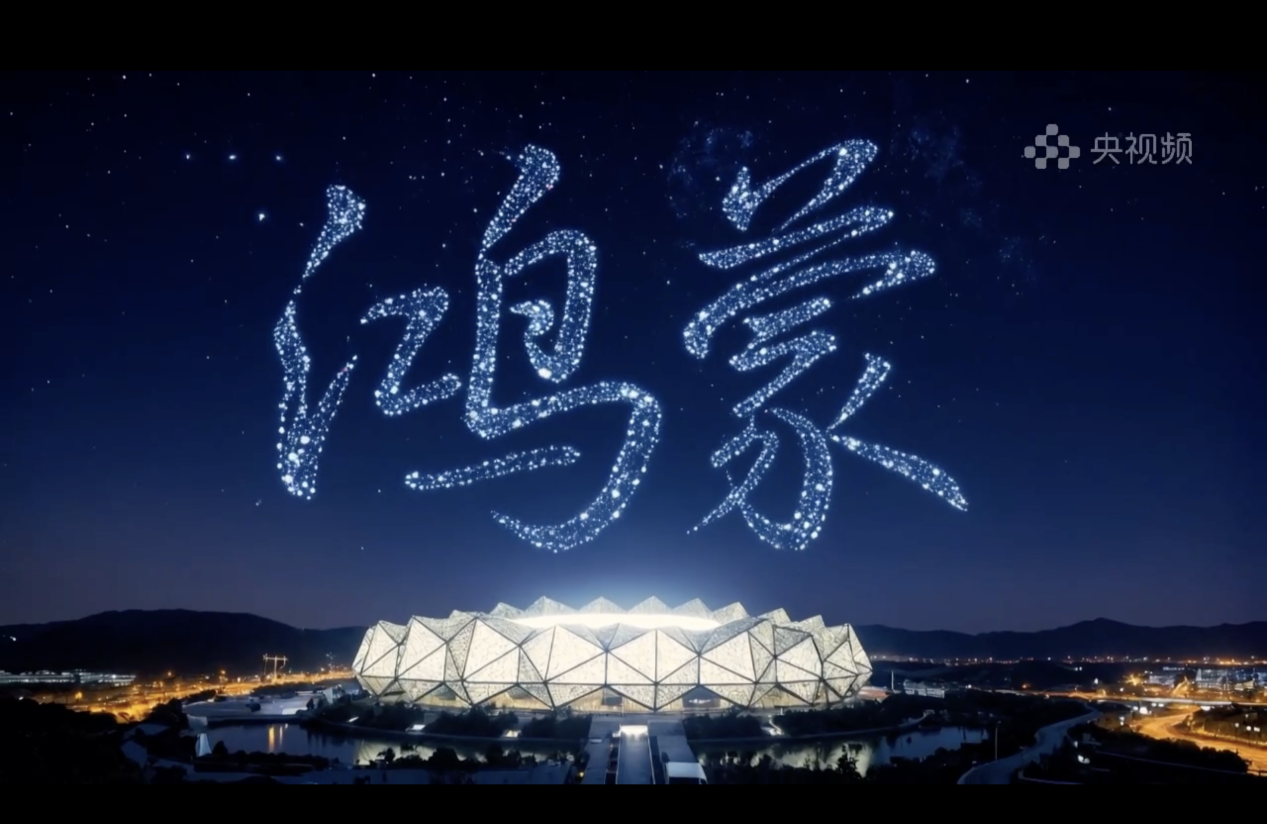
鸿蒙星光盛典:诠释群像力量,照亮“在一起”心路
Jing Ji Wang· 2025-12-22 09:04
Core Viewpoint - The "Hongmeng Starry Night Gala," co-hosted by the China Central Radio and Television and the Guangdong Provincial Government, showcases China's technological self-reliance and collective aspirations for the future, themed "Together" [1]. Group 1: Event Overview - The gala aired on December 20, attracting over 200 media outlets and achieving a viewership of over 203 million, with 307 trending topics and a cumulative reading volume exceeding 1.1 billion [3]. - The event featured a central 18-meter "moon" made of 3,065 curved screens, symbolizing the future of the Hongmeng system, designed by Chen Yan, a prominent figure in art direction for major events [4]. Group 2: Artistic and Technical Excellence - The gala's production involved top talents from major events like the Olympics and Spring Festival, emphasizing high artistic standards and innovative broadcasting technology [4]. - The lighting design included a 31-meter diameter super light ring and 24-meter tall light towers, creating an immersive experience for the audience [4]. Group 3: Musical Contributions - The music director, Liu Zhuo, crafted unique arrangements for each song, with performances that resonated deeply with themes of struggle and pride, such as "Glorious Years" and "I Am Here" [6]. Group 4: Community and Cultural Significance - The event celebrated various contributors to technology and culture, highlighting individuals like Professor Qin Feizhou and CEO Wang Zhengnan, who embody the spirit of collaboration and innovation [7]. - The concept of "together" was emphasized as a metaphor for the interconnectedness of technology and daily life, with references to the collaborative nature of the Hongmeng ecosystem [9].

浙产卫星上天,太空服务落地
Xin Hua Wang· 2025-11-25 01:55
Group 1 - The core focus of the news is the rapid development of commercial space companies in Zhejiang, aiming to make space technology accessible to everyday life [1][2] - Starry Space plans to launch 150 micro-nano satellites over the next three years to create a responsive satellite network for various applications, including natural resource monitoring and emergency services [3][5] - The "Weitong No. 01" satellite, weighing about 20 kg and designed for remote sensing, is set to launch in December, showcasing the advancements in micro-nano satellite technology [3][4] Group 2 - The development of domestic operating systems and chips has improved the capabilities of satellites, allowing for more efficient data processing and response times [4] - The commercial space market in China is projected to reach 2.8 trillion yuan this year, highlighting the strategic importance of satellite constellations [5][6] - Zhejiang enterprises are actively participating in this market, with successful satellite launches contributing to communication and navigation services [6]
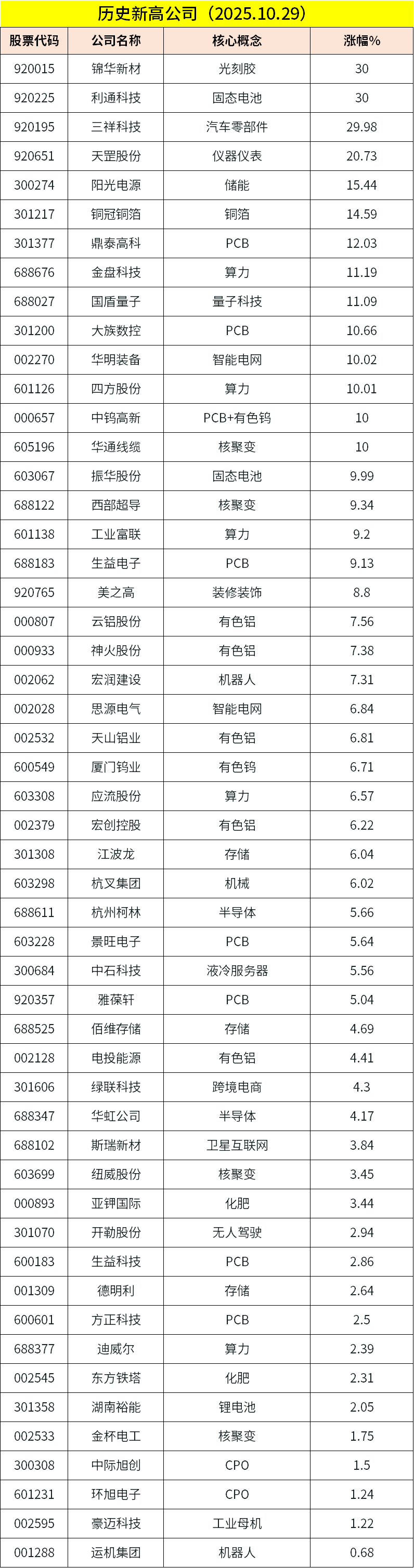
10月30日,鲍威尔转鹰!12月降息生变!A股外盘震荡
Sou Hu Cai Jing· 2025-10-30 16:10
Group 1 - The A-share market experienced a strong rise, with the Shanghai Composite Index increasing by 0.7% to close at 4016.33 points, and the ChiNext Index soaring by 2.93%, reaching a new high for the year [3] - Public fund holdings exceeded 7.38 trillion yuan, marking a historical high, with major institutional investors favoring stocks like Ningde Times, which saw its holdings surpass 200 billion yuan [3] - There is a noticeable shift towards technology stocks, as AI computing leaders like Zhongji Xuchuang and Xinyi Sheng were significantly increased in holdings, while some consumer stocks faced reductions [3] Group 2 - The domestic first open-source Hongmeng system robot "Kua Fu" was unveiled in Wuhan, breaking foreign technology monopolies, indicating a potential rise in the domestic robotics industry [5] - Companies like Yihua Da and Haozhi Electromechanical have seen increased institutional buying, suggesting a positive outlook for the robotics sector despite currently low trading activity [5] - The solar industry is showing signs of recovery, with TCL Zhonghuan's losses narrowing significantly and Sunshine Power's net profit increasing by 56% year-on-year, indicating a potential end to the industry's tough times [5] Group 3 - The semiconductor sector is witnessing a surge in demand, with TSMC's CoWoS capacity being fully booked, leading to increased orders for A-share companies like Tongfu Microelectronics and Changdian Technology [7] - Institutional investors are actively buying into the semiconductor, CPO, and controllable nuclear fusion sectors, with significant net purchases observed in companies like An Tai Technology and Keda National Innovation [9] - The PCB sector is experiencing a divergence, with retail investors buying into certain stocks while institutions are reducing their holdings, indicating rapid market rotation [10] Group 4 - The innovative drug sector has gained attention from funds, with institutions heavily investing in companies like Nuo Si Ge, suggesting a potential breakthrough driven by technology or policy [12] - The non-ferrous metal sector is rising, with companies like Zhongtun Gaoxin seeing significant investments, driven by reconstruction demands from the Russia-Ukraine conflict and expectations of a weaker dollar [12] - The market is at a critical 4000-point level, with increasing divergence between bullish and bearish sentiments, as public fund positions reach historical highs but individual stock performance varies widely [12] Group 5 - The North Stock 50 Index surged by 8% in a single day, indicating a high-risk appetite among investors, while bank stocks declined, reflecting cautious capital allocation [14] - The trading volume expanded to 2.26 trillion yuan, suggesting ample liquidity in the market, but a lack of consensus among investors [14] - The structural market conditions are leading to accelerated sector rotation, as institutional investors shift strategies while retail investors remain hesitant to chase high prices [14]


国内首款鸿蒙人形机器人亮相 业内加速构建全自主可控机器人生态
Zheng Quan Ri Bao Wang· 2025-10-30 12:47
Core Insights - The launch of the "Kua Fu" robot, which is the first domestic robot equipped with the open-source HarmonyOS, marks a significant step in breaking foreign technology monopolies and accelerating the establishment of a fully autonomous and controllable robot ecosystem [1][2] Group 1: Technological Breakthroughs - The "Kua Fu" robot is developed by Leju Robotics in collaboration with Huawei, utilizing the open-source HarmonyOS and Huawei's Pangu intelligent model 5.0, achieving full-chain technological autonomy from the operating system to application frameworks [2] - The establishment of the Wuhan Innovation Center aims to provide comprehensive support for innovative products like "Kua Fu," including technical validation and market promotion [2] Group 2: Industry Trends - The competition in the robot ecosystem is fundamentally about standards and collaborative capabilities, with "Kua Fu" demonstrating the feasibility of HarmonyOS as a foundational technology for robots [4] - Major players in the robotics industry are increasingly focusing on building autonomous and controllable technology ecosystems, with companies like Nanjing Estun Automation and Ningbo Joyson Electronics exploring deep integration of domestic control systems and platforms [3] Group 3: Market Potential - The Harmony ecosystem, which has gathered over 9,200 community contributors and produced more than 1.3 billion lines of code, is expected to unlock a market space worth trillions, extending its reach across various industries [3] - Huawei's "Tian Gong Plan," announced at the HUAWEI CONNECT 2025 event, will invest 1 billion yuan to support the innovation of the Harmony AI ecosystem, providing strong momentum for the competition in this field [3]

10月30日早餐 | 英伟达市值破5万亿美元
Xuan Gu Bao· 2025-10-30 00:03
Group 1: Market Overview - US stock market showed mixed results with Dow Jones down 0.16%, Nasdaq up 0.55%, and S&P 500 flat [1] - Nvidia's stock rose by 2.99%, pushing its market capitalization above $500 billion [1] - The storage sector saw significant gains with Seagate Technology up 19.11%, Western Digital over 13%, SanDisk over 16%, and Micron Technology up 2.13% [1] Group 2: Federal Reserve and Economic Policies - The Federal Reserve lowered interest rates by 25 basis points and announced the end of quantitative tightening (QT), but Powell's hawkish comments reduced the probability of a December rate cut from 95% to 65% [2] - South Korea agreed to invest $350 billion in the US in exchange for tariff concessions on automobiles and semiconductors [2] Group 3: Corporate Earnings and Stock Performance - Alphabet reported Q3 revenue of $102.35 billion, exceeding expectations of $99.85 billion, with Google Cloud revenue at $15.16 billion, above the forecast of $14.75 billion [2] - Meta's stock fell nearly 8% after reporting Q3 revenue of $51.24 billion, a 26% year-over-year increase, but below the expected $49.59 billion [2] - Microsoft saw a drop of 5% in after-hours trading despite a nearly 20% increase in quarterly revenue, as Azure cloud growth was below expectations [2] Group 4: Upcoming IPOs and Innovations - OpenAI plans to submit an IPO application in 2026, aiming for a valuation of around $1 trillion [3] - Western Union announced a stablecoin settlement system based on the Solana blockchain [4] - The European Central Bank is considering launching a digital euro by 2029 [5] Group 5: Commodity Prices - Copper prices rose by 1.31%, reaching $11,184 per ton, marking a new closing record high [6] Group 6: Domestic Developments - China's central enterprises launched a strategic emerging industry development fund with an initial scale of 51 billion yuan, focusing on AI, aerospace, high-end equipment, quantum technology, and future energy [8] Group 7: Sector Insights - The retail sector is set to benefit from a new action plan aimed at boosting consumption and expanding domestic demand [10] - The shipping industry is experiencing a rebound, with major shipping companies announcing rate increases due to stable export demand [11] - The AI pharmaceutical sector is expected to grow significantly, with a projected market size increase from 730 million yuan to 5.86 billion yuan from 2024 to 2028, reflecting a compound annual growth rate of 68.5% [14]

美联储再次降息25个基点,英伟达市值站上5万亿美元;卫星产业进入加速期,上游制造与发射环节需求旺盛——《投资早参》
Mei Ri Jing Ji Xin Wen· 2025-10-29 23:36
Important Market News - The Federal Reserve announced a 25 basis point reduction in the federal funds rate target range to 3.75% to 4.00%, marking the fifth rate cut since September 2024 [1] - U.S. stock indices showed mixed results, with the Nasdaq up 0.55%, S&P 500 flat, and Dow down 0.16%. Notably, Nvidia's market cap surpassed $5 trillion, making it the first company to reach this milestone [1] Industry Insights - The satellite industry is experiencing rapid growth, with China's StarNet planning to launch 12,992 satellites by 2030. The commercial space sector is seeing a surge in companies seeking to go public, with a market size projected to grow from 9.2 billion yuan in 2020 to 310 billion yuan by 2024, reflecting a compound annual growth rate (CAGR) of over 100% [3] - The first humanoid robot powered by the open-source HarmonyOS, named "Kua Fu," was unveiled in Wuhan, marking a significant advancement in China's robotics sector. The HarmonyOS ecosystem has over 1 billion devices and is expected to open up a market space worth trillions [4] - Eli Lilly and Nvidia announced a collaboration to build a powerful supercomputer and AI factory for the pharmaceutical industry, aimed at accelerating drug development. The system will consist of over 1,000 Nvidia GPUs and is expected to be operational by January [5][6] Stock Movements - Jianghua Micro announced that its chairman plans to reduce his stake by up to 11.57 million shares, representing 3% of the total share capital [7] - Hechuan Technology's major shareholder plans to reduce its stake by up to 4.53 million shares, also 3% of the total share capital [7] - WuXi AppTec's major shareholder plans to reduce its stake by up to 59.68 million shares, representing 2% of the total share capital [7]
格林大华期货早盘提示-20251030
Ge Lin Qi Huo· 2025-10-29 23:35
Report Summary 1) Report Industry Investment Rating - Not provided in the given content 2) Core Viewpoints - The photovoltaic and battery sectors soared, driving the ChiNext Index and CSI 500 Index higher, while the Shanghai Composite Index fluctuated around 4000 points. There's a need for consolidation at this level, and sector rotation may accelerate. Short - term index trends require caution, and long positions in stock index futures should mainly focus on the CSI 300 Index [1][2][3] - Betting on AI remains correct as the current AI boom differs fundamentally from historical bubbles in terms of spread speed, low leverage, and valuation levels. Nvidia anticipates that the Blackwell and Rubin chips will generate $500 billion in GPU sales over five quarters [2][3] - Stable stock markets can inject capital into the real economy and drive consumption through wealth, psychological, and expectation effects. China's stock market is expected to have a more sustained upward trend [2][3] 3) Summary by Directory Market Review - The trading volume of the two markets was 2.25 trillion yuan, slightly increasing. The CSI 300 Index closed at 4747 points, up 55 points or 1.19%; the SSE 50 Index closed at 3063 points, up 12 points or 0.41%; the CSI 500 Index closed at 7480 points, up 139 points or 1.91%; the CSI 1000 Index closed at 7569 points, up 89 points or 1.20% [1] - Among industry and theme ETFs, photovoltaic ETFs, battery 50 ETFs, etc. led the gains, while bank ETFs, science - innovation pharmaceutical ETFs, etc. led the losses. Among the two - market sector indices, photovoltaic equipment, consumer electronics, etc. led the gains, and small and medium - sized banks, ground military equipment, etc. led the losses [1] - The settlement funds of CSI 500 and CSI 300 index futures had net inflows of 5.2 billion and 1.2 billion yuan respectively [1] Important Information - On October 28, the central parity rate of the RMB against the US dollar was reported at 7.0856, up 25 basis points from the previous trading day, reaching the highest since October 15, 2024. The central parity rate has risen 1023 basis points this year [1] - In the Q3 market rally, Central Huijin firmly held multiple broad - based ETFs. Since October, hundreds of billions of funds have flowed into equity ETFs, and the new fund issuance market is booming [1] - On October 28, the domestic robot "Kuafu" with an open - source Hongmeng system was unveiled, breaking foreign technology monopolies [1] - Nvidia held the GTC conference. It has shipped 6 million Blackwell GPUs in the past four quarters, with strong demand. It expects the Blackwell and Rubin chips to bring $500 billion in GPU sales over five quarters [1][2] - Nvidia announced cooperation with partners to build the first AI - native wireless stack for 6G in the US and launched new applications for next - generation wireless technology. It also demonstrated NVQLink for connecting traditional GPUs and quantum computers [1] - In the field of "physical AI", Huang Renxun's speech focused on Omniverse digital twin technology. The robot startup Figure announced cooperation with Nvidia to accelerate the R & D of next - generation humanoid robots [2] - Nvidia will invest $1 billion to acquire a 2.9% stake in Nokia, becoming its second - largest shareholder, and they will cooperate on AI network solutions and 6G - related technologies [2] - OpenAI has committed to building over 30GW of infrastructure, with an expected investment of about $1.4 trillion in the coming years. It aims to achieve certain AI research goals by 2026 and 2028 [2] - Uber plans to deploy a 100,000 - vehicle Robotaxi fleet driven by Nvidia technology starting in 2027 and will invest in the Hong Kong IPOs of Pony.ai and WeRide [2] - Sunshine Power's revenue in the first three quarters was 66.4 billion yuan (up 33%), and net profit was 11.9 billion yuan (up 56%). Its overseas energy storage business had a large number of orders, with a high gross margin of 34%, and its operating cash flow increased by over 1100% to 9.9 billion yuan. It also reduced debt by 5.2 billion yuan and is exploring new businesses such as AI data center power supplies [2] - SK Hynix's Q3 revenue was $17.1 billion, and operating profit was $8 billion, up 62% year - on - year, both hitting record highs. It holds a 64% market share in the high - bandwidth memory HBM market, has locked in all 2026 production orders, and will start shipping HBM4 in Q4 2025 [2] - The Dutch government froze the operating rights of Nexperia under Wingtech Technology, causing a global automotive supply - chain crisis [2] Market Logic - The rise of the photovoltaic and battery sectors, Central Huijin's firm holding of broad - based ETFs, and the influx of funds into equity ETFs since October contributed to the market's performance. The debut of the "Kuafu" robot and positive market sentiment also played roles. High - end institutions expect a more sustained upward trend in China's stock market [1][2] Future Outlook - The photovoltaic and battery sectors' strength will continue to influence the market. There's a need for the Shanghai Composite Index to consolidate around 4000 points, and sector rotation may speed up. Short - term index trends require caution, and long positions in stock index futures should focus on the CSI 300 Index [3] Trading Strategies - Stock index futures directional trading: Due to market caution and the need for the Shanghai Composite Index to consolidate around 4000 points, short - term index trends need careful consideration. Long positions in stock index futures should mainly be on the CSI 300 Index [3] - Stock index option trading: Wait and see as the Shanghai Composite Index needs to consolidate around 4000 points [3]
国内首款鸿蒙人形机器人亮相
财联社· 2025-10-29 05:05
Core Insights - The article highlights the launch of the first domestic robot "Kua Fu" equipped with the open-source HarmonyOS, marking a significant step in breaking foreign technology monopolies and accelerating the development of a fully autonomous and controllable robotics ecosystem in China [1]. Group 1 - The "Kua Fu" robot is based on open-source HarmonyOS, showcasing advancements in domestic technology [1]. - The launch event took place at the Harmony Ecosystem (Wuhan) Innovation Center's smart exhibition hall on October 28 [1]. - The development of "Kua Fu" is part of a broader initiative to establish a self-sufficient robotics ecosystem in China [1].
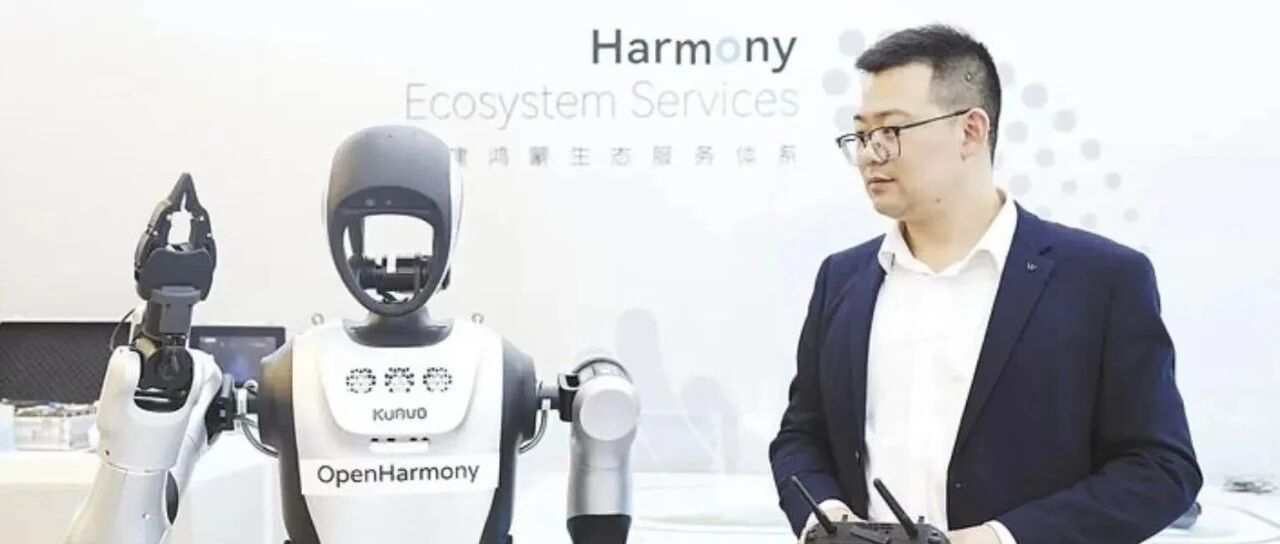
最大鸿蒙创新中心在武汉建成
Xin Lang Cai Jing· 2025-10-29 04:41
Core Insights - The world's first robot equipped with the open-source HarmonyOS was unveiled at the Harmony Ecosystem (Wuhan) Innovation Center, attracting significant visitor interaction [1] Group 1 - The robot, referred to as a "butler," is currently learning the "official language" of the Harmony ecosystem [1] - In the near future, users will be able to control the robot through voice commands, such as "It's dark, please turn off the lights," which will enable automatic adjustment of indoor lighting [1] - The robot will also be capable of scheduling cleaning tasks by responding to commands like "This place needs cleaning," coordinating with cleaning robots [1]