Battery

Search documents
中国电池材料 -价格复苏之路崎岖-China Battery Materials Bumpy Road to Price Recovery
2026-01-28 03:02
Summary of Key Points from the Conference Call on China Battery Materials Industry Overview - The focus is on the battery materials industry, particularly related to lithium iron phosphate (LFP) batteries and the broader electric vehicle (EV) market - The analysis includes the impact of rising costs on battery manufacturers and the implications for downstream demand, especially in energy storage systems (ESS) [1][2][9] Core Insights and Arguments - **Price Trends**: LFP battery cell prices have increased by 8%, while battery costs have surged by 30%, leading to a squeeze in battery margins [1] - **Cost Inflation**: Lithium prices have risen by 46% year-to-date, contributing to an estimated cost inflation of Rmb32/kWh for batteries. The total LFP battery cost has increased by Rmb80/kWh, which may test demand in the coming months [2][11] - **Demand Forecasts**: Battery production guidance from major manufacturers like CATL suggests a growth of 50-70% by 2026, which has raised expectations for raw material demand [3][21] - **Market Dynamics**: The recent surge in costs has shifted the market from a demand-pull to a cost-push scenario, with concerns about EV sales weakness impacting performance [1][9] - **Cost Pass-Through Mechanisms**: Battery manufacturers have mechanisms to pass on metal-linked cost increases to downstream customers, but non-metal cost increases may not be fully passed through [20] Important but Overlooked Aspects - **Investment in Upstream**: Companies like CATL and Gotion are investing in upstream lithium resources to mitigate the impact of rising raw material costs. CATL's self-sufficiency ratio for lithium is expected to be 18% by 2025 [17][18] - **Profit Distribution**: The profit distribution along the battery supply chain is shifting, with downstream manufacturers currently capturing more profit. However, this may change as the market matures and supply chain efficiencies improve [35] - **Policy Impacts**: Changes in Chinese government policy, including export controls and a focus on price recovery, may influence the battery market dynamics and cost structures in 2026 [36] Financial Metrics and Projections - **Battery Demand Growth**: The forecast for total battery demand is projected to grow significantly, with EV battery demand expected to reach 2,096 GWh by 2026, reflecting a 30% year-over-year growth [23] - **ESS Demand**: ESS battery demand is also expected to grow, with projections of 894.5 GWh by 2026, indicating a robust market for energy storage solutions [26] Conclusion - The battery materials industry is facing significant challenges due to rising costs and potential demand weaknesses. However, strategic investments in upstream resources and favorable production guidance from major manufacturers present opportunities for growth. The evolving landscape of profit distribution and policy impacts will be critical to monitor as the market develops.






珠海冠宇(688772):钢壳电池渗透率提升 低压电池加速导入
Xin Lang Cai Jing· 2026-01-27 10:31
Group 1 - The core viewpoint of the articles highlights the significant growth in the company's 3C battery business, driven by government subsidy policies and strong partnerships with leading smartphone manufacturers like Apple, Xiaomi, and Huawei [1] - The company has successfully implemented a Cell+Pack (A+A) supply model for high-end smartwatch batteries for Samsung and has begun mass production of earphone batteries for Samsung [1] - The company has announced a 2 billion investment to expand its steel shell battery production line, expected to be completed by Q3 2026, which is anticipated to increase the shipment volume of steel shell batteries significantly by 2026 [1] Group 2 - The company has positioned its low-voltage lithium battery as a core business for differentiation and has started bulk supply to major domestic and international electric vehicle manufacturers, with expected shipments exceeding 700,000 units in H1 2025 [2] - The company has developed the first generation of sodium-ion start-stop battery products, providing stable and efficient power supply for vehicles in low-temperature scenarios [2] - The drone and electric motorcycle businesses are also experiencing growth, contributing to overall performance alongside collaborations with leading downstream companies [2] Group 3 - The company's Q3 2025 performance was strong, achieving revenue of 4.22 billion yuan, a year-on-year increase of 33.2%, and a net profit of 270 million yuan, up 62.5% year-on-year and 92.2% quarter-on-quarter [3] - For the first three quarters of 2025, the company reported revenue of 10.321 billion yuan, a 21.2% increase year-on-year, and a net profit of 387 million yuan, a 44.4% increase year-on-year [3] - The strong performance in Q3 was attributed to the peak season for 3C consumption and the successful shipment of steel shell batteries, with expectations for further profit growth as steel shell battery production increases [3] Group 4 - Revenue forecasts for the company are projected at 14.37 billion, 18.37 billion, and 22.73 billion yuan for 2025-2027, with EPS estimates of 0.55, 1.31, and 1.76 yuan respectively [4] - The current stock price corresponds to PE ratios of 37, 16, and 12 times for the respective years, with a "buy" investment rating recommended [4]

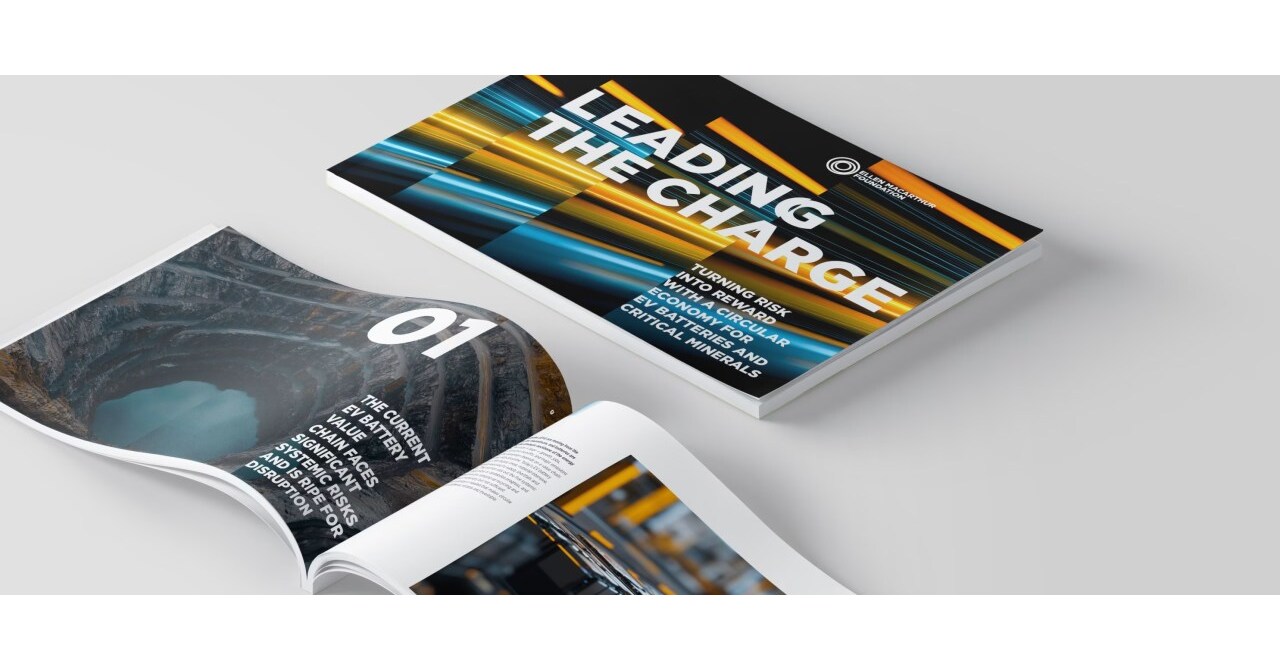
CATL et la Fondation Ellen Macarthur définissent l'orientation des batteries circulaires pour les VE en publiant un livre blanc qui fait date
Prnewswire· 2026-01-25 03:20
Core Viewpoint - The launch of the white paper by the Ellen MacArthur Foundation at the 2026 World Economic Forum outlines a comprehensive roadmap for a circular economy in electric vehicle (EV) batteries and critical minerals, emphasizing the collaboration between CATL and the Foundation [1][10]. Group 1: Industry Collaboration and Contributions - The report was developed with input from over 30 leading organizations in the EV battery ecosystem, including CATL, DHL, Volvo, and JLR, as well as research institutes and NGOs, providing a clear industry-based direction for battery design, usage, recovery, and reintegration [2]. - CATL, as a founding strategic partner of the Foundation's Critical Minerals Mission, has worked closely with the Foundation and industry peers to translate circular economy principles into practical, deployable actions based on operational experience [3]. Group 2: Environmental and Economic Benefits - A circular battery system for EVs can offer significant opportunities in environmental, economic, product, and value creation areas by maintaining the use of batteries and their essential minerals throughout their lifecycle, thereby reducing the demand for newly extracted materials and emissions [4]. - The circular approach enhances economic value by improving material efficiency, reducing waste and operating costs, and creating new revenue streams while strengthening supply chain resilience and distributing economic benefits more equitably across regions [4]. Group 3: Key Actions for Circular Battery Systems - The white paper identifies five interdependent actions necessary to maintain high-value battery material usage and enhance system resilience, including designing batteries for circularity, rethinking battery maintenance, scaling circular business models, investing in regional circular infrastructure, and enabling circular operations through data and policies [5][7]. - CATL is already implementing these measures at a system-wide scale, managing batteries as centralized assets to increase usage and ensure predictable returns at the end of their lifecycle, operating over 1,000 passenger vehicle battery swap stations and more than 300 commercial vehicle swap stations [5][6]. Group 4: Future Directions and Goals - The report marks a significant step towards a global circular economy for batteries, with a call for scaling circular battery systems across regions, industries, and applications, from electric vehicles to energy storage [9]. - CATL aims to achieve carbon neutrality across all its battery factories and the entire value chain by 2035, aligning its agenda with the broader energy transition goals [9].

7 Best Lithium and Battery Stocks to Buy Right Now
Insider Monkey· 2026-01-22 19:47
Industry Overview - Energy storage technologies are expected to significantly increase lithium demand, surpassing electric vehicle demand by 2026 as utility-scale batteries become a major consumer [2] - Lithium prices have recovered 50% from June lows but remain less than one-sixth of late-2022 levels [2] - UBS projects a 55% increase in lithium demand from storage in 2026, compared to a 19% rise from electric vehicles [3] Company Insights - **Standard Lithium Ltd. (NYSE:SLI)**: - Number of hedge fund holders: 8 - Analysts' upside potential as of January 21: 2.90% - The company is involved in a joint venture for the Smackover Lithium project, with over $1 billion in financing secured [9][10] - Anticipates finalizing project funding and commencing construction in 2026 [11] - **Sigma Lithium Corporation (NASDAQ:SGML)**: - Number of hedge fund holders: 15 - Analysts' upside potential as of January 21: 24.22% - Recent operational updates have been deemed insignificant by analysts, with a potential equity raising on the horizon [13] - Net revenue increased by 69% quarter over quarter and 36% year over year, attributed to commercial partnerships [14]


How QuantumScape Stock Rises 2x To $22?
Forbes· 2026-01-22 14:15
Core Viewpoint - QuantumScape stock has seen significant price increases, with a potential to double again if certain catalysts are met [2][4] Group 1: Company Transition and Revenue Generation - QuantumScape is transitioning from a research-focused organization to a commercial business by 2026, expecting its first revenue of approximately $5 million from licensing deals with automakers [3] - The first revenue will shift QuantumScape's image from a "science project" to a "commercial business," potentially attracting institutional investors [4] Group 2: Growth Catalysts - Five key growth catalysts could lead to a doubling of the stock price to $22: 1. Validation and field testing of the QSE-5 cell in 2026, meeting specifications for energy density and charge time [7] 2. A licensing agreement with Volkswagen's PowerCo, providing an upfront payment and future royalties, allowing collaboration with other OEMs [7] 3. The efficiency of the Cobra heat-treatment process for high-volume production of the ceramic separator [7] 4. A realistic financial trajectory with nominal revenue in 2026, but significant growth expected in 2027 [7] 5. Competitive edge over rivals like Toyota and Samsung SDI by being first to B-sample testing [7] Group 3: Valuation Scenarios - Scenario 1: If QuantumScape secures significant OEMs, the market cap could reach around $13 billion based on anticipated royalty streams [8] - Scenario 2: Successful proof-of-concept for manufacturing could shift the stock's perception from speculative to essential infrastructure [8] - Scenario 3: Capturing even 5% of the solid-state market could support a share price of $22 today [9] Group 4: Key Milestones - Key milestones to monitor include: - Q1 2026: Launch of the Eagle Line to demonstrate the Cobra process at scale [13] - Mid-2026: Validation of QSE-5 cells under real-world conditions [13] - Late 2026: Announcement of new licensing agreements with major automakers [13] - 2027: First reported royalties and milestone payments as the company transitions to a commercial player [13] Group 5: Market Context - The solid-state battery market is projected to be worth $27.7 billion, with QuantumScape aiming to establish itself as a leader in this space [12][16] - The company is currently valued at approximately $6.3 billion, based on future potential rather than current revenue [7][12]


谁卡住了固态电池的材料端
新财富· 2026-01-15 10:29
Group 1 - The core viewpoint of the article highlights the emergence of Donut Lab's all-solid-state battery with impressive specifications, including an energy density of 400Wh/kg, operational temperature range of -30℃ to 100℃, 5-minute full charge time, and a lifespan of 100,000 cycles, which has garnered significant attention in the industry [3][5] - Donut Lab plans to deliver electric motorcycles equipped with this battery in the first quarter of 2026, potentially making it the first company to mass-produce all-solid-state batteries for vehicles [3] - The article emphasizes the reliance on lithium sulfide (Li₂S) as a critical precursor material in the production of sulfide solid electrolytes, which are essential for the commercialization of solid-state batteries [7][8] Group 2 - The demand for lithium sulfide is projected to reach tens of thousands of tons annually, driven primarily by the need for sulfide solid electrolytes in solid-state batteries [10][20] - The global production capacity for lithium sulfide is currently limited to a few thousand tons, indicating a significant supply-demand gap as the industry moves towards larger-scale production [25][26] - The article notes that the expansion of lithium sulfide production capacity will likely be slow and steady, requiring several years to meet the anticipated demand once solid-state batteries gain traction in the market [28][29]

尚太科技:本次发行将进一步扩大公司资产规模、优化公司财务结构
Quan Jing Wang· 2026-01-15 09:21
Core Viewpoint - The company, Shangtai Technology, is issuing convertible bonds to raise funds for expanding its production capacity of lithium-ion battery anode materials, which is expected to enhance its financial structure and operational capabilities [1][3]. Group 1: Financial Impact - The issuance of convertible bonds will increase the company's total assets and net assets, improving its financial condition and capital structure [1]. - Although there may be a short-term decline in financial metrics such as return on equity and earnings per share due to the time required for investment projects to yield returns, the long-term benefits are anticipated to enhance the company's operational capacity and profitability [1][4]. Group 2: Business Development - Shangtai Technology has transitioned from a graphite processing service to a high-tech enterprise that integrates R&D, production, and sales, establishing a solid foundation for future growth [2]. - The company is actively expanding its production capacity, with significant projects underway, including a 200,000-ton integrated production line for lithium battery anode materials in Shanxi Province [2][4]. - The company has established a strong presence in the supply chains of major battery manufacturers, enhancing its market share and customer base [3]. Group 3: Investment Project Details - The total investment for the new production project is approximately 399.36 million yuan, with 173.4 million yuan sourced from the bond issuance, and the construction period is planned for 18 months [4]. - The project will include the construction of new facilities and the installation of advanced equipment, significantly increasing the production capacity of artificial graphite anode materials [4].

中国经济透视:2026 年宏观主题与潜在变数-Asia Insights - China_ Beijing announces termination of VAT rebates for exports of solar and battery products
2026-01-15 06:33
Summary of Key Points from the Conference Call Industry Overview - The conference call focuses on the **solar and battery products** industry in China, particularly regarding the changes in **value-added tax (VAT) rebates** for exports of these products [1][2][3]. Core Insights and Arguments - **Termination of VAT Rebates**: The Chinese government announced the complete termination of VAT rebates for solar products by **April 1, 2026**, and a phased reduction for battery products, which will see rebates lowered to **6%** on the same date and completely canceled by **January 1, 2027** [2][3]. - **Reasons for the Policy Change**: This decision is driven by several factors: - An ongoing **anti-involution campaign** aimed at curbing excessive price competition and overcapacity in the manufacturing sector [4]. - A significant **trade surplus** exceeding **USD 1.1 trillion** in 2025, prompting the government to take measures to manage this surplus without relying on currency appreciation [1][3]. - **Impact on Exports**: The termination of VAT rebates is expected to lead to a **front-loading of exports** for solar products in Q1 2026 and for batteries in the second half of 2026 [1][13]. Additional Important Information - **Export Performance**: In 2025, China's solar panel exports increased by **73.6%** in volume but decreased by **9.6%** in value, indicating a significant gap between volume and value growth [6]. Battery exports also showed growth, with lithium-ion battery shipments increasing by **25.6%** in value and **19.3%** in volume [6]. - **Investment Trends**: The manufacturing sector, particularly in electrical machinery and equipment, has seen a decline in fixed asset investment growth, dropping from **-8.0%** in Q2 to **-12.2%** in Q3 2025 [5]. This reflects the adverse effects of the anti-involution campaign on investment levels. - **Trade Tensions**: The ongoing trade tensions, particularly with the EU, may lead to increased tariffs and trade barriers against Chinese goods, as highlighted by the potential for a "second China shock" [12]. Conclusion - The changes in VAT rebates for solar and battery products represent a significant shift in China's trade policy, aimed at addressing overcapacity and trade surplus issues while potentially impacting export dynamics and investment in the sector [1][3][4][12].
蜂巢能源 | 80度插混大电池量产发布
数说新能源· 2026-01-15 06:25
Core Insights - The article highlights advancements in battery technology, including the introduction of new charging technologies and battery products, which are expected to enhance the performance and efficiency of electric vehicles and hybrid electric vehicles. Group 1: New Technologies and Products - The 3.5 generation ion oscillation pulse charging technology reduces full charge time by 25% compared to the second generation, with no additional cost increase, and is planned for mass production in Q3 2026 [1] - The large-capacity HEV power battery has a cell capacity of 10.8Ah, the largest globally, supporting 62C pulse discharge and 47C pulse charging, with a cycle life exceeding 40,000 times and energy coverage from 3.6 to 7.3kWh, with the first product set to launch in Q3 2026 [1] - Five new battery products have been announced, including a clear semi-solid technology route with a dedicated production line of 2.3GWh, and the first generation of 270Wh/kg cells entering sample production, with mass production ramp-up expected in 2026 [1][3] Group 2: Financial Performance and Market Position - Honeycomb Energy announced its first quarterly profit is expected in Q4 2025, marking a significant operational turning point [1] - The article notes that the energy storage market is growing faster than the power market, indicating a shift in market dynamics [9]

J-Star Signs MOU with PSSB to Provide Resins for Batteries
Globenewswire· 2026-01-14 14:00
Core Insights - J-Star Holding Co., Ltd. has signed a memorandum of understanding with Patriot Technology Responsibilities (PSSB) to develop advanced lightweight battery technology utilizing high-ion conductivity resins [1][2] Company Overview - J-Star is a leading provider of carbon fiber and composite solutions, serving various applications including sports equipment, healthcare products, and automotive parts [1] - The company has over 50 years of experience in the material composites industry and operates through subsidiaries in Taiwan, Hong Kong, and Samoa [4] Partnership Details - The collaboration with PSSB aims to create lightweight battery packages for drones and electric bikes, enhancing J-Star's market reach beyond sports and recreation [2][3] - PSSB is recognized for its innovative solid-state battery technology and has significant backing from the Industrial Technology Research Institute (ITRI) in Taiwan [3] Market Implications - This partnership is expected to expand J-Star's addressable market and strengthen relationships with industry leaders in Taiwan, particularly in the electric mobility and automotive sectors [3]