
Funds

Search documents
Total Return Securities Fund Announces Commencement of a Cash Tender Offer
Globenewswire· 2025-12-19 21:35
NEW YORK, Dec. 19, 2025 (GLOBE NEWSWIRE) -- Total Return Securities Fund (f/k/a The Swiss Helvetia Fund, Inc.) (the “Fund”) (NYSE: SWZ) announced today that it is commencing a tender offer to purchase up to 4 million shares of common stock the Fund at a price of 98% of the Fund’s net asset value per share as of the close of the regular trading session of the New York Stock Exchange on the day following the “Expiration Date,” which is January 20, 2026 (unless extended). In accordance with the rules of the U. ...
Virtus Equity & Convertible Income Fund Announces Special Year-End Distribution and Discloses Sources of Distribution – Section 19(a) Notice
Businesswire· 2025-12-19 21:25
HARTFORD, Conn.--(BUSINESS WIRE)--Virtus Equity & Convertible Income Fund (NYSE: NIE) today announced the following special year-end distribution to holders of its common shares.: Ticker Amount of Distribution Ex-Date/Record Date Payable Date NIE $0.526 December 29, 2025 January 9, 2026 This special year-end distribution, which is in addition to the regular quarterly distribution paid to holders of its common shares, is being paid by the Fund to manage certain federal tax requirements. The. ...


四度跻身公募副总!沈阳加盟中信保诚基金背后有何考量?
Nan Fang Du Shi Bao· 2025-12-19 10:25
12月19日,中信保诚基金发布高级管理人员变更公告,宣布自12月17日起,沈阳新任公司副总经理。这 位在券商、媒体及多家公募基金公司都有任职经历的高管,已是第四次担任公募基金副总经理级别职 务。 | 基金管理公司名称 | 中信保诚基金管理有限公司 | | --- | --- | | 公告依据 | 《公开募集证券投资基金信息披露管理办法》《证券基金经 营机构董事、监事、高级管理人员及从业人员监督管理办法》 | | 高管变更类型 | 新任基金管理公司副总经理 | | 新任高级管理人员职务 | 副总经理 | | --- | --- | | 新任高级管理人员姓名 | 沈阳 | | 是否经中国证监会核准取得高管任职资格 | | | 中国证监会核准高管任职资格的日期 | | | 任职日期 | 2025年12月17日 | 从履历来看,沈阳的职业轨迹横跨券商、媒体、资产管理等多个领域。公开资料显示,沈阳早年任职广 发证券分析师,随后转战财经媒体担任中国证券报记者,积累了市场分析与信息传播双重能力。此后他 切入资产管理领域,先后担任恒生投资管理有限公司研究员、博时基金机构业务总经理。 2017年起,沈阳正式跻身公募高管行列,先 ...

四大维度提质增效 续写津沽大地资本新篇章|决胜“十四五” 擘画“十五五”·地方资本市场高质量发展之天津篇
证券时报· 2025-12-19 09:09
Core Viewpoint - The article discusses the development and transformation of Tianjin's capital market during the "14th Five-Year Plan" period, emphasizing the integration of capital market reforms with economic needs and technological innovation. Group 1: Market Growth and Structure - During the "14th Five-Year Plan," Tianjin's capital market has seen a steady expansion, with the number of listed companies increasing to 71, an 18% growth compared to the end of the "13th Five-Year Plan" [7] - By the end of November 2025, the total market capitalization of listed companies in Tianjin is projected to reach approximately 1.66 trillion yuan, an 80% increase [7] - The bond financing channel has become prominent, with 109 bond issuers and a total bond scale of 1.28 trillion yuan, ranking among the top in the country [7] Group 2: Technological Innovation and R&D - The capital market in Tianjin has deeply integrated with technological innovation, with 14 new companies listed on the A-share market in the past five years, nearly 80% of which are technology-oriented [11] - Cumulatively, listed companies in Tianjin have invested over 100 billion yuan in R&D, an increase of nearly 80% compared to the "13th Five-Year Plan" [11] - The overall R&D intensity of key industry chain listed companies reached 7.64%, while companies on the "Two Innovation Boards" and the Sci-Tech Innovation Board had R&D intensities of 13.53% and 28.16%, respectively [11] Group 3: Mergers, Acquisitions, and Risk Management - Tianjin's capital market has introduced policies to support listed companies in accelerating technological upgrades and extending industrial chains through mergers and acquisitions [12] - In 2024, the "Six Merger Guidelines" were released, leading to over 26 billion yuan in merger and acquisition activities among listed companies [12] - Nearly 4,800 industrial enterprises have actively utilized the futures market for risk management, with participation increasing 2.3 times compared to the "13th Five-Year Plan" [12] Group 4: Financing and Investment - Over the past five years, enterprises in Tianjin have utilized multi-level capital markets for direct financing totaling 1.6 trillion yuan, 1.6 times the total financing amount during the "13th Five-Year Plan" [14] - The public fund fee reform has been fully implemented in Tianjin, with significant growth in the scale of equity funds managed by Tianhong Fund, reaching 213.4 billion yuan, a 173% increase [14] - Listed companies in Tianjin have implemented cash dividends exceeding 170 billion yuan, 7.5 times that of the "13th Five-Year Plan," with an average annual dividend yield of 3.08% [15] Group 5: Regulatory and Ecological Improvements - The regulatory framework for Tianjin's capital market has been established, with a "1+N" policy system guiding further reforms [17] - The Tianjin Securities Regulatory Bureau has strengthened collaboration with various departments to enhance enforcement and regulatory measures, resulting in significant penalties for financial misconduct [18] - The market has seen a reduction in key risks, with effective measures taken to address issues in the private equity sector and the exit of underperforming companies [18]

包揽宽基ETF成交前五名 A500指数相关ETF成交持续放大
Xin Hua Cai Jing· 2025-12-19 08:08
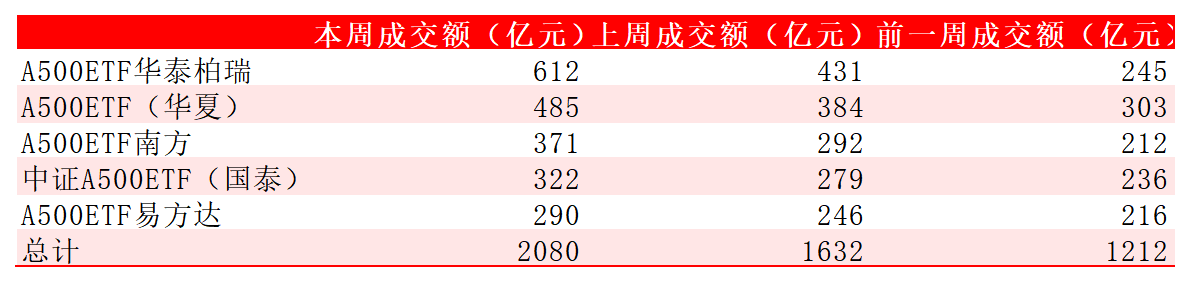
Core Viewpoint - The trading volume of A500 index-related ETFs has significantly increased this week, indicating strong market interest and potential investment opportunities in this sector [1][4]. Group 1: Trading Volume Data - On December 19, the A500ETF from Huatai-PB recorded a trading volume of 13.365 billion yuan, making it the top performer among broad-based ETFs [1]. - The A500ETF from Huaxia also surpassed 10 billion yuan in trading volume, reaching 10.003 billion yuan, marking it as the second ETF to exceed this threshold in a single day [1]. - The top five ETFs by trading volume for the day were all A500 index-related, including A500ETF from Southern, CSI A500ETF, and A500ETF from E Fund, which ranked third to fifth respectively [1]. Group 2: Weekly Trading Volume Comparison - The total trading volume for the five A500 index-related ETFs this week was 208 billion yuan, up from 163.2 billion yuan the previous week, and significantly higher than 121.2 billion yuan two weeks ago, showing an increase of over 40 billion yuan weekly [2][4]. - Specifically, the trading volume for A500ETF from Huatai-PB rose to 61.2 billion yuan this week from 43.1 billion yuan last week, while the A500ETF from Huaxia increased to 48.5 billion yuan from 38.4 billion yuan [2]. Group 3: Market Drivers - Industry experts suggest that insurance funds may be a primary driver behind this surge in trading volume, as regulatory changes have lowered the capital occupation costs for insurance companies, facilitating their entry into the stock market [4]. - The backdrop of declining bond yields and a scarcity of non-standard assets has created an asset shortage, making the CSI A500 index, which covers 500 mid-cap leading companies, attractive for long-term stable returns sought by insurance capital [4]. - Additionally, bank wealth management subsidiaries, brokerage proprietary trading, and foreign institutions are also identified as potential buying forces in this market [4].
白银狂飙,有基金连发10次风险提示
21世纪经济报道· 2025-12-19 05:38
Core Viewpoint - The surge in silver prices has led to a high premium for the Guotou Ruijin Silver Futures Securities Investment Fund (LOF), with a premium of 36% observed, prompting the fund to issue multiple risk warnings and temporarily suspend large subscriptions [1][3][4]. Group 1: Fund Performance and Market Reactions - The Guotou Ruijin Silver LOF experienced significant price volatility, with a closing price of 2.332 yuan on December 18, 2025, compared to a net asset value of 1.7164 yuan, indicating a substantial premium [3]. - The fund's price dropped over 8% on December 19 but later narrowed to approximately 4.3% [1]. - The fund has issued ten premium risk warning announcements in December and has limited subscription amounts to 500 yuan to mitigate speculative trading [1][4]. Group 2: Silver Market Dynamics - The silver market has seen a dramatic increase, with spot silver prices rising nearly 130% this year, particularly accelerating in the second half [6]. - Factors contributing to the rise include strong industrial demand, particularly from the solar energy sector, and a projected structural supply gap of approximately 9.5 million ounces in 2025 [9]. - Analysts expect silver prices to maintain a strong upward trend due to low inventory levels and robust industrial demand, despite potential short-term volatility [9][10]. Group 3: Investment Considerations - High premiums in the fund indicate potential risks for investors, as they may face significant losses if prices revert to net asset values [4]. - Experts suggest that unless investors possess professional arbitrage capabilities, they should consider avoiding high-premium products [4]. - The current market sentiment is influenced by macroeconomic factors and monetary policy expectations, which could affect silver prices in the near term [10].

突破3000亿元!杏林湾基金聚集区规模攀新高
Sou Hu Cai Jing· 2025-12-19 04:20
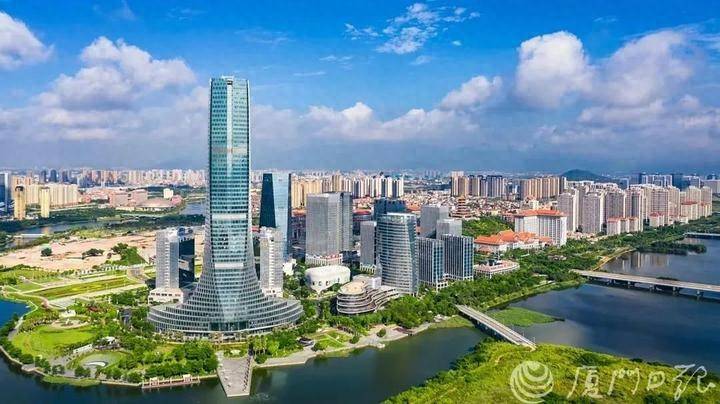
资料图。 近日,随着集美专精特新基金、海翼禾迈基金等多只重大基金落户,集美区杏林湾基金聚集区正式迈 进"3000亿"时代。截至目前,杏林湾基金聚集区已吸引1179家基金企业落户、基金总规模达3002亿元。 "基金动力"成为集美培育科技创新和新质生产力的重要支撑。目前,区产业投资基金及参股子基金已投 资科技创新领域项目140余个,投资金额74.49亿元,总估值近500亿元,助推区域产业升级与战略性新 兴产业集群加速成型。 以资本赋能区域经济高质量发展,截至目前,集美区产业投资基金出资约36亿元,现已收回投资约9亿 元,其中3.5亿元为净利润,回报率超过50%,未回收部分账面回报近40%;杏林湾基金聚集区各基金已 累计缴交税收超15亿元,其中2025年1-11月缴交税收3.35亿元,同比增长50%,为集美区扩充税源提供 强力支撑。 (厦门日报记者 应洁 通讯员 卢和萍) 作为集美区重点打造的金融产业链服务平台,杏林湾基金聚集区规模从"十三五"末期的640亿元增至"十 四五"末期的3002亿元,自成立来连续实现日均"吸金"超过一个亿,五年实现基金规模增长369%。这一 亮眼数据,正是集美基金产业"起步早、持续跑、后 ...
FOF发行热度持续攀升;年末基金积极调仓
Sou Hu Cai Jing· 2025-12-19 00:55
Group 1: Fund Restrictions - Multiple fund companies have announced purchase limits on money market funds, with some products capped at 10,000 yuan and others halting sales through distribution channels [1] - For instance, the Fuanda Cash Fund will suspend purchases through distribution channels starting December 18, while direct sales will continue as normal [1] - Similarly, the Tianzhi Tiandeli Money Market Fund will also halt purchases through distribution channels from December 18, but direct sales will remain unaffected [1] Group 2: New ETF Launches - Several new ETFs have been established, including the Ping An SSE Science and Technology Innovation Board 50 ETF and the Huabao CSI 300 Enhanced Strategy ETF, with contracts effective as of December 17 [2] Group 3: Fund Portfolio Adjustments - In December, some funds have shown significant portfolio adjustments amid volatile market conditions, with managers shifting strategies for the year-end [3] - For example, a fund manager with a heavy tech focus indicated a reduction in holdings of overseas computing power chains due to limited upside potential at a projected 20 times earnings for the next year [3] Group 4: FOF Fund Growth - As of December 17, 79 new FOF funds have been established this year, totaling a scale of 803.54 billion yuan, still short of the 2021 peak by 281.08 billion yuan [4] - The fourth quarter has seen a notable increase in FOF launches, contributing over half of the annual new FOF scale with 410.7 billion yuan established [4] Group 5: Fund Manager Appointments - On December 18, China Europe Fund announced the appointment of a new fund manager, Tang Minwei, to co-manage the China Europe Quantitative Pioneer Mixed Fund [5] - Tang Minwei has four years of experience and has previously held significant roles in alternative data investment research and quantitative research [5] - The fund managed by Tang Minwei, China Europe Small Cap Growth Mixed Fund A, has achieved a return of 16.25% [5] Group 6: ETF Market Performance - On the previous trading day (December 18), major indices showed mixed results, with the Shanghai Composite Index rising by 0.16% while the Shenzhen Component Index and the ChiNext Index fell by 1.29% and 2.17%, respectively [6] - The total trading volume in the Shanghai and Shenzhen markets was 1.66 trillion yuan, a decrease of 155.7 billion yuan from the previous trading day [6] - Sectors such as pharmaceuticals, aerospace, and banking saw gains, while battery, power equipment, and energy metals sectors experienced declines [6] Group 7: Specific ETF Movements - Satellite ETFs collectively performed well, with gains reaching up to 3.80% [7] - Conversely, the Deep Growth ETF and ChiNext Growth ETF saw declines exceeding 3%, with the lithium battery sector also experiencing significant drops [8]
ArrowMark Financial Corp. Announces $14.9 Million Registered Direct Offering
Globenewswire· 2025-12-18 23:30
Core Viewpoint - ArrowMark Financial Corp. has entered into a securities purchase agreement to sell 673,249 shares of common stock at a price of $22.28 per share, which is slightly above the Net Asset Value of $22.20, indicating a positive impact for current shareholders [1]. Group 1: Offering Details - The registered direct offering is expected to generate proceeds of approximately $14.99 million, excluding legal and administrative expenses [2]. - The offering is conducted under a "shelf" registration statement filed with the SEC, allowing for the sale of securities through a prospectus [3]. Group 2: Company Overview - ArrowMark Financial Corp. is a non-diversified, closed-end fund listed on NASDAQ under the symbol "BANX," with an investment objective focused on providing current income primarily through investments in regulatory capital securities of financial institutions [5].


恒生前海基金管理有限公司关于旗下基金参加国元证券股份有限公司基金认购、申购、转换补差及定期定额投资申购费率优惠活动的公告
Shang Hai Zheng Quan Bao· 2025-12-18 18:48
处于封闭期的产品,自开放申购之日起适用于上述申购、转换补差及定期定额投资申购费率优惠。 如本公司新增通过国元证券销售的基金产品,该基金产品适用于上述优惠,具体费率优惠时间及内容以 国元证券的规定为准。 三、重要提示 为更好地满足广大投资者的理财需求,经恒生前海基金管理有限公司(以下简称"本公司")与国元证券 股份有限公司(以下简称"国元证券")协商一致,自2025年12月19日起,本公司旗下基金参加国元证券 开展的基金认购、申购、转换补差及定期定额投资申购费率优惠活动,具体的活动时间、优惠费率以国 元证券的规定为准。相关优惠方案公告如下: 一、适用基金 ■ 二、优惠活动内容 活动期间,投资者通过国元证券认购、申购及定期定额投资申购上述基金、及转出与转入基金的申购费 补差的(仅限前端收费模式),享有费率折扣优惠,具体费率折扣以国元证券的业务规则或公告为准。 本次优惠活动解释权归国元证券股份有限公司所有,有关本次活动的具体事宜,敬请投资者留意国元证 券股份有限公司的有关公告。 1、本优惠活动仅适用于处于正常申购期的基金的一次性申购手续费、定期定额投资申 购手续费及转出与转入基金的申购费补差(仅限前端收费模式),不 ...
